
Uncategorized
Air quality is key to boosting productivity: 1% loss

Apr
TL;DR:
- Poor indoor air quality significantly reduces productivity by impairing cognitive function.
- Monitoring and improving CO2 and PM2.5 levels can enhance focus and decision-making.
- Investing in proper ventilation and air purification offers measurable financial and health benefits.
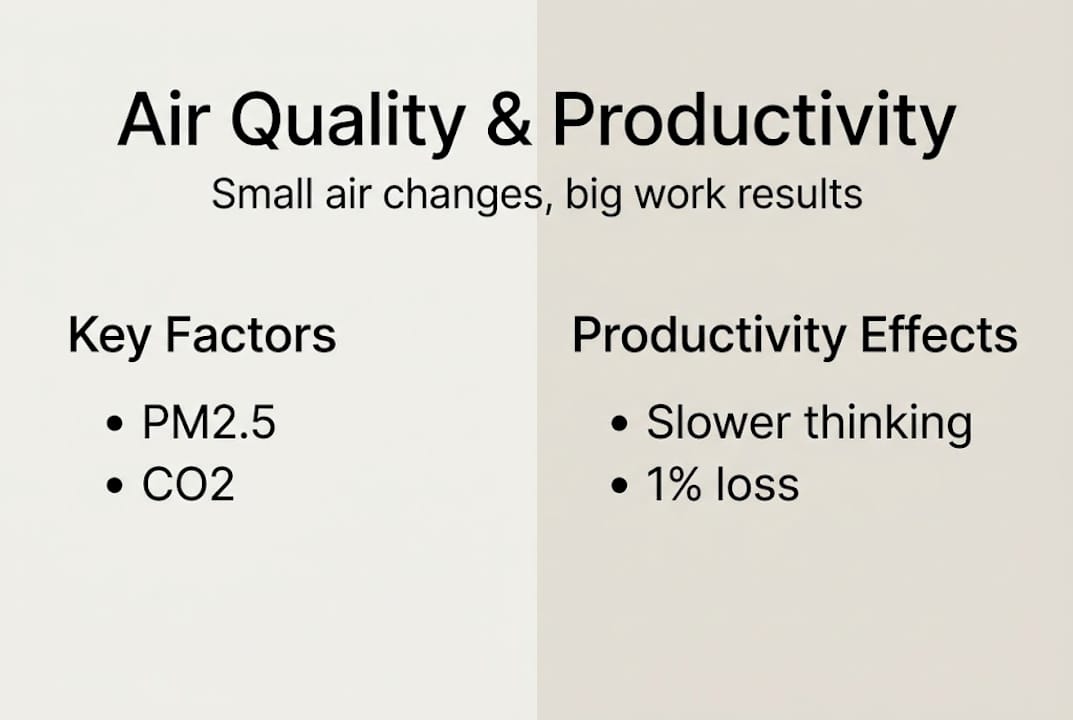
Poor air quality costs you more than a stuffy nose. Labor productivity drops ~1% for every 1 µg/m³ rise in PM2.5, even at levels most people consider safe. That’s not a rounding error. For a home office worker or a small business owner, that translates to slower thinking, more mistakes, and real money left on the table. This article breaks down exactly which pollutants are responsible, how they affect your brain, what it costs you financially, and the practical steps you can take to fix it.
Table of Contents
- Understanding air quality: Beyond allergies and dust
- How air quality affects your brain and performance
- The economic and personal cost of poor air quality
- Who is most affected? Task type, setting, and the air-productivity link
- How to optimize your air for better productivity
- A fresh perspective: Why air quality is the hidden engine of productivity
- Elevate your air quality for lasting productivity gains
- Frequently asked questions
Key Takeaways
| Point | Details |
|---|---|
| Invisible air, big impact | Even minor air quality changes can noticeably reduce productivity and focus. |
| Science-backed risk | PM2.5 and CO2 directly impair thinking, accuracy, and task speed in both homes and offices. |
| Hidden costs add up | The economic and personal toll of poor air rivals common health risks and can cost thousands annually. |
| Sensitive workers, bigger effects | Knowledge, creative, and outdoor workers are especially vulnerable to drops in air quality. |
| Proactive steps work | Simple measures like better ventilation and air purifiers can quickly improve productivity and well-being. |
Understanding air quality: Beyond allergies and dust
Most people think about air quality only when they sneeze or smell something off. But indoor air quality basics go far deeper than dust and pollen. The pollutants that quietly chip away at your focus are often invisible and odorless.
The three main offenders inside homes and small offices are:
- PM2.5 (fine particulate matter): Tiny particles smaller than 2.5 micrometers that penetrate deep into the lungs and bloodstream. Sources include cooking smoke, candles, printers, and outdoor traffic drifting in.
- CO2 (carbon dioxide): Exhaled breath builds up fast in poorly ventilated rooms. A meeting room with four people and closed windows can hit dangerous levels in under an hour.
- VOCs (volatile organic compounds): Released by cleaning products, furniture, paint, and even air fresheners. Many VOCs cause headaches and irritation before you’d ever connect them to your work performance.
Here’s the part most people miss: indoor vs outdoor air pollution comparisons consistently show that indoor concentrations of these pollutants are often two to five times higher than outdoor levels. Your home or office can be more polluted than the street outside, especially in winter when windows stay shut.
Cognitive effects show up before physical symptoms do. You don’t need to feel sick to think slower. Elevated CO2 above 1,000 ppm impairs task speed, decision-making, and crisis response by 10 to 20 percent. Most offices and home workspaces hit that threshold regularly without anyone realizing it.
The sources are everywhere and easy to overlook. Cooking on a gas stove, running a laser printer, using a spray cleaner, or simply having too many people in a small room can spike pollutant levels within minutes. Good air quality management means recognizing these sources before the damage is done.
How air quality affects your brain and performance
Now that you know the main pollutants, let’s look at what they actually do inside your brain.
The biological pathway is straightforward. CO2 buildup in a room reduces the oxygen gradient your body uses to transfer oxygen from lungs to blood. This leads to a condition called hypercapnia (elevated CO2 in the blood), which slows neuronal function. Think of it like running a computer on low power mode. Everything still works, but slower and with more errors.
“PM2.5 causes sub-clinical health effects like cognitive decline, fatigue, and increased errors without absenteeism, while CO2 drives reduced cerebral oxygenation and impaired neuronal function.” NIH PMC research
What makes PM2.5 especially tricky is that it doesn’t make you feel sick in the traditional sense. You won’t call in absent. You’ll just make a few more mistakes, take a bit longer to finish tasks, and feel inexplicably tired by mid-afternoon. That’s the air quality and wellness connection that most productivity conversations completely ignore.
Here’s how the cognitive impairment typically unfolds:
- Within 30 to 60 minutes of entering a poorly ventilated space, CO2 begins accumulating and reaction times start to slow.
- After 2 to 3 hours, decision-making quality drops noticeably, and error rates in detail-oriented tasks increase.
- By end of day, cumulative fatigue from PM2.5 and CO2 exposure compounds, making recovery harder even after leaving the space.
- Over weeks and months, repeated exposure is linked to measurable cognitive decline and increased long-term health risks.
The important takeaway here is that these effects are not dramatic. You won’t collapse. You’ll just be a slightly worse version of yourself, consistently, without knowing why. That’s what makes poor air quality such a silent productivity drain.
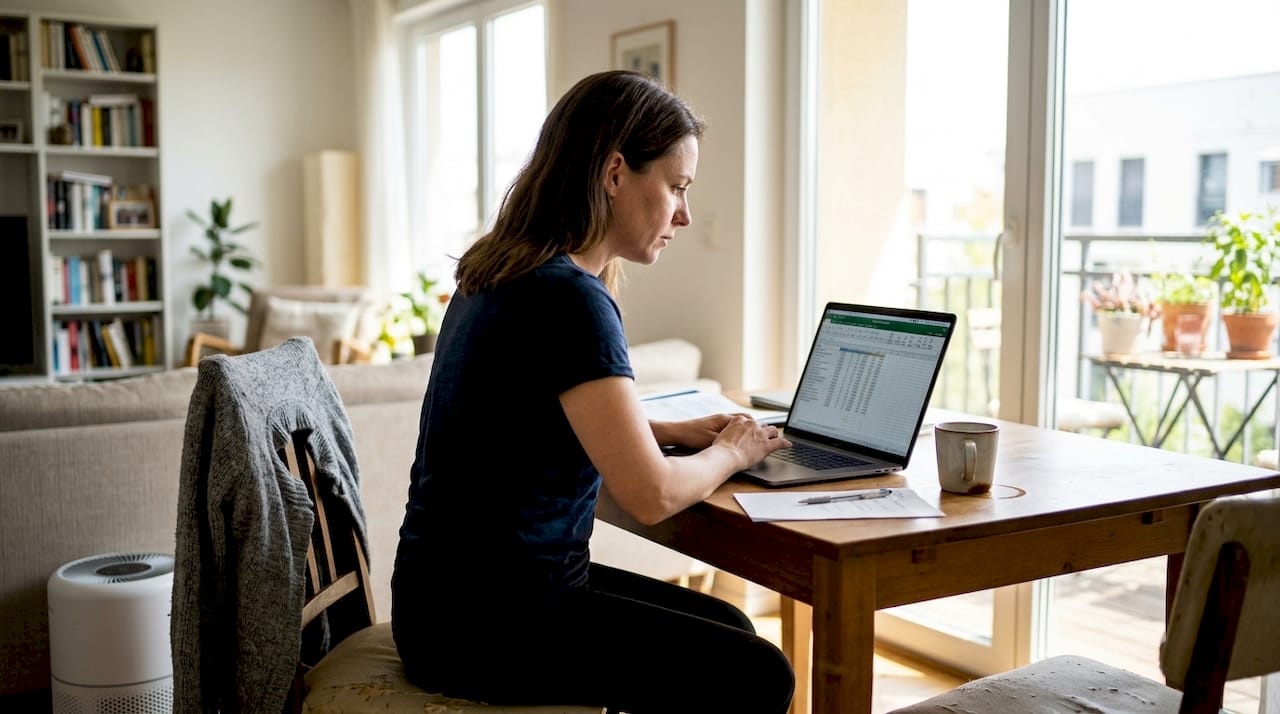
The economic and personal cost of poor air quality
Understanding the science is one thing. But what does it actually cost you?
The numbers are striking. The welfare impact of PM2.5 reduction is estimated at $950 to $3,000 per U.S. household per year from productivity gains alone, representing 0.6 to 1.9 percent of household consumption. That’s comparable to the financial benefit of major mortality-reduction health interventions.
| PM2.5 change | Productivity impact | Annual household value |
|---|---|---|
| 1 µg/m³ reduction | ~1% productivity gain | $950 to $3,000 |
| 5 µg/m³ reduction | ~5% productivity gain | $4,750 to $15,000 |
| Reaching WHO guideline | Significant cognitive boost | Comparable to major health programs |
Key stat: A single microgram per cubic meter reduction in PM2.5 is worth nearly $1,000 per household per year in productivity terms alone, before counting health savings.
For small business owners, the math is even more compelling. Slower decision-making, higher error rates, and increased sick days all hit the bottom line directly. And these losses are hidden. They don’t show up as a line item. They show up as missed deadlines, rework, and employees who seem fine but consistently underperform.
Pro Tip: Track your team’s output patterns against weather and seasonal data. Productivity dips in winter often correlate with closed windows and rising indoor CO2, not just holiday stress.
The economic ripple effects extend further than simple wage calculations suggest. When air quality in workplaces improves, the benefits compound through better decisions, fewer errors, and stronger long-term cognitive health for everyone in the building.
Who is most affected? Task type, setting, and the air-productivity link
Not everyone feels these effects equally. The impact depends heavily on what you do and where you do it.
A 0.55% reduction in annual labor productivity per 1 µg/m³ PM2.5 increase sounds modest until you factor in that effects are significantly stronger on high-pollution days, among high-skilled workers, in the construction sector, and in medium-sized firms.
| Role or setting | Air quality sensitivity | Why |
|---|---|---|
| Knowledge workers (tech, finance, writing) | Very high | Precision and creativity suffer most |
| Teachers and educators | High | Sustained focus and communication impaired |
| Home office workers | High | Often poor ventilation, no facilities management |
| Construction workers | High | Direct outdoor PM2.5 exposure |
| Retail and hospitality | Moderate | Variable ventilation, customer traffic |
The roles most at risk share one trait: they require sustained concentration, quick judgment, or creative output. These are exactly the cognitive functions most sensitive to CO2 and PM2.5.
- Young adults and knowledge workers show measurable performance drops at PM2.5 levels well below current safety standards.
- Home offices are particularly vulnerable because there’s no facilities team monitoring ventilation.
- Open-plan offices with poor airflow can create localized pollution pockets that affect specific desks far more than others.
Pro Tip: Use a home air quality checklist to identify your highest-risk rooms and times of day. Kitchen and meeting areas almost always need the most attention.
If you run a small business, the highest-value employees are often the most affected. That’s the uncomfortable math. The people whose output matters most are the ones whose brains are most sensitive to environmental conditions. Protecting their air quality is a direct investment in your best work.
How to optimize your air for better productivity
Understanding your risk is half the battle. Here’s how to take control.
The evidence is clear: keeping CO2 below 1,000 ppm and PM2.5 low delivers measurable cognitive benefits even when starting from levels that seem acceptable. You don’t need to wait for symptoms.
- Monitor first. Buy a CO2 and PM2.5 monitor. Affordable options exist for under $100. You cannot manage what you don’t measure. Many people are shocked by what they find.
- Ventilate actively. Open windows for at least 10 minutes every two hours, even in winter. Use exhaust fans in kitchens and bathrooms. Cross-ventilation is more effective than a single open window.
- Use a quality air purifier. A HEPA-filter air purifier in your main workspace removes PM2.5 effectively. Position it near your desk, not in a corner.
- Reduce pollutant sources. Switch to fragrance-free cleaning products, avoid candles during work hours, and run the kitchen exhaust when cooking.
- Build a maintenance routine. Follow air optimization strategies on a schedule. Filter replacements, vent cleaning, and regular checks prevent gradual drift back to poor conditions.
For a deeper starting point, an indoor air quality assessment helps you identify specific problem areas before spending money on solutions. Pair that with practical air quality tips tailored to your space type for the fastest gains.
Pro Tip: Combine air quality improvements with stress management practices for compounding productivity benefits. Clean air reduces physiological stress load, making other focus techniques more effective.
A fresh perspective: Why air quality is the hidden engine of productivity
Most productivity conversations circle around the same topics: better software, clearer goals, smarter scheduling, work-life balance. Air quality almost never comes up. That’s a significant blind spot.
Here’s the uncomfortable truth: you can have perfect time management and still think 15 percent slower than you should because your office CO2 is at 1,400 ppm. No app fixes that. No morning routine compensates for it.
What makes this especially frustrating is that productivity losses occur below current safety standards. Regulatory limits are set for health protection, not cognitive optimization. Passing an air quality inspection doesn’t mean your environment supports peak performance.
We’ve seen this pattern repeatedly: businesses invest heavily in ergonomics, standing desks, and wellness programs while the air in the building quietly undermines all of it. Air improvement delivers compounding returns. Better focus today means better decisions tomorrow, fewer errors next week, and stronger long-term cognitive health over years.
Understanding why indoor air matters is the first step toward treating it as the infrastructure investment it actually is, not an afterthought.
Elevate your air quality for lasting productivity gains
You now have the evidence, the mechanisms, and the action steps. The next move is finding the right tools for your specific space.
At Coway, we’ve matched thousands of homeowners and small business owners with air purification solutions built around their real-world needs. Whether you’re starting fresh or upgrading an existing setup, our best air purifier options guide walks you through the top performers for 2026. If you’re not sure where to begin, the air purifier selection guide helps you match features to your space size and pollutant priorities. And once you’ve chosen, our air purification checklist keeps your system performing at its best long-term.
Frequently asked questions
How quickly does air quality impact productivity?
Productivity can drop within hours of exposure to poor air. CO2 above 1,000 ppm reduces task speed and decision-making by 10 to 20 percent in short exposure windows, often within the same workday.
Which air pollutants most harm productivity?
PM2.5 and CO2 carry the strongest evidence. PM2.5 drives cognitive decline and increased errors, while CO2 over 1,000 ppm directly diminishes attention and decision quality.
How can I monitor air quality at home or work?
Affordable CO2 and PM2.5 sensors are available for under $100 and provide real-time readings. Pair sensor data with visual checks like condensation, stuffiness, and cooking odors for a complete picture.
Are the productivity effects reversible if air quality improves?
Yes, in most cases. Short-term air quality improvements restore cognitive performance relatively quickly, though the effects of chronic long-term exposure are less well understood and may take longer to reverse.
Recommended
- Office Wellness via Air Quality: Healthier Workplaces – Coway Water Purifier
- Understanding Why Indoor Air Quality Matters – Coway Water Purifier
- Airborne Pollutants Guide: Proven Ways to Boost Home Air Quality – Coway Water Purifier
- Air purification trends 2026: 7.2% market growth insights – Coway Water Purifier
- Die 7 Besten Luftreinigungssysteme für Hotels 2026
