
Uncategorized
Indoor Air Quality: Everything You Need to Know
Nov
Did you know the EPA reports that indoor air can be up to five times more polluted than the air outside? Many people assume their homes and offices are naturally safe, but common activities and everyday materials quietly lower air quality. Poor indoor air doesn’t just affect comfort, it can trigger health problems for your family. Knowing the truth about indoor air challenges helps you protect your space and your wellbeing.
Table of Contents
- Defining Indoor Air And Common Misconceptions
- Major Sources Of Indoor Air Pollution
- Health And Wellness Impacts At Home
- Effective Solutions For Cleaner Indoor Air
- Risks Of Neglecting Air Quality Indoors
Key Takeaways
| Point | Details |
|---|---|
| Indoor air can be more polluted than outdoor air | Numerous sources contribute to indoor air pollution, including household products, combustion sources, and building materials. |
| Health effects are significant | Poor indoor air quality can lead to respiratory issues and exacerbate conditions for vulnerable populations such as children and the elderly. |
| Effective management requires proactive strategies | Implementing ventilation, source control, and using quality air purification systems are crucial for improving indoor air quality. |
| Neglecting indoor air quality poses serious risks | Long-term exposure can lead to chronic health problems and decreased quality of life, highlighting the need for regular monitoring and management. |
 |
|
Defining Indoor Air and Common Misconceptions
When we talk about indoor air, most people imagine a clean, safe environment. But according to the EPA, indoor air quality is far more complex than many realize. It refers to the quality of air within and around buildings, directly impacting the health and comfort of occupants.
Contrary to popular belief, indoor air can actually be more polluted than outdoor air. Indoor air pollution stems from numerous sources like household cleaning products, cooking appliances, furniture materials, and even human activities. EPA research highlights that limited ventilation and concentrated indoor sources can create higher pollutant concentrations compared to outside environments.
Common misconceptions about indoor air include:
- Outdoor air is always more dangerous than indoor air
- Homes and offices are naturally clean environments
- Air fresheners and open windows solve air quality issues
Understanding these misconceptions is the first step toward creating healthier indoor spaces. By recognizing potential indoor air quality challenges, you can take proactive steps to monitor, filter, and improve the air you breathe daily. Why Filter Indoor Air: Complete Guide for Homeowners provides deeper insights into managing your indoor environment effectively.
Major Sources of Indoor Air Pollution
EPA research reveals that indoor air pollution isn’t a simple issue but a complex interaction of multiple sources. Combustion sources play a significant role, including gas stoves, fireplaces, space heaters, and tobacco products that release harmful particles and gases directly into your living environment.
Household activities and materials contribute substantially to indoor air contamination. Building materials like pressed wood, carpets, and paint can emit volatile organic compounds (VOCs) that degrade air quality. Cleaning products, air fresheners, and personal care items also introduce chemical pollutants that many people unknowingly circulate through their homes and offices.
The most common sources of indoor air pollution include:
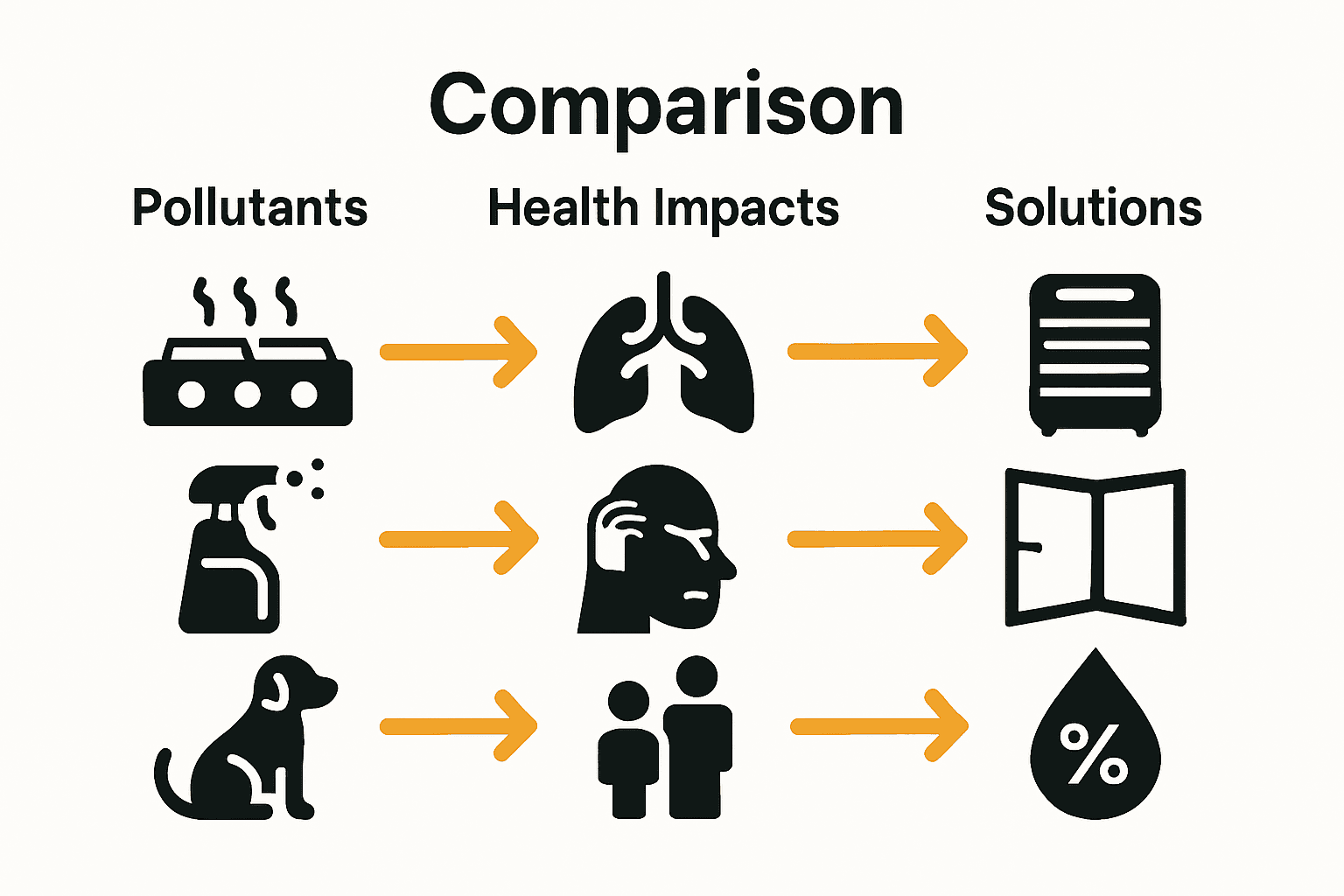
Here’s a summary of the main sources, health effects, and solutions for indoor air pollution:
| Category | Main Sources | Health Effects | Solutions |
|---|---|---|---|
| Combustion | Gas stoves Fireplaces Space heaters Tobacco products |
Respiratory irritation Headaches Dizziness |
Source control Ventilation Air purification |
| Building Materials & Furnishings | Pressed wood Carpets Paint Furniture |
VOC exposure Allergies Fatigue |
Choose low-VOC products Increase ventilation |
| Household Products | Cleaning agents Air fresheners Personal care items |
Eye/nose/throat irritation Asthma symptoms |
Reduce chemical usage Use natural alternatives |
| Biological Sources | Pet dander Dust mites Mold Mildew |
Allergies Infections Chronic problems |
Regular cleaning Humidity control HEPA filtration |
- Combustion appliances (stoves, fireplaces, heaters)
- Tobacco and smoking products
- Building and construction materials
- Household cleaning chemicals
- Personal care products
- Pet dander and dust mites
- Mold and mildew
Understanding these sources is crucial for creating healthier indoor spaces. Understanding Indoor Pollutants and Air Purifiers can help you develop more effective strategies for managing and reducing indoor air contaminants.
Health and Wellness Impacts at Home
CDC research reveals that indoor air quality isn’t just about comfort—it’s a critical health concern. Respiratory health is particularly vulnerable, with poor air quality potentially triggering a range of immediate and long-term health complications that can affect every family member.
The immediate effects of indoor air pollution can be surprisingly diverse. According to EPA research, exposure to indoor pollutants can cause irritation of the eyes, nose, and throat, along with symptoms like headaches, dizziness, and unexpected fatigue. These seemingly minor issues can significantly impact daily functioning and overall well-being.
Vulnerable populations face even greater risks:
- Children with developing respiratory systems
- Elderly individuals with compromised immune responses
- People with pre-existing conditions like asthma or heart disease
- Individuals with chronic respiratory challenges
Managing indoor air quality isn’t just a preventive measure—it’s a crucial investment in your family’s health.
Indoor Air Quality: Everything You Need to Know offers comprehensive strategies to protect your loved ones from potential air quality-related health risks.
Effective Solutions for Cleaner Indoor Air
EPA research outlines a comprehensive approach to improving indoor air quality that goes beyond simple cleaning. Source control emerges as the most effective strategy, focusing on identifying and minimizing pollutant sources before they can circulate through your living spaces.
Ventilation plays a critical role in maintaining healthy indoor air. Proper air exchange helps dilute and remove contaminants, reducing their concentration and potential health impacts. According to CDC research, this means implementing strategies like using exhaust fans, opening windows strategically, and ensuring your HVAC systems are regularly maintained and cleaned.
Key solutions for cleaner indoor air include:
- Removing known pollution sources
- Increasing natural and mechanical ventilation
- Using high-quality air purification systems
- Regular cleaning and dust reduction
- Controlling humidity levels
- Minimizing chemical and synthetic product usage
Implementing these strategies requires a holistic approach. 8 Indoor Air Quality Tips for a Healthier Home can help you develop a comprehensive plan to transform your indoor environment into a cleaner, healthier space.
Risks of Neglecting Air Quality Indoors
EPA research warns that overlooking indoor air quality isn’t just a minor inconvenience—it’s a serious health risk. Long-term exposure to poor indoor air can transform your living space from a sanctuary into a silent health hazard, potentially triggering a cascade of medical complications that develop gradually and often imperceptibly.
The health implications are profound and far-reaching. According to CDC research, vulnerable populations like children and elderly individuals face heightened risks. Prolonged exposure to indoor air pollutants can lead to respiratory diseases, decreased lung function, increased allergic reactions, and even contribute to more serious conditions like heart disease and certain cancers.
Specific risks of neglecting indoor air quality include:
- Chronic respiratory problems
- Increased susceptibility to infections
- Reduced cognitive performance
- Higher stress on immune systems
- Potential neurological complications
- Decreased overall quality of life
Understanding these risks is the first step toward creating a healthier living environment. Understanding Why Monitor Indoor Air Quality Matters provides deeper insights into protecting your family’s health through proactive air quality management.
Take Control of Your Indoor Air Quality Today
Poor indoor air quality affects your family’s health in ways you may not immediately notice. The article shows how harmful pollutants from daily sources like gas stoves, household chemicals, and dust can cause headaches, respiratory issues, and fatigue. If you want to protect your loved ones from these invisible dangers and breathe easier, advanced air purification technology is key.
Discover how the right air purifier can reduce indoor pollutants and allergens effectively. At Coway, you find cutting-edge air purification systems designed with your health in mind, including features like high-efficiency filtration and UV sanitization. Don’t wait until symptoms appear. Visit Indoor Air Quality: Everything You Need to Know and take the first step toward cleaner, healthier air. Act now and explore the latest models to safeguard your home environment at Coway’s official site.
Frequently Asked Questions
What are the common sources of indoor air pollution?
Common sources of indoor air pollution include combustion appliances like gas stoves and fireplaces, building materials such as pressed wood and carpets that emit volatile organic compounds (VOCs), household cleaning chemicals, and biological sources like pet dander and mold.
How can I improve indoor air quality in my home?
Improving indoor air quality can be achieved through source control by minimizing pollution sources, increasing ventilation through exhaust fans and open windows, using high-quality air purification systems, regular cleaning, and managing humidity levels.
What health effects are associated with poor indoor air quality?
Poor indoor air quality can lead to a range of health issues, including respiratory irritation, allergies, chronic respiratory diseases, headaches, dizziness, and increased risks for vulnerable populations such as children and the elderly.
Why is monitoring indoor air quality important?
Monitoring indoor air quality is crucial as it helps identify pollution sources and their concentrations, enabling proactive measures to be taken to protect health, especially in vulnerable individuals. Long-term neglect can lead to serious health complications and decreased overall quality of life.
Recommended
- Indoor Air Quality: Everything You Need to Know – Coway Water Purifier
- Why Filter Indoor Air: Complete Guide for Homeowners – Coway Water Purifier
- Understanding Why Monitor Indoor Air Quality Matters – Coway Water Purifier
- Why Filter Indoor Air: Complete Homeowner Guide – Coway Water Purifier
