
Uncategorized
Best air purifier 2026: health-focused selection guide
Mar
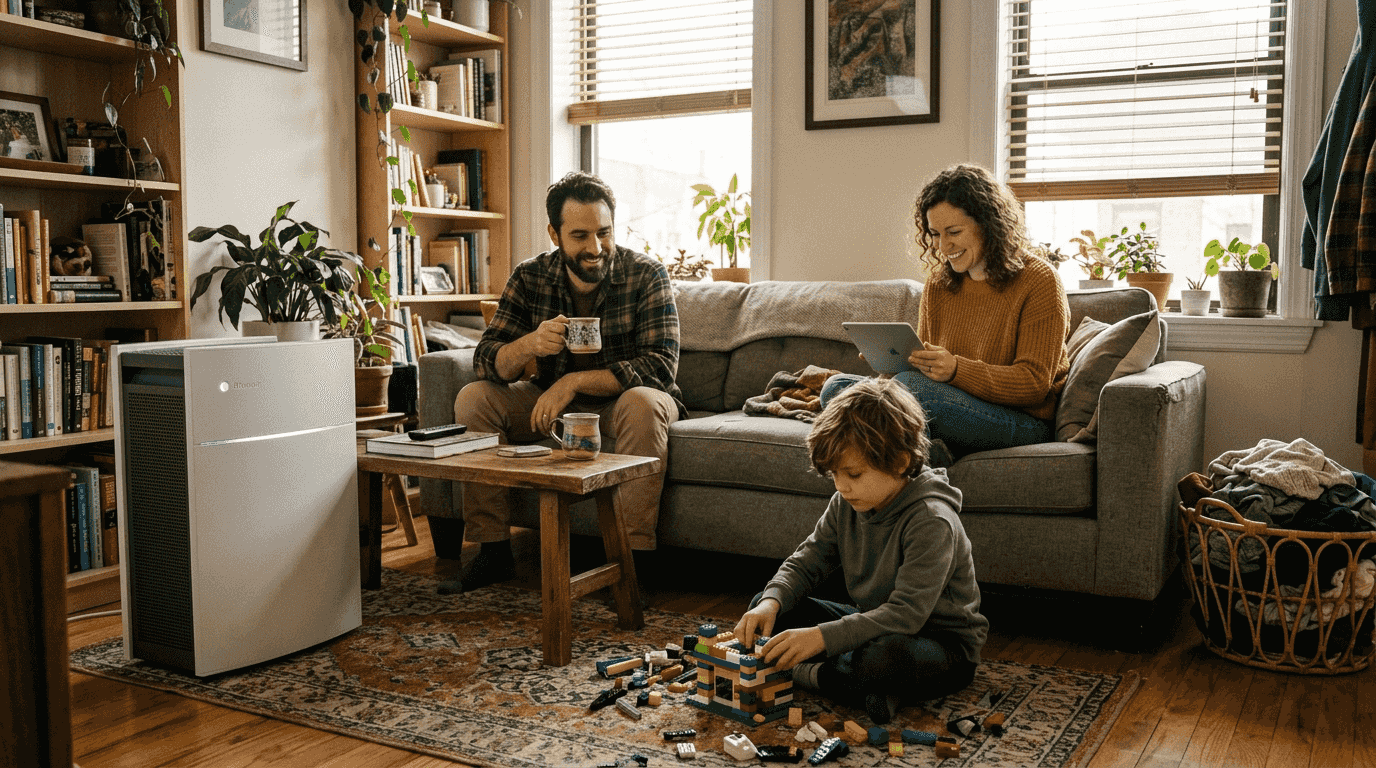
Indoor air pollution poses a greater threat than most families realize, with concentrations often 2-5 times worse indoors than outside. Children are particularly vulnerable due to their developing respiratory systems and higher air intake relative to body weight. This guide provides expert criteria and actionable steps to help you select the best air purifier in 2026, focusing on advanced filtration technology and smart features that protect your family’s health.
Table of Contents
- Understanding Indoor Air Quality And Health Impacts
- Key Features And Technologies For Effective Air Purification
- Calculating Purifier Capacity And Choosing The Right Size
- How To Select And Maintain Your Air Purifier For Long-Term Health Benefits
- Explore Expert Air Purifier Solutions For Healthier Homes
Key takeaways
| Point | Details |
|---|---|
| True HEPA filtration | Captures 99.97% of particles down to 0.3 microns, the most challenging size to filter. |
| CADR calculation | Calculate Clean Air Delivery Rate based on room size using 2/3 of square footage × 10. |
| Smart features | App control and auto modes enhance air quality management and convenience. |
| Bedroom noise | Look for noise levels below 30 dB to ensure undisturbed sleep. |
| Total ownership costs | Factor in replacement filters and energy use over 5 years beyond purchase price. |
Understanding indoor air quality and health impacts
The air inside your home contains invisible threats that directly impact your family’s wellness. PM2.5 particles penetrate deep into lungs and enter bloodstream, increasing heart attack risk, while allergens, mold spores, and volatile organic compounds create a toxic mix. These pollutants cause systemic inflammation affecting cardiovascular health, cognitive function, and respiratory wellness.
Children breathe more air relative to body weight and suffer cognitive and respiratory impacts from poor air quality. Their developing lungs are especially susceptible to damage from prolonged exposure to fine particulates. Research shows that reducing indoor air pollution decreases asthma risk and improves cognitive performance in young learners.
Common indoor pollutant sources include:
- Cooking emissions releasing particulates and nitrogen dioxide
- Furniture and building materials off-gassing formaldehyde
- Pet dander and dust mites triggering allergic responses
- Outdoor pollution entering through ventilation systems
- Household cleaning products releasing chemical vapors
Effective air purification addresses multiple pollutant types simultaneously, but filtration alone is not enough. Source control and proper ventilation work together with purification for optimal results.
Understanding these health impacts creates urgency for selecting the right purification technology. The connection between indoor air pollution and family health demonstrates why advanced filtration is not optional for health-conscious households in 2026.
Key features and technologies for effective air purification
Selecting an air purifier requires evaluating multiple technical specifications that determine real-world performance. The most critical component is filtration technology, where True HEPA filters capture 99.97% of 0.3-micron particles essential for effective air purification. Avoid products labeled “HEPA-type” or “HEPA-like” as these lack certification and typically capture only 80-95% of particles.
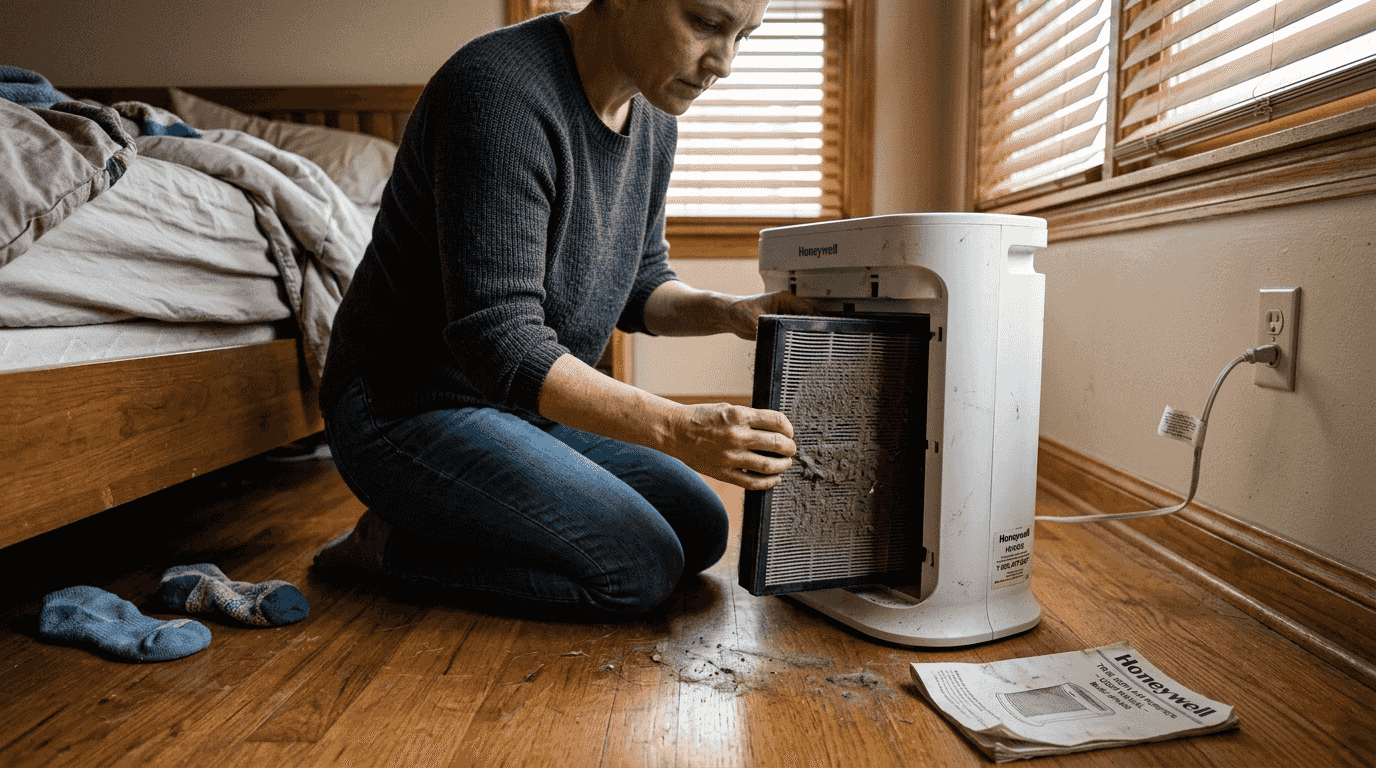
Activated carbon filtration handles odors and gaseous pollutants that HEPA filters cannot address. Look for units containing at least 1 kilogram of activated carbon, especially if you have pets or live near traffic. Thin carbon sheets provide minimal odor control compared to substantial carbon beds.
Smart air purifiers offer app control, auto modes, and air quality monitoring for enhanced convenience. These features allow you to adjust settings remotely, receive filter replacement alerts, and track air quality trends over time. Auto modes adjust fan speed based on detected pollution levels, optimizing both performance and energy efficiency.
Noise considerations matter significantly for bedroom use. Units operating below 30 decibels on low settings ensure quiet operation during sleep. Higher speeds naturally produce more noise, so check specifications across all fan levels.
Essential features to prioritize:
- Certified True HEPA filtration, not generic HEPA-type alternatives
- Substantial activated carbon weight for effective odor removal
- Multiple fan speeds with quiet low-speed operation
- Real-time air quality sensors and display indicators
- Filter replacement indicators preventing performance degradation
Pro Tip: Compare what is a HEPA filter specifications across brands to ensure you’re getting genuine certified filtration, not marketing claims.
Exploring top smart air purifiers reveals how connectivity features enhance daily air quality management beyond basic filtration.
Calculating purifier capacity and choosing the right size
Matching purifier capacity to your room dimensions ensures effective air cleaning without wasting energy or money. The Clean Air Delivery Rate (CADR) measures how many cubic feet of clean air a purifier delivers per minute. Calculate CADR using room volume × 5 air changes per hour, or CADR ≥ 2/3 of room square footage × 10.
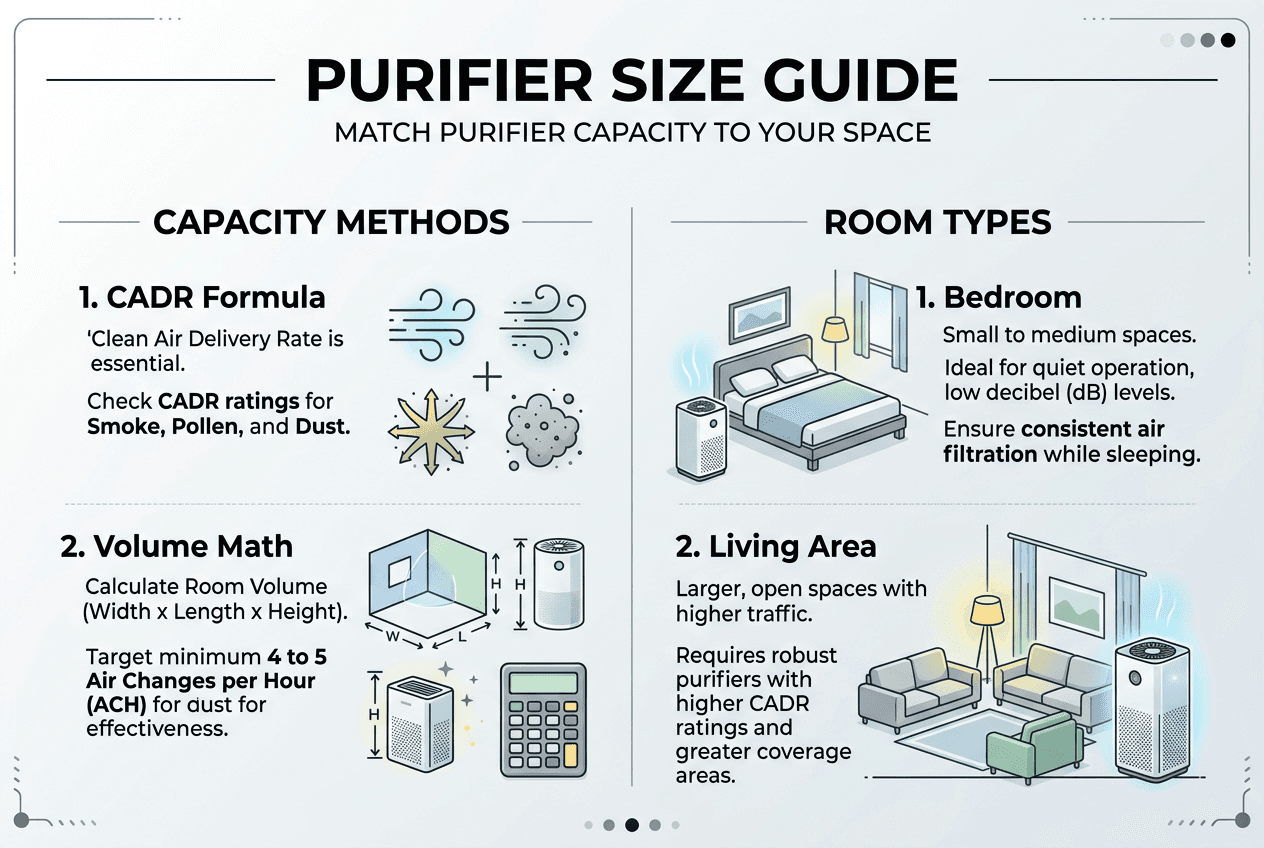
Two practical calculation methods work for most scenarios. The volumetric approach multiplies room length × width × height to get cubic feet, then multiplies by 5 air changes per hour and divides by 60 minutes. The simpler floor area method uses air purifier capacity should be at least 2/3 of room square footage times 10 for effective cleaning.
| Room Size | Required CADR | Example Calculation |
|---|---|---|
| 150 sq ft | 100 CFM | (150 × 2/3) × 10 = 100 |
| 300 sq ft | 200 CFM | (300 × 2/3) × 10 = 200 |
| 450 sq ft | 300 CFM | (450 × 2/3) × 10 = 300 |
| 600 sq ft | 400 CFM | (600 × 2/3) × 10 = 400 |
Here’s how to size your purifier correctly:
- Measure your room’s length and width in feet
- Multiply length × width to get square footage
- Take 2/3 of that number and multiply by 10
- Select a purifier with CADR at or above your calculated result
- Consider open floor plans requiring coverage of multiple connected spaces
Selecting an undersized purifier results in insufficient air changes per hour, leaving pollutants circulating. Oversized units waste electricity and create unnecessary noise. Furniture placement and room layout affect airflow patterns, so position purifiers away from walls and obstacles.
Pro Tip: For allergy sufferers or homes with pets, choose a CADR 20-30% higher than calculated minimums to ensure faster pollutant removal during high-concentration events.
Detailed guidance on air purifier capacity selection helps you match technical specifications to your specific living space requirements.
How to select and maintain your air purifier for long-term health benefits
Executing your air purifier purchase and setup correctly maximizes health benefits while avoiding costly mistakes. Follow this systematic approach to ensure you make the right choice and maintain peak performance over years of operation.
Step-by-step selection process:
- Research brands with proven reliability through independent testing and verified customer reviews
- Verify True HEPA certification and substantial activated carbon content in specifications
- Confirm the CADR rating meets or exceeds your calculated room requirements
- Check filter replacement costs and availability to avoid proprietary filter traps
- Review noise levels across all fan speeds, especially for bedroom placement
- Evaluate energy consumption ratings to estimate ongoing electricity costs
- Look for warranties of at least 3-5 years covering motors and electronics
Consumer Reports testing includes particle removal, noise levels, energy consumption, room coverage, reliability, and owner satisfaction. Independent testing reveals performance differences not apparent from marketing materials.
Ongoing maintenance requirements:
- Replace HEPA filters every 12-18 months depending on usage intensity
- Change activated carbon filters every 6-12 months for odor control
- Vacuum pre-filters monthly to extend main filter life
- Clean air quality sensors quarterly with cotton swabs
- Wipe exterior surfaces weekly to prevent dust buildup
Pro Tip: Set calendar reminders for filter replacements rather than waiting for performance degradation. Clogged filters force the motor to work harder, increasing energy costs and potentially shortening unit lifespan.
Total 5-year ownership costs including filters and electricity often exceed initial purchase price. Budget accordingly by requesting filter pricing before purchase. Some manufacturers offer subscription programs that automatically ship replacement filters at scheduled intervals.
Avoid these common selection mistakes that compromise effectiveness:
- Purchasing “HEPA-type” filters lacking certification standards
- Selecting based solely on price without verifying CADR ratings
- Ignoring filter replacement costs that exceed device cost over time
- Placing purifiers in corners or behind furniture blocking airflow
- Running units only when air quality appears poor instead of continuously
Proper installation matters as much as selection. Position your purifier at least 6 inches from walls and furniture to ensure unobstructed air intake and output. Run units continuously on auto mode rather than manually cycling them on and off.
Comprehensive air purifier maintenance tips extend unit lifespan and preserve filtration efficiency. Regular cleaning prevents performance degradation that reduces health benefits.
Additional guidance to select air purifier guide helps you navigate technical specifications and marketing claims to find genuinely effective solutions.
Explore expert air purifier solutions for healthier homes
Now that you understand selection criteria and maintenance requirements, finding the right purifier for your family becomes straightforward. Coway offers advanced filtration technology specifically designed for health-conscious households prioritizing indoor air quality.
Our comprehensive air purifier selection guide 2026 walks you through matching purifier specifications to your unique needs. Browse Coway air purifier products featuring certified True HEPA filtration, substantial activated carbon beds, and smart monitoring capabilities.
Maximize your investment with our detailed air purifier cleaning guide that extends filter life and maintains peak performance. Each product includes transparent filter replacement information and energy consumption data, eliminating surprises about total ownership costs.
FAQ
What is the difference between True HEPA and HEPA-type filters?
True HEPA filters are certified to capture 99.97% of 0.3-micron particles, meeting strict industry standards. HEPA-type filters lack certification and typically capture only 80-95% of particles, providing significantly less protection against fine particulates and allergens.
How do I calculate the right size air purifier for my room?
Use CADR ≥ 2/3 of your room’s square footage × 10 to determine required capacity. Alternatively, calculate room volume in cubic feet × 5 air changes per hour ÷ 60 minutes for precise CADR requirements. This air purifier sizing calculation ensures effective pollutant removal.
What ongoing costs should I expect with an air purifier?
Filter replacements and electricity typically cost more than the initial purchase price over 5 years. HEPA filters require replacement every 12-18 months, carbon filters every 6-12 months, and continuous operation adds to monthly electricity bills. Proper air purifier maintenance and costs planning prevents budget surprises.
Can air purifiers remove viruses and bacteria from indoor air?
True HEPA filters capture most airborne viruses and bacteria since these particles typically attach to larger droplets or dust. Some purifiers add UV-C light sanitization for additional microbial reduction. However, air purifiers complement but do not replace proper ventilation and hygiene practices for complete protection.
How often should I run my air purifier for best results?
Run your air purifier continuously on auto mode for optimal results. Pollutants accumulate constantly from cooking, cleaning, and outdoor infiltration. Cycling the unit on and off allows particle concentrations to rebuild, reducing overall effectiveness and requiring longer high-speed operation to restore air quality.
Recommended
- Air purifier selection guide for healthier home in 2026 – Coway Water Purifier
- How to Select Air Purifier for Healthy Home Air Quality – Coway Water Purifier
- 7 Must-Have Air Purifier Features for Healthier Homes – Coway Water Purifier
- Home air quality checklist for a healthier 2026 – Coway Water Purifier
- Restaurant Air Quality Tips 2026: Boost Satisfaction 20% – Probe IT
