
Uncategorized
Why Business Settings Need Large Capacity Purifiers
Jun
TL;DR:
- Large-capacity commercial air purifiers are designed to manage high airflow, multiple contaminant types, and continuous operation in large spaces. Proper sizing involves calculating total air volume and achieving appropriate ACH rates, with oversizing by 20% recommended for peak load management. Well-maintained systems improve health outcomes, regulatory compliance, and productivity while requiring careful integration into facility management routines.
Large-capacity air purifiers are specialized commercial systems designed to manage the airflow volume, contaminant diversity, and occupancy density that standard residential units cannot handle. Understanding why business settings need large capacity purifiers starts with one fact: large facilities report 40% more IAQ complaints than smaller buildings, driven by inconsistent air distribution and compounding pollutant loads. The industry term for these systems is “commercial air purification,” and the distinction from residential equipment is not cosmetic. It is structural, mechanical, and regulatory. ASHRAE ventilation standards, HEPA filtration requirements, and Clean Air Delivery Rate (CADR) ratings all scale differently once you cross into commercial territory. Facility managers who treat a 10,000-square-foot open-plan office the same as a living room are setting themselves up for compliance failures, sick-day spikes, and equipment that burns out within months.
Why business settings need large capacity purifiers
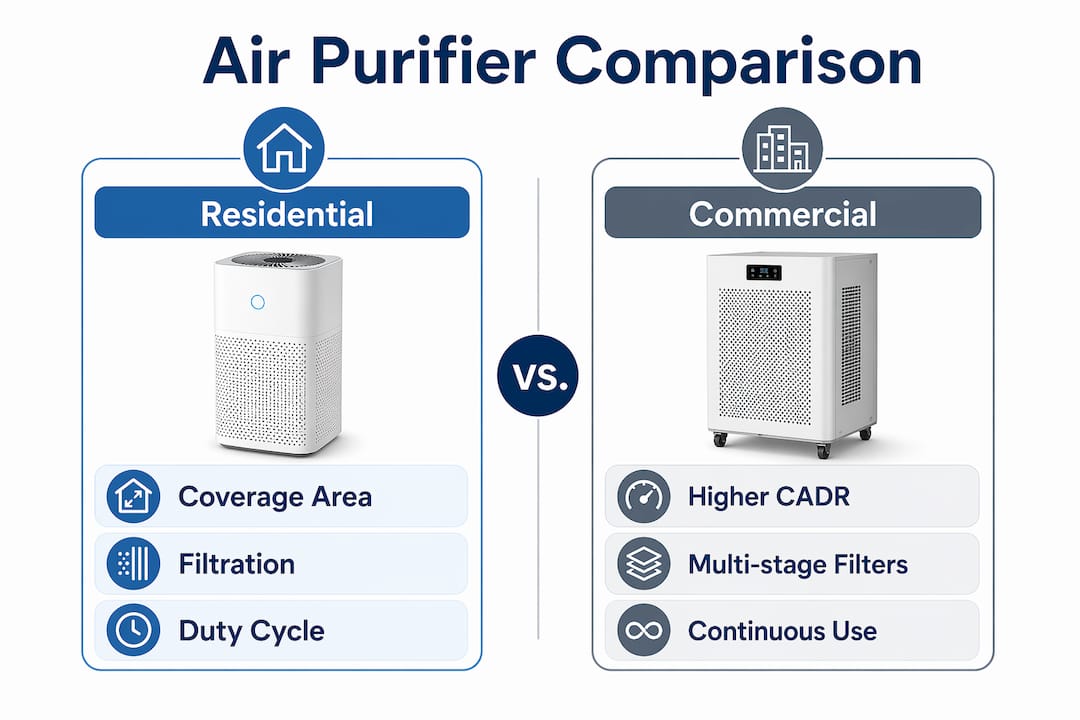
Commercial air purifiers differ from residential units in three measurable ways: airflow capacity, filtration complexity, and build durability. A residential unit typically handles 200 to 400 square feet at one or two air changes per hour (ACH). A commercial system must process thousands of cubic feet per minute to serve open warehouses, multi-floor offices, or healthcare corridors where occupancy density multiplies pollutant output continuously.
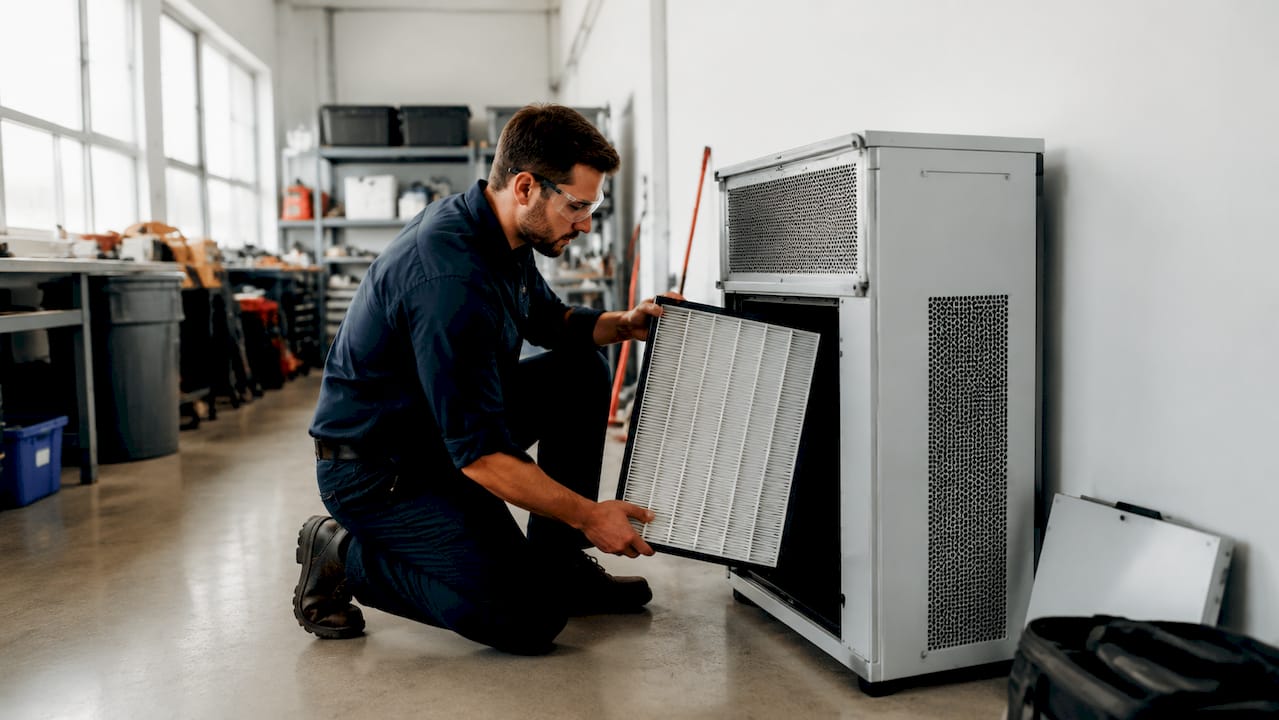
Multi-stage filtration in commercial purifiers combines true HEPA filters with activated carbon layers to target particulates, volatile organic compounds (VOCs), odors, and biological contaminants simultaneously. Residential units rarely include both stages at commercial-grade capacity. That gap matters in environments like manufacturing floors, where VOC concentrations from adhesives or coatings can spike within minutes of a shift change.
Durability is the third differentiator. Commercial units run continuously, often 24 hours a day, seven days a week. They are engineered with industrial-grade motors, reinforced filter housings, and modular designs that allow filter replacement without shutting down the entire system. A residential unit running on the same schedule would fail within weeks.
| Feature | Residential unit | Commercial unit |
|---|---|---|
| Coverage area | Up to 600 sq ft | 1,000 to 10,000+ sq ft |
| ACH rating | 1 to 2 | 4 to 20 depending on application |
| Filtration stages | 1 to 2 (basic HEPA or carbon) | 3 to 5 (HEPA, carbon, UV, pre-filter) |
| Runtime design | Intermittent use | Continuous 24/7 operation |
| Maintenance cycle | Every 6 to 12 months | Every 1 to 3 months under heavy load |
Pro Tip: When evaluating commercial purifiers, request the CADR rating in cubic feet per minute, not just square footage coverage. Square footage figures assume standard 8-foot ceilings. A warehouse with 20-foot ceilings needs a unit rated for roughly 2.5 times the floor area.
How do facility size, air volume, and ACH affect purifier selection?
Floor square footage is the wrong starting metric for commercial purifier selection. The correct calculation multiplies floor area by ceiling height to get total air volume in cubic feet, then determines how many times per hour that volume must be fully cycled through the purifier. That figure is the ACH rate, and it varies significantly by building type.
The required ACH rates by setting break down as follows:
- Standard offices: 4 to 6 ACH, accounting for moderate occupancy and typical office pollutants like printer toner, cleaning chemicals, and CO2 buildup.
- Retail and hospitality spaces: 6 to 8 ACH, where foot traffic introduces outdoor particulates, food odors, and biological contaminants from high-volume public contact.
- Healthcare facilities: up to 15 to 20 ACH to meet infection control standards, particularly in procedure rooms and patient wards where airborne pathogen control is a regulatory requirement.
- Manufacturing and industrial spaces: 8 to 12 ACH minimum, with higher rates in areas generating chemical fumes, metal particulates, or combustion byproducts.
Occupancy density compounds these numbers. A conference room that holds 40 people during peak hours generates far more CO2, moisture, and biological particulates than the same room at 10% capacity. Facility managers who size purifiers based on average occupancy rather than peak occupancy create a system that performs adequately most of the time and fails exactly when it matters most.
Airflow patterns inside the building add another layer of complexity. Dead zones near corners, obstructions from furniture, and HVAC pressure differentials all affect how efficiently a purifier can cycle air through a space. Analyzing occupancy, furniture layout, and pollutant sources before finalizing purifier placement is the difference between a system that works and one that looks good on paper.
Pro Tip: Size your commercial purification system to 120% of calculated capacity rather than exact requirements. That buffer covers peak load spikes, filter degradation between replacement cycles, and any unit taken offline for servicing without leaving the space unprotected.
What are the health and business benefits of large-capacity purifiers?
The health case for commercial air purification is direct and well-documented. HEPA filters capture 99.97% of airborne particles as small as 0.3 microns, including dust, pollen, mold spores, and many airborne pathogens. For employees with asthma or allergies, that filtration level reduces trigger exposure significantly during every working hour.
The business case is equally concrete:
- Reduced IAQ complaints: Improved air quality from purifiers directly correlates with fewer sick days and higher occupant satisfaction scores, both measurable outcomes that affect operational costs.
- Lower absenteeism: Cleaner air reduces the spread of airborne viruses and bacteria, which is particularly relevant in open-plan offices where one sick employee can affect dozens of colleagues within hours.
- Regulatory compliance: ASHRAE Standard 62.1 governs ventilation rates for commercial buildings in the United States. Facilities that supplement HVAC with high-capacity air purification are better positioned to meet and exceed those thresholds as standards tighten.
- Productivity gains: Research consistently links air quality to employee productivity, with cognitive performance measurably declining in high-CO2 and high-particulate environments.
- Liability reduction: Documented air quality management reduces exposure to employee health complaints and related legal or HR costs.
“Investing in large-capacity air purification is not a wellness perk. It is a facility management decision with direct financial returns through reduced absenteeism, lower complaint rates, and regulatory compliance.”
The HEPA standard also matters for virus transmission control. Particles carrying respiratory viruses typically range from 0.1 to 5 microns. A true HEPA filter operating at commercial CADR rates removes a substantial portion of those particles from circulation, reducing transmission risk in densely occupied spaces like call centers, schools, and healthcare waiting rooms.
What should facility managers know about maintenance and operating costs?
The purchase price of a commercial air purifier represents a fraction of its total cost of ownership. Filter replacement schedules and proper installation are the two most critical factors in sustained performance. A clogged HEPA filter does not just reduce efficiency. It reverses airflow dynamics and can push trapped contaminants back into the space.
Key operational considerations for facility managers include:
- Filter replacement frequency: Under continuous commercial use, pre-filters need replacement every one to three months. True HEPA filters typically last six to twelve months depending on particulate load. Activated carbon layers may need replacement every three to six months in high-VOC environments.
- Energy consumption: Commercial purifiers running 24/7 add meaningfully to electricity costs. ENERGY STAR certified units save thousands of dollars over their operational lifespan compared to non-certified equivalents at the same CADR output.
- Smart controls and monitoring: Modern commercial systems include real-time air quality sensors, filter life indicators, and remote management interfaces. These features prevent the most common operational failure: running a degraded filter past its effective lifespan because no one tracked the replacement schedule.
- Placement and installation: Units positioned incorrectly relative to HVAC vents, high-traffic zones, or pollutant sources operate at a fraction of their rated capacity. Professional installation with a site assessment is not optional for large-scale deployments.
- Total cost of ownership planning: Budget for filter consumables, energy costs, and annual servicing when evaluating competing systems. A unit that costs 30% less upfront but uses 50% more energy and requires monthly filter changes will cost significantly more over a three-year period.
Pro Tip: Build a maintenance workflow for your purifiers into your facility management calendar before installation, not after. Reactive maintenance on commercial air purification systems almost always means a period of degraded performance that defeats the investment.
Key takeaways
Large-capacity commercial air purification delivers measurable health, compliance, and financial returns when sized, installed, and maintained correctly.
| Point | Details |
|---|---|
| Size by air volume, not floor area | Multiply floor area by ceiling height and match purifier CADR to required ACH for your building type. |
| Plan for 120% capacity | Oversizing by 20% covers peak loads, filter degradation, and maintenance downtime without gaps in coverage. |
| HEPA filtration is the baseline | True HEPA filters capture 99.97% of particles at 0.3 microns, making them the minimum standard for commercial health protection. |
| Total cost of ownership drives decisions | Factor in energy costs, filter replacement cycles, and ENERGY STAR certification before comparing purchase prices. |
| Maintenance schedules determine outcomes | A neglected commercial purifier underperforms regardless of its rated specifications. |
The sizing mistake I see facility managers make most often
I have reviewed air quality setups in offices, clinics, and manufacturing facilities across a range of building types, and the same error appears repeatedly. Facility managers purchase a unit rated for the floor area of the space, install it in a corner, and assume the job is done. Three months later, IAQ complaints have not dropped, and the unit is running at full speed against a filter that is already 60% saturated.
The problem is almost never the equipment. It is the selection process. Specs on a product sheet describe ideal conditions: standard ceiling height, no obstructions, moderate occupancy, clean starting air. Real commercial spaces have none of those conditions. A 5,000-square-foot open office with 14-foot ceilings and 80 employees at peak capacity needs a system sized for that specific scenario, not for a generic 5,000-square-foot room.
The second mistake is treating air purification as a one-time decision. Occupancy changes. Renovation work introduces new particulates and VOCs. Seasonal shifts affect outdoor air infiltration rates. The right selection process includes a reassessment trigger, not just an initial calculation. I recommend scheduling a formal air quality review every 12 months and after any significant change to the space or its use.
The facilities that get this right share one habit: they treat air quality as an ongoing operational metric, not a checkbox. They track filter replacement dates, monitor real-time air quality readings, and adjust purifier placement when occupancy patterns shift. That discipline is what separates a system that delivers on its promise from one that just occupies floor space.
— Soldierboy
How Cowayswaterpurifier can help you find the right commercial air purifier
Cowayswaterpurifier has built a detailed 2026 air purifier selection guide that walks facility managers through the key criteria for commercial and large-space applications, from CADR calculations to multi-stage filtration comparisons. The guide covers health-focused selection criteria that align with ASHRAE standards and occupancy-based sizing.
For facility managers ready to move from research to action, the Coway Air Care product catalog includes commercial-grade models with true HEPA filtration, activated carbon stages, and ENERGY STAR certified options designed for continuous operation. Each listing includes detailed specifications to match your space requirements directly. Cowayswaterpurifier also provides installation and maintenance support, so the investment performs at its rated capacity from day one.
FAQ
What is a large-capacity air purifier for commercial use?
A large-capacity commercial air purifier is a system rated to process thousands of cubic feet per minute, designed for continuous operation in spaces exceeding 1,000 square feet. Unlike residential units, these systems use multi-stage filtration including true HEPA and activated carbon to address the diverse contaminants found in business environments.
How do I calculate the right purifier size for my facility?
Multiply your floor area by ceiling height to get total air volume, then select a purifier with a CADR rating that achieves your required ACH rate. Healthcare facilities typically need 15 to 20 ACH, while standard offices require 4 to 6 ACH.
Why can’t I just use multiple residential air purifiers instead?
Residential units are not built for continuous 24/7 operation and lack the filtration capacity to handle commercial pollutant loads. Running multiple small units also creates uneven air distribution and higher combined energy costs compared to a properly sized commercial system.
How often do commercial air purifier filters need replacement?
Under continuous commercial use, pre-filters need replacement every one to three months, HEPA filters every six to twelve months, and activated carbon layers every three to six months in high-VOC environments. Neglecting these schedules causes performance to drop sharply regardless of the unit’s rated specifications.
Does improved air quality actually affect employee productivity?
Research links high indoor CO2 levels and elevated particulate concentrations to measurable declines in cognitive performance and increased absenteeism. Facilities with properly maintained commercial air purification report fewer IAQ complaints and higher occupant satisfaction, both of which translate to lower operational costs over time.
Recommended
- Why Businesses Need Air Purification: 2026 Guide – Coway Water Purifier
- How to select large capacity purifiers for home water – Coway Water Purifier
- How Air Purifiers Protect Workplace Health and Safety – Coway Water Purifier
- Role of Air Purifiers in U.S. Business Wellness – Coway Water Purifier
