
Uncategorized
Role of Air Purifiers in U.S. Business Wellness
Feb
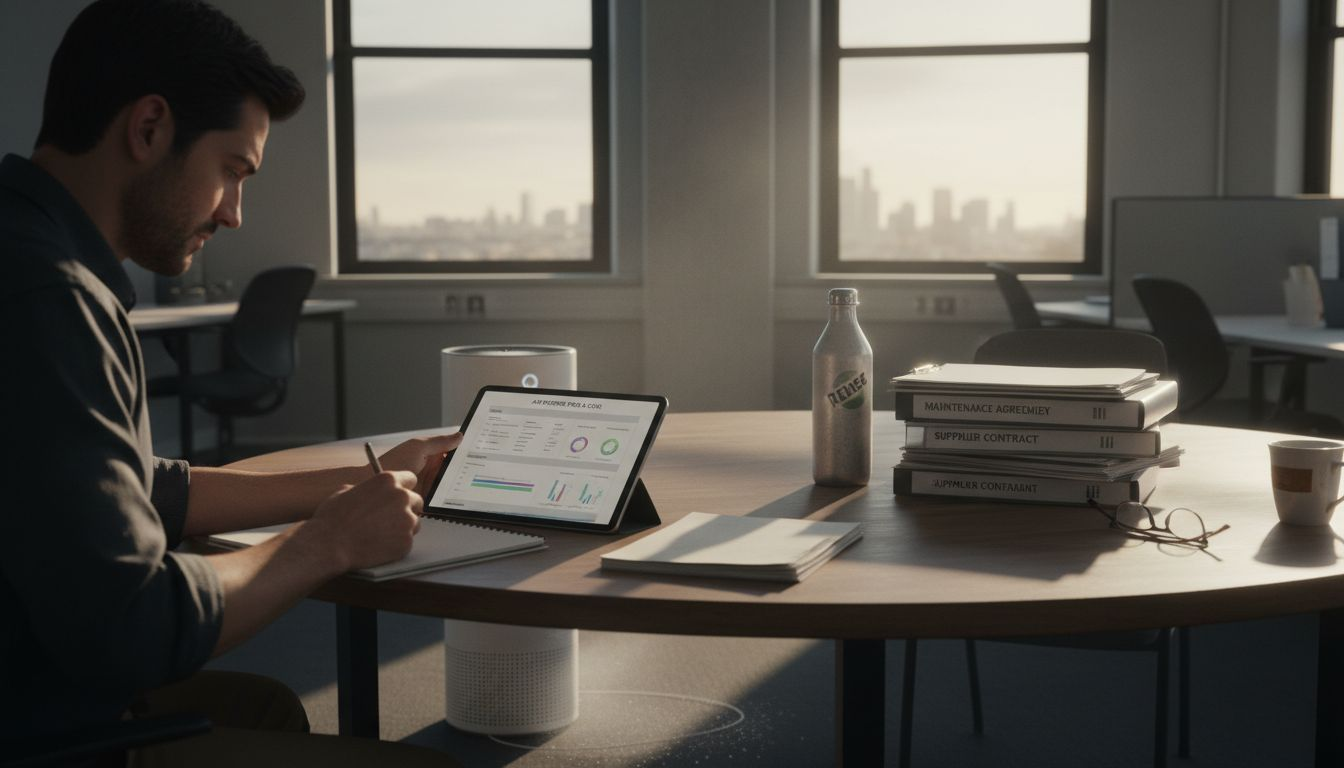
Keeping your workspace healthy can be a daily challenge, especially in busy restaurants and offices across the United States. Poor indoor air often leads to more sick days, discomfort, and stress for both employees and customers. Air purifiers equipped with HEPA filtration are proven to capture particles as small as 0.3 microns, helping reduce allergens and other contaminants that traditional ventilation misses. This guide shows how modern air purification strategies create safer business environments while supporting long-term wellness and productivity.
Table of Contents
- Air Purifiers Defined For Business Use
- Types Of Air Purifiers And Filtration Technologies
- How Air Purifiers Improve Workplace Health
- Regulatory Standards On Indoor Air Quality
- Costs, Risks, And Choosing The Right System
Key Takeaways
| Point | Details |
|---|---|
| Investment in Air Quality | Professional air purifiers enhance workplace health and productivity by providing cleaner indoor air. |
| Technology Considerations | Prioritize models with certified HEPA filtration and independent performance validation when choosing air purifiers. |
| Health Benefits | Effective air purification can lead to a significant reduction in allergy symptoms and respiratory issues among employees. |
| Regulatory Compliance | Ensure air purification systems meet federal standards to safeguard workplace health and comply with regulatory requirements. |
Air Purifiers Defined for Business Use
Air purifiers for business settings are sophisticated indoor air quality management devices designed to systematically remove harmful airborne contaminants from commercial environments. Federal regulations define air cleaners as electrically-powered, self-contained units engineered to eliminate particulates, volatile organic compounds, and microorganisms from indoor spaces.
These advanced filtration systems come in two primary configurations for business applications:
- Portable units for individual rooms or workspaces
- HVAC-integrated systems for comprehensive building air treatment
The core functionality of commercial air purifiers centers on filtering and sanitizing indoor air through multiple technological approaches. HEPA filtration stands out as a premier standard, capable of capturing microscopic particles that traditional ventilation systems might miss. These devices operate by drawing contaminated air through multiple filtration layers, trapping pollutants, allergens, and potentially harmful microorganisms before recirculating cleaned air back into the workspace.
Key technical specifications for business-grade air purifiers typically include:
- Filtration efficiency rating
- Air exchange rate per hour
- Coverage area dimensions
- Noise level during operation
- Energy consumption metrics
Professional air purifiers represent a strategic investment in workplace health and productivity, transforming indoor environments into cleaner, safer spaces for employees.
Pro tip: When selecting a commercial air purifier, prioritize models with certified HEPA filtration and look for independent testing documentation that validates performance claims.
Types of Air Purifiers and Filtration Technologies
Commercial air purification technologies have evolved dramatically, offering businesses multiple sophisticated approaches to improving indoor air quality. Air purification technologies vary primarily by filter type and specific filtration mechanisms designed to address different airborne contaminants in workplace environments.
The primary types of air purification technologies include:
- Mechanical Filtration
- HEPA filters
- Pre-filters
- Carbon filters
- Electronic Air Cleaning
- Ionizers
- Electrostatic precipitators
- Hybrid Systems
- Combination filter approaches
HEPA filtration represents the gold standard in air purification, capable of capturing 99.97% of particles as small as 0.3 microns. These advanced filters use intricate mesh structures to trap microscopic pollutants, including dust, pollen, mold spores, and bacteria, making them particularly effective for businesses concerned with maintaining pristine indoor air quality.
Electronic air cleaning technologies offer alternative approaches, though they come with specific considerations:
Here is a comparison of major commercial air purifier technologies and their workplace impact:
| Technology Type | Main Filtration Method | Notable Advantages | Potential Concerns |
|---|---|---|---|
| HEPA Filtration | Dense mesh captures particles | Removes 99.97% of fine particles | Requires periodic filter changes |
| Ionizer | Releases charged ions to bind particles | Removes smaller particles not trapped by filters | May create low ozone levels |
| Electrostatic Precipitator | Electrically charges and collects particles | Washable plates reduce filter waste | Possible ozone byproduct |
| Activated Carbon | Adsorption of gases/odors | Reduces chemical VOCs and odors | Needs regular carbon replacement |
- Ionizers generate charged particles to remove contaminants
- Electrostatic precipitators use electrical charges to trap particles
- Ozone generators are generally discouraged due to potential health risks
Advanced air purification is not just about removing particles, but creating a comprehensive strategy for workplace health and environmental management.
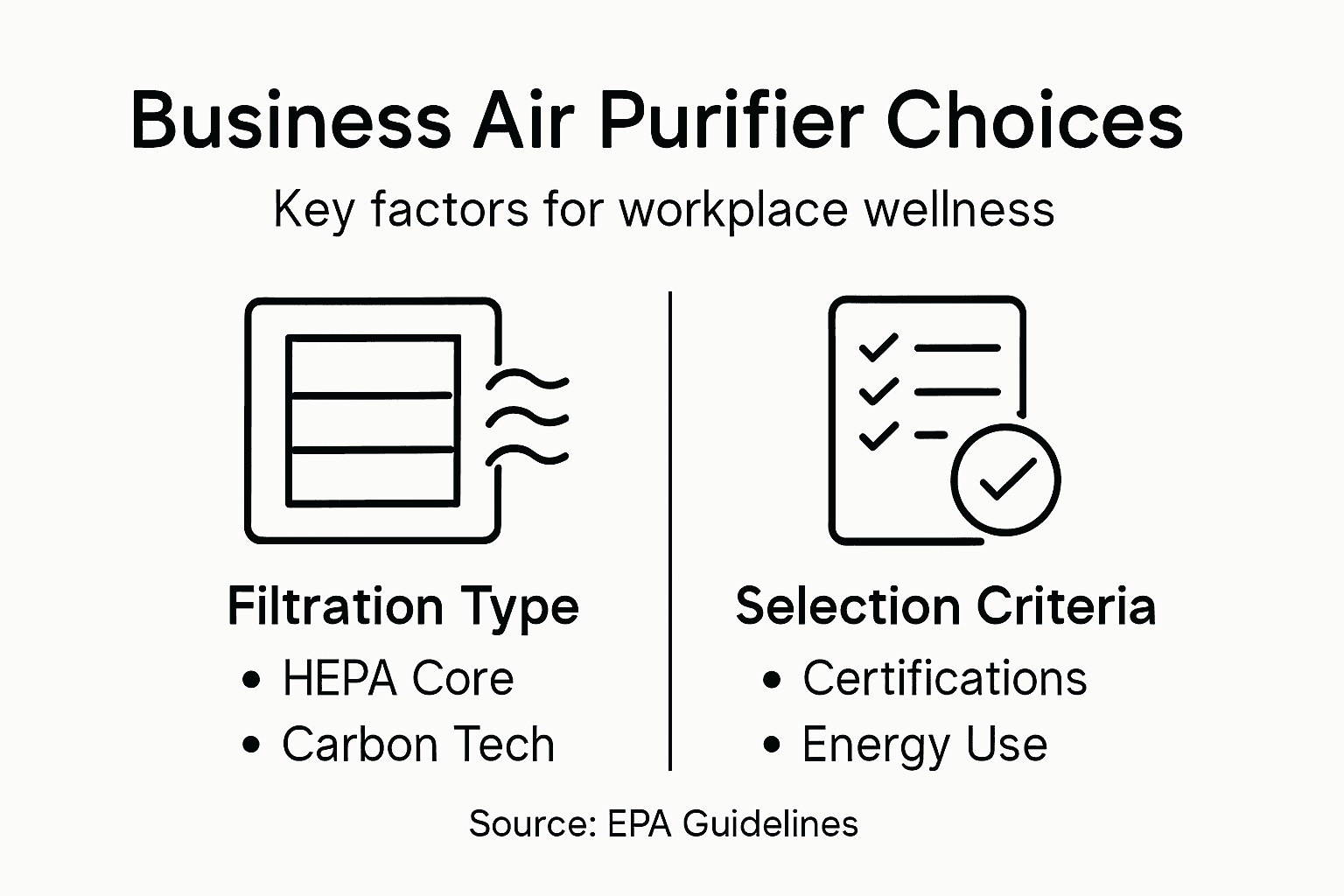
Key performance metrics for selecting air purification systems include:
- Filtration efficiency percentage
- Air exchange rate
- Coverage area
- Noise levels
- Energy consumption
- Maintenance requirements
Pro tip: When evaluating air purification technologies for your business, prioritize systems with documented performance metrics and independent certification from recognized indoor air quality organizations.
How Air Purifiers Improve Workplace Health
Modern businesses are increasingly recognizing the critical role of indoor air quality in maintaining employee health and productivity. Air purifiers help remove airborne allergens and contaminants that can significantly impact workplace wellness and overall employee performance.
The primary health benefits of workplace air purification include:
- Respiratory Health Protection
- Reduction of asthma and allergy triggers
- Removal of fine particulate matter
- Mitigation of respiratory irritants
- Infectious Disease Prevention
- Filtering airborne viruses and bacteria
- Reducing transmission of communicable illnesses
- Overall Workplace Wellness
- Improved employee comfort
- Enhanced cognitive performance
- Decreased sick day occurrences
HEPA filtration technology stands at the forefront of workplace air purification, capable of capturing microscopic particles as small as 0.3 microns. These advanced systems effectively trap potentially harmful contaminants including dust, pollen, mold spores, and airborne pathogens that can compromise employee health.
The impact of clean air extends beyond immediate health considerations:
- Reduced respiratory symptoms
- Enhanced mental clarity and focus
- Lower stress levels
- Decreased likelihood of workplace illness transmission
- Improved overall employee well-being
Clean air is not a luxury, but a fundamental requirement for a healthy and productive workplace environment.
Potential workplace health improvements from air purification include:
- 30% reduction in allergy-related symptoms
- Decreased respiratory irritations
- Improved overall indoor air quality
- Enhanced employee productivity
- Lower healthcare-related costs
Pro tip: Conduct regular indoor air quality assessments and choose air purification systems with multi-stage filtration to maximize workplace health benefits.
Regulatory Standards on Indoor Air Quality
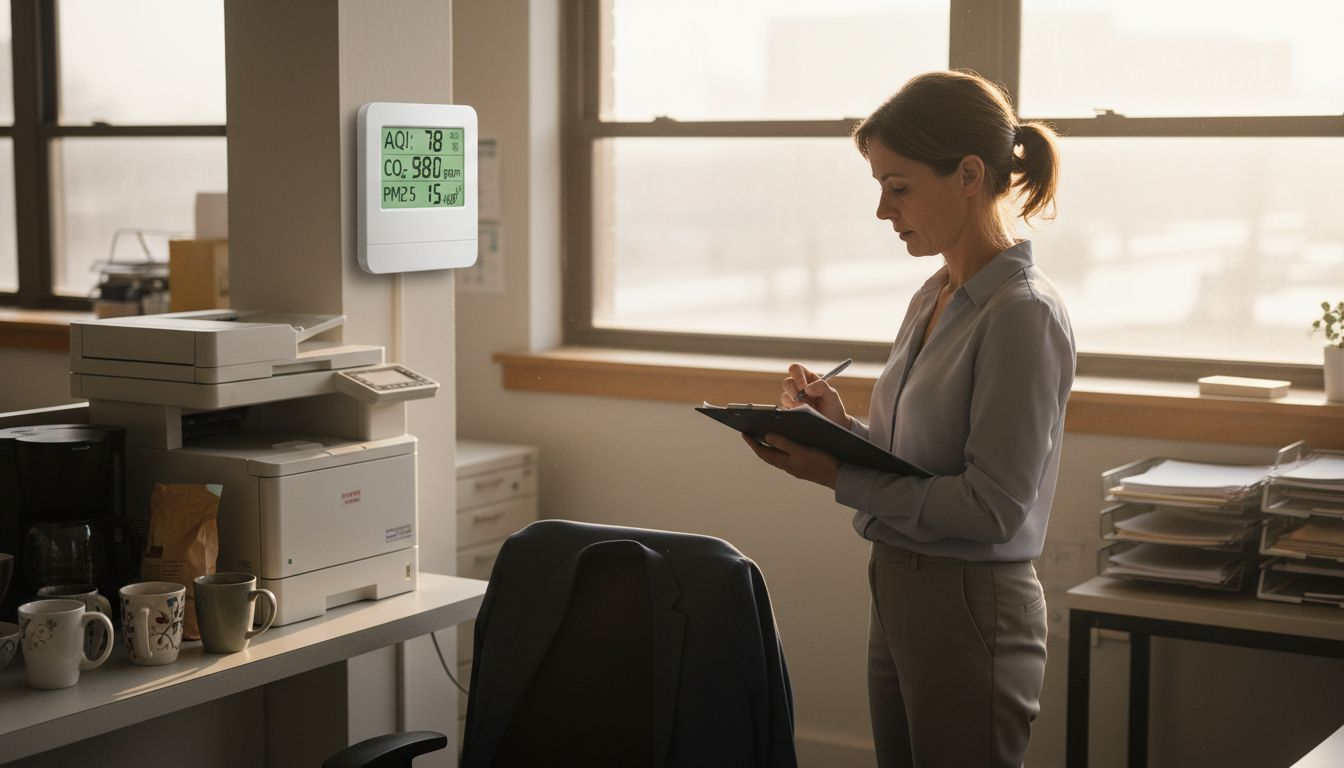
The landscape of indoor air quality regulation in the United States is complex and continually evolving, with multiple federal agencies working to establish and enforce comprehensive standards. The Clean Air Act establishes critical regulatory frameworks that guide indoor air quality management across various commercial and workplace environments.
Key regulatory bodies and their primary responsibilities include:
The following table summarizes regulatory responsibilities for indoor air quality in businesses:
| Agency | Key Focus Area | Typical Business Interaction |
|---|---|---|
| EPA | Sets emissions/IAQ standards | Compliance with pollutant limits |
| DOE | Sets energy and performance rules | Equipment efficiency verification |
| OSHA | Worker air safety regulations | Mandates safe air for employees |
- Environmental Protection Agency (EPA)
- Setting national air quality standards
- Monitoring pollutant levels
- Developing emission guidelines
- Department of Energy (DOE)
- Establishing energy efficiency requirements
- Regulating air cleaner performance standards
- Occupational Safety and Health Administration (OSHA)
- Defining workplace air quality guidelines
- Ensuring worker protection from airborne hazards
Federal energy conservation standards now mandate specific performance criteria for air purification devices. These regulations, effective since 2023, require manufacturers to meet stringent requirements that balance energy efficiency with air cleaning effectiveness. The standards address critical aspects such as:
- Maximum energy consumption levels
- Minimum filtration efficiency
- Ozone emission limitations
- Performance testing protocols
- Reporting and compliance documentation
Regulatory standards are not just bureaucratic requirements, but essential safeguards protecting workplace health and environmental quality.
Compliance mechanisms for businesses include:
- Regular indoor air quality assessments
- Documentation of air purification system specifications
- Verification of equipment meeting federal standards
- Periodic maintenance and performance tracking
- Employee exposure monitoring
Pro tip: Consult with a certified indoor air quality professional to ensure your air purification systems fully comply with the latest federal regulatory standards.
Costs, Risks, and Choosing the Right System
Selecting an appropriate air purification system requires careful consideration of multiple factors beyond initial purchase price. Air purifier selection involves complex cost-benefit analysis that extends well beyond the sticker price, encompassing long-term operational expenses and potential health implications.
Key financial considerations for businesses include:
- Upfront Equipment Costs
- Initial purchase price
- Installation expenses
- Infrastructure modifications
- Ongoing Operational Expenses
- Filter replacement costs
- Energy consumption
- Maintenance requirements
- Potential Savings
- Reduced healthcare expenses
- Improved employee productivity
- Lower absenteeism rates
Health risks represent a critical evaluation parameter when selecting air purification technologies. Certain electronic air cleaning systems can generate harmful byproducts like ozone, which pose significant workplace health hazards. Businesses must prioritize systems with certified safety standards and proven filtration efficacy.
Comprehensive system selection criteria should include:
- Room size compatibility
- Filtration technology performance
- Noise level specifications
- Energy efficiency ratings
- Maintenance accessibility
The most expensive air purifier is not necessarily the most effective; strategic selection matters more than price tag.
Critical risk mitigation strategies:
- Choose HEPA-certified systems
- Verify independent testing documentation
- Assess manufacturer safety certifications
- Implement regular maintenance protocols
- Monitor system performance consistently
Pro tip: Conduct a comprehensive workplace air quality assessment before purchasing to ensure the selected air purification system precisely matches your specific environmental requirements.
Elevate Your Workplace Wellness with Advanced Air Purifiers
Maintaining clean and healthy indoor air is essential for any business aiming to protect employee health and boost productivity. This article highlights the critical role of HEPA filtration and multi-stage air purification technologies in reducing allergens, airborne pathogens, and respiratory irritants. If you are seeking a reliable solution to transform your workspace into a safer environment that complies with the latest standards, explore the premium Coway air purifiers available on our site.
Discover how Coway’s scientifically designed air purifiers with advanced filtration and low energy consumption can meet the unique challenges of commercial indoor air quality. Act now to protect your team and create a thriving business environment by visiting Coway Water Purifier. For more insights, check our full range in the Uncategorized Archives – Coway Water Purifier and start improving air quality today.
Frequently Asked Questions
What are air purifiers and how do they work in a business environment?
Air purifiers are devices designed to remove harmful airborne contaminants from indoor spaces. They operate by drawing contaminated air through multiple filtration layers, trapping pollutants such as dust, allergens, and microorganisms, and then recirculating cleaned air back into the environment.
What types of air purification technologies are available for businesses?
The main types of air purification technologies for businesses include mechanical filtration (like HEPA filters), electronic air cleaning (such as ionizers and electrostatic precipitators), and hybrid systems that combine different filtration approaches to address various airborne contaminants.
How can air purifiers improve employee health and productivity?
Air purifiers enhance employee health by reducing airborne allergens and contaminants, thus lowering respiratory irritations, preventing infectious diseases, and improving overall workplace wellness. Clean air can lead to better cognitive performance and reduced sick days, ultimately enhancing productivity.
What should businesses consider when selecting an air purification system?
When choosing an air purification system, businesses should consider factors such as filtration efficiency, air exchange rate, coverage area, noise levels, energy consumption, and maintenance requirements. Prioritizing models with certified HEPA filtration and independent testing documentation is also recommended.
Recommended
- 8 Key Commercial Air Purifier Benefits You Should Know – Coway Water Purifier
- 7 Key Benefits of Air Purifiers for Urban Homeowners – Coway Water Purifier
- How Air Purifiers Remove Allergens at Home – Coway Water Purifier
- Why Invest in Air Purifiers for Healthy Homes – Coway Water Purifier
