
Uncategorized
Why Invest in Air Purifiers for Healthy Homes
Dec
Over 80 percent of American homes struggle with indoor air pollution, much of it invisible yet threatening to family health. For health-conscious homeowners, every breath matters and the quest for cleaner indoor air is more urgent than ever. This guide clears up common myths, explains the real science behind air purifiers, and helps you confidently choose solutions for safer, healthier living spaces.
Table of Contents
- Air Purifiers Explained And Common Myths
- Types Of Air Purification Technologies
- How Air Purifiers Improve Indoor Health
- Key Features And Certifications To Check
- Investment Considerations And Cost Benefits
Key Takeaways
| Point | Details |
|---|---|
| Air Purifiers Vary in Functionality | Different technologies cater to specific contaminants, such as HEPA for particles and activated carbon for odors. |
| Myths Surrounding Performance | Air purifiers require realistic expectations; effectiveness hinges on room size, filter quality, and maintenance. |
| Health Benefits Are Comprehensive | Improved indoor air quality supports respiratory health and may reduce costs associated with medical care for respiratory illnesses. |
| Consider Certifications and Ratings | Look for recognized certifications like AHAM, CARB, and ENERGY STAR to ensure quality and performance in air purifiers. |
Air Purifiers Explained and Common Myths
Air purifiers represent an essential technology for improving indoor air quality, yet misconceptions about their functionality persist. Understanding the real science behind air purification technologies helps homeowners make informed decisions about protecting their family’s respiratory health.
Contrary to popular belief, not all air purifiers work identically. Different devices utilize various filtration methods such as HEPA filters, activated carbon, UV light, and ionization. Each technology targets specific airborne contaminants – from dust and pollen to microscopic particles and volatile organic compounds. Some purifiers excel at removing allergens, while others specialize in neutralizing odors or capturing ultrafine particulate matter.
Numerous myths surround air purifier performance. Many people mistakenly assume that purchasing an air purifier guarantees instant, complete air cleansing. The reality is more nuanced, with effectiveness depending on factors like room size, filter quality, air exchange rate, and consistent maintenance. A high-quality air purifier requires proper placement, regular filter replacement, and realistic expectations about its capabilities.
Pro Tip: When selecting an air purifier, calculate your room’s square footage and choose a device rated for at least 20% more coverage to ensure optimal air circulation and filtration efficiency.
Types of Air Purification Technologies
Air purification technologies represent a sophisticated approach to improving indoor air quality, with multiple strategies designed to target different types of airborne contaminants. The spectrum of air purifying technologies ranges from passive filtration to active air treatment methods, each offering unique benefits for respiratory health and environmental cleanliness.
Traditional air purification typically involves several core technologies. HEPA filters remain the gold standard for mechanical filtration, capturing particles as small as 0.3 microns with 99.97% efficiency. Activated carbon filters complement HEPA technology by adsorbing chemical pollutants, odors, and gaseous contaminants. More advanced systems incorporate UV-C light and photocatalytic oxidation, which actively neutralize biological contaminants like bacteria, viruses, and mold spores by disrupting their cellular structures.
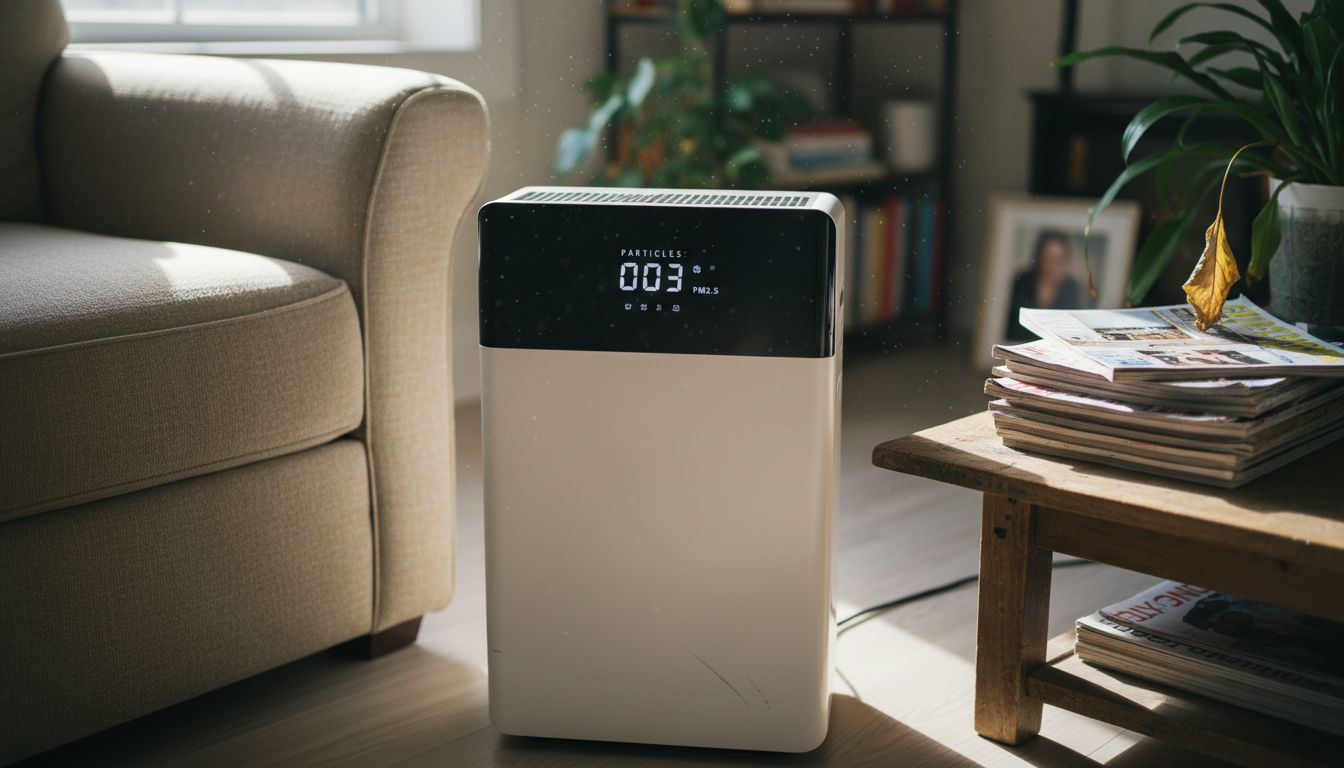
Emerging air purification technologies showcase innovative approaches to comprehensive indoor air treatment. Ionization technologies generate charged particles that bind with airborne pollutants, causing them to settle out of the air. Hybrid systems now combine multiple purification methods – such as HEPA filtration with UV light and activated carbon – to provide multilayered protection against diverse air quality challenges. These sophisticated approaches allow homeowners to address particulate matter, chemical pollutants, biological contaminants, and odors through integrated air treatment strategies.
Here’s a concise comparison of common air purification technologies and the contaminants they target:
| Technology | Best For | Limitation |
|---|---|---|
| HEPA Filter | Dust, pollen, pet dander | Does not remove odors |
| Activated Carbon | Odors, VOCs, gases | Limited allergen removal |
| UV-C Light | Viruses, bacteria, mold | Less effective on dust |
| Ionization | Fine particles, smoke | May generate ozone |
| Hybrid Systems | Broad contaminant range | Higher initial cost |
Pro Tip: When selecting an air purification system, prioritize technologies that offer multiple filtration stages and can address specific air quality concerns in your living environment.
How Air Purifiers Improve Indoor Health
Systematic research demonstrates the profound impact of air purifiers on human health, revealing far more than simple dust removal. Indoor air quality directly influences respiratory function, cardiovascular wellness, and overall physiological performance, making air purification a critical component of preventive health strategies.
Modern air purifiers target multiple health risks by removing microscopic pollutants that traditional ventilation cannot eliminate. These devices effectively capture particulate matter like dust, pollen, pet dander, and microorganisms, reducing respiratory irritation and potential triggers for conditions such as asthma, allergies, and chronic inflammation. By filtering particles as small as 0.3 microns, high-performance air purifiers create a protective barrier against airborne pathogens and environmental contaminants that can compromise immune system function.
Groundbreaking research from Harvard reveals air purifiers impact health beyond respiratory systems, demonstrating connections to gut microbiome health and long-term wellness. Advanced purification technologies can reduce inflammatory responses, potentially mitigating risks associated with prolonged exposure to indoor air pollution. This holistic approach to air quality management supports not just immediate respiratory comfort but also contributes to broader physiological resilience and preventive health maintenance.
Pro Tip: Position your air purifier centrally in rooms where you spend the most time, ensuring maximum air circulation and comprehensive filtration coverage.
Key Features and Certifications to Check
Understanding the critical certifications for air purifiers provides essential guidance for making informed purchasing decisions. Consumer safety and performance standards play a pivotal role in determining an air purifier’s effectiveness, with multiple authoritative organizations establishing rigorous benchmarks for indoor air treatment technologies.
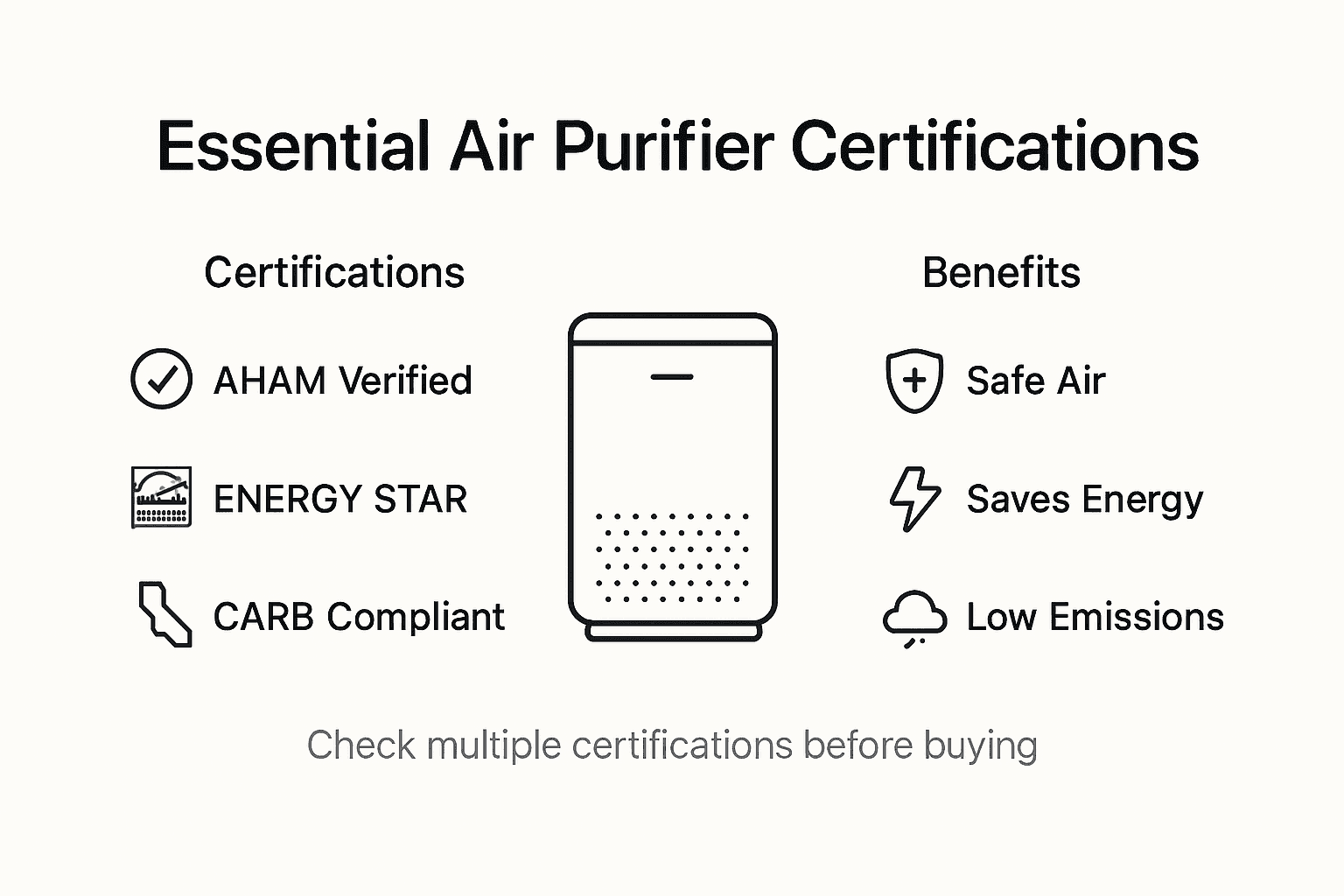
Key certifications serve as crucial indicators of an air purifier’s quality and reliability. The Association of Home Appliance Manufacturers (AHAM) Verifide certification provides the Clean Air Delivery Rate (CADR) rating, which measures an air purifier’s effectiveness in removing specific pollutants like dust, pollen, and smoke. The California Air Resources Board (CARB) certification ensures devices meet strict ozone emission standards, protecting consumers from potentially harmful secondary pollutants generated by some air purification technologies.
Additional critical certifications include ENERGY STAR for energy efficiency, which helps consumers identify models that reduce electricity consumption while maintaining high performance. The Asthma and Allergy Foundation of America (AAFA) Certification offers crucial validation for individuals with respiratory sensitivities, confirming that a device effectively reduces airborne allergens and irritants. HEPA certification remains another gold standard, indicating that a filter can capture 99.97% of particles as small as 0.3 microns, providing comprehensive protection against microscopic contaminants.
The following table summarizes key air purifier certifications and what they represent:
| Certification | Focus Area | Benefit to Buyer |
|---|---|---|
| AHAM Verifide | CADR, performance | Trusted effectiveness info |
| CARB | Ozone emissions | Ensures low ozone output |
| ENERGY STAR | Energy efficiency | Lower operating expenses |
| AAFA | Allergen reduction | Verified for sensitivities |
| HEPA Certified | Particle filtration | Confirms high filtration |
Pro Tip: Always cross-reference multiple certifications and compare CADR ratings to ensure you select an air purifier that meets your specific indoor air quality needs.
Investment Considerations and Cost Benefits
Economic research demonstrates that investing in air purifiers represents a strategic long-term health investment, extending far beyond simple equipment purchase. Health economics reveals that proactive air quality management can significantly reduce potential medical expenses associated with respiratory and cardiovascular complications caused by indoor air pollution.
The total cost of ownership for an air purifier encompasses multiple factors beyond the initial purchase price. Ongoing expenses include filter replacements, electricity consumption, and maintenance, which typically range from $100 to $300 annually. High-efficiency models might have higher upfront costs but deliver substantial long-term savings through reduced energy consumption, longer filter lifespans, and more comprehensive air filtration capabilities. Consumers should calculate the Annual Performance Cost, which combines purchase price, replacement filters, and electricity usage, to understand the true financial commitment.
Beyond direct financial considerations, air purifiers provide substantial indirect economic benefits. They can potentially reduce healthcare expenses by minimizing respiratory illnesses, allergic reactions, and chronic inflammation triggered by poor indoor air quality. Individuals with pre-existing conditions like asthma, allergies, or compromised immune systems may experience fewer medical interventions and decreased medication requirements. The preventative health approach represented by quality air purification can translate into significant personal and societal healthcare cost reductions.
Pro Tip: Compare air purifier models using a comprehensive cost-of-ownership calculator, factoring in filter replacement frequency, energy efficiency ratings, and potential healthcare savings.
Protect Your Home with Advanced Air Purification Solutions
Indoor air quality significantly impacts your family’s health. The article highlights common challenges such as airborne allergens, microscopic pollutants, and ineffective air purification myths that can leave your home vulnerable. At Coway Water Purifier, we understand these concerns and offer air purifiers equipped with cutting-edge technologies including HEPA filtration, UV sanitization, and activated carbon to tackle diverse indoor contaminants effectively. Experience clean air that supports respiratory wellness and creates a healthier living environment.
Explore our selection today in the Uncategorized Archives – Coway Water Purifier. Don’t wait to enhance your indoor air quality and protect your loved ones. Visit https://cowayswaterpurifier.com now to find the perfect air purifier tailored to your needs. Take control of your home’s atmosphere with reliable, scientifically advanced solutions available for immediate delivery and installation.
Frequently Asked Questions
What types of air purification technologies should I consider for my home?
Different air purifiers utilize various technologies, including HEPA filters for removing particles, activated carbon filters for odors and gases, UV-C light for neutralizing biological contaminants, and ionization for fine particles. Consider a hybrid system that combines multiple filtration methods for comprehensive air treatment.
How do air purifiers improve health beyond reducing dust?
Air purifiers capture a wide range of airborne pollutants, including allergens, bacteria, and even volatile organic compounds (VOCs). This helps reduce respiratory irritation and may mitigate risks associated with chronic conditions like asthma and allergies.
How can I ensure I select the right air purifier for my needs?
To choose the best air purifier, assess the square footage of the room, look for units with high CADR ratings for specific pollutants, and prioritize certifications like AHAM Verifide and HEPA to ensure effective filtration and low ozone emissions.
What are the ongoing costs associated with owning an air purifier?
The total cost includes the initial purchase price, replacement filters, and energy consumption, typically ranging from $100 to $300 annually. High-efficiency models may involve higher upfront costs but can save money long-term through better energy use and filter longevity.
Recommended
- Why Choose Home Air Purifier: Complete Guide – Coway Water Purifier
- How Air Purifiers Remove Allergens at Home – Coway Water Purifier
- Why Filter Indoor Air: Complete Guide for Homeowners – Coway Water Purifier
- Health Benefits of Air and Water Purification at Home – Coway Water Purifier
- Air purifier vs. venting: What works best, and for what? – ÅBN
