
Uncategorized
How Air Purifiers Remove Allergens at Home
Dec
More than 50 million American adults and children battle allergies each year, making clean indoor air more than just a comfort. With rising concerns about pollution, pollen, and pet dander, many seek ways to keep their homes healthier year-round. Understanding how air purifiers control common allergens helps American families choose solutions that truly ease symptoms and provide lasting relief.
Table of Contents
- Air Purifiers and Allergens Explained
- Types of Air Filtration Technologies
- How Filtration Captures Common Allergens
- Effectiveness for Allergy and Asthma Relief
- Choosing Air Purifiers for Home Use
Key Takeaways
| Point | Details |
|---|---|
| Role of Air Purifiers | Air purifiers significantly reduce indoor allergens, improving respiratory health by filtering out common pollutants like dust mites and pet dander. |
| Effectiveness of HEPA Filters | HEPA filters capture 99.97% of particles as small as 0.3 microns, making them essential for removing microscopic allergens. |
| Health Benefits | Consistent use of air purifiers can alleviate allergy and asthma symptoms by reducing airborne trigger exposure and improving overall air quality. |
| Choosing the Right Purifier | When selecting an air purifier, consider factors like room size, filter type, and additional features like activated carbon and UV-C light for enhanced air cleaning. |
Air Purifiers and Allergens Explained
Air purifiers play a critical role in reducing indoor allergens and creating healthier home environments. According to research from the Institute for Environmental Research and Education (IERE), these devices effectively remove airborne pollutants like dust mites, pet dander, pollen, and mold spores by drawing in air, filtering out contaminants, and releasing cleaner air back into living spaces.
The filtering process involves multiple stages designed to trap and neutralize different types of allergens. HEPA filters, which are considered the gold standard in air purification, can capture microscopic particles as small as 0.3 microns with 99.97% efficiency. This means they can trap common household allergens including pollen, dust mite debris, and pet hair that typically trigger respiratory reactions. The European Centre for Allergy Research Foundation confirms that these purification systems can significantly reduce indoor allergens, potentially alleviating symptoms for individuals suffering from hay fever or allergic asthma.
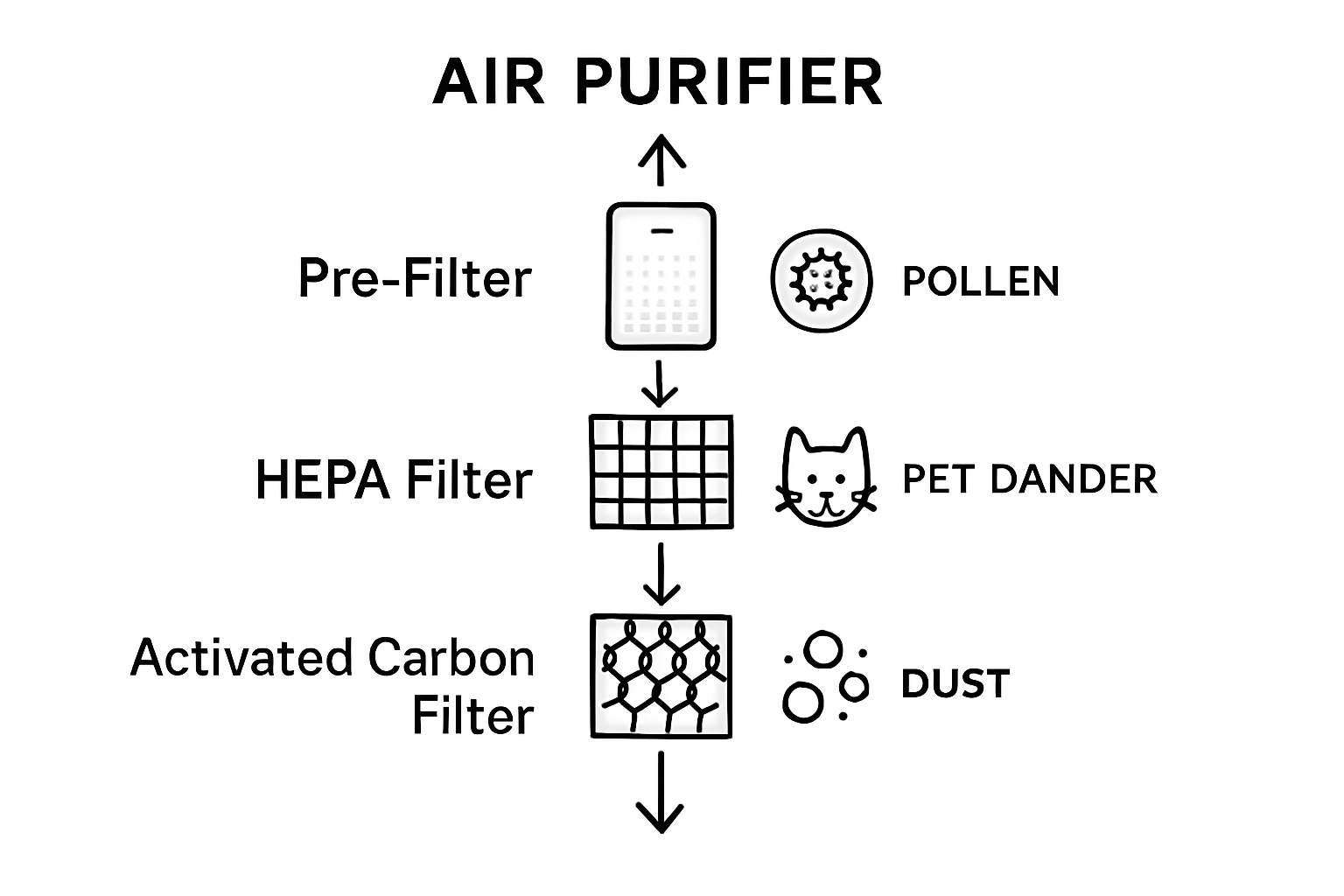
Understanding how air purifiers work requires recognizing their comprehensive approach to cleaning indoor air. Most advanced models incorporate multiple filtration layers:
- Pre-filters that capture large particles like hair and dust
- HEPA filters targeting microscopic allergens
- Activated carbon filters neutralizing odors and chemical pollutants
- UV-C light that can destroy microscopic organisms
By systematically removing these airborne irritants, air purifiers create a cleaner, more breathable indoor environment that supports respiratory health and reduces allergy symptoms. Homeowners seeking relief from persistent allergies can significantly improve their indoor air quality through strategic use of these powerful filtration devices.
Types of Air Filtration Technologies
Air filtration technologies have evolved significantly to address complex indoor air quality challenges. According to the Institute for Environmental Research and Education (IERE), modern air purification systems employ multiple sophisticated filtering techniques that can effectively capture and neutralize diverse airborne contaminants.
The primary air filtration technologies include several advanced mechanisms designed to target different types of pollutants. HEPA filters, which are the most recognized technology, can capture 99.97% of particles as small as 0.3 microns, making them incredibly effective against dust, pollen, and microscopic allergens. Activated carbon filters complement HEPA technology by absorbing gases, odors, and chemical pollutants, creating a comprehensive air cleaning solution.
Additional innovative filtration technologies expand the capabilities of air purification systems:
- Electrostatic precipitators that use electrical charges to remove particles
- UV-C light systems that destroy microorganisms like bacteria and viruses
- Ionic air purifiers that release negatively charged ions to remove airborne particles
- Wet scrubber technologies that use liquid to trap and remove particulate matter
Each filtration technology offers unique advantages, and many advanced air purifiers combine multiple methods to provide comprehensive air cleaning. Homeowners can select systems based on their specific indoor air quality needs, whether targeting allergies, eliminating odors, or reducing potential airborne pathogens. The key is understanding how these technologies work together to create a healthier indoor environment.
How Filtration Captures Common Allergens
Indoor air quality is dramatically impacted by microscopic allergens that can trigger respiratory issues and allergic reactions. According to research from the Institute for Environmental Research and Education, HEPA filters effectively capture at least 99.97% of particles as small as 0.3 microns, creating a powerful defense against common household allergens like pollen, dust mites, pet dander, and mold spores.
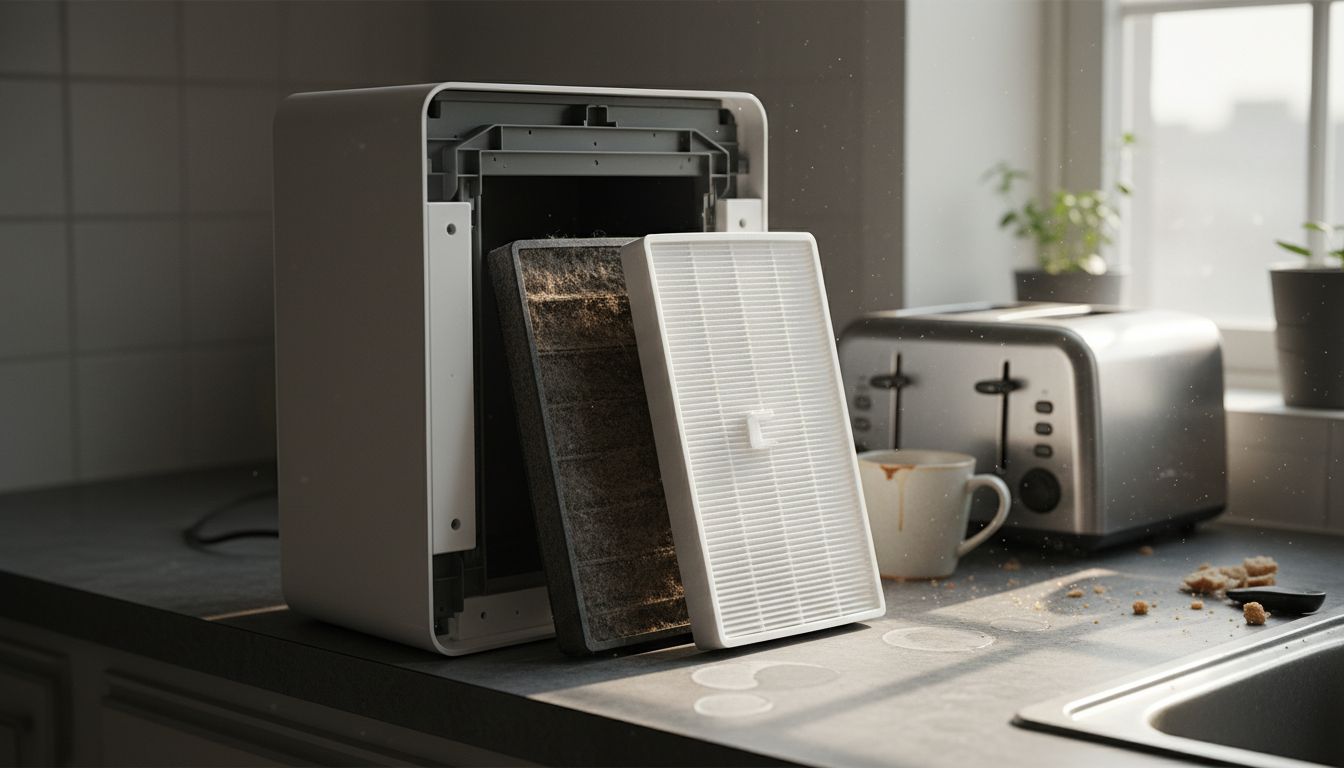
The filtration process works through a sophisticated mechanism that traps and immobilizes airborne particles. HEPA filters utilize a dense network of interwoven fibers that act like a microscopic maze, capturing allergens through multiple interception methods. Particles are trapped through three primary mechanisms: direct interception, where particles stick to filter fibers; inertial impaction, where larger particles cannot navigate around fibers and collide; and diffusion, which captures the smallest particles that move erratically.
Different types of allergens require specific filtration strategies:
- Pollen: Large particles easily trapped by HEPA filter fibers
- Dust mites: Microscopic debris captured through dense fiber networks
- Pet dander: Tiny skin particles intercepted by filter layers
- Mold spores: Trapped before they can spread and reproduce
Air purification technologies draw contaminated air through multiple filter stages, ensuring that clean, filtered air is circulated back into living spaces. By continuously cycling and cleaning indoor air, these systems provide a proactive approach to reducing allergen concentrations, helping individuals with respiratory sensitivities breathe easier and maintain a healthier home environment.
Effectiveness for Allergy and Asthma Relief
Respiratory health is significantly impacted by indoor air quality, making air purifiers a critical tool for individuals struggling with allergies and asthma. A comprehensive multicenter study published in the Yonsei Medical Journal demonstrated that HEPA filter-equipped air purifiers substantially improved symptoms and quality of life for patients with house dust mite-induced allergic rhinitis, providing scientific validation for their therapeutic potential.
The clinical evidence supporting air purifiers extends beyond single symptom relief. Long-term studies have shown remarkable improvements in respiratory conditions. Research published in the International Journal of Environmental Research and Public Health revealed that consistent use of HEPA air purifiers over six months led to improved asthma control and significant reductions in indoor particulate matter levels, offering hope for those managing chronic respiratory challenges.
Key benefits for allergy and asthma sufferers include:
- Reduced airborne trigger exposure: Removing microscopic irritants before they can cause reactions
- Lower inflammation potential: Minimizing particulate matter that can provoke respiratory responses
- Consistent air quality management: Continuous filtration throughout living spaces
- Decreased medication dependence: Potential reduction in symptom management requirements
By creating a cleaner indoor environment, air purifiers offer more than temporary relief. They represent a proactive approach to respiratory health, helping individuals create safer, more breathable living spaces that support long-term wellness and reduce the frequency and intensity of allergy and asthma symptoms.
Choosing Air Purifiers for Home Use
Indoor air quality depends heavily on selecting the right air purification system for your specific needs. Research from the Institute for Environmental Research and Education recommends carefully evaluating key factors like room size, Clean Air Delivery Rate (CADR), and specialized filtration capabilities when choosing an air purifier that will effectively improve your home’s air quality.
The most critical considerations for selecting an air purifier include understanding your specific environmental challenges. True HEPA filters remain the gold standard for comprehensive allergen removal, capable of capturing microscopic particles as small as 0.3 microns. Experts suggest prioritizing air purifiers with additional features like activated carbon filters for odor elimination and UV-C light technology for neutralizing microorganisms, creating a multi-layered approach to air purification.
Key selection criteria for homeowners include:
- Room size compatibility: Match purifier capacity to square footage
- Filtration efficiency: Verify HEPA filter classification
- Noise levels: Consider operation sound, especially for bedrooms
- Additional features:
- Activated carbon filters
- UV-C light sanitization
- Air quality sensors
- Multiple fan speed settings
Beyond technical specifications, homeowners should consider their specific health needs, such as allergies, asthma, or sensitivity to airborne pollutants. By carefully matching an air purifier’s capabilities to individual requirements, you can create a healthier indoor environment that supports respiratory wellness and overall comfort.
Breathe Easier With Advanced Air Purification From Coway
Struggling to keep allergens like dust mites, pollen, and pet dander out of your home can be frustrating and impact your respiratory health. This article highlights how effective air purifiers use multiple filtration stages including True HEPA filters and UV sanitization to trap and neutralize microscopic irritants for cleaner air and relief from allergy symptoms. Now you can experience this scientifically proven protection for yourself by choosing from Coway’s innovative range of air purifiers designed to fit your home’s specific needs.
Discover how Coway’s advanced air purification solutions combine cutting-edge HEPA technology, activated carbon filters, and UV-C sterilization to create a safe and healthy indoor environment. With free delivery, professional installation, and ongoing maintenance options you get not only powerful allergy relief but also trusted service every step of the way. Don’t wait to improve your quality of life. Explore our selection today at Coway Water Purifier or browse through the Uncategorized Archives – Coway Water Purifier to find the perfect purifier for your home.
Frequently Asked Questions
How do air purifiers remove allergens from the air?
Air purifiers remove allergens by drawing in indoor air, filtering it through multiple stages, and releasing cleaner air back into the living space. They utilize technologies like HEPA filters, activated carbon filters, and sometimes UV-C light to trap and neutralize airborne pollutants such as dust mites, pet dander, and pollen.
What types of allergens can HEPA filters effectively capture?
HEPA filters can effectively capture common household allergens including pollen, dust mite debris, pet dander, and mold spores, filtering out particles as small as 0.3 microns with 99.97% efficiency.
Can air purifiers help with respiratory conditions like asthma?
Yes, studies have shown that air purifiers, particularly those equipped with HEPA filters, can significantly improve symptoms for individuals with asthma and allergic rhinitis by reducing airborne trigger exposure and improving indoor air quality over time.
What features should I look for when choosing an air purifier?
When choosing an air purifier, consider factors such as room size compatibility, filtration efficiency (ensuring it has a true HEPA filter), noise levels, and additional features like activated carbon filters for odors and UV-C sanitization for microorganisms.
Recommended
- Why Choose Home Air Purifier: Complete Guide – Coway Water Purifier
- 7 Types of Air Purifiers Every Homeowner Should Know – Coway Water Purifier
- Why Filter Indoor Air: Complete Guide for Homeowners – Coway Water Purifier
- 7 Top Air Purification Features Every Home Needs – Coway Water Purifier
- Eco Friendly Cleaning Tips For Busy European Mums – The Zoofamily
- Master Seasonal Allergen Management for Your Business – Probe IT
- 7 Essential Steps for a Complete Apartment Maintenance Checklist – Guestly Homes
