
Uncategorized
What Is Allergen Filtration? A Practical Home Guide
Jun
TL;DR:
- Allergen filtration captures airborne particles like pollen, pet dander, and mold spores to improve indoor air quality. Using HEPA filters with appropriate ratings and proper system maintenance effectively reduces allergy symptoms and respiratory risks. Combining whole-house HVAC filters with portable purifiers and surface cleaning provides optimal allergy relief and healthier indoor environments.
Allergen filtration is the process of capturing airborne particles like pollen, pet dander, dust mites, and mold spores to deliver cleaner indoor air and reduce allergy symptoms. The industry standard for this process is mechanical air filtration, with HEPA (High Efficiency Particulate Air) filters as the recognized benchmark. Understanding what is allergen filtration means knowing how filters trap particles, which performance metrics actually matter, and how to maintain a system so it works when you need it most. This guide covers all three, with specific numbers and real-world context so you can make a confident decision for your home or workplace.
What is allergen filtration and how does it work?
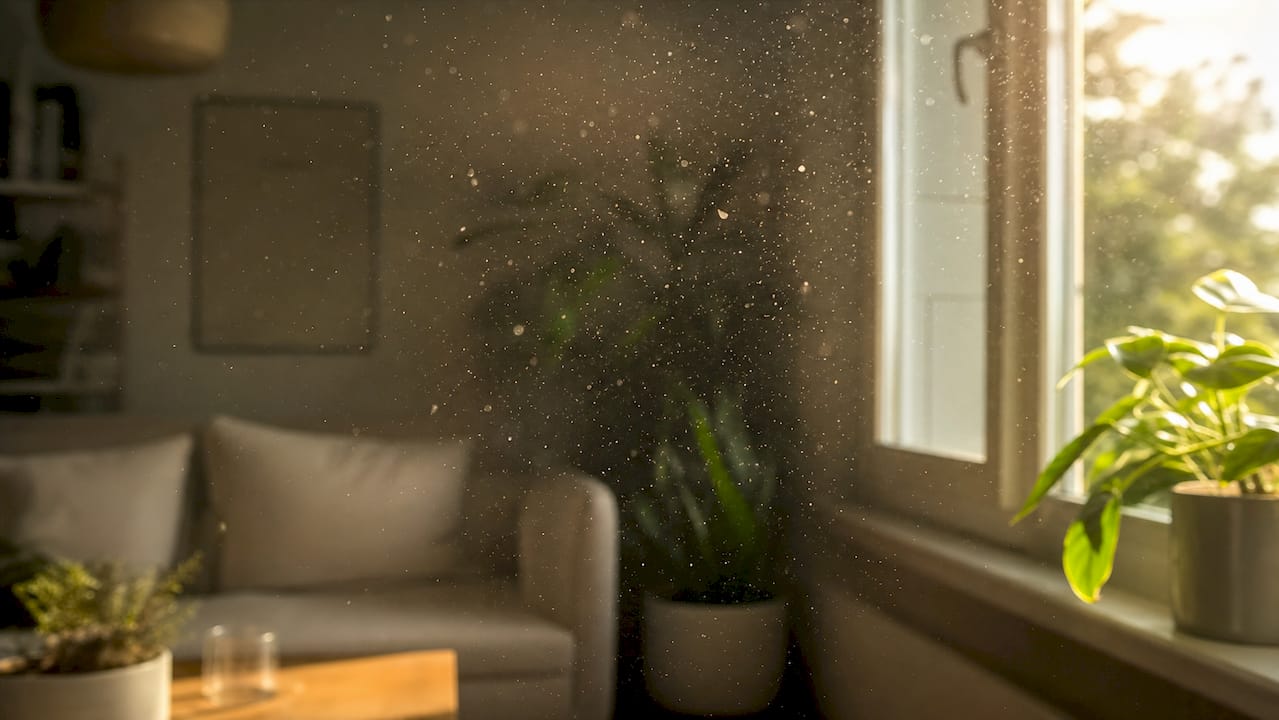
Allergen filtration works by forcing air through a dense fiber matrix that physically traps particles before they circulate back into your breathing zone. The filter media catches particles through three mechanisms: impaction (large particles hit fibers directly), interception (mid-size particles brush against fibers and stick), and diffusion (tiny particles move erratically and collide with fibers). Each mechanism targets a different particle size range, which is why a well-designed filter handles the full spectrum of airborne allergens.
The most common allergens filtered include:
- Pollen (10–100 microns): tree, grass, and weed pollen that peaks seasonally
- Pet dander (2–10 microns): microscopic skin flakes from cats, dogs, and other animals
- Dust mite debris (0.5–50 microns): fecal particles and body fragments, not the mites themselves
- Mold spores (1–30 microns): released year-round, especially in humid environments
- PM2.5 fine particles (under 2.5 microns): includes combustion byproducts and wildfire smoke
HEPA filters capture 99.97% of particles at 0.3 microns or larger. That 0.3-micron size is the hardest particle size to trap. Performance is equal or better for all other sizes, which means a true HEPA filter handles every allergen on the list above.
Allergen filtration operates in two main settings. HVAC systems filter air as it cycles through your home’s heating and cooling infrastructure, covering every room. Portable air purifiers filter a defined space, typically one room, with higher intensity. Both approaches use the same mechanical filtration principles. The air filtration process in either setting depends on moving enough air through the filter media to make a measurable difference in particle concentration.
Pro Tip: Run your portable air purifier on its highest fan setting for the first 30 minutes after entering a room, then drop to a lower setting. This clears the initial particle load fast and reduces noise during extended use.
How do you measure allergen filtration effectiveness?
Not all filters perform equally, and the label alone does not tell the full story. Three metrics define real-world allergen filtration performance.
| Metric | What It Measures | Why It Matters |
|---|---|---|
| HEPA Rating | Captures 99.97% of particles at 0.3 microns | Sets the baseline for true allergen capture |
| MERV Rating | Filter efficiency on a 1–16 scale for HVAC systems | MERV 13+ recommended for fine particle and allergen control |
| CADR (Clean Air Delivery Rate) | Volume of filtered air delivered per minute (cubic feet per minute) | Combines filter quality with fan power for real-world output |
HEPA is the standard for portable air purifiers. A filter labeled “HEPA-type” or “HEPA-like” does not meet the 99.97% threshold and should not be treated as equivalent.
MERV ratings apply to HVAC filters. MERV 8 handles larger particles like pollen. MERV 13 captures fine particles including PM2.5 and most pet dander. Upgrading to at least MERV 13 during wildfire smoke or heavy pollen periods can reduce indoor PM2.5 levels by about 50% when the system fan runs continuously. That reduction is meaningful for anyone with respiratory sensitivities.
CADR is the most underused metric. CADR measures the flow of filtered air delivered by an air cleaner, combining filter performance with airflow. Two units with identical HEPA filters can deliver very different filtration results based on fan power and unit design. When comparing air purifiers, match the CADR number to your room size. A general rule: CADR should be at least two-thirds of the room’s square footage.
What types of allergen filtration systems are available?
Three main system types cover most home and workplace needs. Each has a distinct role, and the best setup often combines more than one.
HVAC Filters treat air across your entire home every time the system runs. Upgrading to a MERV 13 filter is the lowest-effort, highest-coverage allergen removal technique available. The limitation is that HVAC systems only filter air when the fan is running, and older systems may not handle high-MERV filters without reduced airflow. Check your system’s specifications before upgrading.
Portable HEPA Air Purifiers deliver concentrated filtration in a single room. They run independently of your HVAC system, which makes them useful in bedrooms, home offices, or any space where you spend extended time. The air purifier selection guide from Cowayswaterpurifier covers how to match CADR ratings to room size, which is the most common mistake buyers make.
DIY Air Cleaners (such as a box fan with a MERV 13 filter taped to the intake) are a low-cost option validated by EPA research for temporary or emergency use. They work, but design elements like shrouds and filter thickness affect CADR significantly. A DIY unit is not a long-term substitute for a purpose-built purifier.
Additional technologies that complement mechanical filtration include:
- Activated carbon filters: remove odors and volatile organic compounds (VOCs), not particles. Useful alongside HEPA for pet owners or smokers.
- UV-C light: targets biological contaminants like bacteria and mold spores. Learn more about UV in air purification and how it fits into a complete air care strategy.
- Ionizers: release charged particles to clump allergens together. Effectiveness varies, and some models produce ozone as a byproduct.
Pro Tip: For bedrooms, choose a portable HEPA purifier with a CADR rated for a room 20% larger than your actual space. The extra capacity lets you run it on a quieter, lower fan setting overnight without sacrificing performance.
How to use and maintain allergen filtration systems effectively
Proper use determines whether your system actually reduces your allergen exposure. Follow these steps to get consistent results:
-
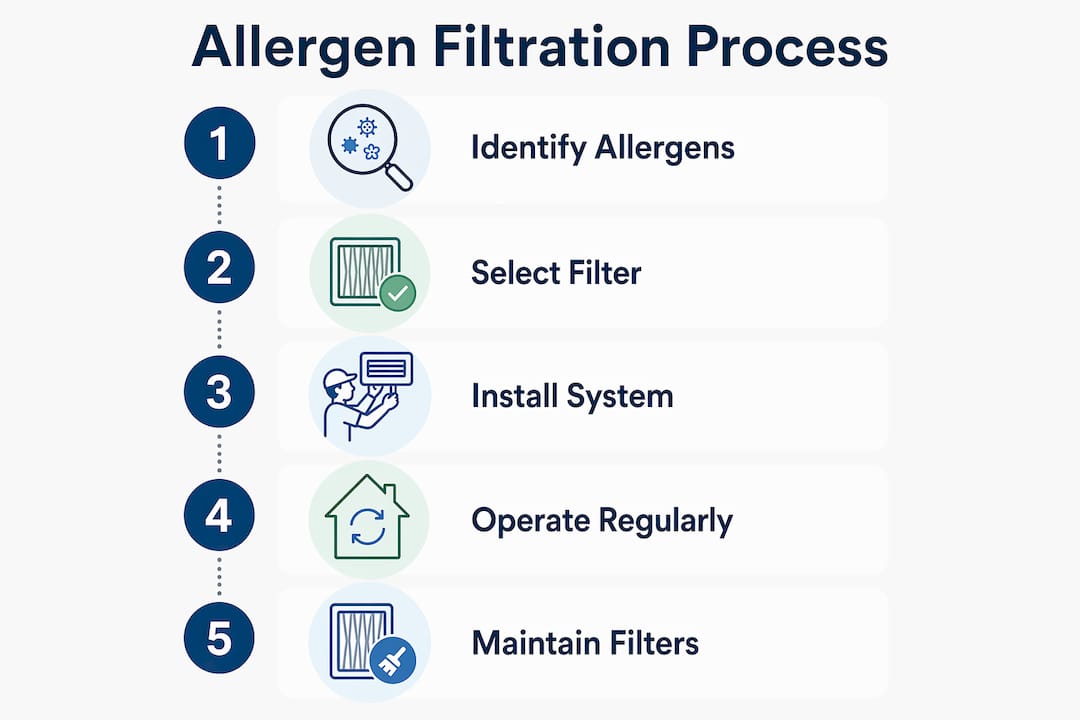
Size the unit correctly. Match the purifier’s CADR to your room size. Poor sizing is a primary cause of limited symptom improvement, not filter quality. An undersized unit running at full speed still cannot clean a large room fast enough.
-
Position the unit for airflow. Place portable purifiers away from walls and corners. The intake and exhaust need clear space to circulate room air. Placing a unit in a corner reduces its effective CADR by restricting airflow.
-
Run the system continuously. Allergens re-enter the air constantly from surfaces, clothing, and outdoor air. Running your purifier on a low setting 24 hours a day maintains lower particle concentrations than running it on high for a few hours.
-
Check and replace filters on schedule. Filters lose efficiency when clogged, and the EPA recommends replacing them when they appear dirty. During pollen season or wildfire smoke events, check filters monthly rather than waiting for the manufacturer’s standard replacement interval.
-
Combine filtration with surface cleaning. Filtration removes airborne particles. It does not remove allergens already settled on carpets, upholstery, or bedding. Filtration complements but does not replace regular vacuuming and laundering. Use a vacuum with a HEPA filter to avoid redistributing particles back into the air.
-
Keep windows and doors closed during high-allergen periods. Opening windows during peak pollen hours (typically 5 a.m. to 10 a.m.) overwhelms even a well-sized filtration system. Check local air quality index readings before ventilating.
What are the real health benefits of allergen filters?
The benefits of allergen filters go beyond comfort. Reducing airborne particle load has measurable effects on respiratory health and allergy symptom frequency.
“Supplemental HEPA air filtration can reduce inhalation exposure to airborne particles by up to 90%, depending on system configuration and combined use with other protective measures.” — CDC-published research
That figure comes from a ceiling-mounted HEPA unit study measuring exposure reductions for respiratory aerosols sized 0.3–10 microns. The range was 49%–90% depending on placement and configuration. Even at the lower end, a 49% reduction in inhaled allergen load is clinically significant for people with moderate to severe allergies.
The EPA frames allergen filtration as a key component of an indoor air quality strategy alongside ventilation and source control. Filtration alone is not enough. Removing pollutant sources (pet bedding, damp materials, tracked-in pollen) and maintaining adequate ventilation work together with filtration to keep indoor air genuinely clean.
Air purification for allergens also provides situational benefits beyond daily allergy management. During wildfire events, a MERV 13 HVAC filter running continuously cuts indoor PM2.5 by roughly 50%. For people with asthma or chronic respiratory conditions, that reduction directly lowers the risk of acute episodes. The symptom relief data from real-world air purifier use supports consistent improvement in nasal, eye, and respiratory symptoms when HEPA filtration runs in the primary living and sleeping areas.
Key takeaways
Effective allergen filtration requires the right filter standard, correct sizing, and consistent maintenance to deliver real reductions in airborne allergen exposure.
| Point | Details |
|---|---|
| HEPA is the baseline standard | True HEPA filters capture 99.97% of particles at 0.3 microns, covering all major allergen types. |
| CADR beats filter label alone | Match CADR to your room size for real-world performance, not just the HEPA designation on the box. |
| MERV 13 for HVAC systems | Upgrading to MERV 13 reduces indoor PM2.5 by about 50% during high-particulate events. |
| Maintenance determines results | Replace filters promptly during pollen season or smoke events to maintain peak capture efficiency. |
| Filtration needs surface cleaning | Vacuuming and laundering remove settled allergens that air filters cannot reach. |
Why most people get allergen filtration wrong
I have spent years looking at how people actually use air purifiers and HVAC filters at home, and the same mistakes show up repeatedly. The biggest one is buying a filter with the right label and assuming the job is done. A HEPA label on a unit that is too small for your room, positioned in a corner, and running only when you remember to turn it on will not move the needle on your allergy symptoms.
The second mistake is ignoring CADR entirely. Most buyers compare filter types. The HEPA filter standard matters, but fan power and unit design determine how much filtered air actually reaches you. Two units at the same price point with identical HEPA filters can perform completely differently because of airflow design.
The third mistake is treating filtration as a standalone fix. I have seen people invest in premium air purifiers while keeping a pet’s sleeping area in the bedroom and never washing their bedding in hot water. Filtration handles what is airborne. Everything settled on surfaces requires physical removal. The combination works. Filtration alone does not.
The trend I find genuinely useful is the shift toward air quality monitors paired with purifiers. When you can see your PM2.5 reading drop in real time after turning on a purifier, you understand exactly what the system is doing. That feedback loop also tells you when a filter is clogged and performance has dropped, which is more reliable than any replacement schedule.
— Soldierboy
Find the right air care solution at Cowayswaterpurifier
If you are ready to put allergen filtration to work in your home, Cowayswaterpurifier carries a full range of Coway air purifiers built around true HEPA filtration and verified CADR ratings. Every model in the Coway Air Care lineup is designed for real-world allergen reduction, not just spec-sheet performance.
Use the air purifier selection guide to match the right unit to your room size and allergen priorities. Whether you need whole-home HVAC support or a dedicated bedroom purifier, Cowayswaterpurifier provides the product detail, CADR data, and service support to help you choose with confidence.
FAQ
What does allergen filtration actually remove from the air?
Allergen filtration removes airborne particles including pollen, pet dander, dust mite debris, mold spores, and fine particulate matter (PM2.5). True HEPA filters capture 99.97% of particles at 0.3 microns or larger, which covers all major household allergen types.
How does CADR differ from a HEPA rating?
HEPA describes filter efficiency at a specific particle size. CADR measures the actual volume of filtered air a unit delivers per minute, combining filter performance with fan power. Two units with the same HEPA filter can deliver very different CADR values based on airflow design.
How often should i replace allergen filters?
Replace filters when they appear visibly dirty, and check monthly during high-allergen seasons or wildfire smoke events. The EPA recommends prompt replacement during heavy particulate periods to maintain peak filtration performance.
Can allergen filtration replace regular cleaning?
No. Filtration removes airborne particles but does not affect allergens already settled on surfaces, carpets, or bedding. Regular vacuuming with a HEPA-equipped vacuum and hot-water laundering of bedding remain necessary alongside air filtration.
What MERV rating do i need for allergy relief in an HVAC system?
MERV 13 is the recommended minimum for meaningful allergen and fine particle control in HVAC systems. It reduces indoor PM2.5 by approximately 50% when the system fan runs continuously, which is significant for allergy and asthma management.
Recommended
- Understanding particulate filtration for healthier home air – Coway Water Purifier
- Advanced Filtration Technology: Cleaner Home Wellness – Coway Water Purifier
- How Air Purifiers Remove Allergens at Home – Coway Water Purifier
- Why Filter Indoor Air: Complete Homeowner Guide – Coway Water Purifier
