
Uncategorized
Complete Guide to the Role of UV in Air Purification
Dec
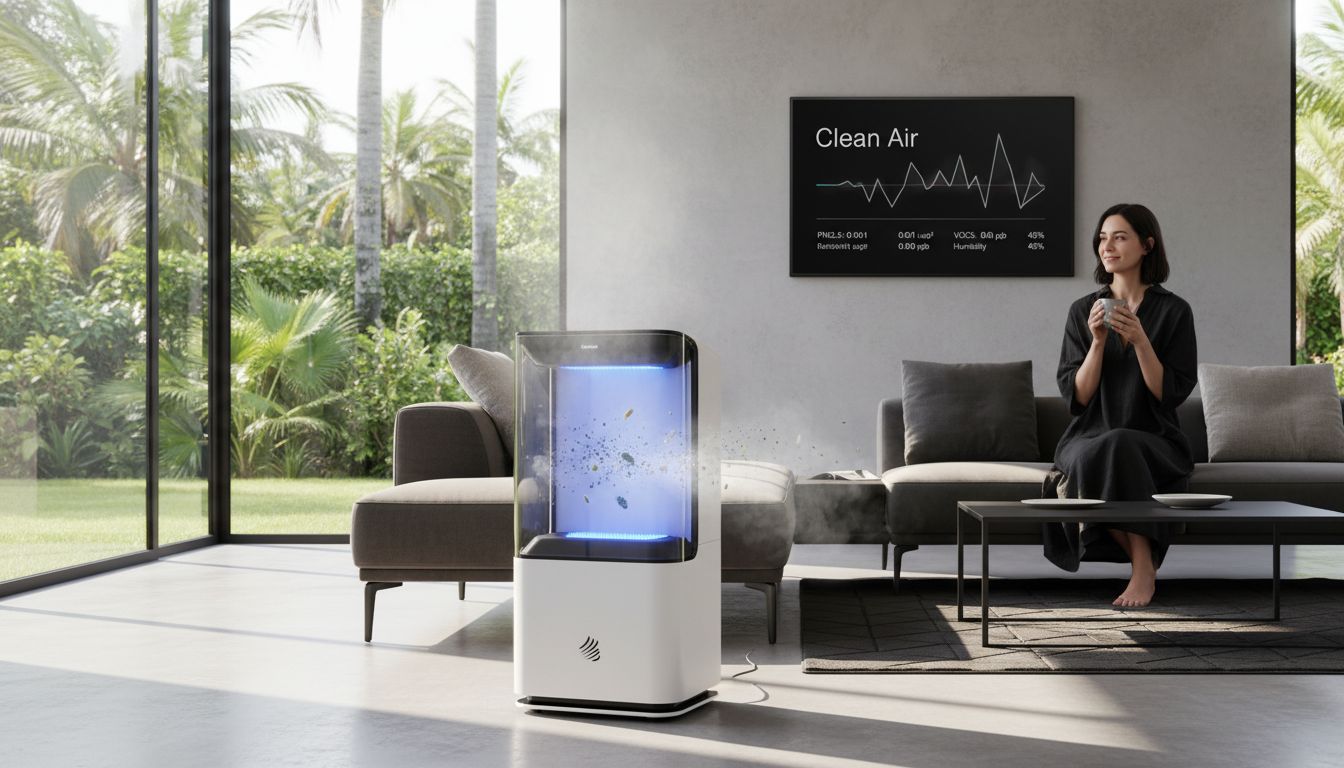
Nearly 90 percent of american homes face air quality concerns that typical filters cannot fully address. For families and businesses, invisible threats like viruses and bacteria move quietly through indoor air, presenting risks traditional purifiers sometimes miss. UV technology steps in with a scientific edge, offering advanced and chemical-free air treatment that targets harmful microbes at the source while promising safer spaces and healthier everyday environments.
Table of Contents
- Defining UV Technology In Air Purification
- How UV Air Purification Systems Work
- Types Of UV-Based Air Purifiers
- Benefits And Limitations Of UV Purification
- Safety Considerations And Common Misconceptions
Key Takeaways
| Point | Details |
|---|---|
| Effectiveness of UV Technology | UV technology effectively neutralizes airborne pathogens by disrupting their genetic material without the use of chemicals. |
| Integration with Other Systems | For optimal indoor air quality, UV purification is best combined with mechanical filters like HEPA to address both microscopic and particulate contaminants. |
| Safety and Maintenance Considerations | Proper system design and regular maintenance are crucial to prevent health risks associated with UV exposure and potential byproducts like ozone. |
| Types of UV Systems | Various UV air purification configurations exist, including in-duct, whole-room, and portable systems, each suited for different environments and contamination levels. |
Defining UV Technology in Air Purification
Ultraviolet (UV) technology represents a powerful approach to air purification that harnesses specific light wavelengths to neutralize harmful microorganisms. Germicidal ultraviolet (GUV) uses specialized UV energy to inactivate viruses, bacteria, and fungal organisms, providing an advanced method of air sanitization beyond traditional filtration techniques.
The core mechanism of UV air purification involves exposing airborne pathogens to short-wavelength ultraviolet radiation, which disrupts their cellular DNA and RNA structures. By targeting the genetic material of microbes, UV radiation effectively prevents these organisms from reproducing or functioning, rendering them harmless. This process occurs rapidly and without introducing additional chemicals into the environment, making it an environmentally friendly air treatment strategy.
Unlike mechanical filters that physically trap particles, UV technology operates through electromagnetic radiation, providing a complementary approach to air purification. Its key advantages include:
- Continuous microbial deactivation without filter replacement
- Elimination of microorganisms too small for standard filtration
- No byproduct generation during the sanitization process
- Capability to neutralize drug-resistant microbes
While UV technology offers significant benefits, it works most effectively when integrated with other air purification methods like HEPA filtration, creating a comprehensive approach to indoor air quality management.
How UV Air Purification Systems Work
UV air purification systems employ specialized ultraviolet light technology to neutralize airborne microorganisms through a precise and scientific process. UVGI air cleaners use UV lamps that emit specific ultraviolet radiation, primarily at a 254 nm wavelength, which penetrates the cellular structures of pathogens and prevents their reproduction.
The operational mechanism of UV air purification involves strategic exposure of airborne microbes to concentrated ultraviolet energy. When microorganisms pass through the UV light chamber, the high-energy radiation directly attacks their genetic material, specifically targeting DNA and RNA structures. This process effectively disrupts the cellular mechanisms of viruses, bacteria, and fungal spores, rendering them unable to multiply or cause infection.
Technical considerations are critical in UV air purification system design. UV-C light positioning requires precise engineering to maximize pathogen inactivation while ensuring human safety. Key design elements include:
- Specialized UV-C lamp wavelength selection (typically 254 nm)
- Controlled exposure duration for maximum microbial deactivation
- Strategic placement within air circulation systems
- Integrated safety mechanisms to prevent direct human exposure
While highly effective, UV air purification works best when combined with mechanical filtration methods like HEPA filters, creating a comprehensive approach to indoor air quality management that addresses both particulate matter and microscopic biological contaminants.
Types of UV-Based Air Purifiers
Air purification technologies have evolved to include sophisticated UV-based systems designed for comprehensive indoor air quality management. In-duct germicidal ultraviolet (GUV) systems represent one of the most advanced approaches to air sanitization, integrating directly with heating, ventilation, and air conditioning (HVAC) infrastructure to provide continuous microbial control.
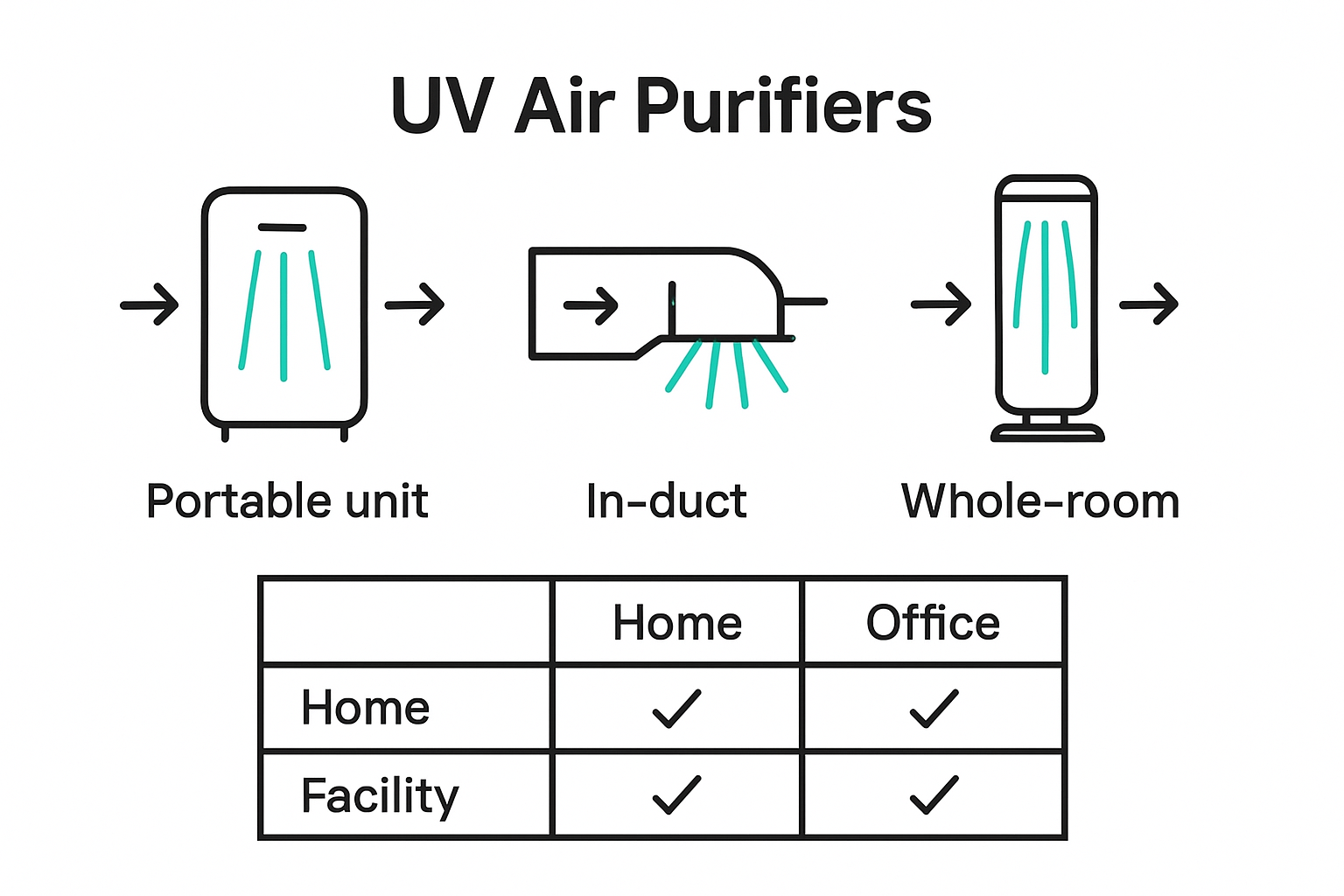
These UV air purification systems can be categorized into several distinct configurations. UV lamps can be strategically deployed in multiple formats to address different air disinfection requirements, each targeting specific environmental needs. The primary types include:
- In-Duct UV Systems: Installed within HVAC systems, these purifiers treat circulating air and prevent microbial growth on mechanical components
- Whole-Room UV Purifiers: Designed to sanitize air within occupied spaces, including innovative far-UV technology
- Portable UV Air Cleaners: Standalone units with built-in UV chambers for localized air treatment
- Upper-Room UV Installations: Mounted high in rooms to create UV fields that disinfect air as it naturally circulates
Each UV air purification system offers unique advantages, with selection depending on specific environmental conditions, room size, and contamination risks. The most effective approaches often combine UV technology with traditional mechanical filtration, creating a multi-layered defense against airborne pathogens and improving overall indoor air quality.
Benefits and Limitations of UV Purification
Air purification technologies continue to evolve, with UV purification offering a unique approach to indoor air quality management. Germicidal UV lamps demonstrate remarkable effectiveness in neutralizing airborne pathogens, presenting both significant advantages and notable challenges for residential and commercial air treatment.
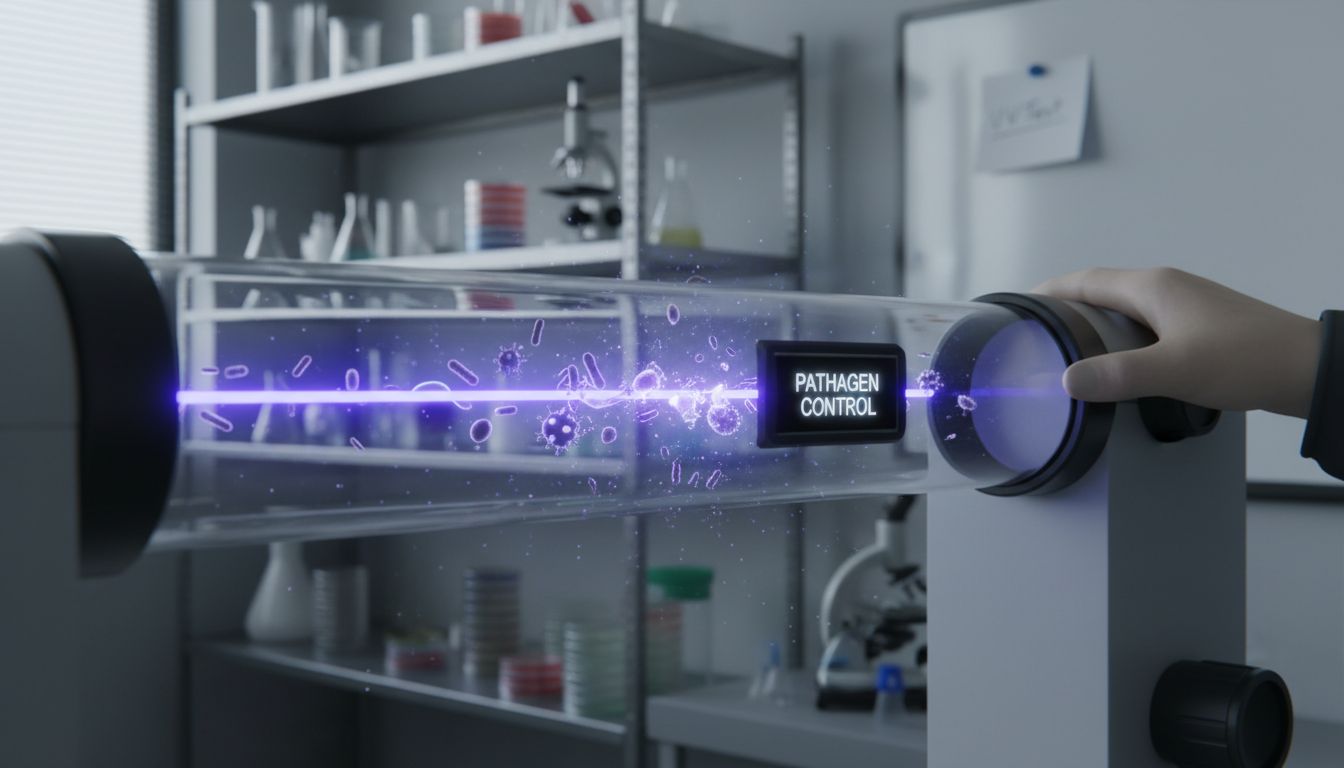
The primary benefits of UV purification include rapid and chemical-free microbial inactivation. Unlike traditional filtration methods, UV technology directly disrupts the genetic material of viruses, bacteria, and other microorganisms, preventing their ability to reproduce or cause infection. This process occurs instantaneously, providing continuous air sanitization without introducing additional chemicals or producing residual waste.
However, UV air purification is not without limitations. UV sanitization can potentially generate harmful indoor air pollutants, including ozone and other byproducts that may compromise air quality. The key considerations include:
- Potential production of secondary air pollutants
- Limited effectiveness against particulate matter
- Requirement for precise positioning and maintenance
- Potential health risks from direct UV exposure
- Decreased performance with dust or debris accumulation
The most effective air purification strategies integrate UV technology with comprehensive filtration systems, leveraging its pathogen-neutralizing capabilities while mitigating potential drawbacks through strategic design and implementation.
Safety Considerations and Common Misconceptions
Indoor air purification technologies require careful evaluation, particularly when it comes to UV-based systems. Direct exposure to UV-C light can pose significant health risks, including potential skin burns and eye damage, making proper system design and implementation critical for user safety.
One of the most pervasive misconceptions about UV air purifiers is the assumption that all systems are inherently safe and universally effective. In reality, the safety of these devices depends on multiple factors, including precise engineering, shielding mechanisms, and careful placement. Reputable manufacturers incorporate multiple safety features to prevent direct radiation exposure, such as enclosed lamp designs and automatic shut-off mechanisms that activate if the protective casing is compromised.
UV air purification systems can potentially generate harmful byproducts like ozone, challenging the perception of these technologies as completely benign. Key safety considerations include:
- Rigorous third-party safety certifications
- Comprehensive shielding of UV light sources
- Verification of ozone emission levels
- Regular maintenance and professional inspections
- Understanding specific usage guidelines
Consumers should prioritize UV air purification systems with transparent safety documentation, proven engineering standards, and comprehensive user protection mechanisms to ensure effective and responsible indoor air quality management.
Experience the Power of UV Technology for Cleaner Air Today
Understanding the role of UV in air purification reveals how crucial it is to protect your home from invisible airborne threats like viruses and bacteria. If you are worried about harmful microbes, allergens, or the buildup of dust in your living space, UV air purifiers offer a scientifically proven solution that goes beyond traditional filters. With UV technology disrupting the DNA of pathogens, you can enjoy continuous disinfection without harmful chemicals or frequent filter replacements. This is a perfect approach for anyone seeking safer, healthier indoor air.
Discover a range of advanced air purification products designed to combine UV sanitization with powerful filtration on Uncategorized Archives – Coway Water Purifier.
Take control of your indoor air quality by exploring trusted Coway air purifiers at https://cowayswaterpurifier.com. Act now to benefit from expert service, free installation, and maintenance that ensure your system works safely and effectively. Don’t wait for poor air quality to impact your health. Get yours today and breathe easier with UV-enhanced purification.
Frequently Asked Questions
What is UV technology in air purification?
UV technology in air purification uses specialized ultraviolet light to neutralize harmful microorganisms by disrupting their DNA and RNA structures, rendering them harmless without introducing chemicals into the environment.
How do UV air purification systems work?
UV air purification systems utilize UV lamps that emit specific wavelengths, mainly at 254 nm, to target airborne pathogens. When these microorganisms pass through the UV light chamber, their genetic material is attacked, preventing them from reproducing or causing infection.
What are the types of UV-based air purifiers?
The main types of UV-based air purifiers include in-duct systems that integrate with HVAC, whole-room purifiers, portable units for localized treatment, and upper-room installations that create UV fields to disinfect air as it circulates.
What are the benefits and limitations of UV air purification?
The benefits include rapid microbial inactivation without chemicals and continuous air sanitization. Limitations involve potential byproduct generation, limited effectiveness against particulate matter, and the need for precise system design to avoid health risks from UV exposure.
Recommended
- What Is UV Sterilization? Complete Guide for 2024 – Coway Water Purifier
- Understanding the Role of UV in Water Purification – Coway Water Purifier
- 7 Top Air Purification Features Every Home Needs – Coway Water Purifier
- Why Choose Home Air Purifier: Complete Guide – Coway Water Purifier
