
Uncategorized
Air purifiers for allergies: 60% symptom relief explained
Mar
You vacuum every week, wash your bedding, and still wake up sneezing. Sound familiar? The problem is not your cleaning routine. It is the air itself. Indoor allergens like pet dander, mold spores, and pollen can linger suspended in the air for hours, completely invisible and completely unavoidable without the right tool. Clinical research shows that HEPA purifiers reduce symptoms by 48 to 60% and cut antihistamine use by 37%. This guide breaks down the science, the comparisons, and the practical steps so you can finally breathe easier at home.
Table of Contents
- Why allergies are worse indoors and what triggers them
- How air purifiers address allergy triggers: What the science shows
- Air purifiers vs. other allergy solutions: Where do they fit?
- Choosing and using an air purifier for maximum allergy relief
- Optimize your indoor air quality with proven solutions
- Frequently asked questions
Key Takeaways
| Point | Details |
|---|---|
| HEPA purifiers work | These reduce allergy symptoms by up to 60 percent when used correctly. |
| Pair with cleaning | Air purifiers are most effective when combined with regular cleaning and allergen-proofing. |
| Match the room size | Choose a purifier with the right CADR for your space for best results. |
| Continuous use pays off | Running a purifier consistently, especially in bedrooms, provides ongoing symptom relief. |
Why allergies are worse indoors and what triggers them
Most people assume outdoor air is the bigger threat. In reality, indoor air can be far more concentrated with allergens because there is less ventilation and more surfaces for particles to circulate from. Your home traps what comes in and keeps recycling it.
The most common indoor allergy triggers include:
- Pet dander: Microscopic skin flakes from cats, dogs, and other animals that stay airborne for long periods
- Dust mite waste: Tiny protein particles from mites living in mattresses, carpets, and upholstery
- Mold spores: Released from damp areas like bathrooms, basements, and around windows
- Pollen: Tracked indoors on clothing, shoes, and through open windows
- Fine particulate matter (PM2.5): Tiny particles under 2.5 microns that penetrate deep into the lungs
PM2.5 is particularly concerning. Research shows that air purifiers lower PM2.5 from 4.6 to 1.4 μg/m³ indoors and measurably improve lung function in asthma patients. That is a 70% reduction in fine particle concentration from a single device running consistently.
Stat to know: Even after thorough cleaning, airborne allergen levels can remain elevated for hours because vacuuming and dusting stir particles back into the air before they settle again.
Cleaning is still important, but it addresses surfaces. Air purifiers address what is floating between you and those surfaces. For a deeper look at what you are actually breathing, the guide on indoor pollutants explained covers the full picture of what hides in home air.
Now that we have set the stage on indoor allergies, let us clarify the real impact air purifiers can have.
How air purifiers address allergy triggers: What the science shows
Not all air purifiers are equal. The ones that actually move the needle for allergy sufferers use True HEPA filtration, which captures 99.97% of particles as small as 0.3 microns. That includes pollen, pet dander, mold spores, and most dust mite allergens floating in the air.
Here is what the clinical data shows:
| Outcome | Reduction with HEPA purifier |
|---|---|
| Allergic rhinitis symptoms | 48 to 60% |
| Antihistamine use | 37% |
| Indoor PM2.5 levels | Up to 70% |
| Airborne allergen capture | 75 to 90% (AAFA-certified models) |
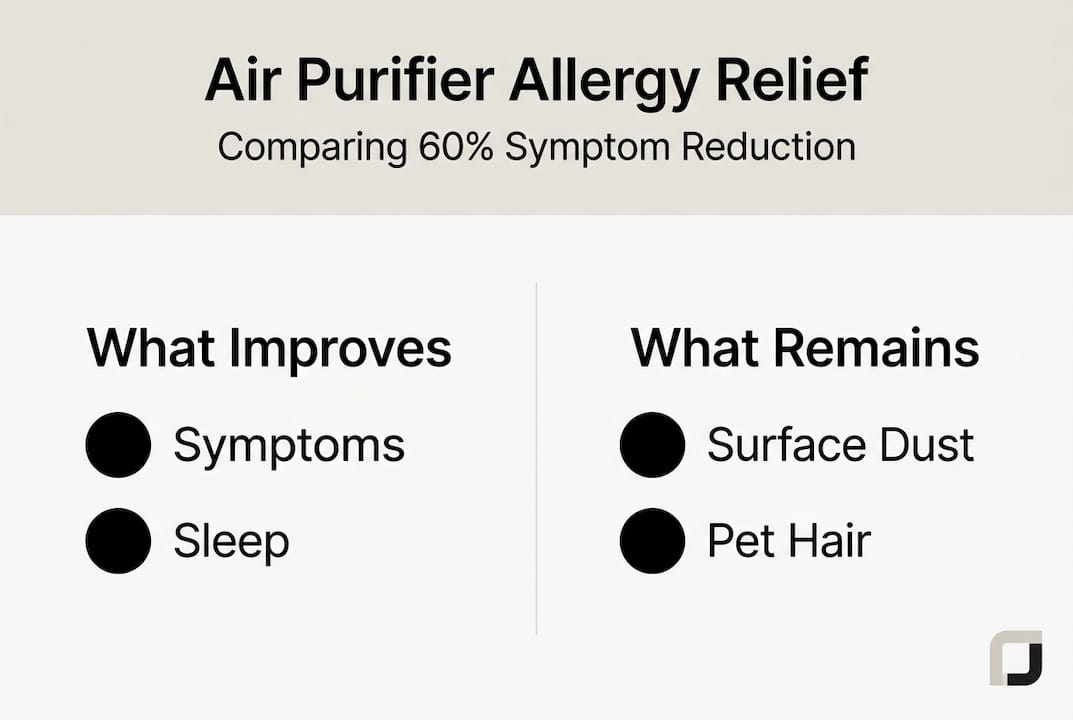
The symptom reduction of 48 to 60% comes from multiple meta-analyses and clinical trials, not just one study. That consistency matters. It means the results are repeatable across different homes, different climates, and different allergen types.
Certification also matters more than most buyers realize. The AAFA certification standards require that purifiers reduce allergens by 75 to 90%, capture over 50% of particles in the filter itself, and emit minimal ozone. Ozone is a lung irritant, so low-ozone output is a non-negotiable for anyone with respiratory sensitivities.
Pro Tip: Look for the AAFA Certified mark on the box or product listing. It is the fastest way to confirm a purifier has been independently tested for allergy and asthma performance, not just marketed that way.
One important limitation: air purifiers work best on airborne particles. They are less effective once allergens have settled onto carpets, furniture, or bedding. That is why understanding removing allergens with air purifiers alongside surface cleaning gives you the full picture. You can also explore the breakdown of air purifier technologies to understand which filter types work for which allergens.
With the science established, let us compare air purifiers with other common allergy-reduction methods.
Air purifiers vs. other allergy solutions: Where do they fit?
Air purifiers are powerful, but they are not a standalone cure. The most effective allergy management combines multiple strategies. Here is how the main approaches stack up:
| Strategy | Best for | Limitation |
|---|---|---|
| HEPA air purifier | Airborne dander, pollen, mold, PM2.5 | Less effective for settled dust |
| Allergen-proof encasements | Dust mites in mattresses and pillows | Does not address airborne particles |
| Regular cleaning | Surface allergens, dust buildup | Temporarily increases airborne particles |
| Humidity control (below 50%) | Mold and dust mite growth | Requires consistent monitoring |
| Antihistamine medication | Symptom management | Does not reduce allergen levels |
The Mayo Clinic recommends treating dust mite allergies with a combined strategy that includes encasements, low humidity, and cleaning rather than relying on any single method. Air purifiers fit into that strategy as the ongoing airborne defense layer.
Where air purifiers clearly stand out:
- Bedrooms: You spend 7 to 9 hours there every night. Continuous filtration during sleep has the highest impact on symptom reduction.
- Pet owners: Dander is lightweight and stays airborne for hours. Filtration is the most practical way to reduce it continuously.
- Pollen season: Keeping windows closed and running a purifier dramatically cuts indoor pollen levels.
- Mold-prone homes: Capturing airborne spores before they settle and spread is far easier than remediation after the fact.
For settled dust mites, air purifiers have real limits. Mites live deep in fabric fibers and their waste particles only become airborne when disturbed. Encasements and washing bedding in hot water remain essential for that specific trigger.
Pro Tip: Place your air purifier in the bedroom first, not the living room. You spend more consecutive hours there than anywhere else, and nighttime allergen exposure directly affects how you feel the next morning.
Use the healthy air checklist to map out which strategies apply to your specific home and allergen triggers. This context helps you choose wisely.
Choosing and using an air purifier for maximum allergy relief
Buying the right purifier matters as much as buying one at all. Here is a practical framework for making the best choice:
- Confirm True HEPA filtration. Not “HEPA-type” or “HEPA-like.” True HEPA is the standard that captures 99.97% of particles at 0.3 microns. Anything less is a marketing term.
- Check the CADR rating. CADR stands for Clean Air Delivery Rate. For bedrooms, a CADR above 150 is the recommended benchmark. Higher CADR means faster air cleaning for larger spaces.
- Look for AAFA certification. This confirms independent testing for allergen reduction and low ozone output, not just manufacturer claims.
- Match the purifier to your room size. Every purifier lists a recommended square footage. Running an undersized unit in a large room cuts its effectiveness significantly.
- Run it continuously. This is the most common mistake people make. Turning the purifier on only when symptoms flare is like turning on a dehumidifier only when it is already flooding. Consistent use over 6 weeks of use is when most users report measurable symptom improvement and reduced medication needs.
- Replace filters on schedule. A clogged HEPA filter does not just lose effectiveness. It can restrict airflow and reduce the unit’s ability to cycle room air at all.
- Integrate with your cleaning routine. Run the purifier during and after vacuuming to capture the particles that cleaning stirs back into the air.
Pro Tip: Set your purifier to its lowest continuous setting overnight rather than running it on high for a few hours. Consistent low-level filtration outperforms intermittent high-speed bursts for allergen control.
For more guidance on matching specs to your home, the resources on selecting an air purifier and the air purifier selection guide walk through the decision in detail.
Optimize your indoor air quality with proven solutions
You now have the evidence, the comparisons, and the practical steps to make a real difference in your indoor air quality. The next move is finding the right purifier for your specific space and allergen profile.
At Coway, we have put together resources to make that decision straightforward. Browse the curated guide to best air purifiers for health to find certified models matched to real allergy needs. Use the air purification checklist to audit your current home setup and identify gaps. And if you are still exploring your options, the overview of types of home air purifiers breaks down every major technology so you can choose with confidence. Equipped with the facts and next steps, you are ready to create a truly allergy-friendly environment at home.
Frequently asked questions
Do air purifiers help with pet allergies?
Yes. HEPA air purifiers capture airborne pet dander effectively, and symptom reduction of 48 to 60% has been documented in clinical trials. Regular grooming and cleaning of pet areas still adds meaningful benefit alongside filtration.
How often should I run my air purifier for allergies?
Run it continuously, especially in the bedroom. Consistent use over 6 weeks is when most allergy sufferers report noticeable symptom improvement and reduced reliance on medication.
Are air purifiers effective for dust mite allergies?
Partially. Air purifiers capture airborne dust mite particles, but settled dust mites live in fabric and are not addressed by filtration alone. Combine purifiers with allergen-proof encasements and hot-water washing for full control.
Which air purifier certification matters most for allergies?
The AAFA certification is the most meaningful. It confirms the purifier reduces allergens by 75 to 90%, captures particles effectively in the filter, and emits low ozone, all verified through independent testing rather than brand claims.
Recommended
- How Air Purifiers Remove Allergens at Home – Coway Water Purifier
- Air purification trends 2026: 7.2% market growth insights – Coway Water Purifier
- 7 Key Benefits of Air Purifiers for Urban Homeowners – Coway Water Purifier
- Air purification checklist: 6 steps for healthier home air – Coway Water Purifier
- Effective Carpet Cleaning for Asthma Relief – Yarra Valley Carpet Cleaning
