
Uncategorized
How to Select Air Purifier for Healthy Home Air Quality
Feb
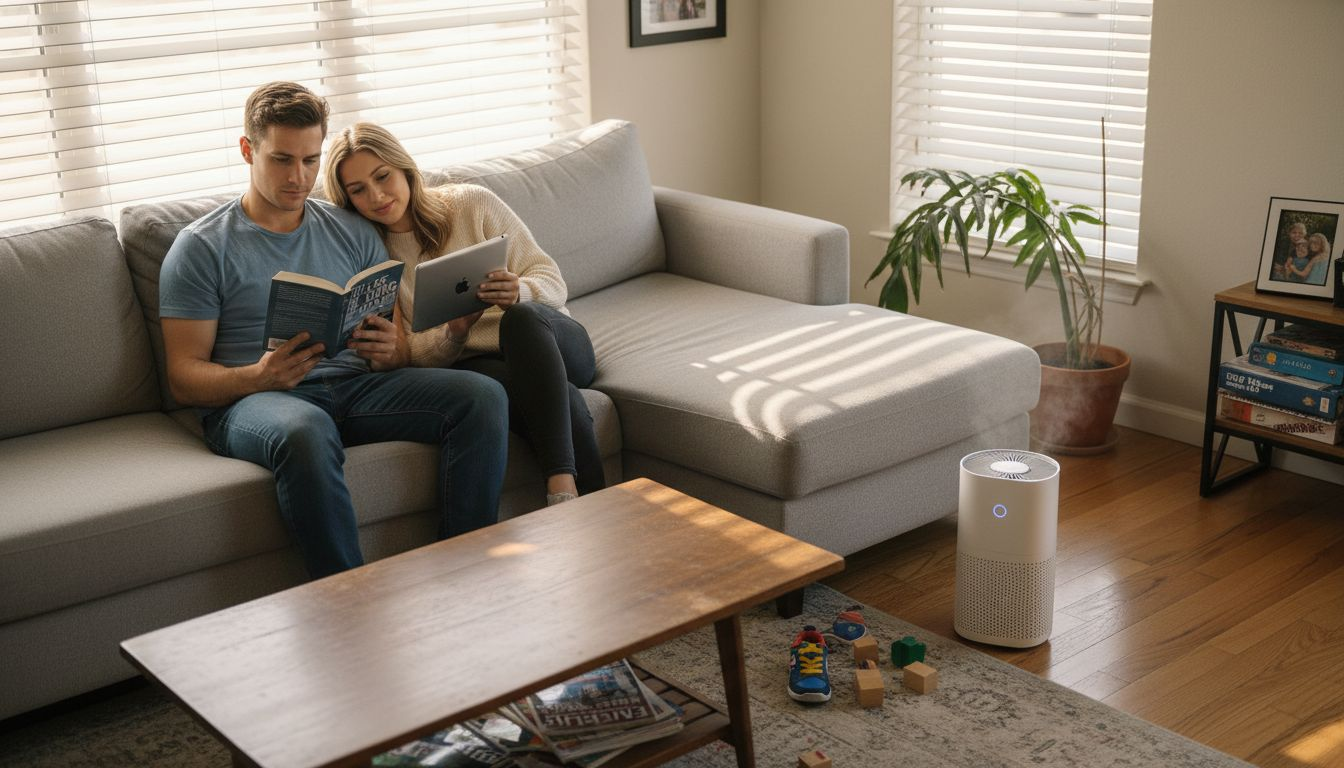
Finding the right way to protect your family’s health often starts with the air you breathe at home. Americans spend about 90% of their time indoors, where air pollution can be significantly higher than outside. For many health-conscious homeowners, the presence of invisible threats like mold spores, pet dander, and volatile organic compounds raises real concerns. This guide helps you identify your unique indoor air quality challenges and select advanced air purifier solutions for a cleaner, safer living environment.
Table of Contents
- Step 1: Assess Your Indoor Air Quality Needs
- Step 2: Determine Room Size And Placement
- Step 3: Compare Filtration And Purification Technologies
- Step 4: Evaluate Features For Health And Convenience
- Step 5: Verify Certifications And Check Performance Ratings
Quick Summary
| Key Point | Explanation |
|---|---|
| 1. Identify indoor air quality needs | Recognize sources of pollutants like pet dander and dust to understand your specific air quality challenges. |
| 2. Match air purifier to room size | Measure your room’s dimensions to choose an air purifier with an appropriate Clean Air Delivery Rate (CADR). |
| 3. Understand filtration technologies | Learn about HEPA and activated carbon filters to effectively target your specific indoor air contaminants. |
| 4. Evaluate features for convenience | Look for features like multiple fan speeds, sleep mode, and smart sensors to enhance user experience and health benefits. |
| 5. Verify certifications and ratings | Check for credible certifications like AHAM and ENERGY STAR to ensure the performance and efficiency of the air purifier. |
Step 1: Assess Your Indoor Air Quality Needs
Before selecting an air purifier, understanding your home’s specific indoor air quality challenges is essential. Americans spend approximately 90% of their time indoors, where air pollution can be significantly more concentrated than outside environments.
To effectively assess your indoor air quality needs, start by identifying potential pollutant sources in your living space. These might include:
- Pet dander from cats and dogs
- Dust mite accumulation in carpets and bedding
- Mold spores in humid areas
- Volatile organic compounds (VOCs) from cleaning products
- Combustion by-products from stoves and fireplaces
Pay attention to specific health symptoms that could indicate poor air quality, such as persistent coughing, wheezing, respiratory irritation, or unexplained fatigue. These signs often suggest the presence of harmful airborne particles that an air purifier could help mitigate.
Recognizing your unique indoor air quality challenges is the first step toward creating a healthier home environment.
Carefully observe your living space and note any areas with high dust accumulation, musty odors, or visible mold. These observations will help you choose an air purifier with the most appropriate filtration technology for your specific needs.
Here’s how common indoor air pollutants impact health and potential solutions:
| Pollutant Type | Health Impact | Suggested Air Purifier Feature |
|---|---|---|
| Pet dander | Triggers allergies, asthma | HEPA filtration |
| VOCs from cleaners | Headaches, irritation | Activated carbon filter |
| Mold spores | Respiratory issues | HEPA + UV-C light |
| Dust mites | Sneezing, coughing | HEPA filtration |
| Combustion by-products | Irritation, breathing issues | HEPA + carbon filter |
Pro tip: Consider keeping a brief journal tracking your respiratory symptoms and home environment conditions to identify potential air quality triggers more systematically.
Step 2: Determine Room Size and Placement
Selecting the right air purifier involves more than just choosing a device – you need to match it precisely to your room’s specific dimensions and layout. Calculating room volume accurately is crucial for ensuring maximum air purification effectiveness.
To determine the appropriate air purifier size, follow these key steps:
- Measure your room’s length, width, and ceiling height
- Multiply these dimensions to calculate total cubic footage
- Check the Clean Air Delivery Rate (CADR) of potential purifiers
- Aim for devices that can achieve 5 Air Changes Per Hour (ACH)
- Consider the primary location where you’ll use the purifier
Placement is equally important for optimal performance. Strategic positioning can significantly improve your air purifier’s efficiency. Position the device in areas with the most human traffic, ensuring maximum exposure to clean air. Avoid placing the purifier in corners or near obstacles that might restrict airflow.
For allergy sufferers and those with respiratory sensitivities, proper air purifier placement can make a substantial difference in indoor air quality.
When selecting your air purifier’s location, prioritize rooms where you spend the most time, such as bedrooms or living areas. For smaller purifiers, consider placing them on tables or elevated surfaces to enhance air intake. Larger units can be positioned on the floor, depending on their fan design.
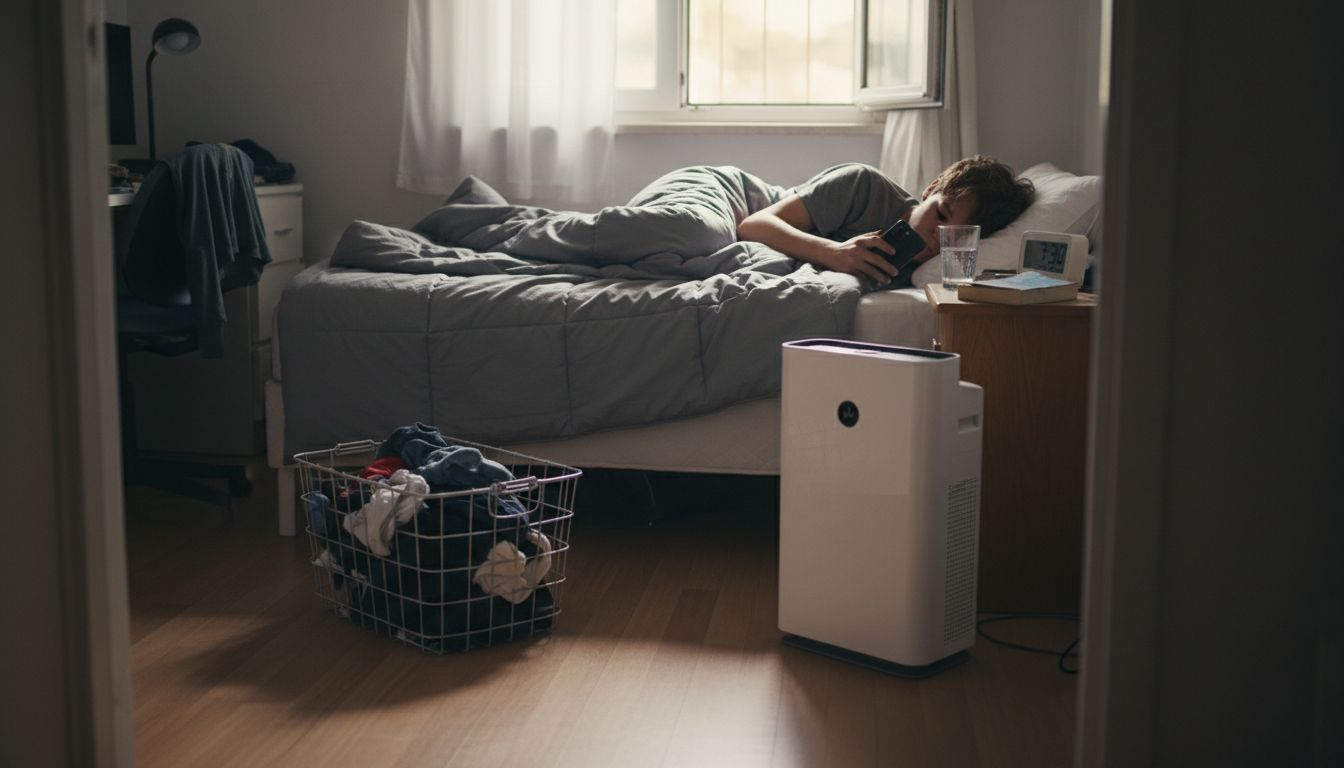
Pro tip: Close windows and doors in the room with the air purifier to maximize its efficiency and prevent contaminated air from entering.
Step 3: Compare Filtration and Purification Technologies
Understanding the different air purification technologies is crucial for selecting the most effective device for your home. Air purifiers utilize multiple filtration methods designed to target specific types of indoor air contaminants.
Key air purification technologies include:
- HEPA Filters: Capture 99.97% of particles as small as 0.3 microns
- Activated Carbon Filters: Adsorb odors and volatile organic compounds (VOCs)
- UV-C Light: Deactivates microorganisms and bacteria
- Ionizers: Charge particles for removal (with potential ozone concerns)
- Hybrid Systems: Combine multiple purification methods
When comparing these technologies, consider your specific air quality needs. HEPA filters remain the gold standard for particle removal, especially for allergy and asthma sufferers. Activated carbon filters excel at eliminating odors and chemical pollutants, while UV-C light provides an additional layer of microbial protection.
Not all air purification technologies are created equal – understanding their strengths and limitations is key to making an informed decision.
Beware of ionizer technologies that may generate harmful ozone. Hybrid systems offering multiple filtration methods typically provide the most comprehensive air cleaning approach. Look for devices that combine HEPA filtration with activated carbon and potentially UV-C light for maximum effectiveness.
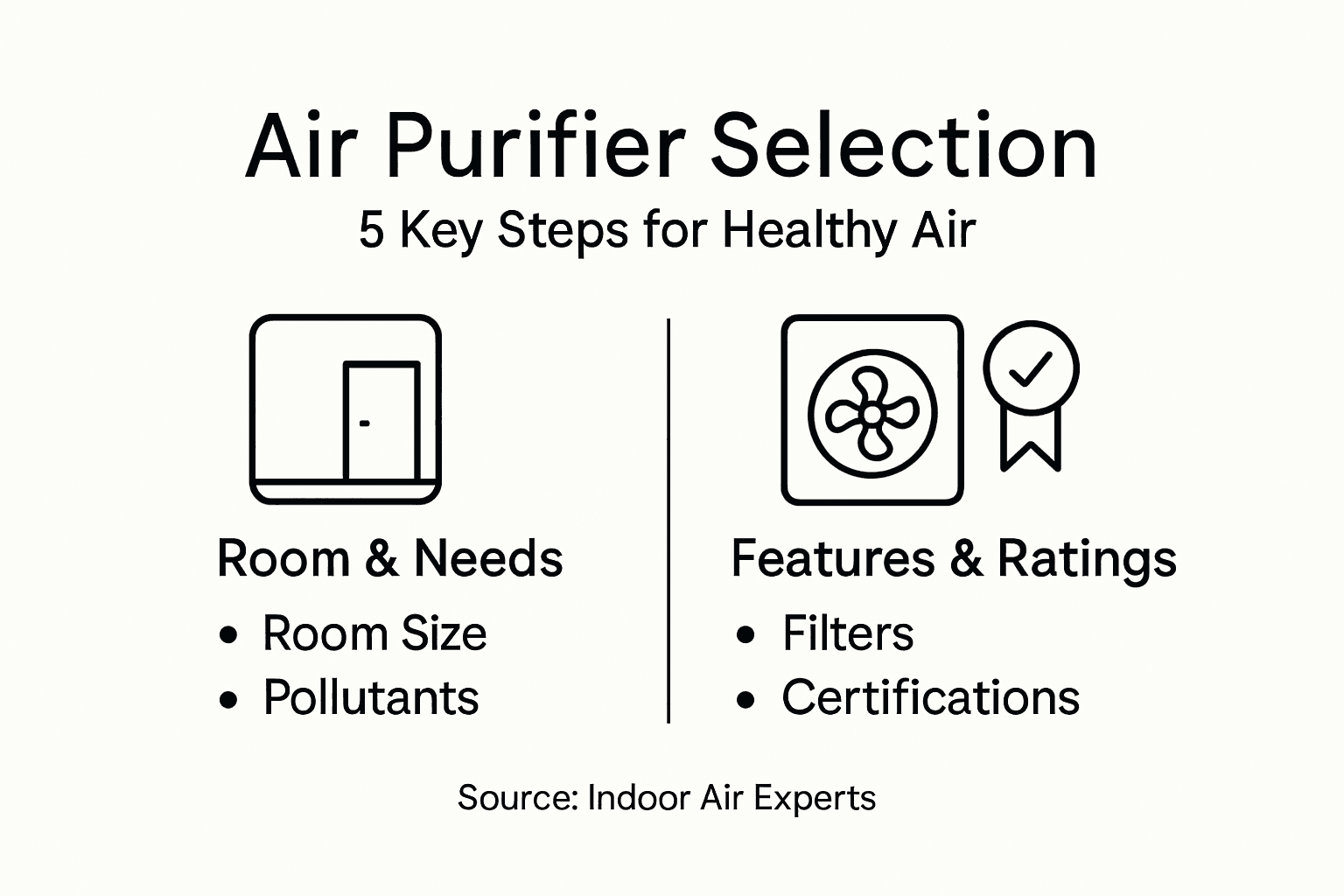
Compare popular air purification technologies and what they target:
| Technology | Targets | Limitation or Consideration |
|---|---|---|
| HEPA Filter | Particles, allergens | Requires replacement, can be noisy |
| Activated Carbon | Odors, VOCs, chemicals | Ineffective for particles, needs replacement |
| UV-C Light | Microbes, bacteria | Not effective for particles or gases |
| Ionizer | Particles (via charge) | May produce ozone |
| Hybrid System | Multiple pollutant types | Usually costs more |
Pro tip: Always check the specifications of air purifiers to verify the specific filtration technologies included and their proven effectiveness against different types of airborne contaminants.
Step 4: Evaluate Features for Health and Convenience
Choosing an air purifier involves more than just filtration technology – you need to consider features that enhance both health benefits and user experience. Clean Air Delivery Rate (CADR) provides critical performance insights to help you make an informed decision.
Key features to evaluate include:
- Multiple Fan Speeds: Adjust cleaning intensity based on air quality
- Filter Change Indicators: Ensure consistent filtration performance
- Sleep Mode: Quiet operation for nighttime use
- Smart Air Quality Sensors: Automatically adjust purification settings
- Energy Efficiency Ratings: Minimize electricity consumption
Pay close attention to the CADR ratings for different pollutants like tobacco smoke, pollen, and dust. Higher values indicate more rapid and effective air cleaning. Smart models with integrated sensors can dynamically monitor and respond to changing indoor air conditions, providing an adaptive approach to air purification.
Not all air purifier features are created equal – prioritize those that directly impact your health and comfort.
Consider your specific needs when selecting additional features. For bedroom use, prioritize quiet operation. For allergy sufferers, look for models with authentic manufacturer-backed filters and advanced filtration capabilities. Some advanced units even offer compatibility with high-efficiency HVAC filters for whole-home air quality improvement.
Pro tip: Compare the actual manufacturer specifications and independent testing results, not just marketing claims, to truly understand an air purifier’s performance capabilities.
Step 5: Verify Certifications and Check Performance Ratings
Ensuring the credibility and performance of your air purifier requires careful examination of official certifications and independent testing results. AHAM Verifide certification provides critical validation of manufacturer performance claims.
Key certifications to look for include:
- AHAM Certification: Third-party performance verification
- ENERGY STAR Rating: Guarantees energy-efficient operation
- Clean Air Delivery Rate (CADR): Measures filtration effectiveness
- Tested Pollutant Removal Percentages: Specific performance metrics
- Independent Laboratory Testing Results: Unbiased performance evaluation
Performance ratings offer concrete evidence of an air purifier’s capabilities. The Clean Air Delivery Rate specifically measures filtration efficiency for tobacco smoke, pollen, and dust, providing a standardized method to compare different devices.
Not all certifications are created equal – focus on those from reputable, independent organizations that provide transparent testing methodologies.
Pay special attention to manufacturers who voluntarily submit their products for rigorous third-party testing. These companies demonstrate confidence in their technology by allowing independent verification of their performance claims.
Pro tip: Cross-reference manufacturer specifications with multiple certification databases to ensure you’re getting accurate and comprehensive performance information.
Enhance Your Home’s Air Quality with Trusted Solutions
If you have been exploring how to select an air purifier to tackle pet dander, dust mites, or VOCs in your home, you understand the importance of choosing the right technology and size for your space. The challenges of indoor pollutants call for advanced filtration systems that deliver clean air consistently and quietly. With a focus on HEPA filters, activated carbon, and smart features, your goal is to breathe easier and protect your family’s health.
Discover the range of premium air purifiers at Coway Water Purifier designed to meet your specific air quality needs. Explore various models and enjoy benefits such as UV sanitization, energy-efficient operation, and comprehensive service including free delivery and installation. Take control of your indoor environment today by visiting our Uncategorized Archives – Coway Water Purifier for detailed product information. Start your journey to fresher air now by exploring options at Coway Water Purifier and choose a purifier tailored for your healthiest home ever.
Frequently Asked Questions
How can I assess my indoor air quality needs before selecting an air purifier?
Start by identifying potential sources of air pollutants in your home, such as pet dander, dust mites, or mold spores. Pay attention to any health symptoms like coughing or sneezing, which can indicate poor air quality. Keeping a brief journal of these observations will help you determine your specific air quality challenges.
What factors should I consider when determining the right size of air purifier for my room?
Measure your room’s length, width, and height to calculate the total cubic footage. Look for an air purifier with a Clean Air Delivery Rate (CADR) that can achieve at least five air changes per hour for effective air cleaning.
What filtration technologies should I compare when selecting an air purifier?
Consider different technologies like HEPA filters, activated carbon filters, and UV-C light systems. HEPA filters are ideal for capturing small particles and allergens, while activated carbon filters are effective for eliminating odors and chemical pollutants; choose based on your specific indoor air quality needs.
Which features enhance the health and convenience of an air purifier?
Look for features such as multiple fan speeds, filter change indicators, and smart air quality sensors. Selecting purifiers with higher Clean Air Delivery Rates (CADR) can provide quicker and more effective air cleaning, enhancing your overall experience.
How can I verify the performance and credibility of an air purifier?
Check for official certifications like AHAM or ENERGY STAR ratings to ensure the unit meets standardized performance metrics. Pay attention to independent testing results that provide unbiased evaluations of how effectively the purifier removes pollutants.
What should I do if I notice persistent air quality issues even after using an air purifier?
Evaluate your air purifier’s size and filtration technology to ensure they align with your specific air quality challenges. Consider relocating the unit to areas with higher foot traffic or combining additional air-cleaning methods for improved results.
Recommended
- How to Assess Indoor Air Quality Effectively at Home – Coway Water Purifier
- 7 Key Benefits of Air Purifiers for Urban Homeowners – Coway Water Purifier
- Why Filter Indoor Air: Complete Guide for Homeowners – Coway Water Purifier
- How Air Purifiers Remove Allergens at Home – Coway Water Purifier
- What Is At-Home Health Testing and Why It Mat… | Biostarks
- How To Boost Immune System Naturally: 15 Science-Based Tips – Float Therapy Wilmslow
