
Uncategorized
HEPA vs Carbon Filter: Key Differences Explained
May
TL;DR:
- HEPA filters mechanically trap airborne particles like dust and pollen with 99.97% efficiency at 0.3 microns, while carbon filters adsorb gases, odors, and VOCs through chemical bonding. Most indoor pollutants include both particles and gases, so using both filter types together ensures comprehensive air cleaning. Regular replacement of filters is essential, with HEPA filters lasting 6 to 12 months and carbon filters needing change every 3 to 6 months, depending on environmental factors.
Most homeowners shopping for an air purifier assume all filters work the same way. They don’t. The difference between HEPA and carbon filters is not a matter of one being better than the other. They target completely different types of pollution. HEPA catches the particles you can see float in a sunbeam. Carbon captures the gases and odors you can smell but never see. Understanding how they each work is what separates an air purifier that actually cleans your air from one that only cleans part of it.
Table of Contents
- Key takeaways
- The difference between HEPA and carbon filters
- What each filter actually removes
- Filter maintenance and replacement timing
- Why you usually need both filters together
- Choosing the right filter setup for your home
- My honest take on where people go wrong
- Coway’s dual filtration technology for your home
- FAQ
Key takeaways
| Point | Details |
|---|---|
| HEPA captures solid particles | HEPA traps dust, pollen, and pet dander down to 0.3 microns with 99.97% efficiency. |
| Carbon targets gases and odors | Activated carbon adsorbs VOCs, cooking odors, and formaldehyde that HEPA physically cannot catch. |
| Neither filter replaces the other | Real indoor air contains both particles and gases, so both filter types are needed together. |
| Carbon wears out invisibly | Carbon saturation shows no visual signs, making scheduled replacement critical for performance. |
| Carbon quality varies widely | The amount of carbon and bed depth determine actual effectiveness, not just marketing claims. |
The difference between HEPA and carbon filters
HEPA stands for High Efficiency Particulate Air. It is a mechanical filter made of a dense mat of randomly arranged fibers, typically fiberglass. Air passes through, and solid particles get trapped through a combination of interception, impaction, and diffusion. True HEPA filters capture 99.97% of airborne particles at 0.3 microns, which is actually the hardest particle size to trap. Larger and smaller particles are caught even more efficiently. Nothing fancy happens here. It is pure physics.
Activated carbon filters work completely differently. The carbon is treated to create millions of microscopic pores on its surface, a process that gives it an enormous surface area. A single gram of activated carbon can have a surface area equivalent to adsorbing gases across thousands of square meters. When air passes through, gas molecules bind to the carbon surface in a process called adsorption. This is not absorption. The molecules stick to the outside of the carbon rather than soaking into it.
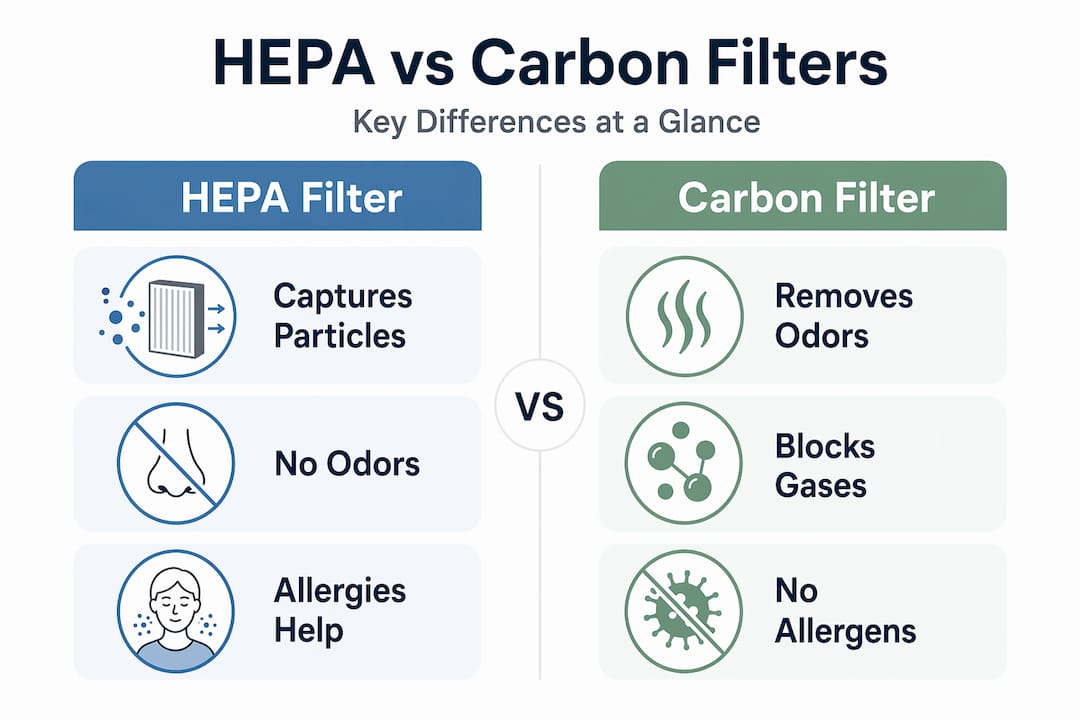
Pro Tip: Do not confuse the two processes: HEPA physically catches solid particles like a net, while carbon chemically bonds gas molecules to its surface. They are fundamentally different tools.
| Feature | HEPA filter | Carbon filter |
|---|---|---|
| Filtration method | Mechanical trapping | Adsorption |
| Targets | Solid particles | Gases, odors, VOCs |
| Visible when saturated | Yes, turns gray or brown | No, looks clean even when spent |
| Typical lifespan | 6 to 12 months | 3 to 6 months |
| Removes allergens | Yes | No |
| Removes cooking odors | No | Yes |
What each filter actually removes
This is where the HEPA filter vs carbon filter conversation gets practical. Each filter type has a specific lane, and neither one crosses over.
What HEPA removes:
- Dust and dust mite debris
- Pollen from trees, grasses, and weeds
- Pet dander and animal hair fragments
- Mold spores
- Smoke particles (the visible solid component)
- Bacteria and some viruses when filtered at 0.3 microns
What carbon removes:
- Cooking odors (garlic, fish, frying oils)
- Tobacco and wildfire smoke chemicals
- Volatile organic compounds (VOCs) from paints, cleaning products, and adhesives
- Formaldehyde released from furniture, flooring, and building materials
- Benzene from vehicle exhaust or attached garages
- General household odors from trash, bathrooms, and pets
The critical line here is this: odor molecules are gases far smaller than the smallest particles HEPA is designed to trap. They pass straight through the fiber mesh without interacting with it at all. Running your air through a HEPA filter to remove cooking smell is like trying to catch water with a chain-link fence. On the flip side, carbon has no mechanical structure to catch a pollen grain. The two filters address completely separate pollutant classes.
This also means that HEPA filters are essential for allergy and asthma sufferers dealing with airborne particulates, while carbon filters matter most when you are dealing with chemical sensitivities, strong odors, or off-gassing from new furniture.
Filter maintenance and replacement timing
Knowing when to replace each filter type is as important as owning the right one. The maintenance schedules are different, and confusing them can silently degrade your air quality.
-
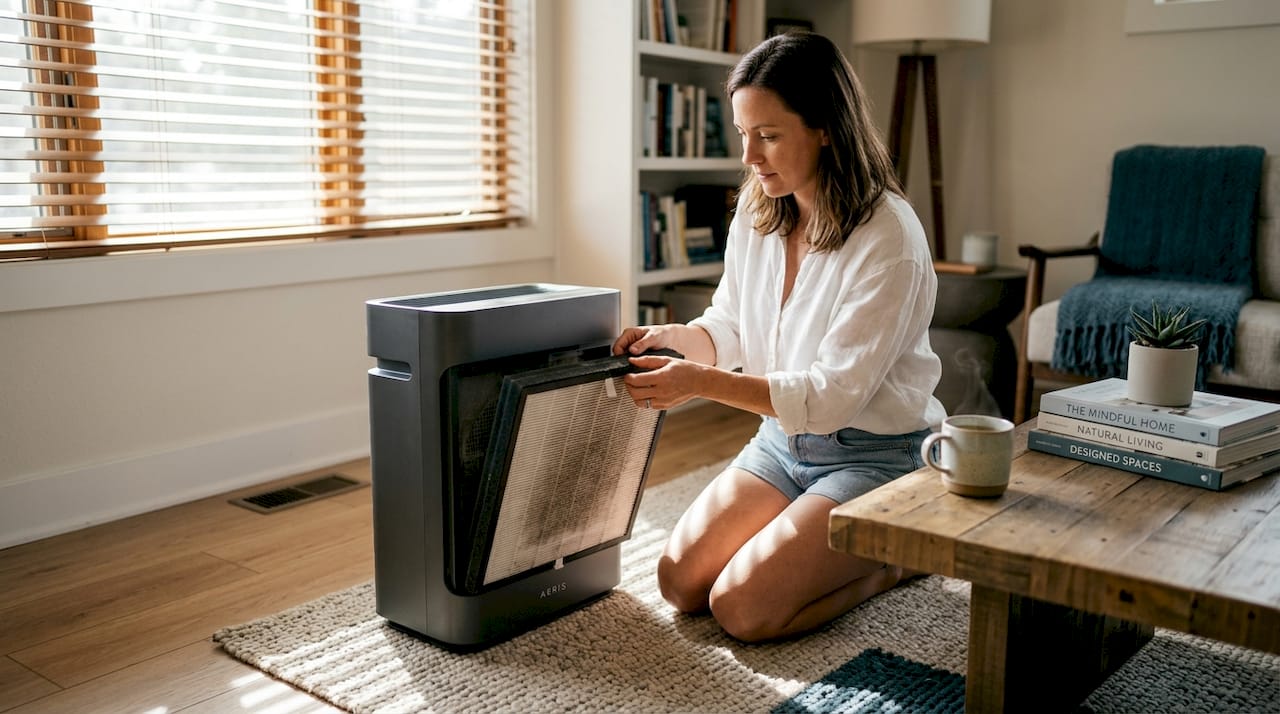
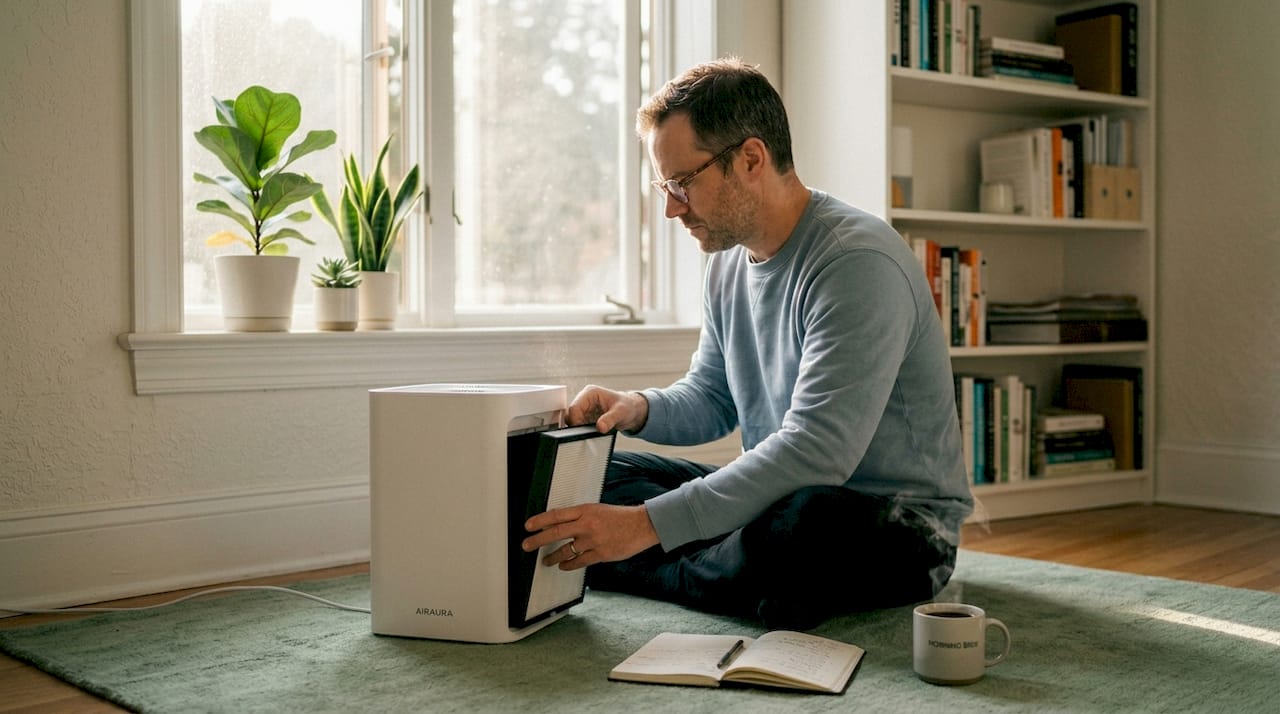
Replace your HEPA filter every 6 to 12 months. HEPA filters show physical signs of loading. The filter media darkens and collects visible debris. You can see when it is working hard. That said, a visually dirty filter is also a restricted filter. Airflow drops, and your purifier works harder for worse results.
-
Replace your carbon filter every 3 to 6 months. Carbon saturation is completely invisible. The filter looks exactly the same when it is new as when it is fully spent. Most people keep carbon filters in service far too long because there is no visual cue telling them to change it. The odors that seemed to disappear when the filter was new start creeping back, but it happens gradually enough that many people do not notice right away.
-
Adjust schedules based on your environment. A home with two dogs, a smoker, or a kitchen that sees heavy daily cooking will saturate carbon faster than a single-occupant apartment. High-VOC environments like newly renovated homes can exhaust a carbon filter in weeks, not months.
-
Track replacement dates on a calendar or your phone. Because carbon performance loss is hidden, you cannot rely on visual inspection. Set a reminder and replace on schedule.
Pro Tip: When you replace your carbon filter, note any odors that return within the first few days. That is your baseline for how quickly your specific environment saturates the filter. Use that data to set a more accurate replacement schedule.
Why you usually need both filters together
Here is the reality of indoor air: it contains both particles and gases at the same time. Your home does not generate only one type of pollutant. When you cook a meal, you release grease particles (caught by HEPA) and smoke odors (caught by carbon). When you have pets, you deal with dander (HEPA) and pet odors (carbon). Wildfire smoke events hit with both visible particulate matter and toxic chemical gases simultaneously.
Particle and gas-phase pollutants coexist indoors, which is why relying on only one filter type always leaves a gap. The carbon vs HEPA filter comparison is not a competition. It is a collaboration.
| Scenario | HEPA handles | Carbon handles |
|---|---|---|
| Pet owner | Dander, hair fragments | Pet odors |
| Wildfire smoke | Smoke particles | Chemical gases, VOCs |
| New home renovation | Construction dust | Formaldehyde, paint fumes |
| Daily cooking | Airborne grease particles | Cooking odors |
| Allergy season | Pollen, mold spores | None (particles only issue) |
Cheaper air purifiers often address this by using a thin carbon mesh layer over the HEPA filter. That sounds like a solution, but thin carbon layers provide minimal adsorption capacity. You need a substantial carbon bed with real mass behind it to see meaningful gas and odor reduction. This is one area where reading the product specs matters far more than reading the box copy.
For a structured walkthrough on evaluating air purifier specs before you buy, the air purification checklist at Cowayswaterpurifier covers the key technical checkpoints step by step.
Choosing the right filter setup for your home
Applying the HEPA and carbon filter uses framework to your actual life comes down to three questions: What pollutants are you dealing with? How intensely? And what does your budget allow for maintenance?
Match the filter to your dominant problem:
- If your main concern is seasonal allergies or asthma, a high-quality HEPA is your priority. Carbon is still worth having, but HEPA is doing the heavy lifting.
- If you cook daily, live with smokers, or recently moved into a renovated home, carbon filter effectiveness is your biggest variable. Prioritize a purifier with a substantial activated carbon stage.
- If you live near a highway, have an attached garage, or experience wildfire seasons, you need both at full capacity. Neither filter is optional in those situations.
Evaluate carbon filter quality beyond the label. Carbon filter specs are not standardized the way HEPA specs are. HEPA efficiency is well-standardized at 99.97% for 0.3 micron particles, but carbon filter claims vary widely based on carbon type, weight, and bed depth. Look for actual carbon weight listed in grams, not just “activated carbon filter” as a feature. More mass means more adsorption capacity and a longer functional life.
Factor in your local environment. Urban apartments near heavy traffic see higher benzene and NOx levels. Suburban homes with large yards face heavier pollen loads. Homes in humid climates may see faster carbon saturation since moisture reduces adsorption efficiency. These factors affect how often you replace filters, which directly affects your annual operating cost. A health-focused air purifier guide can help you match purifier specs to your specific living situation.
My honest take on where people go wrong
I’ve watched a lot of people invest in decent air purifiers and then quietly wonder why their air still smells stale or why their allergies never fully clear up. After looking into this closely, the pattern is almost always the same. They bought a purifier with a HEPA filter, trusted it to do everything, and never thought critically about the carbon stage.
The biggest mistake I see is treating HEPA as a universal air purification solution. HEPA is excellent at what it does. But the invisible gases and odors in your home, the formaldehyde from your pressed-wood furniture, the benzene drifting in from outdoor traffic, the VOCs off-gassing from your new couch, none of those respond to HEPA at all. A pristine HEPA filter does nothing for them.
The second mistake is underestimating how much carbon quality varies. I’ve seen purifiers marketed with “activated carbon filtration” that contain barely a few grams of carbon embedded in a foam pre-filter. That is not meaningful odor or VOC control. It is a marketing feature. Real carbon filtration requires real carbon mass, and the units that deliver it are usually not the cheapest option in the aisle.
The third thing most articles skip over is filter staging. Placing HEPA before carbon in the airflow path is not just a convention. HEPA upstream of carbon physically protects the carbon from being fouled by particles, which extends carbon life and keeps its adsorption surfaces available for gases. If your purifier stages these in the wrong order, you are losing efficiency whether or not the box tells you so.
Maintain both on schedule. Do not wait until something smells off or until you can see the filter is dirty. Carbon gives you no warning.
— Soldierboy
Coway’s dual filtration technology for your home
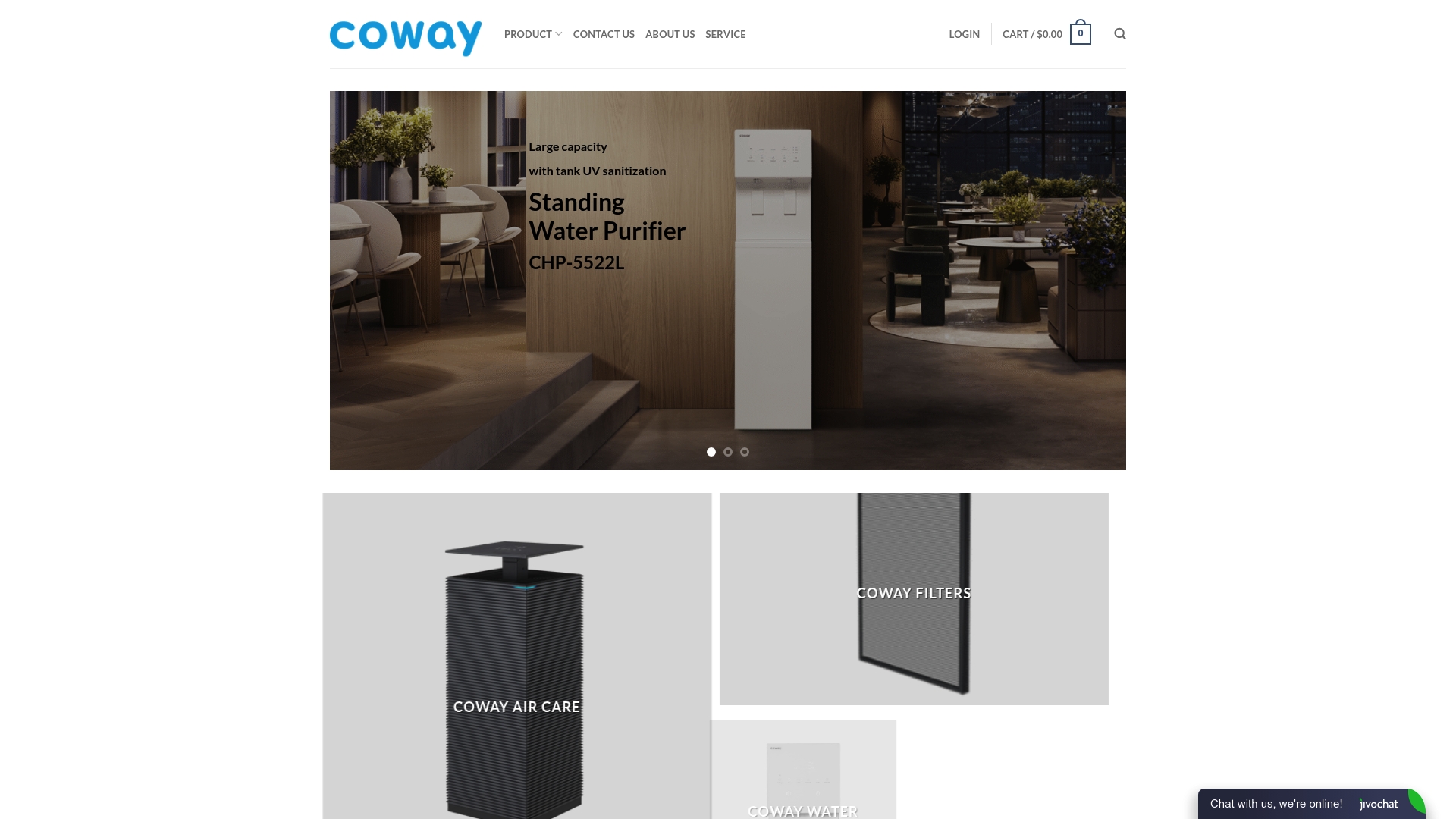
If you have been putting off buying an air purifier because the filter options felt confusing, this is actually the straightforward part. Cowayswaterpurifier carries Coway air purifiers that combine true HEPA filtration with a substantial activated carbon stage, addressing both particles and gases without requiring you to compromise on either. You get the particle capture performance that allergy sufferers depend on and the odor and VOC control that makes a real difference in daily comfort. Browse the full range of Coway air care products to compare models by room size and filtration spec. If you want to go deeper on which model fits your home before purchasing, the air purifier selection guide at Cowayswaterpurifier walks through filter specs, room coverage, and maintenance costs in plain language.
FAQ
What is the main difference between HEPA and carbon filters?
HEPA filters physically trap solid particles like dust, pollen, and pet dander at 99.97% efficiency for particles down to 0.3 microns. Carbon filters use adsorption to capture gases, odors, and VOCs that pass straight through HEPA.
Can a HEPA filter remove odors and VOCs?
No. Odor molecules and VOCs are gases far smaller than the particles HEPA is designed to trap. They pass through HEPA fiber media without any interaction. Only activated carbon can adsorb these gas-phase pollutants.
How often should you replace a carbon filter vs a HEPA filter?
HEPA filters typically last 6 to 12 months. Carbon filters need replacement every 3 to 6 months because carbon saturates and loses adsorption capacity without showing any visible signs of wear.
Do you need both a HEPA and a carbon filter in your air purifier?
For most homes, yes. Indoor air contains both particles and gases at the same time. Relying on one filter type alone leaves half of your pollutant load unaddressed. Combined filtration is the standard for real air quality improvement.
Does carbon filter quality actually matter?
Significantly. Carbon filter effectiveness depends on the amount and type of carbon used. Thin carbon mesh layers in budget purifiers offer minimal protection. Look for purifiers that list actual carbon weight and bed depth to verify meaningful adsorption capacity.
Recommended
- How Purifiers Save Cost for Homes and Businesses – Coway Water Purifier
- How Purifiers Save Cost for Homes and Businesses – Coway Water Purifier
- Understanding particulate filtration for healthier home air – Coway Water Purifier
- What is a HEPA Filter? Understanding Its Importance – Coway Water Purifier
