
Uncategorized
Air purification trends 2026: 7.2% market growth insights
Mar
Not all air purifiers are created equal, and the gap between a basic box fan with a filter and today’s advanced hybrid systems is wider than most people realize. The U.S. air purifier market is projected to reach $6.82 billion by 2030, growing at 7.2% annually. That kind of growth signals something important: health-conscious homeowners and business owners are no longer satisfied with guesswork. They want technology that actually works. This guide breaks down what’s driving that demand, which technologies deliver real results, and how to make a smart choice for your home or workplace.
Table of Contents
- Why air purification is more critical than ever
- Core air purification technologies in 2026
- Real-world air purifier performance: What the evidence shows
- Expert advice: Selecting the right air purifier for your space
- Go further with health-focused air and water purification
- Frequently asked questions
Key Takeaways
| Point | Details |
|---|---|
| Market growth fuels innovation | Demand for air purifiers in the U.S. and Europe is driving better, smarter technologies. |
| Match purifier to pollutant | HEPA excels with particles and allergens; PCO/UV/PECO are needed for gases, odors, and pathogens. |
| Hybrid solutions provide best coverage | The most effective systems now combine multiple filtration and purification technologies into one device. |
| Certifications ensure safety | Look for CADR, zero-ozone (UL2998), and true HEPA certifications to avoid hidden risks. |
| Maintenance maximizes benefits | Changing filters regularly and correct device placement are just as important as choosing the right technology. |
Why air purification is more critical than ever
The pandemic changed how people think about the air inside their homes and offices. Demand for air purifiers surged, and it hasn’t slowed down. The U.S. market is growing over 7% annually because health awareness is no longer a niche concern. It’s mainstream. Across the Atlantic, the European market is expanding rapidly, with smart features gaining traction as urban pollution worsens in major cities.
One of the biggest misconceptions is that any air purifier will handle any problem. That’s simply not true. A standard HEPA unit won’t remove volatile organic compounds (VOCs), which are gases released by paint, cleaning products, and furniture. A carbon filter won’t capture fine particulate matter (PM2.5) from wildfire smoke or traffic exhaust. Understanding what you’re actually dealing with is the first step.
“Indoor air can be two to five times more polluted than outdoor air, yet most people spend 90% of their time indoors.”
Here’s what’s actually driving demand right now:
- Wildfire smoke spreading PM2.5 across entire regions, even indoors
- Allergen seasons getting longer and more intense due to climate shifts
- Post-pandemic awareness of airborne pathogen transmission
- Urban pollution seeping into homes and offices through ventilation gaps
- Regulatory pressure pushing businesses to meet indoor air quality standards
Exploring emerging smart air solutions and understanding the full range of indoor pollutants you’re up against is essential before you invest in any system.
Core air purification technologies in 2026
With the context set, it’s time to compare today’s main technologies so you can choose wisely. Each one has a specific job, and none of them does everything.
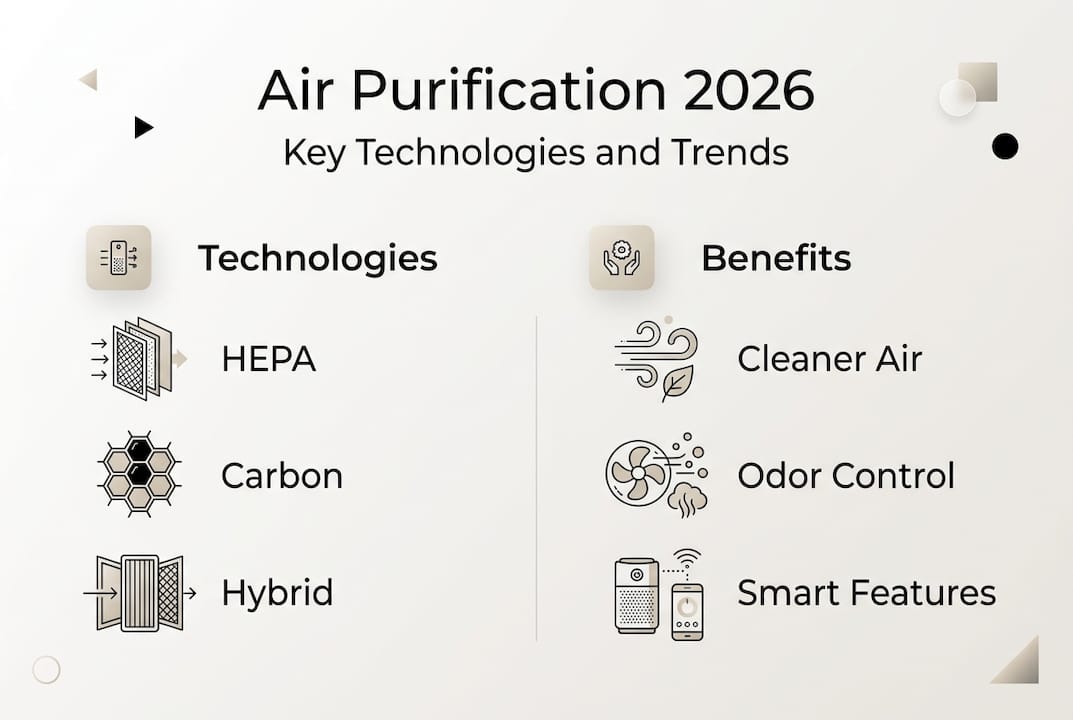
HEPA filtration remains the gold standard for capturing particles. True HEPA filters trap 99.97% of particles at 0.3 microns, including dust, pollen, mold spores, and pet dander. However, HEPA filters are most effective for allergens and particles but won’t touch VOCs or gases. That’s a critical limitation if you’re dealing with chemical off-gassing or cooking fumes.
Activated carbon fills that gap by adsorbing gases and odors. It works well alongside HEPA but has a finite capacity and needs regular replacement.
PCO (photocatalytic oxidation) and PECO (photoelectrochemical oxidation) use light-activated catalysts to break down VOCs, bacteria, and viruses at the molecular level. PCO, PECO, UV-C, and plasma ionizers each carry unique strengths and risks, including the potential for ozone byproducts in some models.
Hybrid systems combine two or more of these technologies. Hybrid systems are recommended for full-spectrum air cleaning because no single technology covers every contaminant type.
| Technology | Best for | Limitation | Ozone risk |
|---|---|---|---|
| HEPA | Particles, allergens, PM2.5 | No gas/VOC removal | None |
| Activated carbon | Gases, odors, VOCs | Limited capacity | None |
| PCO/PECO | VOCs, bacteria, viruses | Slower action | Low to moderate |
| UV-C | Pathogens, mold spores | No particle capture | Low |
| Plasma/ionizer | Particles, some pathogens | Ozone byproduct risk | Moderate to high |
| Hybrid | Full-spectrum coverage | Higher cost | Varies by model |
Pro Tip: When reviewing types of home air purifiers, always check whether a device carries UL2998 zero-ozone certification before purchasing, especially if you have children, pets, or respiratory conditions.
“The best air purifier for your space isn’t the most expensive one. It’s the one designed for your specific contaminant mix and room size.”
For a deeper breakdown of which models perform best for specific health needs, the health-focused purifier guide is a solid starting point.
Real-world air purifier performance: What the evidence shows
Understanding the technologies is vital, but what do the numbers and field tests actually reveal about cleaner air? The results are encouraging but come with important caveats.
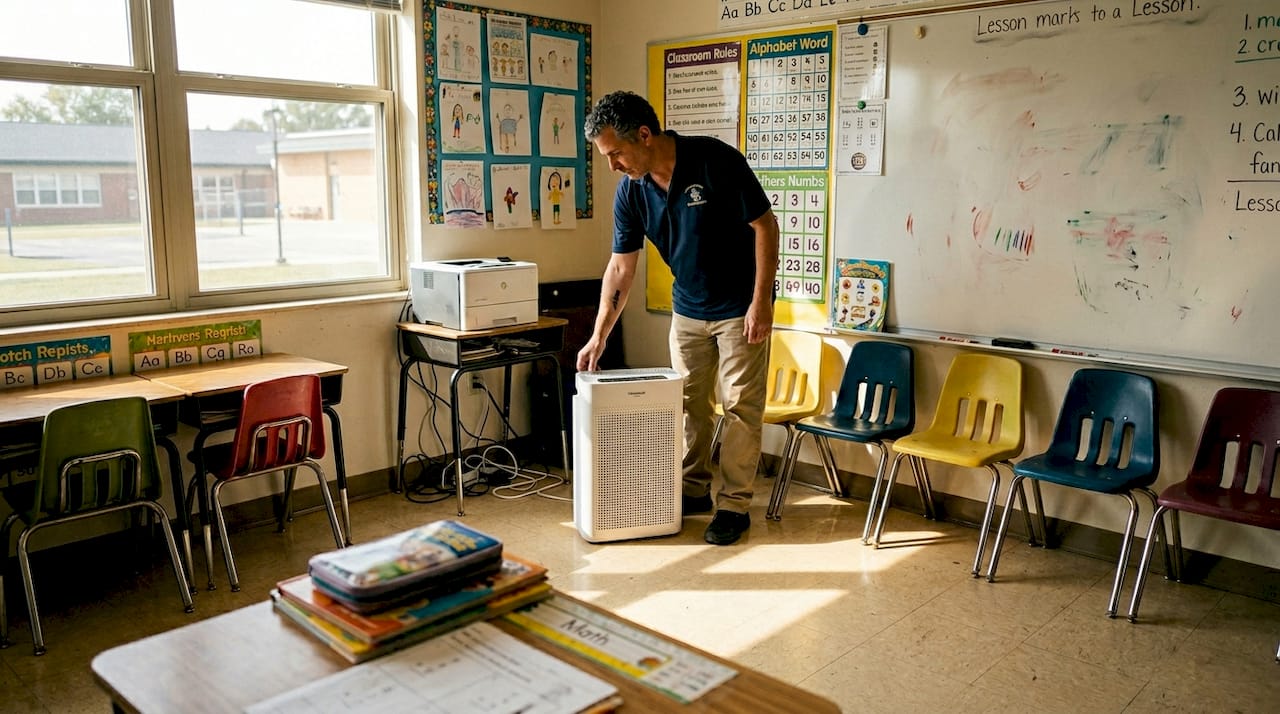
Portable HEPA units reduce PM2.5 by nearly 40% in classrooms and by 15% in homes during wildfire events. That’s meaningful protection, but it also shows that performance varies significantly by setting. A unit that works well in a sealed classroom may underperform in an open-plan office with high foot traffic.
MERV16 filters capture 95% or more of 0.3-micron particles, and UV-C systems can deactivate viruses in seconds under the right conditions. These numbers sound impressive, but they depend heavily on airflow rates, room volume, and how often the air cycles through the unit.
Here are the top mistakes that undermine real-world performance:
- Buying the wrong size. A unit rated for 200 square feet won’t clean a 500-square-foot open kitchen effectively.
- Poor placement. Tucking a purifier in a corner or behind furniture blocks airflow and cuts efficiency dramatically.
- Skipping filter changes. A clogged HEPA filter doesn’t just stop working. It can become a breeding ground for the very contaminants it captured.
- Ignoring maintenance alerts. Smart purifiers track filter life for a reason. Dismissing those alerts is a common and costly mistake.
- Overestimating a single unit. Large homes and open commercial spaces often need multiple units or integration with HVAC systems.
Reviewing top air purifiers side by side and using an air purification checklist before you buy can save you from these common pitfalls.
Expert advice: Selecting the right air purifier for your space
With the latest data in hand, let’s explore how you can confidently select and get the most from your air purifier investment. The specs can feel overwhelming, but a few key metrics cut through the noise.
CADR (Clean Air Delivery Rate) measures how quickly a purifier cleans a specific volume of air. Higher CADR means faster cleaning. Match the CADR rating to your room size, not just the square footage listed on the box. Ceiling height matters too.
ACH (Air Changes per Hour) tells you how many times the purifier cycles all the air in a room each hour. For allergy sufferers or anyone with respiratory conditions, aim for at least 4 to 5 ACH. Experts recommend prioritizing CADR and room-size matching along with UL2998 zero-ozone certification as non-negotiable criteria.
Hybrid devices offer the most complete protection for urban homes in the U.S. and Europe, where both particulate and chemical pollution are ongoing concerns.
Pro Tip: Don’t just read the filter specs. Check the actual replacement cost and availability. Some budget purifiers have expensive proprietary filters that make the total cost of ownership much higher than a premium unit with standard replacements.
Here’s a quick checklist for smarter selection:
- Match CADR to your room size and ceiling height
- Confirm UL2998 zero-ozone certification for any ionizer or UV model
- Look for multi-stage filtration (HEPA plus carbon at minimum)
- Check filter replacement cost and frequency before buying
- Prioritize smart features like air quality sensors if you travel or work remotely
- For businesses, consider units with scheduling and remote monitoring
For a step-by-step walkthrough, the guide on selecting a home air purifier covers every major decision point. If budget is a concern, cost-saving air purification tips can help you get maximum performance without overspending.
Go further with health-focused air and water purification
You now hold the latest insights on air purification technology, performance data, and selection criteria. If you want to take your indoor air quality a step further, Coway’s resources are built specifically for homeowners and small business owners who want real results, not marketing promises.
Start with the best air purifier 2026 guide to compare top-performing models across different room sizes and health needs. If you’re still narrowing down your options, the air purifier selection guide walks you through every key decision with clarity. Before you finalize anything, run through the purification checklist to make sure your setup covers every contaminant type in your specific space. Clean air and clean water work together for whole-home wellness, and Coway’s product lineup is designed with exactly that in mind.
Frequently asked questions
What is the most effective type of air purifier for homes in 2026?
Hybrid systems are recommended for full-spectrum air cleaning. Models that combine HEPA, activated carbon, and PCO or UV technology remove both particles and gases, giving you the broadest protection available.
Do air purifiers remove viruses and bacteria?
HEPA filters capture many airborne particles including some virus carriers, while PCO, PECO, and UV-C systems can inactivate viruses and bacteria at the molecular level for more complete pathogen control.
Are smart air purifiers worth it for small businesses?
Smart features are becoming standard in European markets and are gaining ground in the U.S. For small businesses, remote monitoring and scheduling help maintain consistent air quality without requiring constant manual attention.
How often should I change air purifier filters?
Most HEPA and carbon filters need replacement every 6 to 12 months. Skipping changes is risky because clogged HEPA filters can harbor microbial growth, turning your purifier into a pollution source.
Is there any risk of ozone from air purifiers?
Some plasma, ionizer, and UV-C devices do emit ozone as a byproduct. Always look for UL2998 zero-ozone certification, which certified zero-ozone models confirm as the safest option for enclosed living and working spaces.
Recommended
- Emerging Air Purification Trends 2025: Smart, Sustainable Solutions – Coway Water Purifier
- Best air purifier 2026: health-focused selection guide – Coway Water Purifier
- Air purifier selection guide for healthier home in 2026 – Coway Water Purifier
- Air purification checklist: 6 steps for healthier home air – Coway Water Purifier
