
Uncategorized
Step by Step Air Purifier Cleaning: 2026 Guide
Jun
TL;DR:
- Regular cleaning and timely replacement of filters are essential for maintaining an air purifier’s performance and longevity. Proper procedures include turning off the device, cleaning the pre-filter every 2–4 weeks, and avoiding harsh chemicals or damp components to prevent damage and mold growth. Consistent, component-specific maintenance ensures accurate air quality readings and optimal indoor air purification results over time.
Effective step by step air purifier cleaning is the single most reliable way to extend your device’s lifespan and protect your indoor air quality. Most homeowners replace filters on schedule but skip the equally important tasks: cleaning the pre-filter, wiping down the housing, and maintaining the air quality sensor. Brands like Coway and Levoit publish specific air purifier cleaning instructions in their manuals for good reason. Skipping these steps forces your unit to work harder, shortens filter life, and can push contaminants back into your home. This guide walks you through every component, every interval, and every mistake worth avoiding.
What tools do you need before you start?
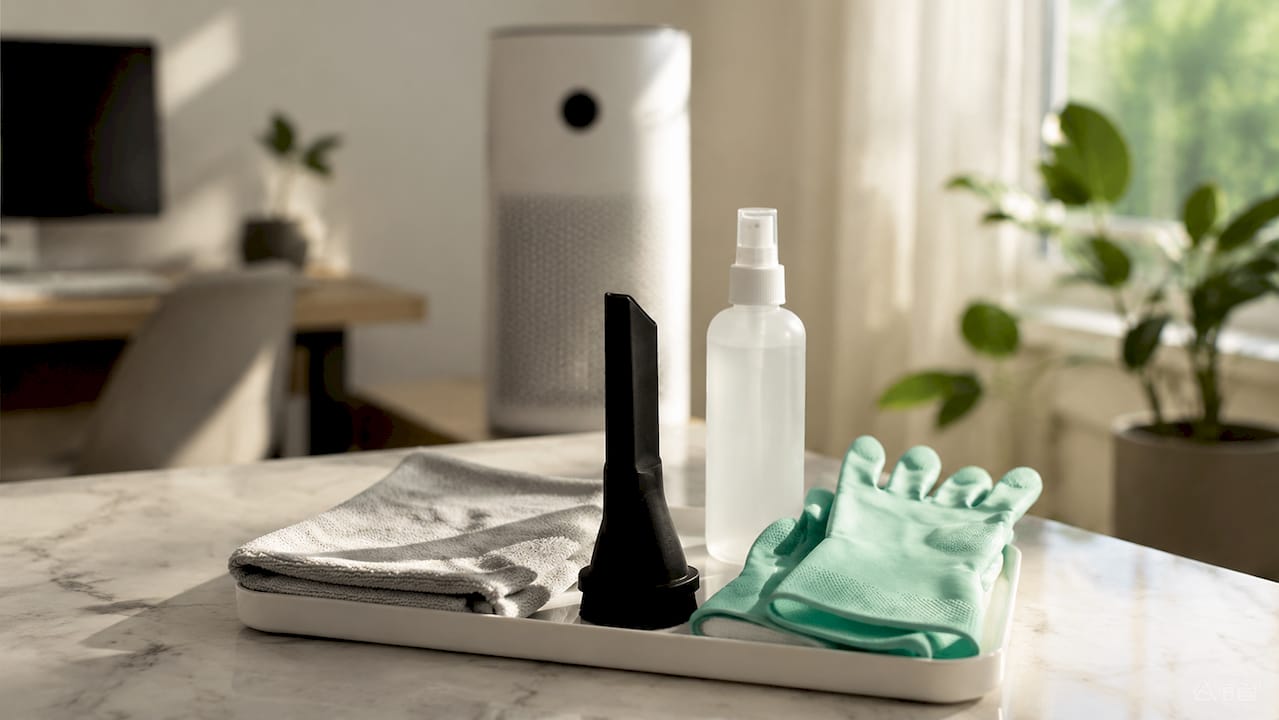
The right supplies make the entire air purifier cleaning process faster and safer. You need a soft microfiber cloth, a vacuum cleaner with a crevice or brush attachment, a soft-bristle brush, dry cotton swabs, and lukewarm water for washable components. That is the complete kit. Nothing exotic, nothing expensive.
Equally important is knowing what to leave under the sink. Avoid benzene, alcohol, bleach, chlorine, paint thinners, and any abrasive cleaner. These chemicals degrade the plastic housing and, worse, release harmful fumes the next time you run the unit. The Coway Airmega AP-1512HHS manual lists these substances explicitly as prohibited.
| Safe Cleaning Materials | Unsafe Cleaning Materials |
|---|---|
| Soft microfiber cloth | Bleach or chlorine solutions |
| Soft-bristle brush | Alcohol-based cleaners |
| Vacuum with crevice tool | Abrasive scrubbing pads |
| Dry cotton swabs | Paint thinners or solvents |
| Lukewarm water (washable parts only) | Compressed air canisters |
Pro Tip: Assemble a dedicated cleaning kit in a small labeled bin and store it near your air purifier. When everything is in one place, you are far more likely to clean on schedule instead of skipping a month.
Step by step air purifier cleaning for every component
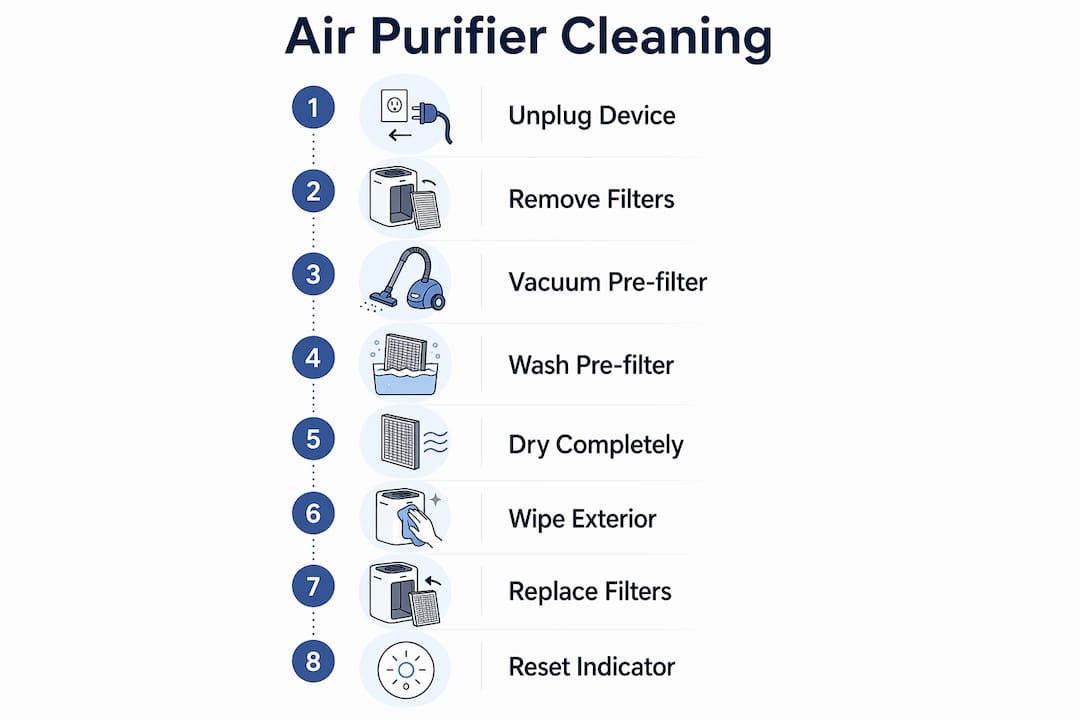
This is the core air purifier maintenance guide. Follow these steps in order every time you clean your unit.
-
Turn off and unplug the unit. Wait at least 5 minutes before opening any panels. This allows the fan to fully stop and eliminates the risk of electrical injury. Skipping this step is the most common cause of accidental damage during cleaning.
-
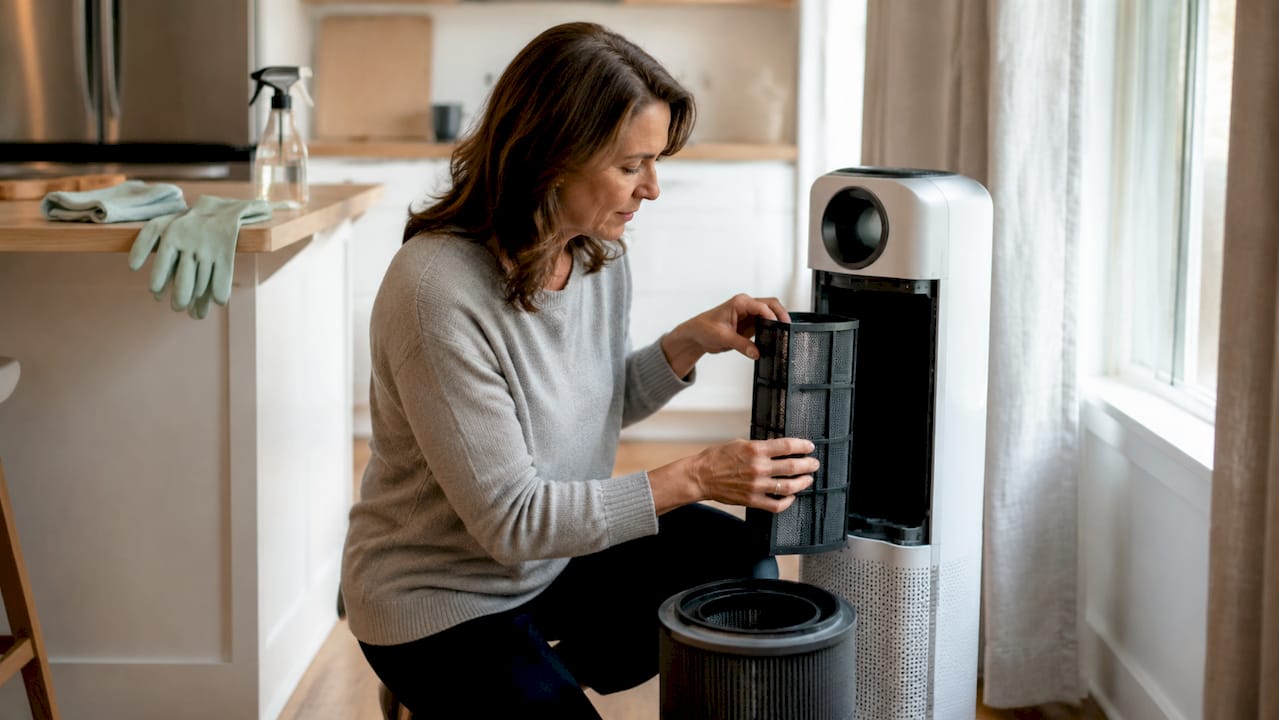
Remove and clean the pre-filter. The pre-filter catches large particles like pet hair, dust, and lint. Clean it every 2–4 weeks by vacuuming gently with a brush attachment or a soft-bristle brush. If your model has a washable pre-filter, as many Coway and Levoit units do, rinse it under lukewarm water and let it air dry completely on a clean surface. Do not rush this step.
-
Inspect and replace the main HEPA filter. The main HEPA filter is not a cleaning target. Washing or vacuuming a HEPA filter damages its fine-fiber structure and reduces its ability to capture microscopic particles. Check your manual for the replacement interval, which is typically every 6–12 months. If the filter looks gray and compressed, replace it regardless of the indicator light.
-
Clean the air quality sensor. The sensor is a small optical component that reads pollution levels in your room. Use dry cotton swabs to gently wipe the sensor lens every 2–3 months. Never use compressed air. Compressed air pushes dust deeper into the sensor housing and can crack delicate optical parts. Learn more about how sensors work to understand why this step matters more than most people realize.
-
Wipe down the interior and exterior housing. Use a dry or slightly damp microfiber cloth to wipe all surfaces inside and outside the unit. Pay attention to the air intake vents, where dust builds up fastest. Do not spray any liquid directly into the unit. Avoid all chemical cleaners on plastic surfaces.
Pro Tip: After rinsing a washable pre-filter, pat it with a dry cloth and then leave it in a warm, ventilated area for at least two hours before reinstalling. A filter that feels dry on the outside can still hold moisture inside. Residual moisture causes mold to grow rapidly inside the warm, enclosed housing.
What mistakes damage your air purifier during cleaning?
Most cleaning errors come from applying household cleaning logic to a precision appliance. Air purifiers are not kitchen appliances. The rules are different.
- Washing a non-washable HEPA filter. HEPA and carbon filters trap contaminants in a dense fiber matrix. Water collapses that matrix, traps dirt permanently, and creates conditions for microbial growth. If your manual does not say “washable,” treat the filter as replace-only.
- Using bleach or harsh chemical cleaners. Cleaning with bleach damages plastic components and leaves chemical residue that the unit then circulates through your home when you turn it back on.
- Reinstalling a damp pre-filter. This is the fastest way to grow mold inside your unit. Always confirm the filter is bone dry before it goes back in.
- Using compressed air on the sensor. This pushes dust into the optical housing rather than removing it, and it can physically damage the sensor lens.
- Ignoring the sensor entirely. A dirty air quality sensor gives inaccurate pollution readings, which causes the unit to run at the wrong speed. Your air quality suffers even though the machine appears to be working.
Troubleshooting quick reference: Persistent odors after cleaning usually mean the carbon filter needs replacement, not more cleaning. Poor airflow after a filter change often means the filter was installed backward. Check the arrow on the filter frame. Inaccurate sensor readings almost always trace back to a dirty sensor lens that needs a cotton swab wipe.
How often should you clean and replace each component?
A consistent air purifier maintenance schedule is what separates a unit that performs for five years from one that underperforms after eighteen months. The table below gives you the full picture at a glance.
| Component | Cleaning Frequency | Replacement Interval |
|---|---|---|
| Pre-filter | Every 2–4 weeks | As needed (if damaged) |
| Air quality sensor | Every 2–3 months | Rarely, if ever |
| HEPA filter | Do not clean | Every 6–12 months |
| Carbon/activated filter | Do not clean | Every 3–6 months |
| Exterior housing | Monthly | Not applicable |
Carbon filters deserve special attention because most homeowners forget them entirely. A saturated carbon filter stops absorbing odors and volatile organic compounds. Replacing it every 3–6 months keeps your unit effective against cooking smells, pet odors, and off-gassing from furniture.
Running your air purifier continuously on Auto mode is the best practice for sensor calibration and dust prevention. Continuous operation keeps the sensor active and responsive, which means it detects pollution spikes faster and adjusts fan speed accordingly. Turning the unit off and on repeatedly actually increases dust settling on internal components between cycles. For a deeper look at how to structure your ongoing maintenance workflow, Cowayswaterpurifier has a dedicated resource worth bookmarking.
Pro Tip: When you replace a filter, reset the filter indicator light immediately. If you skip the reset, the unit will trigger a replacement alert on the wrong schedule. Check your manual for the reset button location. On most Coway models, you hold the filter reset button for three seconds.
Key takeaways
Consistent, component-specific cleaning is the most effective way to maintain air purifier performance and prevent premature filter failure.
| Point | Details |
|---|---|
| Pre-filter cleaning frequency | Clean every 2–4 weeks by vacuuming or rinsing, and always dry completely before reinstalling. |
| HEPA filter handling | Never wash or vacuum a HEPA filter; replace it every 6–12 months as the manufacturer specifies. |
| Sensor maintenance | Wipe the sensor lens with a dry cotton swab every 2–3 months to preserve accurate air quality readings. |
| Chemicals to avoid | Never use bleach, alcohol, or abrasive cleaners; they damage plastic and release fumes when the unit runs. |
| Continuous operation benefit | Running the unit on Auto mode 24/7 keeps sensors calibrated and reduces how often deep cleaning is needed. |
Why most people are cleaning their air purifiers wrong
I have spent years looking at how homeowners actually maintain their air purifiers versus how they should. The gap is striking. Most people treat the HEPA filter like a furnace filter: they pull it out, tap it against the trash can, and put it back. That habit actively destroys the filter’s performance. The fine fibers that capture particles smaller than 0.3 microns are not designed to survive mechanical agitation.
The other thing I see constantly is people cleaning the outside of the unit religiously while ignoring the sensor for years. A dirty sensor is a hidden performance killer. The machine looks like it is running fine, the fan is spinning, the lights are on. But the sensor is reading the air incorrectly, so the unit never ramps up when pollution actually spikes. You think you have clean air. You do not.
My honest recommendation: tie your air purifier cleaning schedule to something you already do monthly. Pair it with changing your HVAC filter or your first-of-the-month home walkthrough. The stepwise air purifier care process I described above takes less than fifteen minutes once you have done it twice. The payoff is real. Units that are cleaned on schedule consistently outperform neglected ones, and they last significantly longer before needing full replacement.
One more thing worth saying: if you are buying a new unit, prioritize models with washable pre-filters and accessible sensor ports. These design features make the entire filter maintenance process dramatically easier and reduce the chance you will skip it.
— Soldierboy
Coway air purifiers make maintenance simpler
Cleaning your air purifier consistently is easier when the unit is designed for it. Cowayswaterpurifier carries Coway air purifiers built with washable pre-filters, clearly labeled filter compartments, and built-in filter replacement indicators that take the guesswork out of your maintenance schedule. You do not need to remember intervals. The unit tells you.
If you are ready to invest in an air purifier that supports easy, effective care, the 2026 air purifier selection guide on Cowayswaterpurifier walks you through every feature worth prioritizing. From HEPA filtration to smart sensor technology, Coway models are built to perform and built to last when you maintain them properly. Explore the full Coway Air Care range and find the right unit for your home today.
FAQ
How often should i clean my air purifier?
Clean the pre-filter every 2–4 weeks and wipe the exterior monthly. Clean the air quality sensor every 2–3 months and replace the HEPA filter every 6–12 months based on manufacturer guidelines.
Can i wash my HEPA filter to make it last longer?
No. Washing a HEPA filter collapses its fiber structure and reduces its ability to capture fine particles. Replace it on schedule rather than attempting to clean it.
What happens if i reinstall a damp pre-filter?
Residual moisture inside the warm, enclosed housing creates ideal conditions for mold growth. Always confirm the pre-filter is completely dry before reinstalling it.
Why is my air purifier still producing odors after cleaning?
Persistent odors after cleaning almost always indicate a saturated carbon filter that needs replacement, not additional cleaning. Carbon filters should be replaced every 3–6 months.
Is it safe to use a vacuum on my air purifier filters?
You can vacuum the pre-filter gently with a brush attachment. Never vacuum the main HEPA filter, as the suction and mechanical contact damage the fine fibers and reduce filtration performance.
Recommended
- Air Purifier Cleaning Process for Optimal Performance – Coway Water Purifier
- Air purification checklist: 6 steps for healthier home air – Coway Water Purifier
- Essential tips to maintain your air purifier for cleaner air – Coway Water Purifier
- Best air purifier 2026: health-focused selection guide – Coway Water Purifier
