
Uncategorized
What Is Energy Efficient Filtration? Cleaner Air and Water
Apr
TL;DR:
- Modern filtration systems remove up to 95% of contaminants while using less energy.
- Energy efficient filters feature lower pressure drops, longer lifespans, and consistent performance.
- Upgrading filters and optimizing system sizing can significantly reduce household energy costs.
Filtration has a reputation for being an energy hog. Many families assume that getting cleaner air and water automatically means higher utility bills. That assumption is outdated. Modern energy efficient filtration systems now remove up to 95% of airborne particles and waterborne contaminants while consuming a fraction of the power older units needed. This article breaks down how these systems work, what technologies actually matter, and how you can choose the right setup for your home without overpaying on energy or sacrificing the clean, healthy environment your family deserves.
Table of Contents
- What is energy efficient filtration?
- How energy efficient air filtration works in homes
- Energy efficient water filtration: systems and strategies
- What to consider when choosing energy efficient filtration for your home
- Why most homeowners overlook small changes that deliver big results
- Explore advanced solutions for your healthiest home
- Frequently asked questions
Key Takeaways
| Point | Details |
|---|---|
| Lower energy, cleaner air | Energy efficient filtration keeps your home’s air healthier while using less energy than traditional filters. |
| Modern water solutions | Tankless reverse osmosis and ultrafiltration systems provide safe water with minimal energy and waste. |
| Choose wisely for savings | Selecting the right energy efficient filter can reduce utility costs and maximize health benefits for your family. |
| Upgrades may be simple | Often, improving filtration efficiency is as easy as switching filter type or updating a system, not replacing everything. |
What is energy efficient filtration?
Energy efficient filtration means using filters that maintain high pollutant removal while consuming less energy. That sounds simple, but the engineering behind it is genuinely impressive. Traditional filters work by forcing air or water through dense materials that trap contaminants. The denser the material, the better the filtration but also the harder your fan or pump has to work, which burns more energy. Energy efficient systems solve this problem with smarter design, not just denser materials.
For air systems, this means using advanced filter media with gradient density structures, which are layered materials that get progressively denser from one side to the other. This design captures particles at different depths rather than clogging up at the surface, which keeps airflow resistance low. For water systems, it means using membranes and filtration stages that are optimized to remove contaminants without requiring excessive water pressure or pump power.
Here is what sets energy efficient filtration apart from conventional options:
- Lower pressure drop: Less resistance means your fan or pump uses less electricity to push air or water through.
- Higher filter lifespan: Better media design means filters clog more slowly, so you replace them less often.
- Consistent performance: Efficiency does not degrade as quickly, so you get steady results between replacements.
- Reduced environmental footprint: Lower energy use and fewer filter replacements mean less waste and lower carbon output.
Exploring energy-efficient purification at home is one of the smartest upgrades a health-focused household can make. The benefits compound over time: lower bills, better health outcomes, and less maintenance hassle.
“The goal of energy efficient filtration is not to compromise between clean and affordable. It is to make both possible at the same time.”
This is the mindset shift that separates modern filtration from older approaches. You are not choosing between performance and savings. You are getting both.
How energy efficient air filtration works in homes
With the basics established, it helps to see how this plays out in a real home. Air filtration efficiency comes down to two competing forces: how well a filter captures particles and how much resistance it creates for your HVAC fan or air purifier motor.
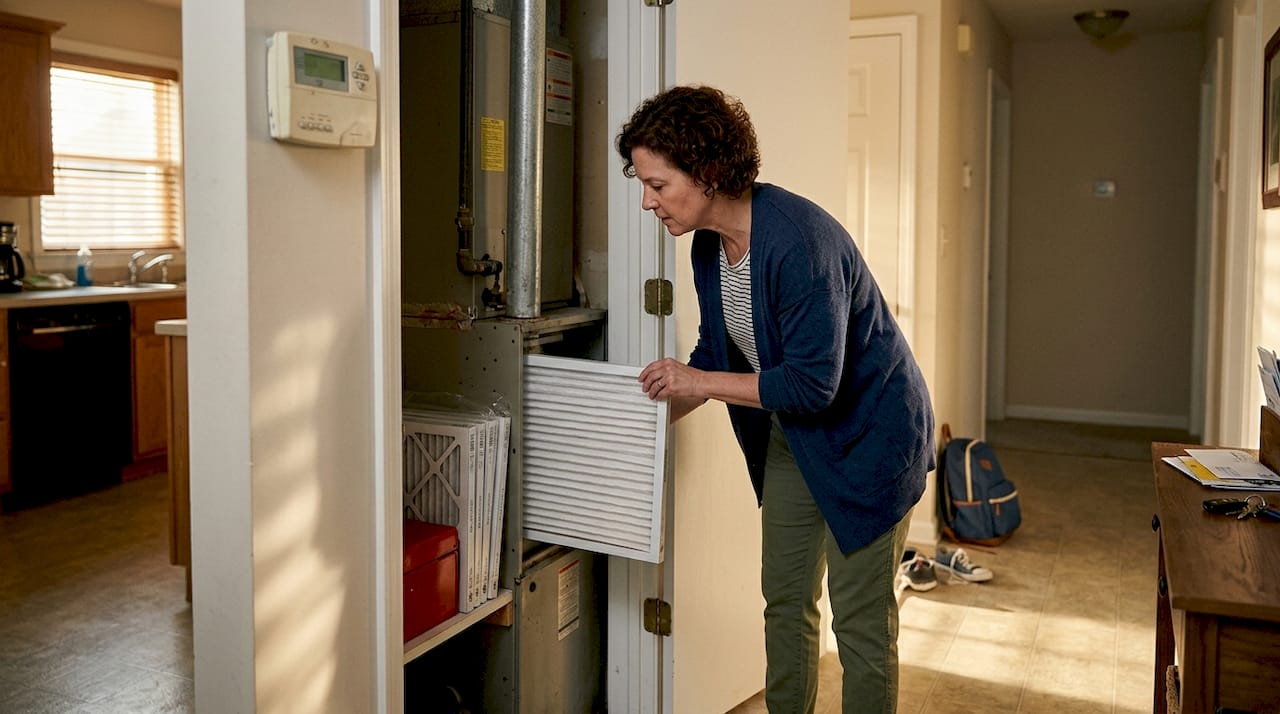
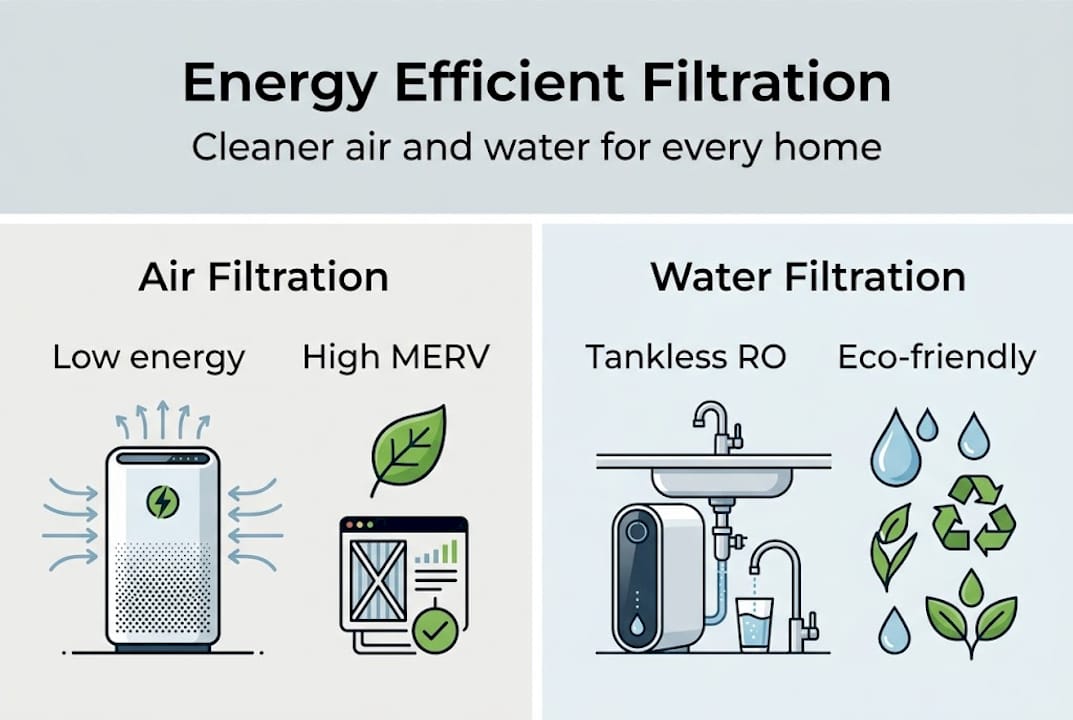
Low pressure drop filters achieve a 30 to 45% reduction in resistance compared to conventional filters, using advanced media like gradient density structures, optimized pleat geometry, and electrostatic enhancement. This allows MERV 13 to 16 ratings with significantly less fan energy. That is the sweet spot for most homes: hospital-grade filtration without the energy penalty.
Here is how to read the key specs when shopping:
- MERV rating: Minimum Efficiency Reporting Value. MERV 13 and above captures fine particles including smoke, bacteria, and allergens. Look for this paired with a low pressure drop specification.
- CADR-to-power ratio: Clean Air Delivery Rate divided by watts consumed. Higher is better. Energy Star certified purifiers like the Blueair 511i Max achieve high CADR-to-power ratios and low annual energy use, enabling 24/7 operation at minimal cost.
- Annual energy consumption (kWh): Look for this in the product specs. A good energy efficient air purifier should run for under $50 per year in electricity at average US rates.
- Filter replacement interval: Longer intervals mean lower ongoing costs and less waste.
| Feature | Conventional filter | Energy efficient filter |
|---|---|---|
| MERV rating | 8 to 10 | 13 to 16 |
| Pressure drop | High | 30 to 45% lower |
| Annual energy cost | $80 to $150+ | $20 to $50 |
| Filter lifespan | 1 to 3 months | 6 to 12 months |
| Particle capture | Basic dust, pollen | Smoke, bacteria, fine PM2.5 |
One thing many homeowners miss: if you upgrade to a high-MERV filter in an older HVAC system, the fan may struggle with the added resistance. Check your system’s fan capacity before upgrading. Learning how purifiers save energy can help you avoid this common mistake. For standalone units, the best air purifiers for health already pair efficient motors with low-resistance filters, so compatibility is built in.
Pro Tip: Run your air purifier on its lowest effective setting during the day and boost it for 30 minutes after cooking or cleaning. This cuts energy use by up to 40% without sacrificing air quality. Check out cost-saving air purification tips for more strategies like this.
Using an air purifier selection guide tailored to your room size and air quality needs is the fastest way to avoid overspending on a unit that is either too powerful or too weak for your space.
Energy efficient water filtration: systems and strategies
Water filtration has its own energy story. Older reverse osmosis (RO) systems were notorious for wasting water, sometimes discarding three to four gallons of water for every one gallon filtered. They also required significant water pressure to operate, meaning pumps worked harder and energy bills climbed. Modern systems have changed this dramatically.
Tankless reverse osmosis and ultrafiltration are now top choices for energy efficient water purification in homes. Tankless RO eliminates the storage tank, which means no energy is wasted keeping water pressurized in a reservoir. Ultrafiltration (UF) systems use hollow fiber membranes that filter at lower pressure, which reduces pump energy requirements significantly.

Here is a quick comparison of the main system types:
| System type | Energy use | Water waste | Best for |
|---|---|---|---|
| Traditional RO | Moderate to high | High (3:1 to 4:1 ratio) | Basic filtration |
| Tankless RO | Low | Low (1:1 to 2:1 ratio) | Small to medium households |
| Ultrafiltration (UF) | Very low | Near zero | Households with good source water |
| Carbon block filters | Minimal | None | Sediment and chlorine removal |
Key things to watch for with water filtration:
- Water pressure: Standard RO systems need at least 40 to 60 psi. If your home has low pressure, a booster pump adds cost and energy use. Tankless models often handle lower pressure better.
- Household size: A system sized too small runs constantly, which wastes energy. Too large and you are paying for capacity you never use.
- Contaminant profile: Know what is in your water before choosing a system. A water filtration guide for homes can help you match the right technology to your actual water quality.
Pro Tip: Request a water quality report from your local utility before purchasing any filtration system. This free document tells you exactly which contaminants are present, so you can choose a system that targets them specifically rather than buying more filtration than you need.
For families interested in sustainability, eco-friendly water purification options go beyond just energy use, covering water waste reduction and sustainable filter materials. Understanding the full water purification process explained also helps you make sense of what each filtration stage actually does.
What to consider when choosing energy efficient filtration for your home
Now that you know the options, the next step is picking what actually fits your home. Here is a practical framework.
Step-by-step selection checklist:
- Identify your primary concern: air quality, water quality, or both.
- Check your HVAC system’s fan rating before choosing a high-MERV filter. High-efficiency filters may increase initial pressure drop and require fan upgrades.
- Look for Energy Star certification on any standalone air purifier.
- For water, test your home’s water pressure and get a water quality report.
- Calculate total cost of ownership: upfront price plus annual filter replacements plus estimated energy cost.
- Avoid systems marketed purely on filter stage count. More stages does not always mean better efficiency.
What matters most (and what does not):
- Matters: MERV rating paired with low pressure drop spec; Energy Star label; filter replacement interval; system sizing for your space.
- Does not matter as much: Number of filtration stages; brand claims without third-party certification; “lifetime” filters with no replacement data.
Cost savings snapshot: Switching from a conventional MERV 8 HVAC filter to a MERV 13 low-pressure-drop filter can reduce fan energy use by up to 30% annually, saving the average household $40 to $90 per year on electricity alone.
For air systems, selecting an air purifier with the right room coverage is just as important as the filter rating. An undersized unit runs at maximum power constantly, which defeats the energy efficiency goal. Understanding energy efficiency in purifiers helps you compare models on real-world performance rather than spec-sheet numbers.
Why most homeowners overlook small changes that deliver big results
Here is something the filtration industry does not advertise loudly: the biggest energy and health gains in most homes do not come from buying a new system. They come from choosing the right filter for the system you already have.
Marketing focuses on hardware because hardware has a price tag. But swapping a MERV 8 filter for a MERV 13 low-pressure-drop version in your existing HVAC costs less than $30 and can transform your home’s air quality overnight. The same logic applies to water: upgrading from a tank-based RO to a tankless model often costs less than a full system replacement.
We have seen families spend thousands on new HVAC units when a $25 filter change would have solved the problem. The uncomfortable truth is that iterative, small upgrades, done in the right order, consistently outperform single large purchases. Start with filter quality. Then optimize system sizing. Then consider hardware upgrades only if the first two steps are not enough. Real-world energy-efficient purification examples show this pattern playing out again and again in actual homes.
Explore advanced solutions for your healthiest home
If this article has helped you see filtration differently, the next step is finding solutions that match your home’s specific needs. Whether you are focused on water purity, air quality, or both, the right system makes a measurable difference in how your family feels every day.
Start by exploring the full water purification process explained to understand which filtration stages matter most for your household. Then browse our curated list of best air purifiers 2026 to find Energy Star certified options that deliver hospital-grade air quality without inflating your energy bill. Coway’s lineup is built specifically for health-focused families who want real performance, not just impressive specs on a box.
Frequently asked questions
How do I know if a water or air filter is energy efficient?
Energy Star certified purifiers carry high CADR-to-power ratios and low annual kilowatt-hour use, which you can verify directly in the product specs. For water filters, look for tankless RO or UF systems with published energy consumption data.
Does switching to energy efficient filtration require new appliances?
Often, you can upgrade the filter alone, but high-efficiency filters may increase initial pressure drop, which sometimes requires an HVAC fan upgrade or a water pressure booster for RO systems.
Are energy efficient filtration systems more expensive?
They often cost more upfront, but lower long-term costs through reduced energy bills and longer filter life typically offset the initial investment within one to two years.
What are the most energy efficient air and water filters for homes?
For air, prioritize MERV 13+ low-pressure-drop filters or Energy Star certified purifiers. For water, tankless reverse osmosis and ultrafiltration systems offer the best balance of purity and energy efficiency.
Recommended
- Energy-Efficient Purification: Cleaner Air and Water at Home – Coway Water Purifier
- Eco-Friendly Filtration: Health And Environmental Impact – Coway Water Purifier
- Advanced Filtration Technology: Cleaner Home Wellness – Coway Water Purifier
- Energy Efficiency in Purifiers Saves 40% on Power Bills – Coway Water Purifier
- Enhance Efficiency with Cloud-Based Water Analytics | LeakSense
