
Uncategorized
Energy Efficiency in Purifiers Saves 40% on Power Bills
Feb
Think running an air or water purifier around the clock will skyrocket your electric bill? Many homeowners worry about this, yet efficient air purifiers only add a few dollars monthly to electricity costs. This guide explains why energy efficiency matters in purifiers and how choosing the right model benefits both your health and wallet, helping you maintain clean indoor air and water without breaking the bank.
Table of Contents
- Introduction: The Importance of Energy Efficiency in Home Purifiers
- How Purifier Design Influences Energy Efficiency
- Evaluating Energy Efficiency: CADR Ratings and Power Usage
- Operational Costs and Maintenance Impact on Efficiency
- Energy Efficiency in Water Purification Systems
- Common Misconceptions About Purifier Energy Use
- Practical Guide: Choosing and Using Energy-Efficient Purifiers
- Conclusion: Maximizing Health and Energy Savings with Efficient Purifiers
- Explore Energy-Efficient Purifiers for Your Home
- Frequently Asked Questions
Key Takeaways
| Point | Details |
|---|---|
| Energy balance | Efficient purifiers reduce operating costs while maintaining strong cleaning performance. |
| Design impacts consumption | BLDC motors and filter maintenance significantly affect how much power your purifier uses. |
| CADR plus wattage | Understanding both metrics together helps you identify truly efficient purification systems. |
| Maintenance prevents waste | Regular filter changes stop energy waste and extend your purifier’s useful life. |
| Myths inflate costs | Common misconceptions dramatically overestimate purifier energy expenses and wattage requirements. |
Introduction: The Importance of Energy Efficiency in Home Purifiers
Energy efficiency directly shapes your purifier’s long-term operational cost and environmental footprint. When you run air and water purifiers continuously to maintain healthy indoor environments, their power consumption becomes a meaningful factor in household expenses. Health-conscious homeowners increasingly demand sustainable solutions that deliver excellent purification without excessive energy draw.
Several key factors make energy efficiency critical for purifier selection:
- Continuous operation magnifies small efficiency differences into substantial annual savings
- Lower energy consumption reduces your home’s carbon footprint and supports sustainability goals
- Efficient purifiers often feature better engineering and longer component lifespans
- Smart energy use enables guilt-free 24/7 operation for optimal indoor health
Modern purification technology has evolved to balance thorough cleaning with minimal power requirements. Understanding what drives efficiency helps you invest in systems that protect your family’s health while respecting your budget and environmental values. The right choices let you enjoy purified air and water continuously without worrying about utility costs.
How Purifier Design Influences Energy Efficiency
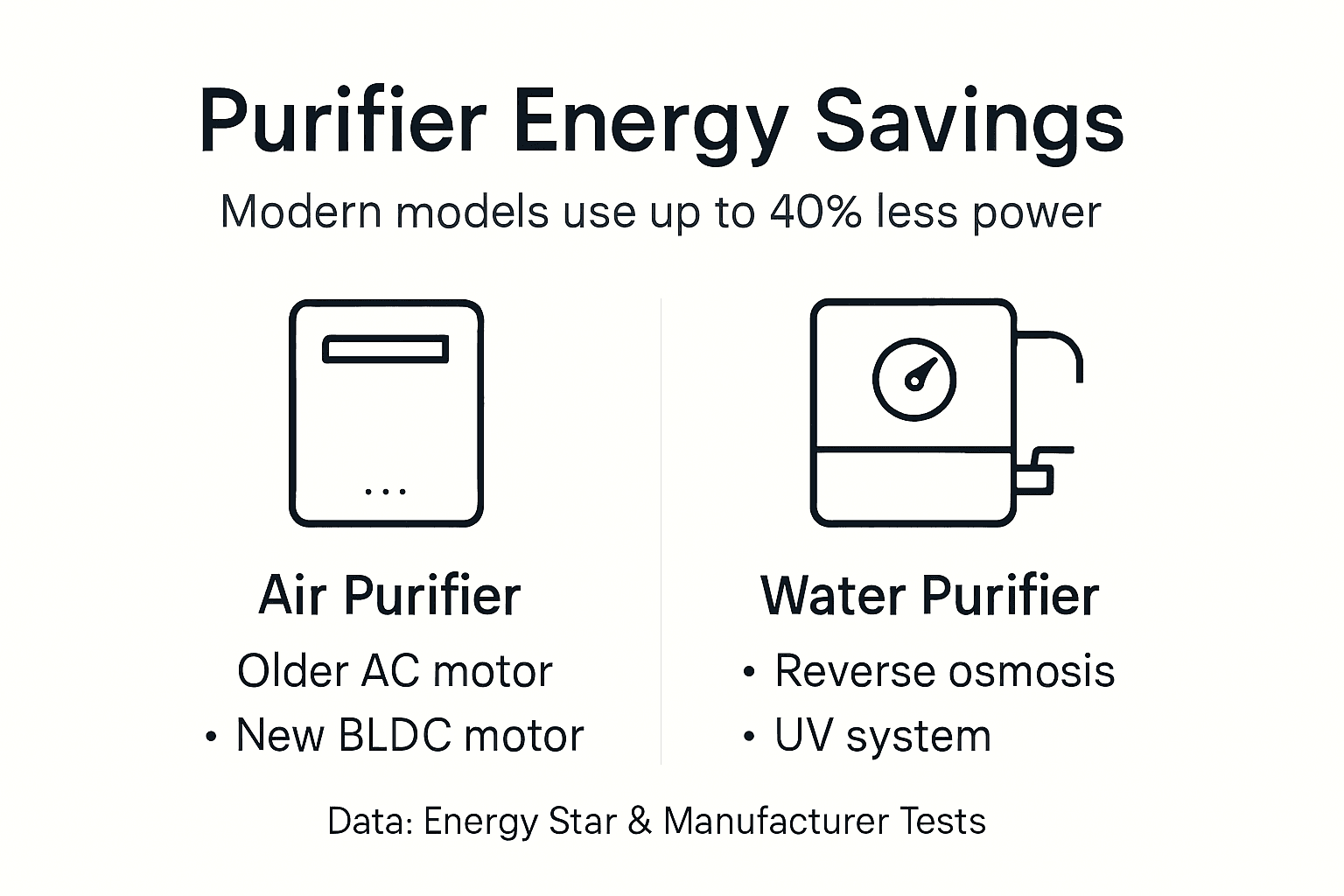
Purifier design fundamentally determines how much electricity your unit consumes daily. Most modern air purifiers consume between 30 to 200 watts, comparable to or less than a standard light bulb. Motor type stands out as the biggest efficiency factor, with Brushless DC motors improving energy efficiency by about 40% compared to standard AC motors.
Key design elements affecting energy consumption include:
- Motor technology: BLDC motors waste less energy as heat and provide precise speed control
- Fan design: Aerodynamic fans move more air with less power input
- Filtration stages: Multi-stage filters slightly increase power use but dramatically improve purification effectiveness
- Smart sensors: Auto modes adjust power based on actual air or water quality needs
The table below compares wattage and performance for different purifier types:
| Purifier Type | Typical Wattage | CADR Rating | Efficiency Notes |
|---|---|---|---|
| Compact desktop | 30-50W | 80-120 CFM | Best for small rooms, minimal energy |
| Mid-size room | 50-80W | 200-300 CFM | Balanced power and coverage |
| Large room | 80-150W | 350-450 CFM | Higher consumption justified by area |
| Whole home | 150-200W | 500+ CFM | Most power but covers entire space |
Pro Tip: Look for purifiers with multiple fan speed settings. Running on low or medium during typical conditions saves considerable energy compared to constant high-speed operation, and auto modes adjust power only when needed.
Understanding how purifiers save energy and lower costs helps you identify models engineered for efficiency. The best designs optimize airflow paths, minimize resistance through filters, and use sensors to operate only at necessary intensities.
Evaluating Energy Efficiency: CADR Ratings and Power Usage
CADR (Clean Air Delivery Rate) measures the volume of clean air a purifier produces per hour against specific pollutants like dust, pollen, and smoke. A high CADR-to-wattage ratio indicates strong purification with minimal energy investment. This metric helps you compare true efficiency across different purifier models and brands.
When selecting air purifiers using CADR, calculate efficiency by dividing CADR by wattage. Higher numbers mean you get more clean air per watt consumed. This simple calculation reveals which models deliver the best performance per dollar of electricity.
| Model Example | CADR | Wattage | Efficiency Ratio | Cost Effectiveness |
|---|---|---|---|---|
| Budget unit | 150 CFM | 75W | 2.0 | Acceptable for small spaces |
| Mid-tier | 280 CFM | 65W | 4.3 | Excellent value and efficiency |
| Premium | 400 CFM | 80W | 5.0 | Best performance per watt |
| Oversized | 450 CFM | 180W | 2.5 | Wastes energy in typical rooms |
Room size matching matters enormously for efficiency. An oversized purifier in a small bedroom wastes energy, while an undersized unit runs constantly at maximum power trying to keep up. Measure your space and choose purifiers rated for slightly larger areas to ensure comfortable operation at moderate speeds.
Pro Tip: Energy Star certified purifiers meet strict efficiency standards verified by independent testing. These models typically consume 40% less energy than conventional units while maintaining or exceeding cleaning performance.
Operational Costs and Maintenance Impact on Efficiency
Electricity costs for efficient purifiers typically range from $3 to $8 monthly depending on your model, local utility rates, and usage patterns. This modest expense makes continuous operation feasible for most households. However, maintenance practices dramatically influence whether your purifier stays within this efficient range or creeps higher.
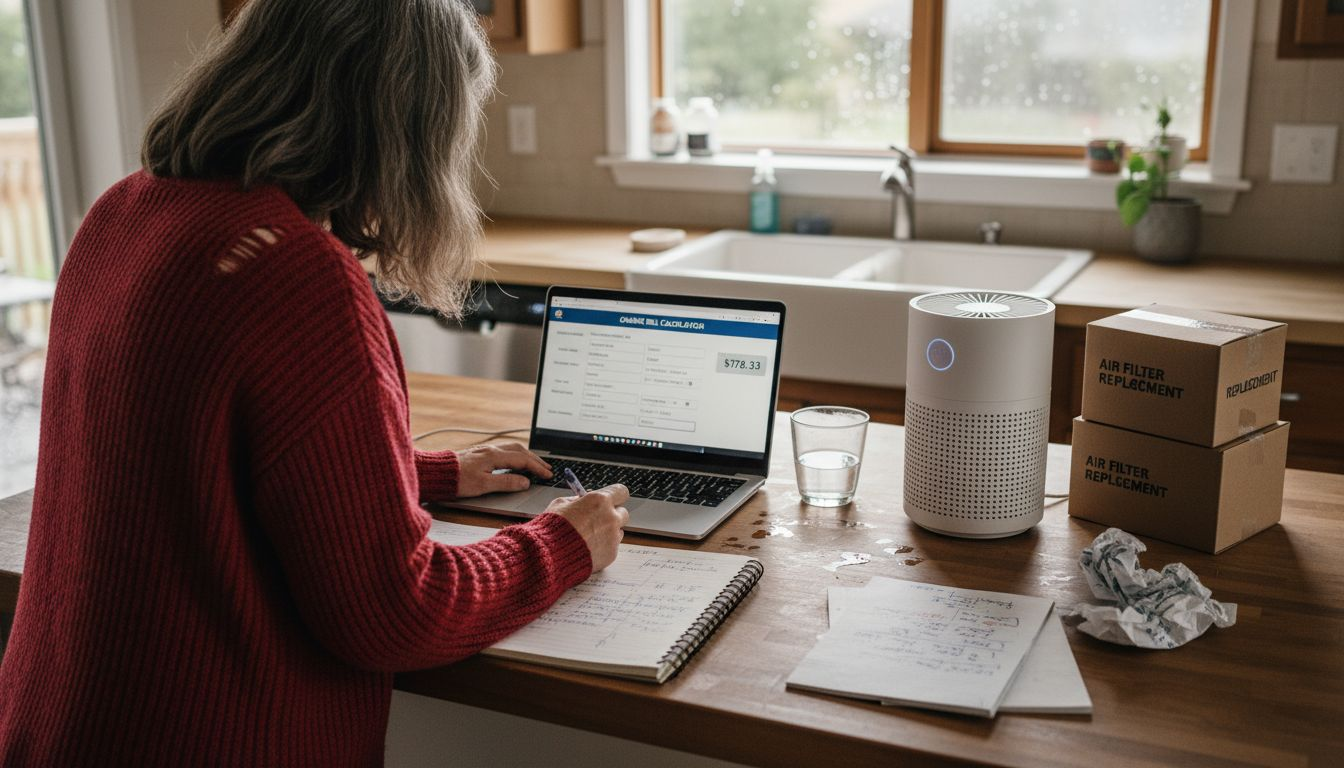
Clogged or dirty filters create the biggest efficiency drain. Dirty filters increase power use by 20-30% as motors work harder to pull air through blocked media. This extra effort not only wastes electricity but also accelerates motor wear and reduces purification effectiveness.
Maintenance best practices that preserve energy efficiency include:
- Check pre-filters monthly and vacuum or rinse them to remove large particle buildup
- Replace HEPA and carbon filters according to manufacturer schedules, typically every 6-12 months
- Clean exterior vents and sensor windows to ensure accurate air quality readings
- Monitor filter replacement indicators and act promptly when they signal maintenance needs
- Use auto or smart modes that adjust fan speeds based on actual air quality rather than running constantly at maximum
Understanding why regular purifier maintenance matters protects your investment and keeps energy costs predictable. Simple monthly attention prevents the gradual efficiency losses that turn an economical appliance into an energy hog. Following how purifiers save energy through proper care ensures your unit performs as efficiently as the day you bought it.
Energy Efficiency in Water Purification Systems
Water purifiers employ different technologies than air cleaners, yet energy efficiency remains equally important. UV sterilization systems use less electricity than some traditional chemical treatment methods while effectively neutralizing bacteria, viruses, and other microbes. Modern UV lamps consume just 8-40 watts depending on flow rate and system capacity.
Multi-stage filtration systems balance thorough water cleansing with reasonable energy requirements. These systems typically include:
- Sediment filters that remove particles with no power requirement
- Activated carbon stages that work passively to eliminate chemicals and odors
- UV chambers that sanitize water using minimal electricity
- Optional mineralization stages that enhance water quality without added power draw
Energy savings from contemporary UV water purifiers compared to older reverse osmosis systems can reach 30-50% depending on configuration. Energy-efficient water purification technologies have advanced significantly, making whole-home water treatment more accessible and affordable than ever.
Matching purifier capacity to your household’s actual water consumption prevents waste. An oversized system cycles unnecessarily, while an undersized unit runs continuously and wears components faster. Calculate your daily water usage and choose systems rated for your typical demand with modest overhead capacity.
Common Misconceptions About Purifier Energy Use
Myths about purifier energy consumption discourage many homeowners from investing in these health-promoting appliances. Clearing up these misunderstandings helps you make confident purchasing decisions based on facts rather than fears.
Myth 1: Air purifiers dramatically increase electric bills. Fact: Efficient models only add a few dollars per month in electricity costs under typical use, often less than leaving a porch light on overnight.
Myth 2: Higher wattage automatically means better purification. Fact: Efficiency depends on CADR relative to watts consumed, not raw power numbers. A 50-watt purifier with excellent design can outperform a wasteful 150-watt model.
Myth 3: Energy efficiency compromises cleaning effectiveness. Fact: Advanced technologies like BLDC motors and optimized airflow paths sustain or improve performance while reducing energy consumption. Engineering innovation delivers both benefits simultaneously.
Common household items for electricity cost comparison:
Running an efficient air purifier 24/7 costs roughly the same as operating a refrigerator light bulb continuously, or about one-third the energy of a desktop computer used for 8 hours daily. Your morning coffee maker’s 15-minute brew cycle often consumes more power than a purifier uses in several hours.
These comparisons reveal that purifier energy use fits comfortably within typical household consumption patterns. The health benefits and air quality improvements justify the minimal electrical cost for most families.
Practical Guide: Choosing and Using Energy-Efficient Purifiers
Applying energy efficiency knowledge when selecting and operating purifiers maximizes both health benefits and cost savings. Follow these actionable steps to ensure you get optimal value from your investment.
- Match purifier size and CADR rating to your room dimensions or household water volume needs, avoiding both undersized and oversized units that waste energy.
- Choose Energy Star certified models featuring BLDC motors for 40% lower energy consumption and longer service life compared to conventional designs.
- Establish a regular maintenance schedule with purifier maintenance best practices that includes monthly filter checks and timely replacements per manufacturer guidelines.
- Use smart operation modes and moderate fan speeds during normal conditions, reserving high settings for times when air quality testing shows actual need.
- Position purifiers properly with adequate clearance for airflow, ensuring they work efficiently without obstruction that forces higher power operation.
- Monitor energy consumption with a smart plug or power meter to identify usage patterns and optimize settings based on actual performance data.
When choosing energy-efficient purifiers, prioritize models with documented efficiency ratings over marketing claims. Independent testing and Energy Star certification provide reliable performance verification. Reading energy-efficient purification tips helps you identify features that deliver real savings.
Pro Tip: Install a smart plug with energy monitoring on your purifier to track actual consumption over time. This data reveals whether your unit maintains efficiency or needs maintenance, and helps you optimize operation schedules based on usage patterns and electricity rate structures.
Conclusion: Maximizing Health and Energy Savings with Efficient Purifiers
Energy-efficient purifiers enable continuous indoor air and water quality improvements with minimal impact on utility bills. Understanding the design factors, efficiency metrics, and maintenance practices that preserve low energy consumption empowers you to make informed purchasing decisions. The combination of BLDC motors, appropriate sizing, smart operation modes, and diligent filter care ensures your purification systems deliver maximum health benefits at minimum cost.
Informed purchasing paired with consistent maintenance sustains energy savings throughout your purifier’s lifespan. Small monthly electricity savings accumulate into significant long-term benefits for both your household budget and environmental footprint. Modern purification technology proves you don’t have to choose between healthy indoor environments and responsible energy use.
Explore Energy-Efficient Purifiers for Your Home
Ready to experience the benefits of efficient purification? Discover Coway’s selection of Energy Star certified water and air purifiers engineered to save energy while delivering superior cleaning performance. Our advanced UV and multi-stage filtration technologies provide exceptional purification with minimal power consumption. Explore compact models like our countertop ice water purifier perfect for health-conscious, energy-aware homeowners.
Learn more about the water purification process explained and discover UV sanitization benefits for your family. Our energy-efficient systems deliver clean, safe water and air without the high electricity costs you might expect.
Frequently Asked Questions
Why does energy efficiency matter in purifiers?
Energy efficiency reduces your electricity bill and environmental impact without sacrificing the indoor health protection you need. By selecting efficient purifiers, you ensure continuous purification that fits comfortably within your household budget. Lower energy consumption also means reduced carbon emissions, supporting your sustainability goals while maintaining excellent air and water quality.
How do BLDC motors improve purifier energy use?
BLDC motors improve energy efficiency by about 40% and extend lifespan compared to conventional AC motors. They optimize operation by using less electrical energy and generating less waste heat. These motors also run quieter and require less maintenance, making them superior choices for continuous purifier operation.
Will running a purifier 24/7 cause a high electric bill?
Modern energy-efficient purifiers run cost-effectively even with continuous operation. Efficient purifiers typically add only $3 to $8 monthly to electricity costs, comparable to or less than running common household light bulbs all day. This modest expense makes 24/7 purification practical for maintaining consistently healthy indoor environments.
How often should I replace purifier filters for best efficiency?
Follow manufacturer guidelines, typically scheduling replacements every 3 to 6 months depending on usage intensity and your specific model. Neglected filters can increase power use by 20 to 30%, so scheduled replacement keeps energy consumption low. Regular filter changes through proper maintenance also preserve air and water quality at optimal levels.
Recommended
- How Purifiers Save Energy and Lower Costs – Coway Water Purifier
- Energy-Efficient Purification: Cleaner Air and Water at Home – Coway Water Purifier
- How Purifiers Save Cost for Homes and Businesses – Coway Water Purifier
- How Purifiers Save Cost for Homes and Businesses – Coway Water Purifier
