
Uncategorized
How Purifiers Save Energy and Lower Costs
Feb
Finding ways to lower utility bills while maintaining a healthy home often sends American homeowners searching for smarter solutions. Cleaner air not only means fewer respiratory issues but also helps heating and cooling systems run more efficiently. Energy-efficient air and water purifiers with advanced filters can minimize energy waste, capture pollutants, and create comfortable living spaces. Discover how these modern technologies offer both healthier air and long-term cost savings for your family.
Table of Contents
- How Purifiers Save Energy Explained
- Types of Energy-Efficient Purifiers
- Technology Driving Energy Savings
- Comparing Purifiers Versus Traditional Solutions
- Tips for Maximizing Purifier Energy Savings
Key Takeaways
| Point | Details |
|---|---|
| Energy Efficiency | Air purifiers reduce overall energy consumption by optimizing indoor air quality and minimizing HVAC strain. |
| Technology Utilization | Features like smart sensors and advanced filtration technologies significantly enhance energy savings. |
| Types of Purifiers | Various models, including HEPA and activated carbon purifiers, offer targeted pollutant removal while using less energy. |
| Strategic Placement | Proper placement and regular maintenance of purifiers are essential for maximizing their energy efficiency and effectiveness. |
How Purifiers Save Energy Explained
Air purifiers have emerged as intelligent solutions for reducing energy consumption and maintaining optimal indoor environments. By employing advanced filtration technologies, these devices help homeowners dramatically decrease their overall energy expenditure while improving air quality. Advanced filtration systems play a critical role in minimizing energy waste and creating more efficient living spaces.
The energy-saving mechanisms of purifiers operate through several strategic approaches:
- Reducing HVAC system strain by removing airborne pollutants
- Minimizing respiratory health issues that could increase medical energy consumption
- Utilizing low-electricity filtration technologies
- Preventing unnecessary ventilation and system overwork
Modern purifiers achieve these energy efficiencies through sophisticated design. Clean Air Delivery Rate (CADR) ratings help consumers identify units that provide maximum pollutant removal with minimal electrical input. By capturing particulate matter, gases, and biological contaminants, these devices prevent buildup that could force heating and cooling systems to work harder.
Energy-efficient purifiers can reduce overall home energy consumption by optimizing indoor air quality and system performance.
Filtration technologies like HEPA and activated carbon filters work silently in the background, capturing microscopic particles without significant power draw. These systems continuously circulate and clean indoor air, preventing pollutant accumulation that might otherwise require more intensive environmental control.
Pro tip: Select air purifiers with Energy Star certifications to maximize both air quality improvements and energy savings.
Types of Energy-Efficient Purifiers
Homeowners have multiple options for energy-efficient air purification systems that can dramatically reduce electricity consumption while improving indoor air quality. Portable air cleaners and HVAC system filters represent two primary strategies for achieving comprehensive air filtration with minimal energy expenditure.
The most common energy-efficient purifier types include:
- HEPA Portable Purifiers: Single-room devices with high-efficiency particulate air filtration
- HVAC Integrated Filters: Whole-house solutions with varying efficiency ratings
- Activated Carbon Purifiers: Low-energy units targeting gases and odors
- UV Light Purifiers: Minimal electricity consumption for biological contaminant elimination
Advanced research reveals that strategic purifier deployment can significantly impact energy efficiency. Multi-room purification strategies demonstrate that using multiple smaller units can be more energy-efficient than relying on a single powerful device. This approach allows for targeted air cleaning with reduced overall power consumption.
Energy-efficient purifiers can reduce home energy consumption by up to 30% through intelligent air quality management.
Understanding Minimum Efficiency Reporting Value (MERV) ratings is crucial for selecting the most energy-efficient purification systems. Higher MERV-rated filters capture more pollutants while maintaining optimal airflow, preventing unnecessary strain on heating and cooling systems.
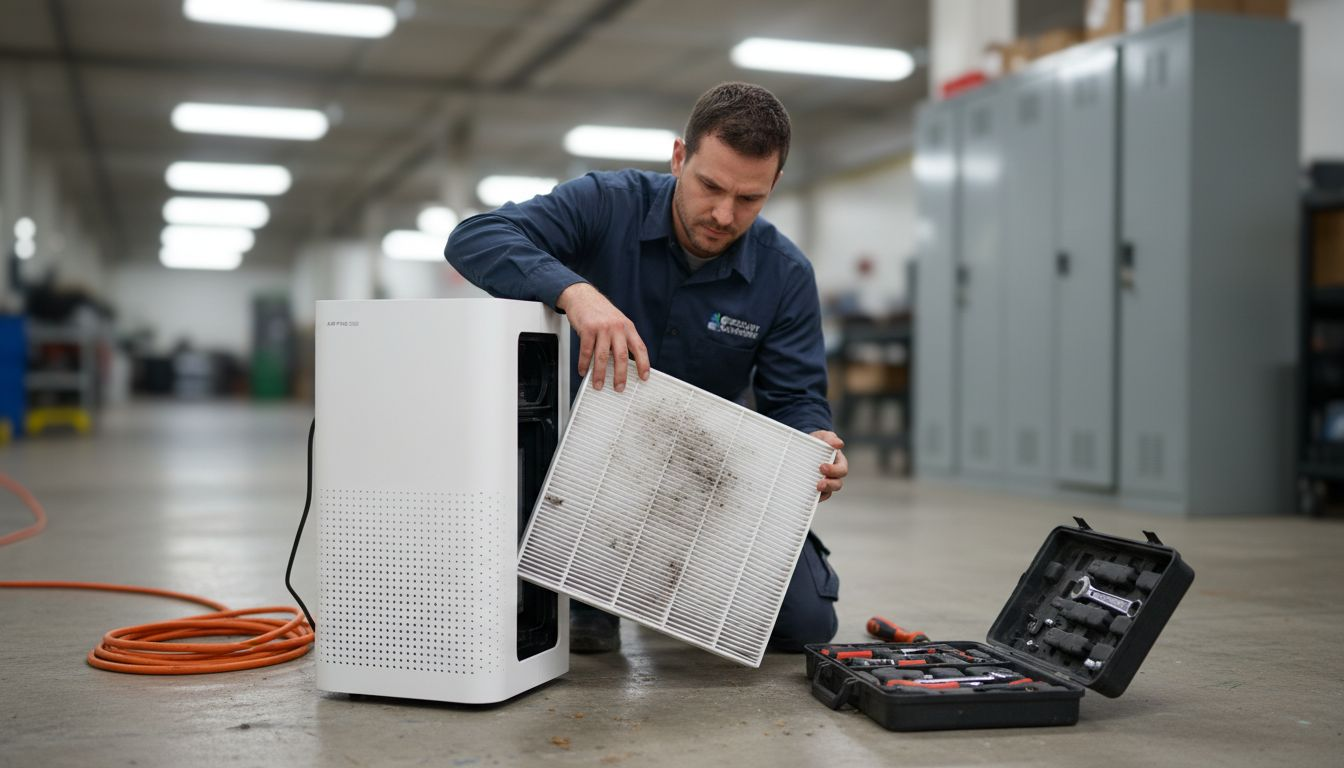
Here’s a summary of popular purifier technologies and their unique energy-saving advantages:
| Purifier Type | Distinct Energy-Saving Mechanism | Air Quality Impact |
|---|---|---|
| HEPA Portable Purifiers | Efficient particle capture, low power usage | Improves single-room filtration |
| HVAC Integrated Filters | Maintains airflow, minimizes system strain | Whole-house coverage |
| Activated Carbon Purifiers | Targets gases, energy-efficient operation | Reduces odors and VOCs |
| UV Light Purifiers | Minimal electricity, biological control | Eliminates germs, allergens |
Pro tip: Compare the Energy Star ratings of different purifiers to maximize both air quality improvements and energy savings.
Technology Driving Energy Savings
Cutting-edge technologies are revolutionizing air purification by dramatically reducing energy consumption and improving environmental efficiency. Solar-powered air purification systems represent a groundbreaking approach to sustainable indoor air management, combining renewable energy with advanced filtration technologies.
Key technological innovations driving energy savings include:
- Smart Air Quality Sensors: Automated systems that activate filtration only when needed
- Solar Panel Integration: Renewable energy powering purification technologies
- AI-Driven Filtration Control: Intelligent systems optimizing air cleaning processes
- Real-Time Pollutant Monitoring: Advanced sensors detecting air quality changes instantly
Advanced filtration technologies are transforming how purifiers consume and conserve energy. Sophisticated air quality sensors enable precise control, allowing purification systems to adjust their operation dynamically. This means filters can reduce power consumption by operating at optimal levels, responding directly to actual environmental conditions.
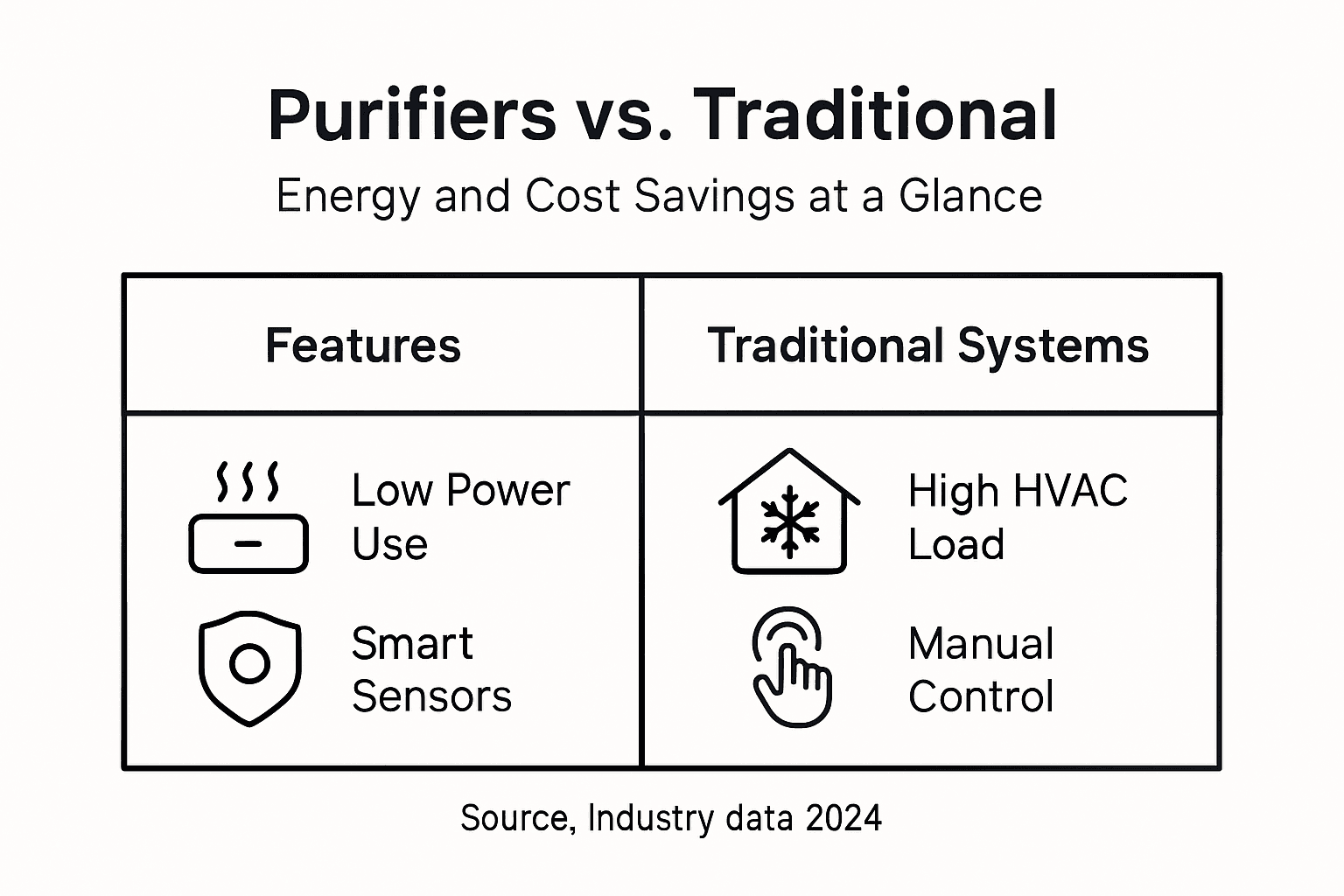
Intelligent air purification technologies can reduce energy consumption by up to 40% compared to traditional systems.
The integration of Internet of Things (IoT) technologies further enhances energy efficiency. Smart purifiers can now connect to home networks, providing real-time performance data and allowing homeowners to monitor and optimize their air quality management strategies.
Pro tip: Choose purifiers with smart sensor technologies that automatically adjust filtration levels to maximize energy efficiency and air quality.
Comparing Purifiers Versus Traditional Solutions
Traditional air quality management methods rely on ventilation and source control, but air purifiers offer a more targeted and energy-efficient approach to indoor environmental control. While conventional techniques address air quality broadly, modern purification technologies provide precise, selective pollutant removal with minimal energy expenditure.
Key differences between purifiers and traditional solutions include:
- Targeted Filtration: Purifiers capture specific pollutants more effectively
- Energy Efficiency: Lower power consumption compared to HVAC systems
- Flexible Deployment: Can be moved and used in multiple spaces
- Continuous Monitoring: Real-time air quality tracking
Portable air purifiers demonstrate significant advantages over integrated HVAC filtration. Consumer research indicates that these devices operate at lower energy costs while providing focused air cleaning capabilities. Traditional whole-house systems clean air only when fans are running, whereas modern purifiers can continuously monitor and filter environmental contaminants.
Combining air purifiers with traditional ventilation strategies offers the most comprehensive indoor air quality management approach.
Understanding the Complementary Nature of these technologies is crucial. Air purifiers are not replacements for source control or ventilation but powerful supplements that enhance overall indoor air quality with remarkable energy efficiency.
Compare how purifiers and traditional solutions differ in energy and air quality effectiveness:
| Approach | Energy Consumption | Precision of Pollutant Removal | Flexibility |
|---|---|---|---|
| Modern Air Purifiers | Lower, efficient | Targeted, specific | Portable |
| Traditional Ventilation | Higher, less efficient | Broad, less precise | Fixed |
Pro tip: Implement a hybrid approach by using targeted air purifiers alongside existing ventilation systems to maximize air quality and minimize energy consumption.
Tips for Maximizing Purifier Energy Savings
Strategic purifier placement and maintenance can significantly reduce energy consumption while maintaining optimal indoor air quality. Homeowners can implement targeted approaches to ensure their air purification systems operate efficiently and cost-effectively, minimizing unnecessary power expenditure.
Key strategies for maximizing energy savings include:
- Optimize Room Placement: Position purifiers in high-occupancy areas
- Maintain Consistent Airflow: Run units at lower fan speeds when possible
- Regular Filter Maintenance: Clean or replace filters according to manufacturer recommendations
- Use Smart Sensor Technologies: Leverage automated air quality monitoring systems
Choosing the right purifier size and configuration is critical for energy efficiency. Energy Star certified units provide guaranteed performance standards, ensuring maximum air cleaning capabilities with minimal electricity consumption. Homeowners should carefully match purifier capacity to their specific room dimensions to prevent overworking the system.
Proper purifier management can reduce energy consumption by up to 30% compared to inefficient operation.
Smart Deployment Techniques involve understanding each room’s unique air quality requirements. By utilizing targeted filtration and intelligent sensor technologies, users can create a comprehensive air quality management strategy that minimizes energy waste while maintaining a healthy indoor environment.
Pro tip: Invest in purifiers with adjustable fan speeds and automatic shut-off features to optimize energy consumption and reduce unnecessary electrical usage.
Save Energy and Cut Costs with Coway Air Purifiers
The article highlights common challenges in managing indoor air quality while keeping energy consumption low. Many homeowners struggle with balancing effective pollution removal and minimizing electricity costs. You want energy-efficient solutions that reduce HVAC strain and decrease your overall energy bills without compromising the cleanliness of your indoor air. Understanding terms like CADR, Energy Star certifications, and smart sensor technologies can guide you toward smarter air quality management.
Coway understands these needs and offers a wide range of advanced air purification products designed to save energy and maintain healthy living spaces. Our purifiers feature cutting-edge filtration and UV sanitization technology that work quietly and efficiently. With models varying in capacity and features, you can find the perfect match to reduce your energy use and breathe easier. Explore products that integrate smart controls for automatic adjustment based on real-time air quality data.
Discover how to make your home cleaner and more energy-efficient today by visiting our Uncategorized Archives – Coway Water Purifier collection. Learn more about our innovations and secure a healthier space for your family at Coway Water Purifier.
Take control of your indoor air quality and lower your energy bills now. Browse our selection, compare features, and get yours with free delivery and installation. Start saving energy the smart way with Coway products designed for your well-being.
Frequently Asked Questions
How do air purifiers save energy?
Air purifiers save energy by reducing the strain on HVAC systems, utilizing low-electricity filtration technologies, and preventing unnecessary ventilation and system overwork. They optimize indoor air quality, allowing heating and cooling systems to operate more efficiently.
What are the benefits of using Energy Star certified air purifiers?
Energy Star certified air purifiers meet strict efficiency guidelines, ensuring they provide maximum air cleaning capabilities while consuming minimal electricity. This helps lower energy costs and improves overall indoor air quality.
Can using multiple small air purifiers be more energy-efficient than one large unit?
Yes, using multiple smaller air purifiers across different rooms can be more energy-efficient than relying on one large unit because it allows for targeted air cleaning without overloading a single system, reducing overall power consumption.
How can I maximize the energy savings of my air purifier?
To maximize energy savings, optimize room placement of the purifier, maintain consistent airflow by running units at lower fan speeds, perform regular filter maintenance, and utilize smart sensor technologies that adjust filtration based on real-time air quality.
Recommended
- How Purifiers Save Cost for Homes and Businesses – Coway Water Purifier
- How Purifiers Save Cost for Homes and Businesses – Coway Water Purifier
- How Purifiers Save Cost for Homes and Businesses – Coway Water Purifier
- Energy-Efficient Purification: Cleaner Air and Water at Home – Coway Water Purifier
- Energy-Efficient Shutters: Smart Solutions for UK Homes 2025 | Shutter World
