
Uncategorized
Top purifier features for 2026: clean, healthy air and water
Apr
TL;DR:
- Modern purifiers should prioritize certified removal of bacteria, viruses, heavy metals, and chemicals.
- Key technologies include reverse osmosis for dissolved contaminants and UV for pathogens.
- Smart features like real-time monitoring and maintenance alerts improve ease of use and long-term protection.
Picking a water or air purifier used to be simple. Now you’re staring at spec sheets packed with acronyms like RO, UV, TDS, HEPA, and alkaline enhancement, and every brand claims to be the healthiest choice. For families who just want safe drinking water and cleaner indoor air, that feature overload creates real confusion. This article cuts through the noise by breaking down the features that genuinely matter in 2026, explaining the technologies behind them, and showing you how to compare models side by side so you can make a confident, health-focused decision for your home.
Table of Contents
- Essential selection criteria for modern purifiers
- Advanced filtration technologies: RO, UV, and beyond
- Smart, connected features for easier maintenance and control
- Comparing popular 2026 purifiers for home health and safety
- Our perspective: What most homeowners miss about purifiers in 2026
- Find the right purifier for your home
- Frequently asked questions
Key Takeaways
| Point | Details |
|---|---|
| Prioritize health protection | Look for purifiers with high-efficiency germ filters and certified safety standards. |
| Choose advanced filtration | RO and UV technologies deliver the strongest contaminant and microbe reduction for water and air. |
| Embrace smart features | App alerts and automated maintenance make managing air and water quality easy for busy families. |
| Compare before you buy | A side-by-side feature comparison helps you match a purifier to your specific home needs. |
Essential selection criteria for modern purifiers
Before you spend a dollar, you need a clear checklist. Modern purifiers have evolved far beyond basic carbon filters, and the gap between a good unit and a great one often comes down to a handful of specific criteria that directly affect your family’s health and your long-term cost of ownership.
Here are the core factors to evaluate:
- Health protection: Look for certified removal of bacteria, viruses, heavy metals, and chemical contaminants. A purifier that only filters sediment is not enough for most households.
- Water and energy efficiency: High water recovery rates (the percentage of input water that becomes clean output water) matter both for your utility bill and for environmental responsibility.
- Filter technology variety: Different homes have different water and air quality problems. RO, UV, HEPA, activated carbon, and multi-stage systems each target different contaminants.
- Smart monitoring: Real-time quality alerts and app-based controls help you stay on top of filter health without guessing.
- Ease of maintenance: Filter replacement should be straightforward, and the brand should offer clear service support.
As water purification trends shift toward whole-home wellness, the bar keeps rising. 2025 filtration trends confirm that 99.99% germ protection, low water wastage, and smart app integration are now baseline expectations, not premium extras.
“The best purifier is not the one with the longest feature list. It’s the one that solves your specific water and air quality problems reliably, day after day.”
Pro Tip: Before buying, test your tap water with an inexpensive TDS meter. That single number tells you whether you need a full RO system or whether a simpler UV plus carbon setup will do the job.
Advanced filtration technologies: RO, UV, and beyond
Understanding what matters, let’s break down the top filtration technologies powering 2026’s best purifiers.
Reverse osmosis (RO) is the gold standard for water purification. It forces water through a semi-permeable membrane with pores so small that dissolved salts, heavy metals, pesticides, and microplastics cannot pass through. RO reduces TDS by 90 to 98%, making it the right choice for homes with hard water or high contamination levels. The trade-off is water waste, though newer high-efficiency RO systems have improved recovery rates significantly.
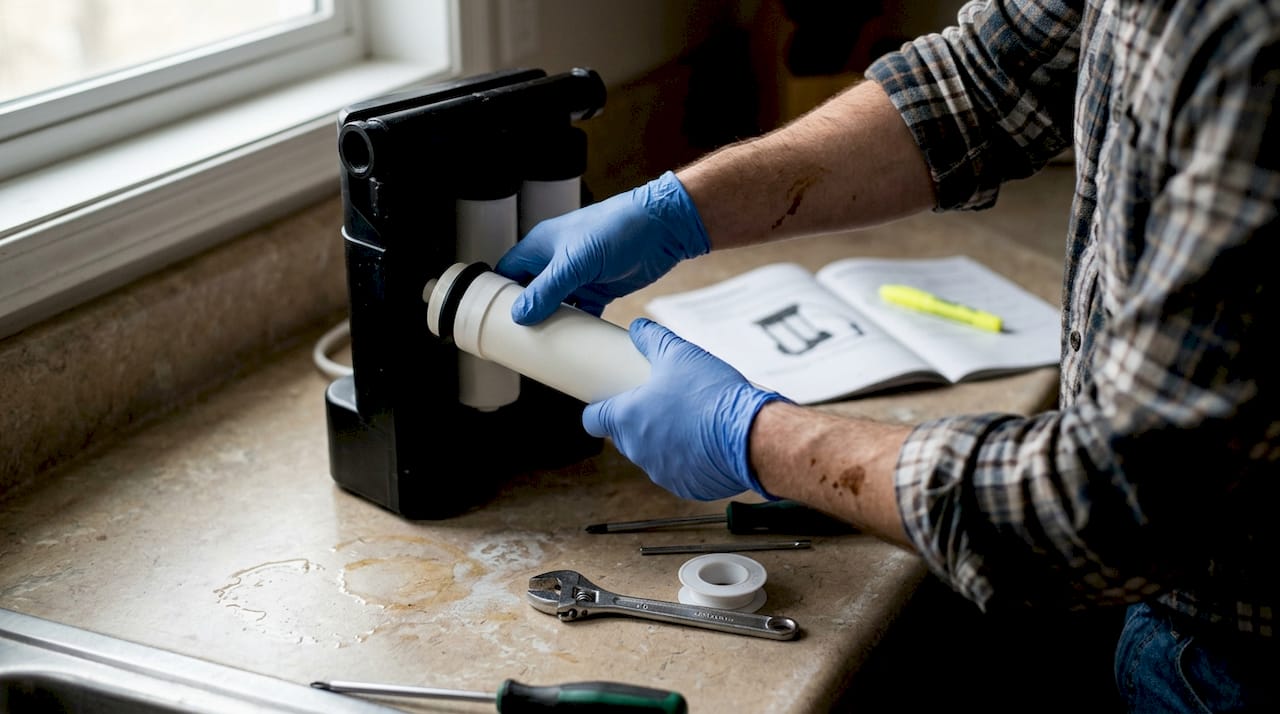
Ultraviolet (UV) sterilization works differently. It does not filter particles out. Instead, it exposes water or air to UV-C light, which destroys the DNA of bacteria and viruses so they cannot reproduce. UV sterilization eliminates 99.99% of pathogens. It is often combined with RO for a two-stage attack on both dissolved solids and biological threats.
For air purification, HEPA (High Efficiency Particulate Air) filters are the benchmark. A true HEPA filter captures 99.97% of particles as small as 0.3 microns, including dust, pollen, pet dander, and mold spores. Activated carbon layers handle gases, volatile organic compounds (VOCs), and odors that HEPA alone cannot trap. Check out these purification facts 2025 for a deeper look at how these technologies compare in real-world settings.
| Technology | Best for | Key benefit |
|---|---|---|
| Reverse osmosis | Water with high TDS or heavy metals | Removes 90-98% of dissolved contaminants |
| UV sterilization | Biological threats in water and air | Kills 99.99% of bacteria and viruses |
| True HEPA | Indoor air particles | Captures 99.97% of particles at 0.3 microns |
| Activated carbon | Gases, odors, VOCs | Absorbs chemicals and improves taste/smell |
| Copper/alkaline enhancement | Post-RO water quality | Improves mineral balance and taste |
Copper and alkaline enhancement is a newer addition worth noting. After RO strips water of nearly everything, some systems add back beneficial minerals or pass water through a copper-infused stage for antimicrobial benefits and improved taste. Explore modern purifier features to see how these enhancements are being built into current models.
Smart, connected features for easier maintenance and control
Once filter technology is understood, smart features are the next big differentiator.
Many 2026 purifiers include app-based TDS and purity alerts alongside auto-maintenance reminders, turning what used to be guesswork into a simple notification on your phone. That shift matters more than most buyers realize.
Here is what to look for in smart purifier features, ranked by practical value:
- Real-time water or air quality display: A live TDS reading or air quality index on the unit or in the app tells you exactly what your purifier is dealing with right now.
- Filter life tracking and replacement alerts: Instead of manually tracking when you last changed a filter, the system monitors usage and tells you when action is needed.
- Wi-Fi and app connectivity: Remote monitoring means you can check your home’s water or air quality even when you’re away, and adjust settings from your phone.
- Auto-flush and self-cleaning modes: Some RO systems automatically flush the membrane to extend its life and maintain performance without any effort from you.
- Voice assistant integration: Compatibility with Alexa or Google Home lets you check air quality or get filter status updates hands-free.
Pro Tip: When comparing smart purifiers, check whether the app requires a subscription fee after the first year. Some brands lock advanced monitoring features behind a paywall that adds to your total cost of ownership.
| Feature | Basic model | Smart model |
|---|---|---|
| Filter life indicator | Manual check | App notification |
| Water quality monitoring | None | Real-time TDS display |
| Remote control | None | Full app control |
| Maintenance scheduling | User-managed | Auto-reminder |
| Voice assistant support | No | Yes (select models) |
For families managing smart air purification across multiple rooms, connected systems are especially valuable. If you are still deciding between models, the how to choose water purifier guide walks through the decision process step by step.
Comparing popular 2026 purifiers for home health and safety
After understanding the features, a direct model comparison makes options easier to evaluate.
Top purifiers in 2026 prioritize water recovery rates, germ protection, and user-friendly controls as their defining qualities. Here is how common purifier categories stack up for different household needs:
| Category | Best for | Key strength | Watch out for |
|---|---|---|---|
| RO + UV water purifier | Families with hard or contaminated water | High TDS removal plus germ kill | Higher water waste on older models |
| UV-only water purifier | Homes with microbiologically unsafe but low-TDS water | Compact, energy-efficient | Does not remove dissolved solids |
| HEPA + carbon air purifier | Allergy sufferers, pet owners | Particle and gas removal | Filter replacement costs |
| Multi-stage smart purifier | Tech-forward households | Full monitoring and control | Higher upfront cost |
| Countertop purifier | Renters or small apartments | No installation required | Lower capacity |
For families with young children or elderly members, prioritizing certified germ protection and a reliable after-sales service plan is more important than chasing the highest-spec filter. Check the water quality checklist to match your local water conditions to the right system.
For allergy-prone households, a HEPA plus activated carbon air purifier running continuously in bedrooms and living areas makes a measurable difference. Review the air purifier types breakdown to find the right configuration for your floor plan.
“The right purifier for a studio apartment is rarely the right purifier for a four-bedroom house. Match the system to the space, not the other way around.”
Situational picks at a glance:
- Apartment or rental: Countertop or freestanding units with no installation requirements
- Large family home: High-capacity under-sink RO with a whole-home air purifier
- Eco-conscious buyer: High water recovery RO systems with energy-saving modes
- Allergy household: True HEPA air purifier with real-time air quality monitoring
Our perspective: What most homeowners miss about purifiers in 2026
Here is the uncomfortable truth we see repeatedly. Families spend hours comparing filter specs and smart features, then buy a unit that costs them far more in the first year than they expected because they did not read the fine print on filter replacement costs and warranty terms.
A purifier advertised at a low price point can require filter changes every two to three months, with proprietary cartridges that are not cheap. That annual maintenance cost can easily exceed the cost of a better-built unit with longer-lasting filters and a real service network behind it.
Smart controls are another area where marketing outpaces reality. Some apps are genuinely useful. Others are clunky, rarely updated, and add friction rather than convenience. We always recommend looking at user reviews specifically about the app experience, not just the hardware.
The single most overlooked factor? Certifications and after-sales support. A purifier certified by NSF International or a comparable body has been independently tested. That matters far more than a brand’s own marketing claims. Pair that with a service plan that includes professional maintenance, and you have a system that actually protects your family long term. Check modern purifier buying tips before you finalize any purchase decision.
Find the right purifier for your home
Choosing a purifier that genuinely fits your household does not have to be overwhelming. The right information makes all the difference.
Start by understanding how the water purification process works so you know exactly what each stage in a multi-filter system is doing for your family. If air quality is your priority, the air purifier selection guide walks you through matching the right unit to your home size and health needs. For a practical, space-saving water solution, the Coway countertop water purifier delivers advanced filtration with zero installation hassle, making it a strong starting point for any household.
Frequently asked questions
What does RO mean and why is it important in water purifiers?
RO stands for reverse osmosis, a technology that removes up to 98% of dissolved solids and contaminants from water, making it one of the most thorough purification methods available for home use.
How does UV purification protect my family?
UV sterilization kills 99.99% of bacteria and viruses by destroying their ability to reproduce, providing a chemical-free layer of protection for both drinking water and indoor air.
Are smart app features in purifiers actually useful?
Yes, when well-designed. Smart apps for TDS alerts and maintenance reminders genuinely reduce the effort of ownership, though app quality varies significantly between brands.
What’s the difference between HEPA and carbon filters in air purifiers?
HEPA filters physically capture fine particles like dust, pollen, and pet dander, while activated carbon filters chemically absorb gases, odors, and VOCs that HEPA cannot trap on its own.
Does a purifier with copper or alkaline enhancement make a difference?
Copper and alkaline enhancement can improve the taste and mineral balance of RO-filtered water and may offer additional antimicrobial benefits, making it a worthwhile feature for health-focused households.
Recommended
- Best air purifier 2026: health-focused selection guide – Coway Water Purifier
- Air purification trends 2026: 7.2% market growth insights – Coway Water Purifier
- Emerging Air Purification Trends 2025: Smart, Sustainable Solutions – Coway Water Purifier
- 7 Must-Have Air Purifier Features for Healthier Homes – Coway Water Purifier
- Filtration de l’eau : Comment bien s’hydrater en 2026
