
Uncategorized
The ultimate water safety checklist for healthy homes
May
TL;DR:
- Your home’s tap water may look clear but can still contain hidden contaminants that threaten health. Identifying your water source and regularly testing, inspecting plumbing, and maintaining filters are essential steps to ensure safety. Upgrading to comprehensive filtration systems helps protect families from unseen risks and guarantees consistent access to clean water.
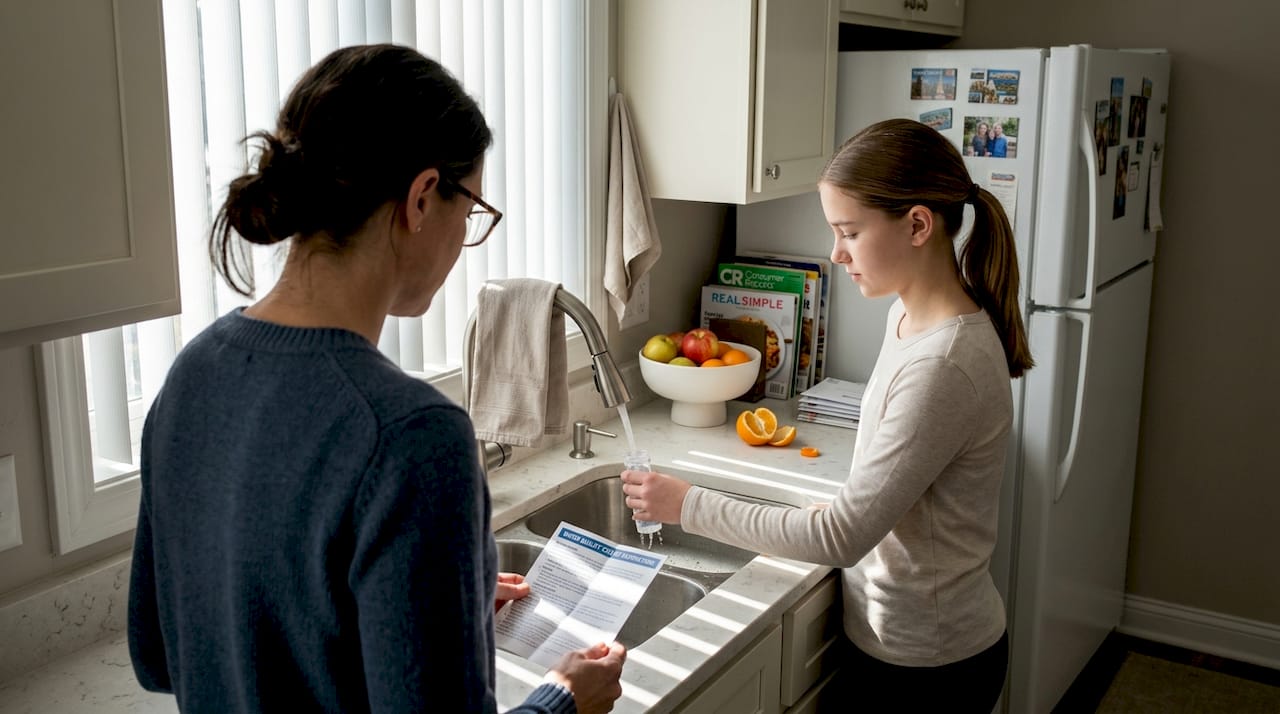
Your home’s tap water may look perfectly clear, but appearances can be deceiving. Contamination from aging pipes, agricultural runoff, and bacterial growth can threaten your family’s health long before any visible sign appears. Identifying your water source is the essential first step, because municipal users and private well owners face completely different responsibilities and risks. This practical checklist walks you through every critical action, from reading your water report to checking your pipes and responding to emergencies, so your family drinks with real confidence every day.
Table of Contents
- Know your water source: Municipal vs. private well essentials
- Inspect your plumbing for hidden risks
- Regular testing: Stay ahead of hidden contaminants
- Keep water fresh: Flushing, filter care, and smart hygiene
- Responding to problems: Emergencies, advisories, and proactive alerts
- What most water safety checklists miss: The real gaps between “safe” and “secure”
- Want cleaner, worry-free water? Discover the next step
- Frequently asked questions
Key Takeaways
| Point | Details |
|---|---|
| Identify your water source | Knowing if your water is municipal or from a private well is crucial for choosing the right safety steps. |
| Test and monitor regularly | Yearly well tests or prompt checks for changes in municipal water can catch hidden problems early. |
| Check for lead and plumbing hazards | Simple at-home tests help you spot lead risks and prevent long-term health concerns. |
| Maintain filters and flush pipes | Routine care and filter changes keep water fresh and contaminants out. |
| Act quickly in emergencies | During advisories, using boiled or bottled water prevents illness before help arrives. |
Know your water source: Municipal vs. private well essentials
Every water safety plan starts with one simple question: where does your water actually come from? You might assume you already know, but many homeowners are surprised to find out their neighborhood has a shared well, or that their municipal supply switches sources seasonally. Check your monthly utility bill, contact your local water authority, or simply look for a well cap or pressure tank in your basement or yard.
The reason this matters so much is that municipal vs. well responsibilities differ significantly. Municipal water is regulated and monitored by local utilities, who must publish annual Consumer Confidence Reports (CCRs). These reports detail every contaminant measured and how those levels compare to federal limits. Private well owners, on the other hand, carry full responsibility for testing and treating their own supply, with no regulatory body checking in on them.
In Europe, the WHO Water Safety Plans model extends this risk-assessment thinking all the way to the household level, encouraging families to trace risks from their source to every tap in the home. It’s the same logic that utilities use on a city scale, applied to your kitchen sink.
Action checklist by water source:
- Municipal users: Locate and read your most recent CCR, typically mailed annually or available on your utility’s website. Note any contaminants detected, even below legal limits.
- Municipal users: Contact your water utility if your home was built before 1986, since older service lines may contain lead.
- Well owners: Schedule annual testing for coliform bacteria, nitrates, pH, and total dissolved solids (TDS).
- Well owners: Inspect the well cap and casing for cracks, and keep potential contaminant sources like septic tanks at least 50 feet away.
- Both: Read up on safe drinking water essentials to understand the full scope of what healthy water should contain.
Pro Tip: Your CCR may show all contaminants at “safe” levels at the treatment plant, but those results don’t reflect what’s happening inside your home’s pipes. You still need to test at your tap.
Inspect your plumbing for hidden risks
After identifying your water source, the next step is examining the path that water takes inside your home. Even perfectly treated municipal water can pick up dangerous contaminants from old plumbing before it reaches your glass.
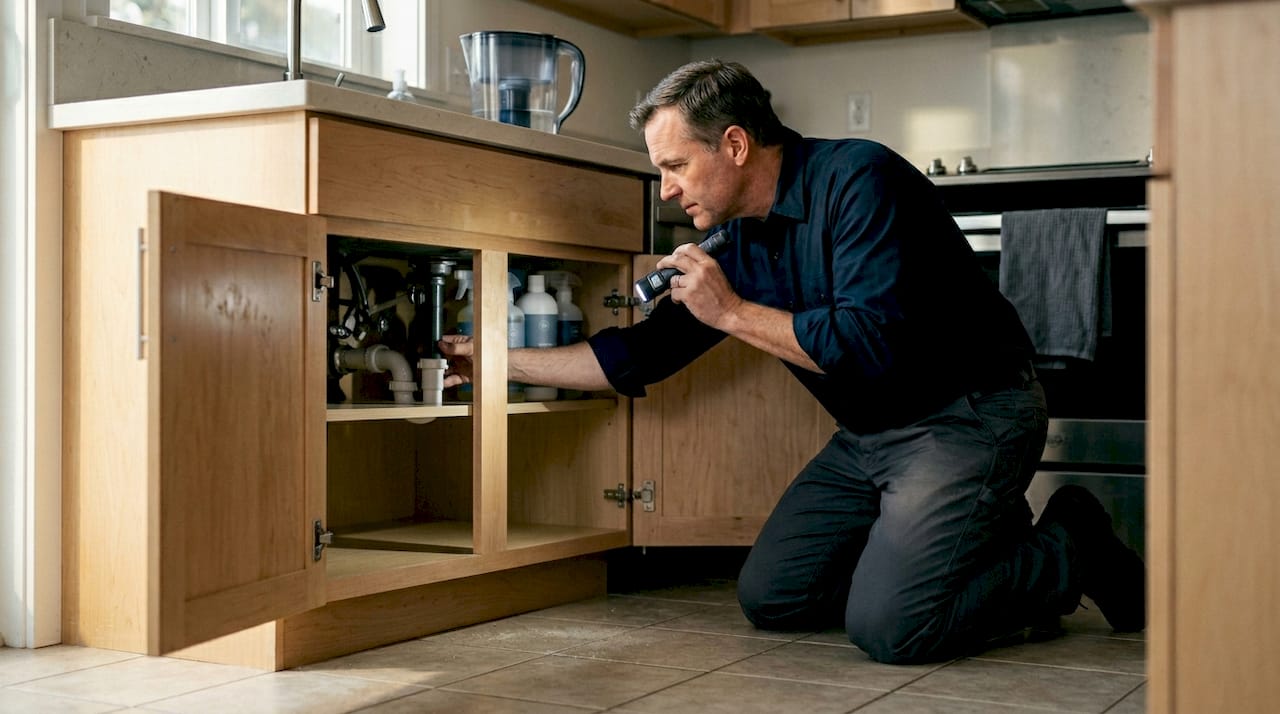
Lead is the most serious concern. Homes built before 1986 are most likely to have lead service lines or lead solder in their plumbing. The EPA Protect Your Tap guide recommends a quick physical check: find the main pipe entering your home and scratch it lightly with a coin. If the scratch reveals a shiny silver color, the pipe may be lead. A magnet test helps too: lead is not magnetic, so if a magnet doesn’t stick, that’s a warning sign worth acting on.
“Municipal CCR shows plant levels, but home tests for lead are needed to detect premise plumbing contaminants, with an action level of 15 ppb.”
Here’s the step-by-step process to inspect your plumbing and reduce risk:
- Locate your main supply pipe where it enters through the wall or floor. Check its color, texture, and whether a magnet sticks.
- Test your water for lead using an EPA-certified lab or a reliable at-home kit if you suspect lead pipes. Collect a “first-draw” sample, meaning water that has sat in pipes overnight, as this captures worst-case levels.
- Flush your taps before drinking if results show elevated lead, especially in the morning or after the water has been sitting.
- Install certified filtration on drinking and cooking taps. Look for filters meeting certified filtration standards that are tested specifically for lead reduction.
- Never use hot water from the tap for drinking, cooking, or mixing infant formula, since hot water draws more lead from pipes than cold water does.
Understanding the importance of water filters becomes very clear once you realize your plumbing itself can be a contamination source, completely separate from what the city does or doesn’t remove.
Pro Tip: If you rent, ask your landlord for the building’s plumbing records. In most U.S. states and EU countries, landlords are legally required to disclose known lead hazards.
Regular testing: Stay ahead of hidden contaminants
With plumbing checked, focus on what’s actually in your water with regular tests. Testing is the only way to know for certain whether your water is safe, and it’s far more affordable than most families assume.
Annual testing benchmarks for private wells include: coliform bacteria (should be absent), nitrates (below 10 mg/L), TDS, and pH (ideally between 6.5 and 8.5). Municipal users should test after any plumbing work, after flooding near their property, or whenever they notice changes in taste, odor, or color.
| Contaminant | Safe limit | Primary risk | Who should test |
|---|---|---|---|
| Coliform bacteria | Absent | Gastrointestinal illness | Well owners (annual) |
| Nitrates | Below 10 mg/L | Infant health risk | Well owners (annual) |
| Lead | Below 15 ppb (action level) | Neurological damage | All homes, especially pre-1986 |
| TDS | Below 500 mg/L | Taste, mineral balance | Well owners and municipal |
| pH | 6.5 to 8.5 | Pipe corrosion, taste | Well owners |
Knowing when to test is just as important as knowing what to test for. Triggers that should prompt immediate testing include:
- A sudden change in taste or smell, such as a chlorine spike, rotten egg odor (sulfur), or metallic flavor
- Any gastrointestinal illness among household members with no clear food-related cause
- Flooding in or near your well or property
- New plumbing work, especially if older pipes were disturbed
- A neighbor’s water test that came back with concerning results
For the most accurate results, always use a certified laboratory. Collect samples in clean containers provided by the lab, follow their instructions carefully, and send samples promptly. For lead testing specifically, collect first-draw water (after six or more hours of no use) for the most accurate picture of what your family is actually drinking.
These clean water tips are the foundation of a healthy home system, and combining them with advanced filtration methods gives you a truly layered defense against contamination.
Pro Tip: Many state health departments offer free or low-cost well water testing kits. Check your state’s environmental health website before paying for a private lab.
Keep water fresh: Flushing, filter care, and smart hygiene
Beyond testing, day-to-day and routine care keep your system safe and efficient. Even a well-installed filter provides no protection once it’s overdue for replacement, and stagnant water in pipes can accumulate metals and bacteria overnight.
Flushing your cold taps for one to three minutes each morning, or any time water has sat unused for more than six hours, removes water that has been in contact with pipe materials. This is especially important in homes with copper or galvanized steel plumbing. Monthly aerator cleaning, where you unscrew the small screen at the tip of your faucet and rinse away mineral deposits and debris, prevents bacterial buildup right at the point where water enters your glass.
Filter maintenance deserves its own schedule. Here’s a comparison of common filter types and their maintenance needs:
| Filter type | Replacement schedule | Certified for | Key feature |
|---|---|---|---|
| Carbon block (pitcher/faucet) | Every 2 to 3 months | Lead, chlorine, taste | Low cost, easy to replace |
| RO prefilter | Every 6 to 12 months | Sediment, chlorine | Protects membrane |
| RO membrane | Every 2 to 3 years | TDS, nitrates, metals | Core purification stage |
| UV lamp | Annually | Bacteria, viruses | No chemical addition |
When choosing filters, look for NSF/ANSI 53 certification for lead reduction and NSF/ANSI P473 for PFAS removal. These certifications mean an independent lab has verified the filter actually performs as advertised, not just that the manufacturer claims it does. Understanding why certified filters matter is the difference between real protection and false reassurance.
Here are the most important daily habits to build into your routine:
- Always draw from the cold tap for drinking, cooking, and especially infant formula.
- Never use hot tap water for cooking, as it leaches more metals from pipes.
- Track filter change dates on a calendar or set a phone reminder.
- Check under-sink filter housings monthly for leaks or signs of mold.
- Learn how filtration and home health are connected so your whole family understands the system.
Pro Tip: Write the installation date on every filter with a permanent marker. It takes two seconds and eliminates all guesswork about when it’s time to change.
Responding to problems: Emergencies, advisories, and proactive alerts
Even the safest system can face emergencies, and knowing how to act is your final line of defense. Water advisories, boil orders, and flooding events happen more often than most families expect, and the first 30 minutes of your response matter most.
During a boil water advisory or notice: Boil water for at least one minute before drinking, cooking, or brushing teeth. At elevations above 6,500 feet, boil for three minutes. Use bottled water if boiling isn’t practical. Do not assume the advisory only applies to drinking water. It covers all water that enters your mouth.
Contaminant warning signs to watch for at home:
- Milky, cloudy, or discolored water that doesn’t clear after flushing
- A strong chlorine smell that wasn’t present before
- Metallic, sulfur, or chemical odors that appear suddenly
- Multiple household members experiencing nausea, diarrhea, or stomach cramps with no other explanation
- Unusual taste changes that persist after flushing for several minutes
- Reports from neighbors of similar issues
After any flooding event, treat all well water as contaminated until tested. Floodwater can carry bacteria, agricultural chemicals, and fuel directly into the water table. Disinfect your well according to your local health department’s guidelines, and don’t use the water for any purpose until a certified lab confirms it’s safe.
The benefits of clean water extend far beyond taste. Consistent access to safe water reduces the risk of waterborne illness, supports child development, and protects vulnerable family members including infants, elderly relatives, and anyone with a compromised immune system.
What most water safety checklists miss: The real gaps between “safe” and “secure”
Here’s something worth saying plainly: most families who believe their water is safe have never actually tested it at the tap. They rely on their city’s annual report, and that report is genuinely useful, but it measures water quality at the treatment facility, not at your faucet.
The gap between those two points is where most real exposure happens. A municipal CCR shows plant levels measured before water enters the distribution system. By the time water travels through miles of aging infrastructure and through the specific pipes in your home, the picture can look very different. Lead is the clearest example: the city may deliver water with zero detectable lead, but if your home has lead solder from a 1970s renovation, every glass you pour carries that risk.
The second gap is family education. One person in the household usually manages water safety, and when that person isn’t home, filters go unchanged, flush routines are skipped, and boil advisories get ignored. Water safety is a household system, not a single person’s responsibility. Make sure everyone in your home, including older children, knows where the filters are, when they were last changed, and what to do if the water smells or looks wrong.
The third gap is complacency. Families who did a test three years ago and got clean results often feel permanently reassured. But groundwater conditions change. Pipes age. A new construction project nearby can disturb soil and affect a well. A one-time clean test is a snapshot, not a guarantee. A proactive schedule, checked twice a year for well owners and after any change in municipal supply for city users, keeps your safety plan current and your homewater safety guide relevant.
The families who consistently drink safe water aren’t lucky. They’re organized.
Want cleaner, worry-free water? Discover the next step
Going through this checklist is a serious step toward protecting your family, and the next logical move for many homeowners is upgrading to a system that handles multiple threats automatically. Modern purification technology can address lead, bacteria, PFAS, nitrates, and sediment in a single unit, giving you consistent protection without relying on city reports or manual flushing routines.
Understanding how water purification works helps you choose the right solution for your home’s specific risks. Whether you’re looking at best under sink purifiers for a compact kitchen setup or want to explore the full range of modern water purifier features, Coway’s lineup is built around certified filtration, UV sanitization, and professional installation and maintenance. Every system is designed to close the gaps this checklist identifies, so clean water is never something your family has to think twice about.
Frequently asked questions
How often should families test tap water for safety?
Well owners should test annually for coliform bacteria, nitrates, TDS, and pH, while municipal users should test after any plumbing changes or when they notice taste, odor, or color changes.
What are the key signs of unsafe water at home?
Watch for sudden changes in taste, odor, or color, or gastrointestinal illness among household members, as these are the clearest signals that testing is needed right away.
Is bottled water safer than tap during advisories?
Yes. During advisories, use bottled water or boil tap water for one minute before any drinking, cooking, or tooth brushing to eliminate bacterial risk.
Should I drink hot tap water?
No. Always use cold tap water for drinking and cooking because hot tap water leaches more metals from pipes, increasing your exposure to lead and copper.
What’s the single most important home water safety step?
Identifying your water source and building a regular testing routine around it is the foundation of every other safety measure in your home.
Recommended
- How to Assess Water Quality for Safer Homes – Coway Water Purifier
- 7-Step Home Water Filtration Checklist for Safer Drinking – Coway Water Purifier
- Why water quality matters for your health at home – Coway Water Purifier
- Safe water consumption tips for healthier homes – Coway Water Purifier
