
Uncategorized
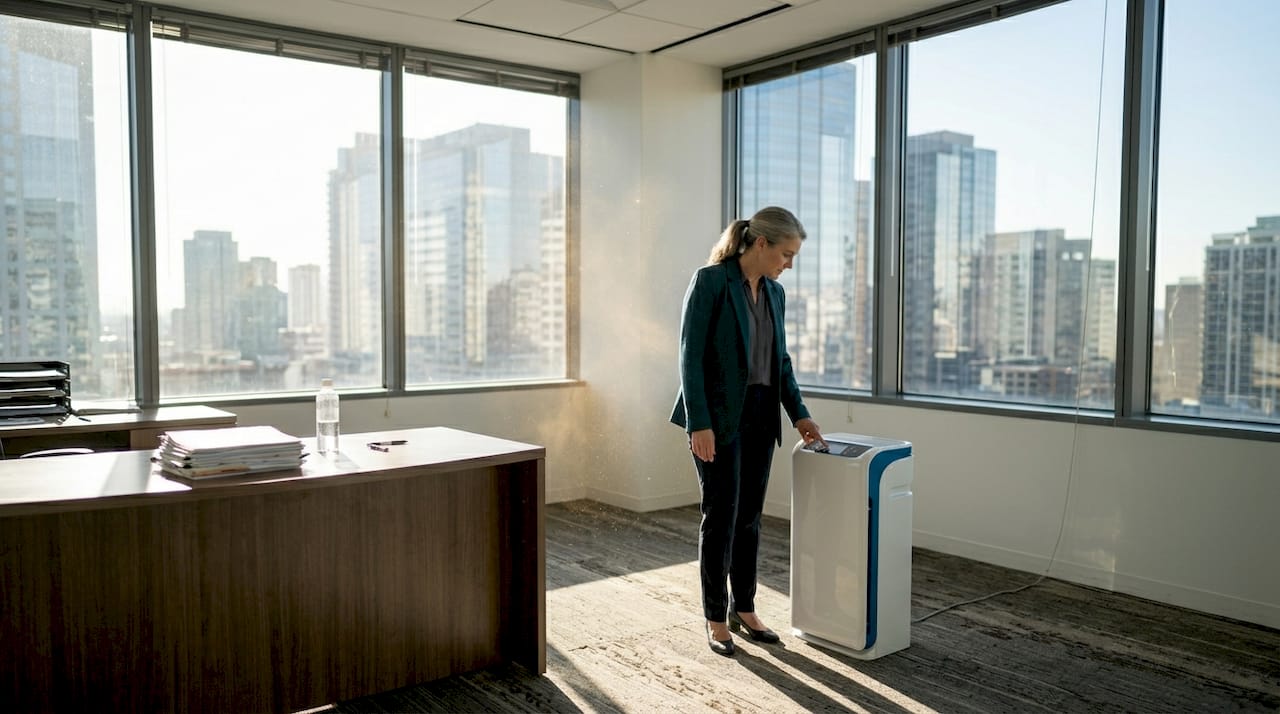
How Air Purifiers Protect Workplace Health and Safety
May
TL;DR:
- Installing HVAC systems alone does not ensure clean indoor air, requiring additional air purification strategies. Business environments face continuous airborne risks, including particles and pathogens, which air purifiers with HEPA filters can effectively reduce, improving employee health and productivity. Proper selection, maintenance, and integration of air purifiers into a layered health approach are essential for sustained indoor air quality and business resilience.
Ventilation alone does not guarantee clean indoor air. Many business owners install HVAC systems and assume the job is done, but that assumption leaves employees exposed to a cocktail of airborne particles, pathogens, and chemical off-gassing that standard air circulation simply cannot address. The EPA and CDC now provide clear guidance that air purification is a necessary layer in any serious workplace health strategy, not an optional upgrade. This guide explains the science, the selection criteria, and the practical steps your business needs to act on right now.
Table of Contents
- The science behind airborne risks in business environments
- Why air purifiers are essential—not just optional—for businesses
- Choosing the right air purifier: What business owners must know
- Integrating air purification into a holistic workplace health strategy
- Our take: What most businesses overlook about air purification strategies
- Solutions: Find the right air purifier and upgrades for your business
- Frequently asked questions
Key Takeaways
| Point | Details |
|---|---|
| Layered air quality strategy | Air purifiers should supplement ventilation and source control for safer workplaces. |
| HEPA filtration impact | Portable HEPA cleaners reduce harmful airborne particles in real business environments. |
| Avoid risky technologies | Steer clear of ozone generators and certain ionizers due to potential health risks. |
| Prioritize real-world fit | Choose and maintain units based on actual business occupancy, ventilation, and workflow. |
| Staff engagement essential | Routine maintenance and IAQ culture drive long-term air purification effectiveness. |
The science behind airborne risks in business environments
To understand why air purification matters, let’s first examine the airborne threats businesses face every single day.
Business environments are rarely the clean, low-traffic spaces most managers picture when they sign a lease. Offices, clinics, retail floors, and manufacturing areas all generate a continuous stream of particulate matter, including dust, biological aerosols, and volatile organic compounds (VOCs, meaning gases released by cleaning products, furniture, and equipment). In a space where 20 or more people spend eight hours a day, the concentration of these contaminants builds faster than any passive ventilation system can clear it.
The risks are particularly sharp in:
- Crowded open-plan offices where respiratory aerosols accumulate between workstations
- Healthcare-adjacent spaces like clinics and pharmacies where pathogen loads are inherently higher
- Retail and hospitality environments with constant foot traffic from the public
- Industrial sites where chemical or particulate pollution is generated at the source
- Conference rooms and break rooms with limited air exchange and irregular occupancy
“Businesses use air purifiers to reduce harmful airborne particles and germs in indoor spaces, especially where ventilation is limited or spaces are crowded.”
What most businesses miss is the invisibility factor. You cannot see a 2.5-micron particle (PM2.5), but your employees’ lungs certainly register it. Long-term exposure to PM2.5 is linked to cardiovascular stress and worsened respiratory conditions. For employees who already manage conditions like asthma, even moderate particulate exposure can disrupt breathing capacity and control in ways that compound over months and years.
HEPA (High Efficiency Particulate Air) filters are specifically engineered to capture 99.97% of particles 0.3 microns or larger, which covers the vast majority of respiratory aerosols, allergens, dust, and biological contaminants. The commercial air purifier benefits go well beyond cleaner air. You get measurable reductions in sick days, improved cognitive performance from reduced pollutant load, and a facility that signals to employees and clients that you take health seriously.
The air purification market is growing precisely because business owners are catching on. Demand is accelerating globally as occupational health standards tighten and employee expectations rise.
Why air purifiers are essential—not just optional—for businesses
Understanding the threats, let’s see why air purification must be a core part of every business’s health plan.
There is a persistent myth in facilities management that a good HVAC system handles everything. It does not. HVAC systems condition air temperature and humidity and provide basic circulation, but most commercial HVAC filters are rated at MERV 8 or lower, meaning they capture large dust particles but allow fine particulate matter, aerosols, and ultrafine pollutants to circulate freely. The EPA is explicit: air purification supplements source control and ventilation rather than replacing either one.
Here’s what the research shows when you layer air purification on top of standard ventilation:
| Metric | Ventilation only | Ventilation + air purification |
|---|---|---|
| Fine particulate reduction | 20-35% | 60-85% |
| Airborne pathogen reduction | Moderate | Significantly higher |
| VOC removal | Minimal | Improved with activated carbon |
| Employee-reported air quality | Mixed | Consistently positive |
| Allergy-related absences | Baseline | Measurably reduced |
The productivity angle is not soft data. Multiple studies correlate lower indoor pollutant levels with faster cognitive processing, fewer headaches, and lower fatigue scores. For a business with 30 employees, reducing allergy-driven absences by even two days per year per person represents thousands of dollars in recovered productivity.
A Nature study on air cleaner performance confirmed that HEPA and high-efficiency filtration can measurably reduce indoor particulate matter in real occupational settings, not just laboratory conditions. That distinction matters. Lab results are always cleaner than real-world outcomes, so the fact that gains persist under occupied, active-use conditions is significant.
The 2026 health air purifier guide outlines the leading filtration technologies and what performance benchmarks to prioritize for different space types.
Benefits your business gains from committing to air purification:
- Lower absenteeism tied to respiratory illness and allergy flare-ups
- Reduced liability by demonstrating proactive indoor air quality (IAQ) management
- Enhanced staff morale because employees notice and appreciate a healthier environment
- Client and visitor confidence, especially in health-conscious industries
Pro Tip: Run your air purifiers at least one hour before staff arrive and keep them running through peak occupancy. Scheduling purifier operation around your business hours, rather than running units 24/7 at maximum fan speed, extends filter life while delivering the highest-quality air when it counts most.
The urban home purifier benefits research also highlights that even spaces previously thought to have “acceptable” air quality show meaningful improvements once proper filtration is added. Business environments are not different.
Choosing the right air purifier: What business owners must know
Once convinced of their necessity, here’s how to select and manage air purifiers for maximum real-world impact.
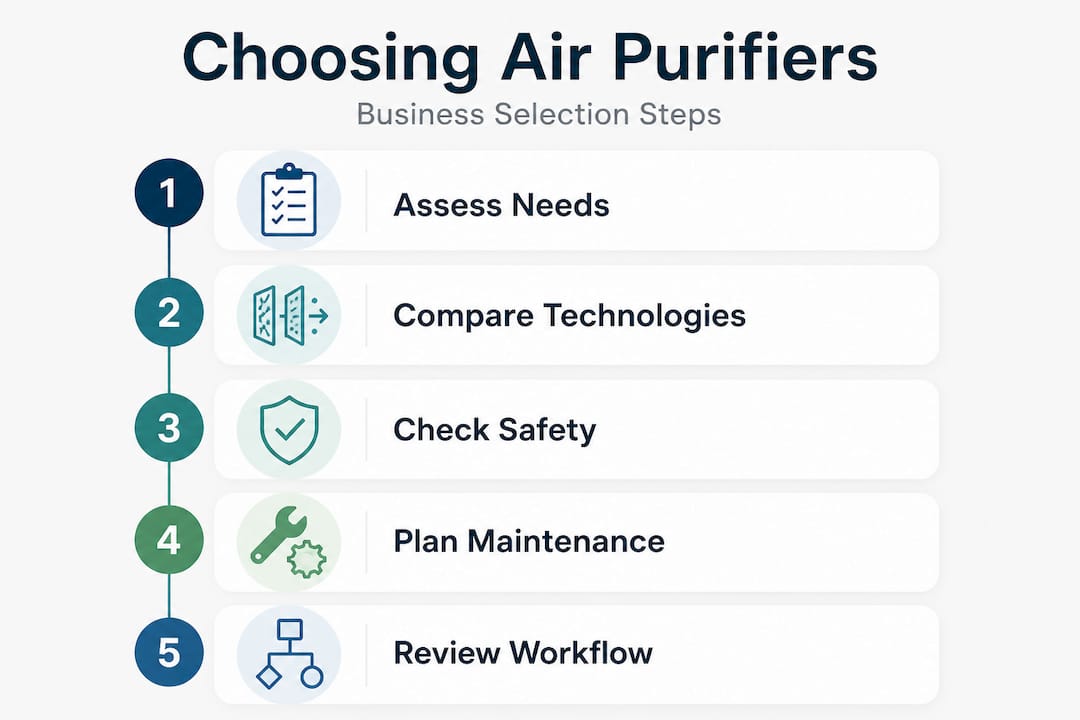
Not all air purifiers are created equal, and the wrong choice can waste money or, worse, create new health hazards. The Washington State Department of Health is unambiguous: avoid ozone generators, UV light units that produce ozone, electrostatic precipitators, ionizers, and negative ion purifiers because these technologies can release harmful byproducts into occupied spaces.

| Technology | Safe for occupied spaces? | Best use case |
|---|---|---|
| HEPA filtration | Yes | Particle and pathogen removal |
| Activated carbon | Yes | Odors, VOCs, chemical fumes |
| HEPA + activated carbon | Yes (recommended) | Comprehensive IAQ management |
| Ozone generators | No | Not recommended for occupied use |
| Ionizers/electrostatic | Use with caution | Only certified low-emission units |
| UV-C light (enclosed) | Yes, if enclosed | Supplemental pathogen control |
The EPA also notes that real-world IAQ improvements depend heavily on proper sizing, airflow relative to room volume, and actual occupancy patterns. A purifier technically rated for 1,000 square feet will underperform in a densely occupied 800-square-foot meeting room compared to the same unit in a sparsely used storage annex. Context always matters.
Steps for selecting the right unit for your business:
- Measure your space accurately. Calculate each room’s square footage separately rather than using total facility size.
- Check the CADR rating. CADR (Clean Air Delivery Rate) tells you how many cubic feet of filtered air the unit delivers per minute. Match it to your room dimensions.
- Identify your primary pollutant concern. Particles and pathogens require HEPA. Odors and chemical exposure require activated carbon. Most business spaces benefit from both.
- Factor in ceiling height. Standard CADR ratings assume 8-foot ceilings. Higher ceilings mean you need a higher-rated unit or multiple units.
- Account for occupancy peaks. A waiting room that holds 5 people Monday through Thursday but 20 on Friday needs to be sized for the worst-case scenario.
- Confirm filter availability. Choose brands with readily available replacement filters so maintenance never gets delayed because of supply issues.
Use the air purifier selection tips and the air purifier workflow guide to map your specific requirements before committing to a purchase.
Pro Tip: Align filter replacement with your quarterly facilities audit calendar. That way, filter checks never slip through the cracks during busy operational periods, and your purifiers maintain peak performance consistently throughout the year.
Integrating air purification into a holistic workplace health strategy
With the right purifier selected, integrate it seamlessly for full employee health benefits.
Air purifiers are not standalone solutions. Their value multiplies when combined with the other layers of a well-designed occupational health strategy. The EPA framework is clear that source control and ventilation remain foundational, and purification amplifies what those layers already accomplish.
A layered approach looks like this:
- Source control first: Eliminate or minimize pollutants at origin. Switch to low-VOC cleaning products, improve waste management, and control moisture to prevent mold growth.
- Optimize ventilation: Maximize fresh air intake where building design allows, even simple window or door openings during low-traffic periods make a difference.
- Deploy air purification: Position units where occupancy is highest, not just in the most convenient corner of a room.
- Monitor continuously: Use affordable CO2 monitors as an indirect indicator of air freshness. When CO2 rises, it signals that occupant-generated pollutants are accumulating.
- Review and adjust: Quarterly reviews of filter condition, unit placement, and occupancy patterns keep your system calibrated to actual use.
How air purification fits into broader health initiatives also includes pandemic preparedness. Businesses that already had layered IAQ systems in place during respiratory virus outbreaks reported fewer transmission events and faster recovery of operational capacity. That is a measurable competitive and reputational advantage.
Use the air purification checklist to build your own maintenance schedule tailored to your facility size and operation type.
For businesses managing employee health across seasons, protecting your workforce from flu and respiratory illness through clean air is one of the most cost-effective interventions available.
Pro Tip: Involve your facilities or operations team in monthly filter checks and ask them to log any unusual odors, dusty surfaces near vents, or visible discoloration on filter housing. Frontline staff who use the spaces daily often notice IAQ problems before management does.
Our take: What most businesses overlook about air purification strategies
After working with businesses across a range of industries, the pattern we see most often is not the wrong filter choice or an undersized unit. It is a cultural gap between purchasing a solution and actually sustaining it.
Managers research CADR ratings, compare HEPA grades, and negotiate pricing with real diligence. Then the units go into service, the first set of filters comes pre-installed, and the maintenance calendar never gets built. Six months later, saturated filters are doing essentially nothing while the spec sheet still hangs on the wall looking impressive. The air purification market trends show that more businesses are investing in units each year, but investment without follow-through does not protect anyone.
The businesses that consistently see strong IAQ outcomes share one trait: they treat air purification as a team responsibility, not a facilities department checkbox. When employees understand why filters matter and what degraded air quality feels like, they become early-warning systems. They notice when something smells off, when allergy symptoms spike across a department, or when a unit’s indicator light has been ignored for weeks.
There is also an honest conversation to have about expectations. Air purifiers are not magic. Even the best HEPA unit in a perfectly sized room will not compensate for a poorly maintained HVAC system, a mold problem behind a wall, or a chemical source that keeps generating pollutants. The technology works within a system. Businesses that treat it as one powerful component of that system get durable results. Those who treat it as a one-time fix get disappointing ones.
Our strongest recommendation is counterintuitive: before upgrading to a more expensive unit, invest in building the habits and accountability structures that will keep your current units running at their design performance. The returns on operational discipline consistently outperform the returns on hardware upgrades alone.
Solutions: Find the right air purifier and upgrades for your business
If you’re ready to upgrade your business’s air quality, here are useful next steps and resources.
Selecting an air purifier for a business environment involves more variables than a home purchase, and getting it right matters for compliance, employee wellbeing, and long-term cost efficiency. We have curated resources specifically to help business owners and facilities managers navigate those decisions without the guesswork.
Start with the business air purifier selection guide, which walks through CADR requirements, filter type comparisons, and placement strategies for commercial spaces. If you are evaluating specific models, the best air purifier 2026 breakdown covers top-performing units with side-by-side performance data. For businesses ready to explore the full range of Coway air care solutions, including models suited to large commercial spaces, visit the air care product archive for complete product listings, specifications, and purchasing options.
Frequently asked questions
Do air purifiers eliminate all indoor air pollutants?
No, air purifiers reduce many airborne particles but do not remove all pollutants. Source control and ventilation remain essential complements to filtration for complete IAQ management.
How often should business air purifier filters be changed?
Most business air purifiers require filter changes every 3 to 12 months depending on usage intensity and manufacturer specifications. Washington State DOH notes that portable HEPA air cleaners require careful selection and consistent maintenance to perform as intended.
Are ozone generators safe for indoor business use?
No. Washington State DOH specifically warns against ozone generators and ionizers in occupied spaces because they can produce harmful byproducts with documented adverse health effects.
How do I choose the right air purifier size for my business?
Match the unit’s CADR to your room square footage and occupancy levels. The EPA emphasizes that longer operation and correct sizing directly determine the effectiveness of particulate reduction in real-world settings.
Recommended
- Office Wellness via Air Quality: Healthier Workplaces – Coway Water Purifier
- Best air purifier 2026: health-focused selection guide – Coway Water Purifier
- Role of Air Purifiers in U.S. Business Wellness – Coway Water Purifier
- Understanding How Air Purifiers Work for Healthier Homes – Coway Water Purifier
- Verbeter je gezondheid: waarom kantoorinrichting essentieel is – LOOP
