
Uncategorized
Essential air quality improvement checklist for a healthier home
May
TL;DR:
- Effective indoor air quality depends on source control, ventilation, cleaning, and filtration.
- During wildfires or pollution surges, sealing your home and using portable filters is essential.
- Regular habits like checking filters, monitoring humidity, and reducing indoor pollutants improve health outcomes.
Your home may look spotless, but the air inside it could still be working against your family’s health. Poor indoor air quality is linked to respiratory problems, persistent headaches, and even reduced mental clarity, yet most families never think twice about it. This checklist walks you through every layer of protection, from identifying hidden pollution sources to building daily habits and responding to emergencies like wildfires, so you can take real, confident steps toward cleaner air at home.
Table of Contents
- Understand key sources of indoor air pollution
- Ventilation: When and how to refresh your indoor air
- Filtration and cleaning: Tools for healthier air
- Checklist: Daily, weekly, and seasonal air quality habits
- Special situations: What to do during wildfires or extreme pollution
- The real key to clean indoor air: Why simple steps beat expensive gadgets
- Want to automate healthy air at home?
- Frequently asked questions
Key Takeaways
| Point | Details |
|---|---|
| Source control comes first | Eliminating pollutant sources is the most effective step for healthy air. |
| Smart ventilation matters | Refresh indoor air when outdoor conditions allow, but seal up during pollution. |
| Maintain strong filtration | Use MERV 13+ or HEPA filters and replace them regularly to keep air clean. |
| Stick to a checklist | Regular daily, weekly, and seasonal habits keep improvements on track. |
| Prepare for air emergencies | Rapidly seal, filter, and monitor indoor air during wildfires or pollution spikes. |
Understand key sources of indoor air pollution
Before you can fix a problem, you have to know where it’s coming from. Indoor air pollution isn’t just smoke or chemical fumes. It’s a broad mix of particles, gases, and biological contaminants that build up quietly in your living spaces.
The most common culprits include:
- Dust and dust mites: These accumulate in bedding, carpets, and upholstered furniture and are a leading trigger for allergies and asthma.
- Volatile organic compounds (VOCs): Emitted by paints, cleaning products, pressed wood furniture, and air fresheners. VOCs are gases that off-gas at room temperature and can irritate airways.
- Pet dander: Tiny flakes of skin shed by cats, dogs, and other animals. Even “hypoallergenic” pets produce some level of dander.
- Tobacco smoke: One of the most harmful indoor pollutants, containing hundreds of toxic chemicals that cling to surfaces long after the smoke clears.
- Mold and mildew: Thrive in damp areas like bathrooms, basements, and around leaky pipes. Mold spores become airborne and cause serious respiratory reactions.
- Radon: A naturally occurring radioactive gas that seeps up through soil and enters through foundations. It’s colorless, odorless, and a leading cause of lung cancer in non-smokers.
- Carbon monoxide (CO): Produced by gas appliances, furnaces, and attached garages. Odorless and potentially fatal in high concentrations.
Children, elderly family members, and people with asthma or other respiratory conditions face a higher risk from all of these pollutants. Their lungs are more sensitive, and they often spend more time indoors than healthy adults. Learning about common indoor pollutants is a powerful first step toward protecting them.
Expert hierarchy of control: The most effective and cost-efficient approach to cleaner indoor air is source control first, then ventilation, and filtration last. Jumping straight to an air purifier without addressing the root cause is like mopping the floor with the faucet still running.
Removing or reducing pollutant sources is the foundation of any air quality strategy. Switch to low-VOC paints, ban indoor smoking, and fix moisture problems before spending a dollar on equipment.
Ventilation: When and how to refresh your indoor air
Controlling sources is step one, but next is making sure stale air doesn’t accumulate indoors. Ventilation dilutes and removes pollutants, and knowing when to use it correctly makes a big difference.
Natural ventilation works best when outdoor air quality is good. When outdoor pollution spikes due to wildfire smoke, traffic, or industrial activity, sealing your home and relying on filtration is the smarter call. This is where checking the Air Quality Index (AQI) before opening a window becomes essential. Think of ventilation as a tool that works with conditions, not against them.
Effective ventilation strategies include:
- Open windows for cross-ventilation: Position windows on opposite sides of a room or floor to create airflow that sweeps pollutants out quickly rather than just circulating them.
- Use exhaust fans in kitchens and bathrooms: Run the kitchen exhaust fan every time you cook. Cooking generates moisture, particulate matter, and gases that should vent directly outside rather than recirculate.
- Run bathroom exhaust fans for 15-20 minutes after showers: This removes humidity before mold spores have a chance to settle.
- Spot ventilation for painting and cleaning: Open windows and use fans whenever you’re using strong products indoors. Even brief exposure to concentrated VOCs in poorly ventilated spaces adds up over time.
- Whole-home ventilation systems: Heat recovery ventilators (HRVs) or energy recovery ventilators (ERVs) exchange stale indoor air for fresh outdoor air while keeping your heating or cooling costs manageable.
Ventilation that pulls in polluted outdoor air actually increases your energy costs while worsening air quality. On high AQI days, skip the open windows and rely on your HVAC and filtration systems instead. Getting a sense of your local air patterns takes only a few days of checking an AQI app.
Pro Tip: Download a free AQI monitoring app like AirNow and check it each morning before deciding whether to ventilate naturally. On days below AQI 50, open up freely. On days above 100, seal up and run your air purifier. You can also read our full indoor air quality overview or compare indoor vs outdoor air pollution to understand how these factors interact for your household.
Filtration and cleaning: Tools for healthier air
With ventilation covered, it’s essential to know how filtration keeps the air clean when outdoor air quality is poor or pollution sources linger. The good news is that filtration technology has advanced significantly, and there are solid options at every budget.
Understanding filter ratings:
MERV stands for Minimum Efficiency Reporting Value. A higher MERV number means the filter traps smaller particles. For home use, MERV 11 to 13 is ideal. MERV 13 captures fine particles like smoke, bacteria, and some virus carriers. HEPA (High Efficiency Particulate Air) filters go even further, capturing 99.97% of particles as small as 0.3 microns. These are the gold standard for portable air purifiers.
How to maintain your filters:
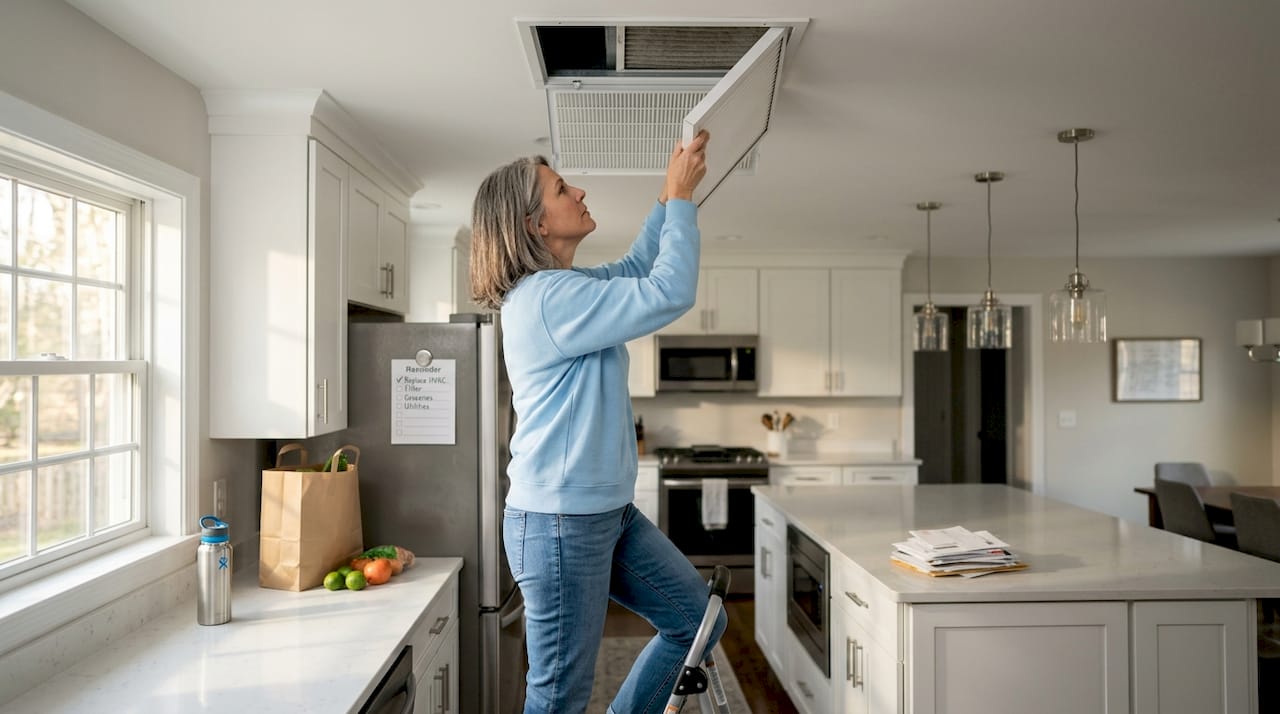
- Check your HVAC system’s manual to confirm it can handle MERV 13 filters without restricting airflow. Some older systems are designed for lower-rated filters, and forcing a denser filter can strain the blower motor.
- Replace HVAC filters every 60 to 90 days under normal conditions. Shorten that to 30 days during wildfire season or if you have pets.
- Set a recurring phone reminder to check your filter on the first of every month. Holding it up to a light source is a quick way to see whether it’s clogged.
- For portable air purifiers, replace HEPA filters according to the manufacturer’s schedule, usually every 6 to 12 months. Pre-filters that catch larger particles can often be vacuumed and reused.
- Clean the exterior grills and intake vents on portable units monthly to prevent buildup that reduces performance.
The effectiveness of portable air cleaners depends heavily on matching the unit’s Clean Air Delivery Rate (CADR) to your room size. A unit rated for 150 square feet will underperform in a 400-square-foot living room. Also, portable cleaners do not remove gases like formaldehyde or radon without an added activated carbon layer.
Whole-home vs. portable air purifier comparison:
| Feature | Whole-home system | Portable air purifier |
|---|---|---|
| Coverage area | Entire home | Single room or zone |
| Upfront cost | $500 to $3,000+ | $100 to $700 |
| Maintenance | Quarterly filter changes | Every 6 to 12 months |
| Installation | Professional required | Plug-and-play |
| Best for | Consistent baseline protection | Targeted problem areas, bedrooms, wildfires |
| Gas removal | Possible with carbon add-ons | Yes, with activated carbon filter |
For most families, a combination works best. Whole-home filtration covers the baseline while a portable unit in the bedroom adds targeted protection, especially at night when consistent air quality matters most for sleep and recovery. Explore our air optimization steps and air quality improvement steps to build a layered approach for your home.
Pro Tip: Running your HVAC fan continuously during wildfire events, rather than only when heating or cooling, can increase filtration efficiency by 50 to 80%. Set it to “on” instead of “auto” on your thermostat for the duration of any smoke event.
Checklist: Daily, weekly, and seasonal air quality habits
Armed with tools and strategies, a regular schedule turns best practices into effective habits. Air quality improvement isn’t a one-time project. It’s an ongoing practice.
Quick-reference checklist by frequency:
- Daily: Check AQI before ventilating, run kitchen and bath exhaust fans during and after use, avoid burning candles or incense in poorly ventilated rooms.
- Weekly: Vacuum carpets and rugs with a HEPA vacuum, wash bedding in hot water to reduce dust mites, wipe down surfaces to prevent dust accumulation, empty dehumidifier trays.
- Monthly: Check air purifier indicator lights, inspect HVAC filter, check under sinks and around appliances for moisture or mold growth.
- Seasonally: Deep clean air ducts if you notice buildup, replace HVAC filters, check window seals and weatherstripping for gaps, service gas appliances before heating season.
- Annually: Test your home for radon if levels exceed the EPA action threshold of 4 pCi/L (picocuries per liter). Install or test CO and smoke alarms in every bedroom and on every floor.
Air quality habit tracker:
| Task | Recommended frequency | Impact level |
|---|---|---|
| HEPA vacuuming | Weekly | High |
| Washing bedding | Weekly | High |
| HVAC filter check | Monthly | High |
| Air purifier filter check | Monthly | Medium |
| Humidity monitoring | Weekly | High |
| Radon testing | Every 2 years | Critical |
| CO/smoke alarm testing | Monthly | Critical |
| Gas appliance inspection | Annually | High |
Maintaining indoor humidity between 30 and 50 percent is one of the most powerful and underrated steps on this list. Too much moisture and mold takes hold. Too little and airways dry out, making you more susceptible to airborne irritants. A $20 digital hygrometer placed in your main living area gives you a constant read on this number. Learn more about assessing air quality at home or download our complete 2026 air quality checklist for a printable version.
Children and older adults should always be the priority when tracking air quality indoors. Their bodies give early warning signs, such as frequent sneezing, eye irritation, or unusual fatigue, that the air quality may need attention before adults notice any effects themselves.
Special situations: What to do during wildfires or extreme pollution
While everyday habits keep indoor air healthy, specific threats like wildfires require rapid, focused action. When outdoor air quality crashes quickly, you need a plan you can execute within minutes.
Immediate actions during a wildfire or air quality emergency:
- Close all windows, doors, and fireplace dampers immediately. Every gap is a pathway for contaminated outdoor air.
- Switch your HVAC system to recirculate mode to stop drawing in outdoor air.
- Set up your portable HEPA air purifier in the room where your family spends the most time, typically the living room or master bedroom.
- Seal gaps around doors and windows with damp towels or temporary weatherstripping tape if the event is severe.
- Avoid cooking on a gas stove or using anything that adds combustion products to indoor air during the event.
- Monitor indoor PM2.5 levels continuously. The target is below 12 micrograms per cubic meter for safe indoor air during smoke events.
Key statistic: Using MERV 13 or higher filters combined with continuous HVAC fan operation can reduce indoor fine particulate matter (PM2.5) by 50 to 80% compared to doing nothing during a wildfire event. That’s a dramatic improvement achievable without leaving the house or spending anything beyond what you’ve already invested in your HVAC system.
Pro Tip: Keep a low-cost PM2.5 monitor in your home year-round, especially if you live near wildfire-prone areas, highways, or industrial zones. Models under $50 give real-time readings that tell you whether your current measures are working or whether you need to add more filtration. Check our guide on airborne pollutant strategies for a deeper breakdown of specific threats and responses.
During these events, children should stay indoors with windows closed. Even short outdoor exposure during wildfire smoke can irritate developing lungs in ways that take days to recover from.
The real key to clean indoor air: Why simple steps beat expensive gadgets
Here’s an opinion that might surprise you: families who spend $800 on a flagship air purifier but still smoke indoors, skip regular vacuuming, and ignore humidity have worse air quality than those who do none of those things but keep up with the basics.
The research and expert guidance are clear. Source control and ventilation consistently outperform filtration as the primary strategy. An air purifier is a last line of defense, not a substitute for good habits. It can’t remove what’s actively being generated faster than it can filter.
“The fanciest gadget can’t replace the daily discipline of clean habits and source control.”
This isn’t an argument against air purifiers. Used correctly, they are genuinely valuable tools, particularly for managing residual pollution, protecting bedrooms overnight, and responding to outdoor air quality events. But their value compounds only when the foundation is solid.
The families who see the biggest improvements are those who layer their approach: they control sources first, ventilate smartly, clean consistently, and then use filtration to handle what’s left. That order matters. Skipping to step three doesn’t get you the results of doing all three.
Understanding why indoor air matters doesn’t require expensive testing or specialist consultants. It requires consistent attention to the basics and a willingness to treat air quality as a real part of your family’s health routine, not an afterthought.
Want to automate healthy air at home?
You now have the full picture: source control, smart ventilation, regular cleaning habits, proper filtration, and an emergency plan. If you want to simplify the filtration piece and trust that it’s handled correctly, that’s where Coway comes in.
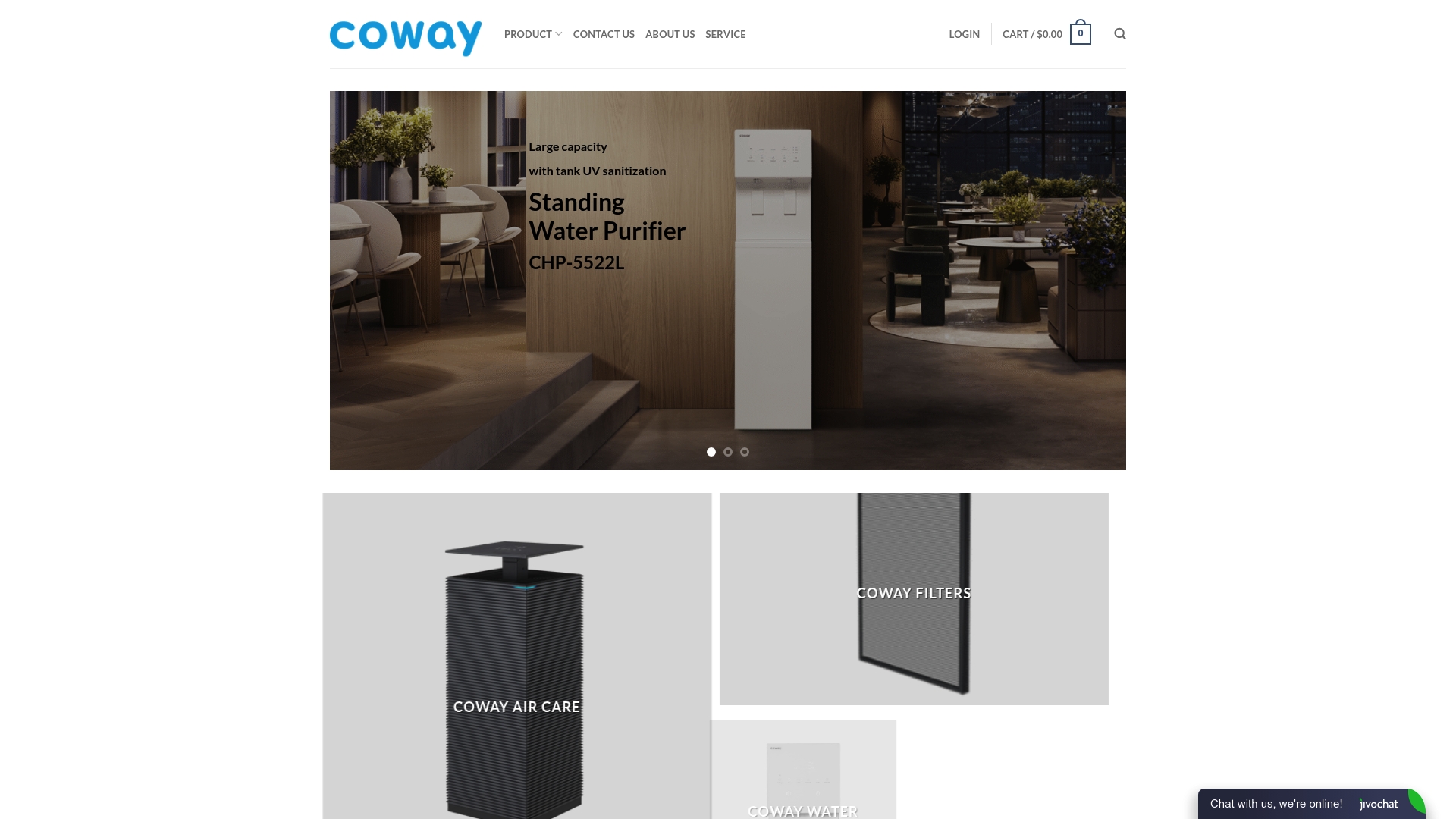
Coway’s air purifiers are engineered for real home environments, covering large rooms efficiently with multi-stage filtration that handles particles, odors, and airborne contaminants. Whether you need guidance on choosing the right model or want a full overview of what’s available, our best air purifier 2026 guide makes it easy to match a unit to your space and needs. For a structured path to cleaner air, our air purification checklist pairs perfectly with everything you’ve learned here. Browse the full range of Coway air care solutions and find the setup that fits your home.
Frequently asked questions
What is the single most effective step for better indoor air quality?
Source control is the most impactful approach, meaning removing or reducing the actual pollutants at their origin rather than trying to clean the air after the fact.
How often should I change my HVAC or air purifier filter?
For MERV 13 filters, plan on replacement every 3 months under normal conditions, and more frequently during wildfire season or if you have multiple pets.
Do I need both a whole-house and a portable air purifier?
Whole-house filtration provides consistent background protection throughout your home, but a portable HEPA unit in the bedroom or living room adds meaningful extra coverage during pollution events or for high-risk family members.
How can I tell if my air quality is actually improving?
A PM2.5 monitor and a CO2 detector give you real data to track as you work through the checklist. Watch for drops in PM2.5 readings after changing filters and improving ventilation habits.
Is air quality more important for certain family members?
Yes. Children and elderly individuals are significantly more vulnerable to indoor air pollution, making consistent air quality management especially critical in homes with young kids, older adults, or anyone with asthma or respiratory conditions.
Recommended
- Air purification checklist: 6 steps for healthier home air – Coway Water Purifier
- Home air quality checklist for a healthier 2026 – Coway Water Purifier
- Spot the signs of poor air quality for a healthier home – Coway Water Purifier
- Indoor Air Optimization Process for Healthier Homes – Coway Water Purifier
