
Uncategorized
Explore the advantages of UV sterilization for safe home water
May
TL;DR:
- UV sterilization effectively destroys bacteria viruses and protozoa without adding chemicals.
- Proper maintenance and pre-filtration are essential for UV systems to work reliably at home.
- UV is best suited for clear water sources and may require additional filtration for turbid water.
Choosing a water purification method is one of the most consequential decisions you make for your family’s health, yet most homeowners approach it with guesswork rather than facts. UV sterilization has quietly become one of the most trusted technologies in home water safety, and for good reason. It destroys bacteria, viruses, and protozoa without adding a single chemical to your water. This guide unpacks how it works, what it does exceptionally well, where it falls short, and how to decide if it belongs in your home.
Table of Contents
- How UV sterilization works: The science made simple
- Top advantages of UV sterilization for home water safety
- Real-world limitations: What homeowners must know
- When is UV sterilization the right choice for your home?
- What most homeowners miss about UV sterilization
- Explore smart water purification solutions for your home
- Frequently asked questions
Key Takeaways
| Point | Details |
|---|---|
| Chemical-free disinfection | UV sterilization neutralizes pathogens without adding chemicals or changing water taste. |
| Fast and effective | UV systems rapidly destroy a wide range of waterborne microorganisms, important for home safety. |
| Requires consistent maintenance | UV effectiveness depends on both water clarity and regular care of bulbs and protective sleeves. |
| Best for clear water sources | Homes with well or municipal water and good pre-filtration benefit most from UV technology. |
| Integrates with other filtration | Pairing UV with pre-filters ensures reliable, comprehensive water purification for households. |
How UV sterilization works: The science made simple
UV sterilization uses ultraviolet light to destroy the DNA of microorganisms so they can no longer reproduce or cause infection. The process happens inside a sealed chamber where water flows past a UV lamp. The exposure is brief but powerful enough to neutralize most common waterborne pathogens instantly.
Here is what makes this technology stand out for health-focused homeowners:
- No chemicals involved. Unlike chlorination, UV adds nothing to your water. There are no disinfection byproducts, no chemical odors, and no residue to worry about.
- Broad-spectrum protection. It works against bacteria like E. coli and Salmonella, viruses like hepatitis A and norovirus, and protozoa like Giardia and Cryptosporidium.
- Speed. Water is disinfected in real time as it flows through the chamber. There is no waiting period, no batch processing, and no storage tanks required.
- No taste alteration. The water that comes out tastes exactly like the water that went in, minus the pathogens.
- Reliability in emergencies. UV systems are frequently recommended during boil-water advisories because of their UV sterilization basics and speed of action.
There is one important condition: the water must be reasonably clear. UV light cannot penetrate murky or turbid water effectively. Sediment and particles physically block the light rays, which means pathogens hiding behind particles can slip through unaffected.
“For health-conscious homeowners, the main health and safety advantage of UV is rapid inactivation of pathogens in a chemical-free way.”
That is the core promise. And when conditions are right, UV sterilization delivers on it with impressive consistency.
Top advantages of UV sterilization for home water safety
With a clear foundation set, it is time to break down the major advantages UV offers for your home’s drinking water. These benefits are what make UV a go-to recommendation for homeowners with private wells, rural water sources, or simply a preference for cleaner, chemical-free disinfection.
-
Destroys a wide range of pathogens. UV light neutralizes bacteria, viruses, and protozoa in a single pass. Chlorine, by comparison, struggles with Cryptosporidium and Giardia. UV handles them without any additional dosing adjustments.
-
Zero chemical residue. If you have ever noticed a chlorine smell in your tap water, you know how off-putting chemical disinfection can be. UV leaves your water tasting and smelling exactly as it should, with no byproducts.
-
Real-time disinfection. Water is treated the moment it passes through the UV chamber. Unlike some filtration approaches that require soaking or sitting time, UV is instant. You turn on the tap and get disinfected water immediately.
-
Low ongoing maintenance. Compared to chemical feed systems, UV units are straightforward to maintain. The main task is replacing the lamp annually and cleaning the protective sleeve periodically. There are no chemical orders, no mixing, and no storage of hazardous materials.
-
Excellent for private wells and rural homes. Well water can carry bacteria introduced by surface runoff, animals, or nearby septic systems. The advantages of UV filtration are especially significant here because these sources are more vulnerable and often lack municipal treatment.
-
Emergency-ready. During boil-water advisories or natural disasters when water quality is uncertain, a UV system provides a fast, reliable layer of protection. Understanding the full role of UV in water purification helps homeowners prepare rather than react.
-
Eco-friendly operation. UV systems use electricity, not chemicals. There is no chemical manufacturing, no packaging waste, and no risk of chemical spills. The environmental footprint is minimal compared to chemical-based alternatives.
According to water safety research, the main health advantage of UV is the broad pathogen inactivation it provides, especially for well water users and families navigating boil-water advisories where conventional chemical treatment is unavailable or impractical.
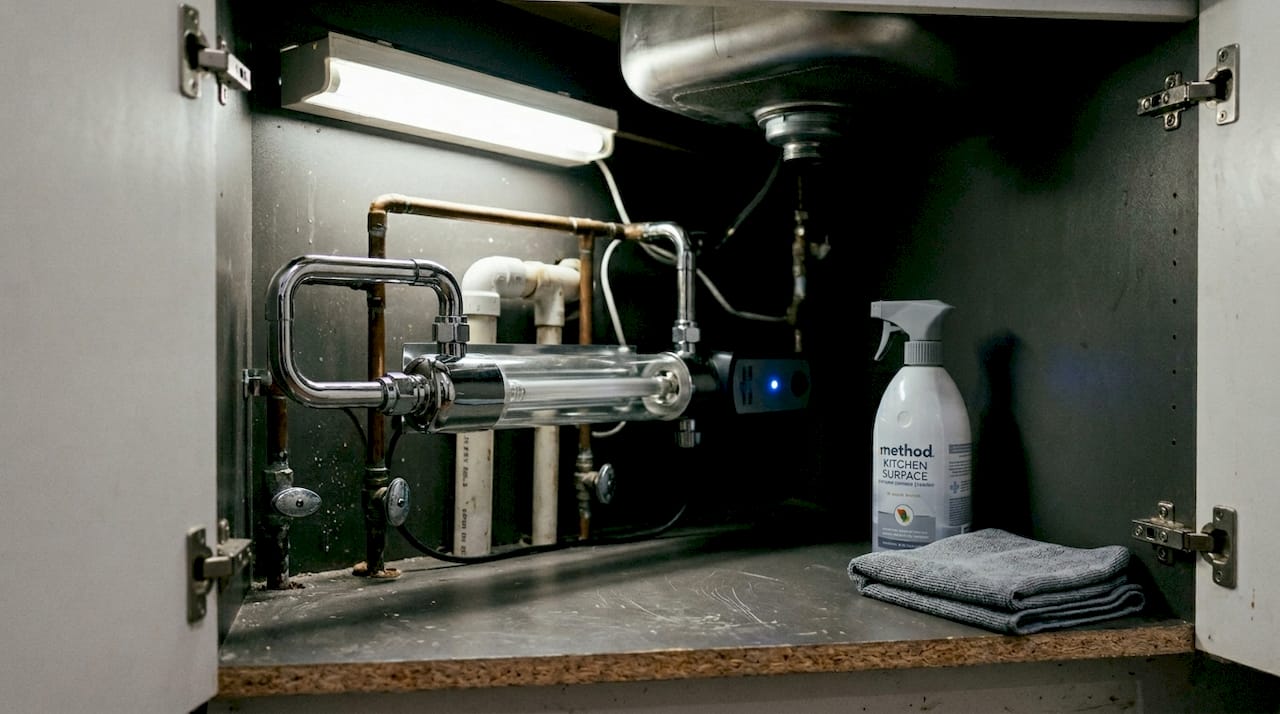
Pro Tip: Always pair your UV system with a quality pre-filter. A sediment filter rated at 5 microns or less, installed before the UV chamber, removes particles that would otherwise block UV light and protect pathogens from inactivation. This two-step approach dramatically improves your system’s real-world effectiveness.
Real-world limitations: What homeowners must know
No system is flawless. Here is what can go wrong with UV and how to avoid common pitfalls that many homeowners discover only after something has already gone wrong.
The most sobering data point comes from real field inspections. A field study found that 25% of inspected UV units could not provide disinfection because the UV bulb was not glowing. Another 8% had thick biofilm deposits on the lamp sleeve, which would likely inhibit disinfection even if the lamp was operational. These are not rare edge cases. They reflect what happens when homeowners treat UV as a “set it and forget it” solution.
Here is a direct comparison to help you weigh your options:
| Factor | UV sterilization | Chemical (chlorine) | Mechanical filtration |
|---|---|---|---|
| Pathogen coverage | Broad (bacteria, viruses, protozoa) | Broad (less effective on protozoa) | Limited (size-dependent) |
| Chemical byproducts | None | Yes (trihalomethanes) | None |
| Maintenance frequency | Annual lamp, periodic sleeve cleaning | Regular chemical replenishment | Filter replacement |
| Water clarity required | Yes (pre-filter needed for turbid water) | No | Depends on filter type |
| Taste and odor impact | None | Yes (chlorine taste/smell) | Depends on filter media |
| Emergency suitability | High (instant action) | Moderate | Low (depends on contamination type) |
| Operating cost | Low to moderate (electricity, lamp) | Moderate (chemical cost) | Low to moderate (filter cost) |
The table makes one thing clear: UV is excellent across most categories, but it has a non-negotiable dependency on water clarity and consistent maintenance. A UV system with a burned-out bulb or a sleeve caked with mineral deposits is effectively useless, regardless of how advanced the technology is.
Understanding how UV sanitization for home safety translates in practice means accepting that the technology requires your attention to stay effective. And knowing how UV purification works at each step helps you spot warning signs before they become water quality problems.
Pro Tip: Set a recurring calendar reminder every 12 months for lamp replacement and every 6 months for sleeve inspection and cleaning. Treat it the same way you would an HVAC filter or smoke detector battery. A two-minute check can be the difference between safe water and a false sense of security.
When is UV sterilization the right choice for your home?
Armed with both benefits and caveats, here is how to decide if UV is the right solution for your living situation. The answer is not the same for everyone, and the right setup depends on your water source, maintenance habits, and health priorities.
| Use case | Is UV a good fit? | Recommended pre-filtration | Key maintenance tip |
|---|---|---|---|
| Private well (rural home) | Yes, highly recommended | Sediment filter (5 micron) | Annual lamp replacement, test water quarterly |
| Municipal water (extra protection) | Yes, as an added layer | Carbon filter for chlorine | Annual lamp check, sleeve cleaning |
| Emergency or disaster preparedness | Yes, ideal | Pre-filter if water is visibly cloudy | Keep a spare lamp on hand |
| High turbidity source (muddy water) | Not on its own | Heavy-duty sediment + carbon filtration | Ensure pre-filter is changed frequently |
| Apartment or rental with limited access | Possibly, with countertop units | Check unit specifications | Follow manufacturer schedule |
Decision criteria every homeowner should weigh before choosing UV:
- Your water source. Well water users benefit most. Municipal water already receives some treatment, but UV adds a meaningful extra layer.
- Your water clarity. If your water runs visibly cloudy or has high iron, install pre-filtration first.
- Your maintenance commitment. If you will not change a lamp once a year, UV may give you false confidence. Be honest with yourself.
- Your health priorities. If chemical-free disinfection is important to you, UV is one of the cleanest solutions available.
- Your budget. Entry-level UV systems are affordable. The ongoing cost is mainly electricity and an annual lamp replacement.
Real-world UV disinfection effectiveness depends on correct dosing, adequate pre-filtration, and reliable lamp and sleeve maintenance working together. One weak link in that chain compromises the entire system. Understanding the features of modern water purifiers helps you identify which systems are designed to make that chain as strong as possible.
What most homeowners miss about UV sterilization
Here is something we see repeatedly that typical UV articles never address directly: the gap between what a UV system promises on paper and what it actually delivers in a home that has not stayed on top of maintenance.
The technology itself is sound. There is no argument there. UV sterilization has been used in municipal water treatment plants and medical facilities for decades. It is not experimental. But the “set-and-forget” reputation that UV has picked up in consumer marketing is genuinely dangerous.
We have seen homeowners assume their water was safe for years, only to discover the UV lamp had burned out months earlier with no visible sign of failure. Unlike a carbon filter that eventually lets through bad taste or a sediment filter that slows water pressure when clogged, a failed UV lamp gives you no obvious signal. The water looks, smells, and tastes exactly the same. But it is no longer disinfected.
The deeper insight here is that UV sterilization is not a product. It is a practice. The hardware is just the starting point. What actually protects your family is the combination of a properly installed system, a pre-filter that keeps water clear, and a consistent maintenance routine. That is a multi-barrier approach, and it is the only approach that holds up under real-world conditions.
If you are evaluating UV for your home, visit the UV sanitization perspective section of our resource library. It gives you a realistic, unfiltered look at what works and what does not based on real installation and maintenance experience, not just lab data.
The homeowners who get the most out of UV are not necessarily the ones with the most expensive systems. They are the ones who treat maintenance like a non-negotiable part of home ownership, the same way they treat changing smoke detector batteries or scheduling furnace inspections.
Explore smart water purification solutions for your home
Knowing the facts about UV sterilization is a strong first step. The next is finding a system that puts that science to work reliably in your specific home. Whether you are just beginning to research your options or you are ready to invest in a complete water purification setup, having access to honest, detailed guidance makes all the difference.
At Coway, we have built our product line around the same multi-barrier principles this article covers, combining pre-filtration, UV sanitization, and ongoing maintenance support in one integrated system. If you want to understand the full water purification process explained, our resource library walks you through every stage in plain language. Ready to compare specific models? Our UV water purifiers comparison guide lays out the key differences between systems so you can match features to your actual needs. And if you want to understand exactly how home UV sanitization works in everyday use, we cover that too. Your family’s water safety deserves more than guesswork.
Frequently asked questions
Does UV sterilization remove chemicals and heavy metals from water?
No, UV sterilization only inactivates living microorganisms and does not remove chemicals, heavy metals, or particulates from your water. For those contaminants, you need activated carbon or reverse osmosis filtration combined with UV.
How often should a UV sterilizer bulb and sleeve be cleaned or replaced?
UV bulbs typically need replacement once a year, even if they appear to still glow, because biofilm buildup and lamp failure quietly undermine performance over time. Sleeves should be inspected every six months and cleaned whenever mineral or biological deposits are visible.
Is UV sterilization safe for all types of drinking water sources?
UV works best on clear water, and sources with high sediment or turbidity require pre-filtration first. UV disinfection depends strongly on how much light can actually reach the microorganisms in your water.
Does UV affect the taste or odor of drinking water?
No, UV does not change the taste, odor, or appearance of your water in any way. Unlike chlorination, UV produces no byproducts and leaves your water chemically unchanged after disinfection.
Recommended
- UV Sanitization: Boosting Home Water and Air Safety – Coway Water Purifier
- Top 5 Advantages of UV Filtration for Safe Home Water – Coway Water Purifier
- What Is UV Sterilization? Complete Guide for 2024 – Coway Water Purifier
- UV Purification Process Explained: Step-by-Step for Clean Water – Coway Water Purifier
