
Uncategorized
UV Sanitization: Boosting Home Water and Air Safety
Jan
Keeping your home safe from invisible threats is a constant concern, especially when it comes to the water you drink and the air you breathe. UV sanitization offers a chemical-free way to target harmful microorganisms using UV-C light, which disrupts their DNA and prevents illness. For American homeowners who want peace of mind without chemical residue, understanding the basics and common misconceptions about UV technology will help you make smarter choices in protecting your family’s well-being.
Table of Contents
- UV Sanitization Basics And Misconceptions
- Types Of UV Sanitization For Homes
- How UV Sanitization Systems Work
- Health Benefits And Effectiveness Evidence
- Potential Risks And Safety Concerns
- Comparing UV To Other Purification Methods
Key Takeaways
| Point | Details |
|---|---|
| UV-C Light’s Effectiveness | UV-C light can effectively inactivate harmful microorganisms but cannot remove non-living contaminants from water or air. Combine UV with additional filtration for comprehensive purification. |
| Types of Systems | Different UV sanitization systems target water, air, or surfaces; choose based on your specific health concerns and installation needs. |
| Maintenance Importance | Regular maintenance, including cleaning quartz sleeves and replacing lamps, is crucial to ensure optimal performance and safety of UV systems. |
| Multi-Barrier Approach | For maximum protection, employ a multi-barrier approach by combining UV sanitization with other filtration methods to address various contaminants. |
UV sanitization basics and misconceptions
UV sanitization works by using ultraviolet light to damage the genetic material of harmful microorganisms, effectively stopping them from reproducing and causing illness. The most effective wavelength for this purpose is UV-C light, which ranges from 180 to 280 nanometers. When microorganisms like bacteria, viruses, fungi, and molds encounter UV-C radiation, the light penetrates their cells and disrupts their DNA or RNA, making them unable to function. This process has been used for over a century—germicidal applications of UV light trace back to 1878—and remains one of the most reliable physical disinfection methods available today. Unlike chemical disinfectants, UV sanitization leaves no toxic residue behind, making it an attractive option for health-conscious homeowners who want a chemical-free approach to purifying their water and air.
Unfortunately, several persistent misconceptions surround UV sanitization that lead people to either overestimate its capabilities or dismiss it entirely. One common myth is that UV sanitization removes all contaminants from water or air. The reality is more nuanced: UV-C light is excellent at inactivating microorganisms, but it cannot remove non-living contaminants like heavy metals, chlorine, or sediment. This is why effective water and air purification systems typically combine UV technology with other filtration methods. Another widespread misconception involves safety concerns. Many people worry about UV-C exposure, assuming it’s dangerous in home settings. While UV-C from mercury vapor lamps is indeed hazardous with direct human exposure, properly designed home systems use sealed chambers that prevent any contact with the light source itself. Additionally, UV-C light is absent from sunlight reaching Earth because the ozone layer blocks it, so you’re not naturally exposed to germicidal UV radiation outdoors. Some homeowners also believe UV sanitization provides ongoing protection throughout their water distribution system. This misconception stems from misunderstanding how UV works—it sanitizes water or air as it passes through the UV chamber, but provides no residual disinfection in pipes or ducts after treatment. This means that UV systems work best when installed at the point where water enters your home or where air circulates through your HVAC system.
A third major misconception involves effectiveness against specific pathogens. People often assume UV won’t work against certain “tough” viruses or bacteria, but research has demonstrated that UV disinfection effectively targets viruses, spores, and cysts, including pathogens like SARS-CoV-2. However, UV effectiveness does depend on several factors: water clarity matters significantly since cloudy or sediment-laden water reduces UV penetration, proper exposure time is critical, and the intensity of the UV source must be adequate for your flow rate. This is why pre-filtration before UV treatment is essential—removing particles, turbidity, and other contaminants allows UV light to reach and inactivate the microorganisms you’re trying to eliminate. Think of it like sunburn prevention: sunscreen only works on exposed skin, not on skin covered by clothing. Similarly, UV light can only inactivate microorganisms it can directly reach.
Pro tip: If you’re considering UV sanitization for your home, pair it with a multi-stage filtration system that includes sediment filters before the UV chamber—this ensures maximum effectiveness and prevents wasting UV energy on particles that a simple mechanical filter could remove.
Types of UV sanitization for homes
When you start shopping for UV sanitization systems, you’ll quickly notice they come in several different forms, each designed for specific purposes in your home. The main distinction between UV systems depends on what you’re trying to sanitize: water, air, or surfaces. Understanding these categories helps you choose the right solution for your specific needs, and more importantly, ensures you’re getting the technology that actually addresses your concerns rather than wasting money on something that won’t solve your problem.
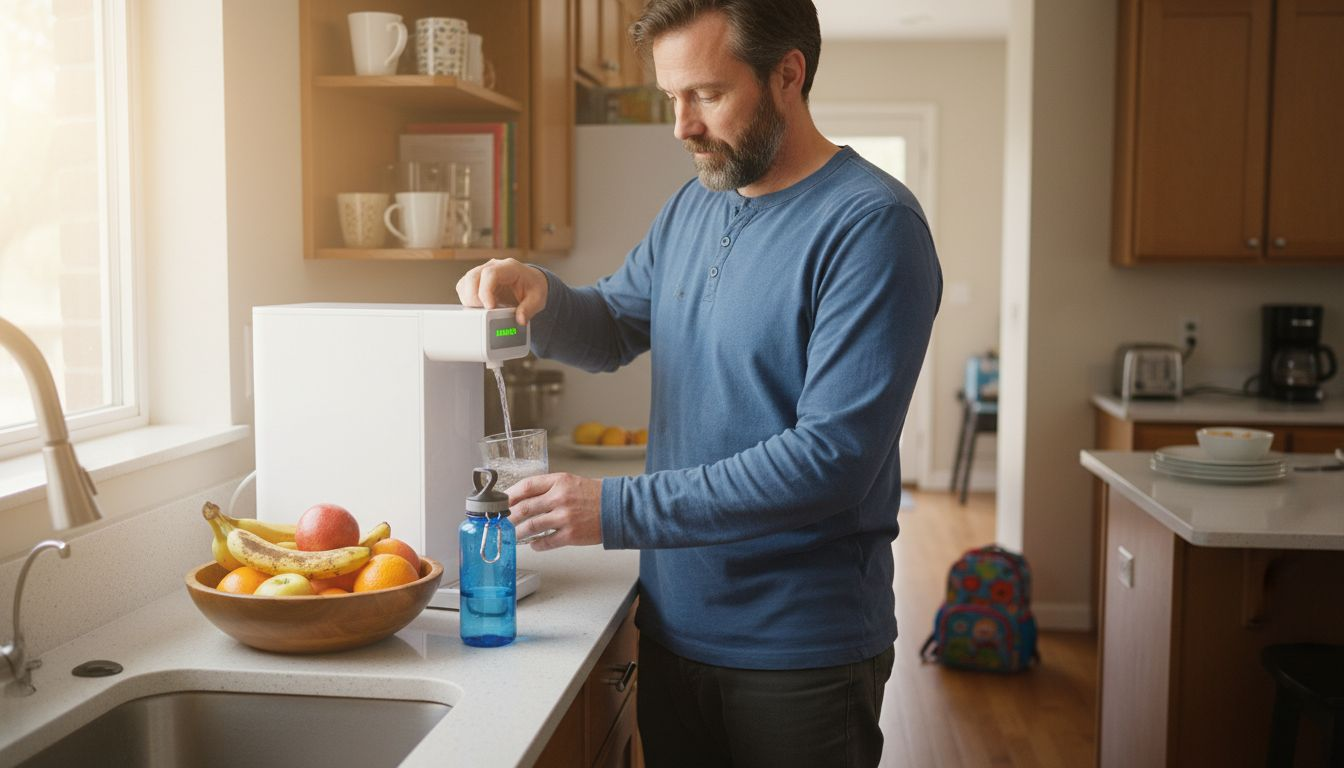
Water Sanitization Systems are among the most popular UV applications for American homeowners. These units work by passing water through a chamber containing a UV-C lamp, where microorganisms are inactivated before the water reaches your tap. You’ll typically find two installation options: point-of-use systems installed under the sink or on the kitchen counter, and whole-house systems installed at the main water line where water enters your home. Point-of-use systems are more affordable and easier to install yourself, making them popular for renters or anyone wanting to test UV technology first. Whole-house systems require professional installation but protect all water throughout your home, which matters if you’re concerned about contaminated water reaching your showers, washing machines, or toilets. The role of UV in water purification involves ensuring water clarity before treatment, since sediment and particles reduce UV effectiveness. Many homeowners combine UV water systems with multi-stage filtration to achieve optimal results.
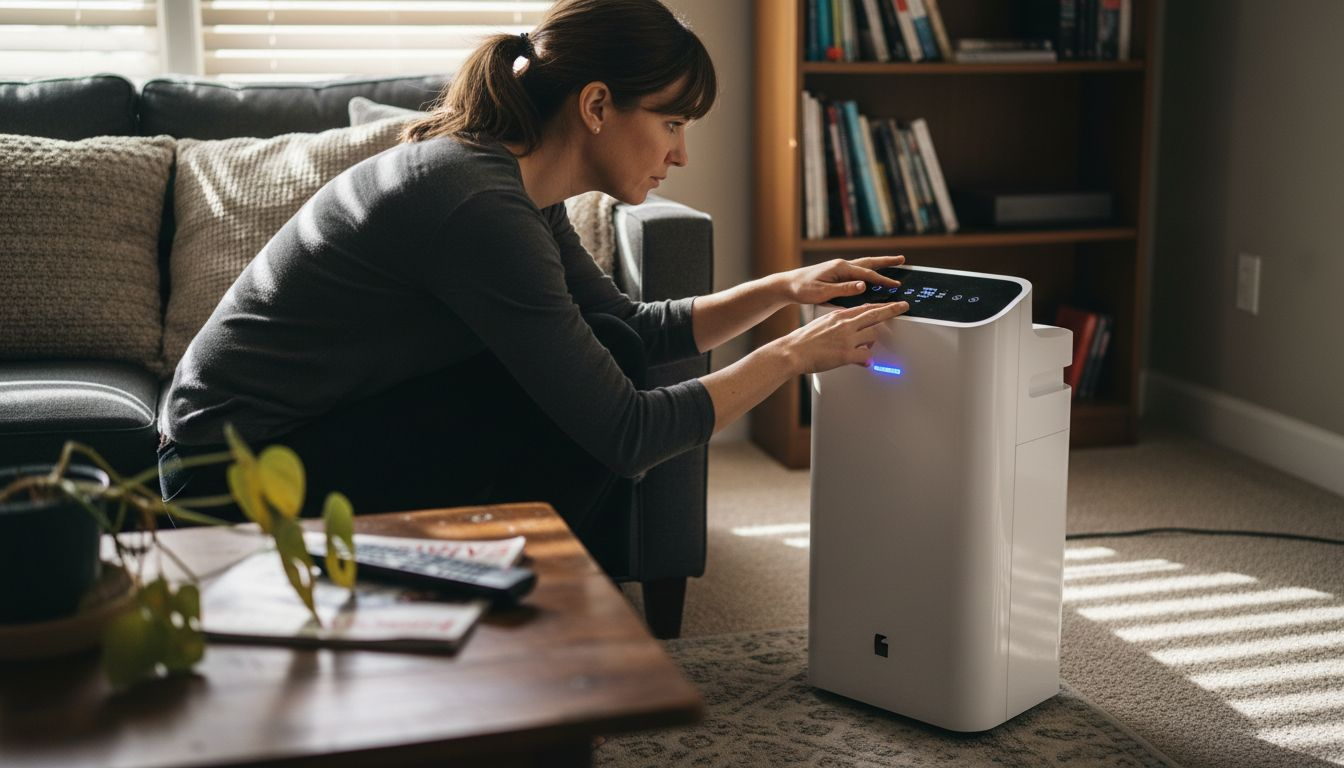
Air Sanitization Systems integrate UV-C technology directly into your home’s HVAC system or operate as standalone air purifiers. The integrated approach involves installing UV lamps inside your ductwork or air handler, where air passes through and gets disinfected before circulating through your rooms. This method sanitizes all air flowing through your system without requiring you to do anything after installation. Standalone UV air purifiers work differently—they pull air through an internal chamber containing UV-C lamps, sanitizing it before releasing clean air back into your room. These are excellent for specific spaces like bedrooms, offices, or nurseries where you want concentrated air cleaning. Some advanced systems now use UV-C disinfection between wavelengths of 250 to 280 nanometers for optimal germicidal effectiveness. One advantage of air systems is their ability to continuously sanitize as air circulates, providing ongoing protection rather than one-time treatment.
Portable Surface Sanitizers represent the smallest category but offer flexibility that stationary systems cannot match. These handheld UV-C wands or boxes allow you to sanitize specific items in your home: toothbrushes, phone screens, tablet devices, keyboards, baby pacifiers, or cutting boards. You simply place the item inside the device or wave the wand over it, and UV-C light eliminates surface microorganisms. While less comprehensive than whole-system solutions, these portable devices fill a genuine gap for people wanting to disinfect high-touch items that frequently come into contact with germs. They’re particularly popular among parents of young children or people with compromised immune systems.
The choice between these three types depends on your priorities. Are you concerned about drinking water quality? A water system makes sense. Worried about airborne viruses or allergens spreading through your home? An air purification system targets that problem. Want versatility in sanitizing specific items? Portable devices offer that flexibility. Many health-conscious homeowners actually use multiple types together—a water system for clean drinking water, an air system for respiratory health, and portable devices for high-touch items. This layered approach provides comprehensive home sanitization coverage.
Installation and maintenance requirements also differ significantly between types. Water systems need periodic lamp replacement (typically every 9,000 to 12,000 operating hours) and regular cleaning of quartz sleeves around the lamps. Air systems require similar maintenance but often integrate more easily with existing HVAC infrastructure if you hire a professional. Portable devices are the lowest maintenance option, usually requiring only periodic lamp replacement and occasional cleaning of the device exterior.
Pro tip: Start with the water or air system that addresses your biggest health concern, then add complementary solutions—most homeowners find that combining water and air sanitization provides the most noticeable improvement in overall home safety and family wellness.
Here’s how the main types of UV sanitization systems for homes compare:
| System Type | Primary Use | Installation Location | Maintenance Needs |
|---|---|---|---|
| Water Sanitization | Drinking/cooking | Main water line or under sink | Lamp/sleeve cleaning, replacement |
| Air Sanitization | Airborne pathogens | Inside HVAC or standalone | Lamp changes, HVAC integration |
| Portable Surface Sanitizers | Small items | Handheld/in-room | Device/lamp cleaning |
How UV sanitization systems work
Understanding how UV sanitization systems actually function demystifies why they work so effectively and helps you maintain them properly. At their core, all UV systems operate on the same fundamental principle: UV-C light damages the genetic material of harmful microorganisms, preventing them from reproducing and causing infection. The process sounds simple, but the engineering behind it requires precise control of several variables to ensure maximum effectiveness in your home.
Let’s start with the hardware itself. A typical residential UV water treatment system contains a UV lamp (usually a low-pressure mercury vapor lamp) enclosed within a protective quartz sleeve. This sleeve serves a critical purpose: it protects the lamp from water while allowing UV-C light to pass through. Water flows around the quartz sleeve through an enclosed chamber, ensuring that every drop gets exposed to the UV light as it travels through. The lamp emits UV-C radiation at approximately 254 nanometers, which is the most effective wavelength for germicidal purposes. For air systems, the setup differs slightly. Instead of water flowing past a lamp, air passes through a chamber or ductwork where UV-C lamps are installed, exposing the air to the same germicidal radiation. The key difference is that air systems must account for air velocity and volume to ensure adequate exposure time, while water systems must consider flow rate and water clarity.
The actual disinfection process happens at the microscopic level. When UV-C light strikes microorganisms like bacteria, viruses, or fungi, the radiation penetrates their cell membranes and damages their nucleic acids (DNA or RNA). This damage prevents the microorganisms from replicating and disrupts their normal cellular functions, effectively inactivating them. Think of it like scrambling the instruction manual that tells the microorganism how to survive and reproduce. Without functioning genetic material, even if a pathogen isn’t technically killed, it cannot cause infection because it cannot replicate. This is why UV sanitization is called inactivation rather than elimination. The microorganisms remain in the water or air, but they’re harmless.
Three critical factors determine whether your UV system actually works effectively: UV dose, exposure time, and water or air clarity. The UV dose is the amount of UV light energy delivered to each unit of water or volume of air. This depends on lamp intensity (measured in microwatts per square centimeter) and how long the microorganism stays exposed to the light. Your system’s flow rate directly affects exposure time, which is why manufacturers specify maximum flow rates for each unit. Exceed that flow rate, and water or air moves too quickly through the UV chamber, reducing the time microorganisms spend under the light and potentially allowing some pathogens to pass through untreated. Water and air clarity matters enormously because particles, sediment, and turbidity block UV light from reaching microorganisms hiding behind them. This is why UV purification processes require pre-filtration to remove sediment before water reaches the UV lamp. Without clean water, your system becomes significantly less effective.
Maintenance directly impacts system performance. Over time, lamp intensity decreases, which reduces UV output. Most systems require lamp replacement every 9,000 to 12,000 operating hours, though this varies by manufacturer and usage. Additionally, mineral deposits and algae can accumulate on the quartz sleeve, creating a barrier that blocks UV light from penetrating the water. Regular cleaning of the quartz sleeve ensures unobstructed light transmission and maintains the system’s disinfection capability. Many homeowners neglect this maintenance, not realizing that a dirty quartz sleeve can reduce effectiveness by 50 percent or more, essentially rendering their system unreliable.
Pro tip: Set a calendar reminder to clean your UV system’s quartz sleeve monthly and track lamp operating hours to replace it on schedule, ensuring your system maintains its full germicidal effectiveness year-round.
Health benefits and effectiveness evidence
The health benefits of UV sanitization become clear when you understand what research has demonstrated over decades of real-world use. UV-C technology isn’t new or experimental—it has a proven track record dating back to the 1930s in controlling infectious diseases like tuberculosis and measles. What makes this relevant to your home today is that modern UV sanitization systems apply this same well-established science to protect your family from pathogens in your drinking water and breathing air. The evidence supporting UV effectiveness is substantial and continuously expanding as researchers study its impact on emerging health threats.
One of the most important measures of UV effectiveness is the log reduction value, which quantifies exactly how many pathogens are neutralized. A log reduction of 1 means 90 percent of pathogens are inactivated, a log reduction of 2 means 99 percent are eliminated, and a log reduction of 3 means 99.9 percent are neutralized. When you see a UV system marketed with a log reduction value of 3 or 4, you’re looking at genuine, measurable pathogen reduction—not vague marketing claims. The reason health-conscious homeowners care about this is straightforward: if you have contaminated water or air entering your home, even a small percentage of surviving pathogens can cause illness, especially for vulnerable family members like young children or elderly relatives. Research confirms that UV-C light destroys DNA and RNA of pathogens including viruses, effectively neutralizing their ability to cause infection. This mechanism works across a broad spectrum of microorganisms, which is why UV is considered a universal disinfection method.
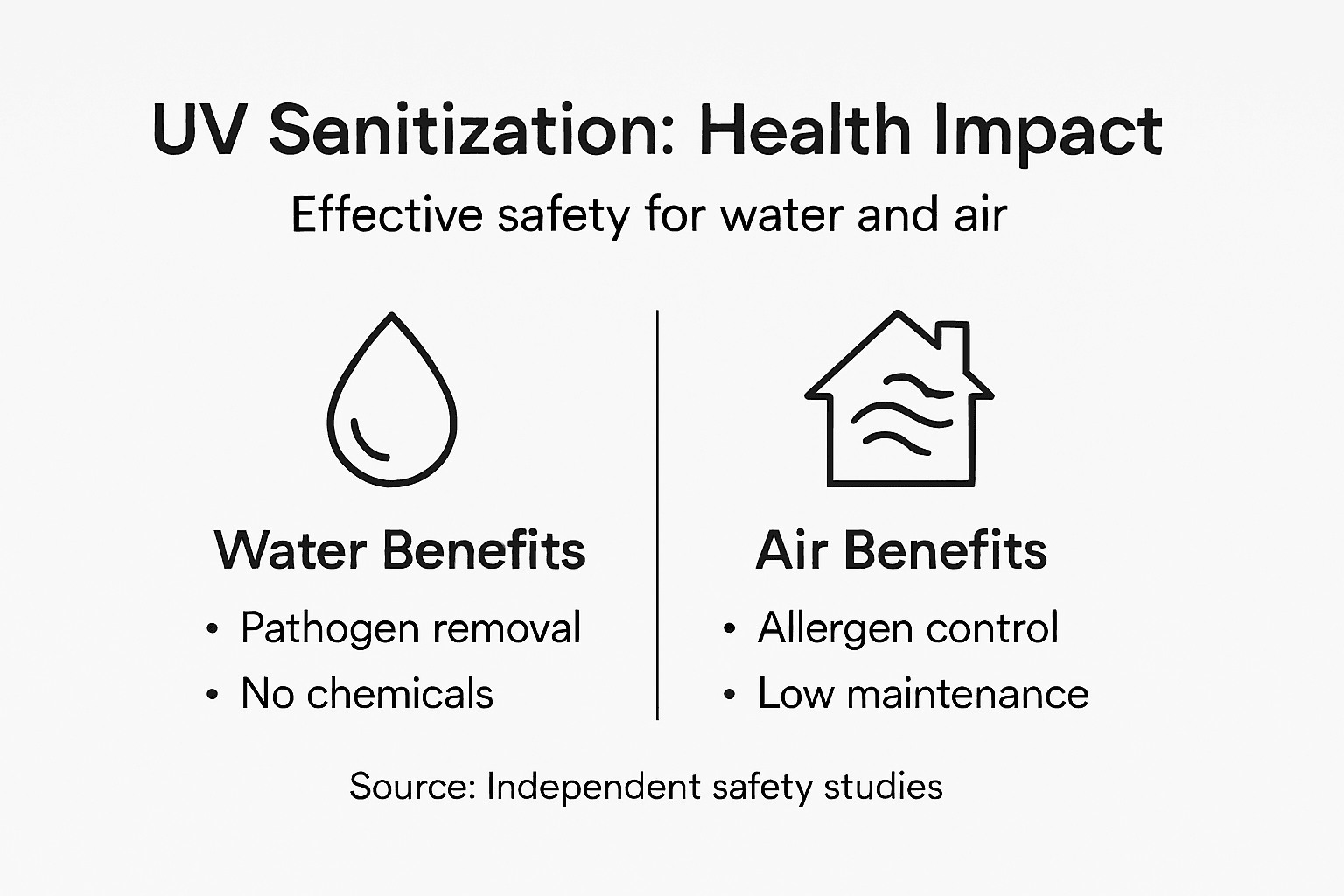
The practical health benefits you experience from UV sanitization depend on what specific pathogens you’re trying to address. For water safety, UV sanitization protects against bacteria like E. coli, viruses that cause gastrointestinal illness, and parasitic cysts that can survive chlorine treatment. For air quality, UV systems reduce airborne viruses including influenza and coronavirus variants, along with mold spores that trigger allergic reactions and respiratory issues. Many American homeowners install UV water systems specifically to avoid the risks associated with contaminated groundwater or aging municipal water infrastructure. Others prioritize UV air purification in response to concerns about respiratory viruses spreading through shared HVAC systems, particularly in homes with immunocompromised family members. The flexibility of having both systems means you’re addressing contamination at multiple entry points into your home—water you drink and bathe with, plus air you breathe continuously.
Pro tip: Request the log reduction value and specific pathogen effectiveness data from any UV system you’re considering purchasing, then cross-reference those claims with third-party testing results to ensure you’re getting genuine protection backed by measurable evidence.
A critical point that often gets overlooked: UV sanitization works best as part of a multi-barrier approach rather than as a standalone solution. Over 40 years of empirical evidence demonstrates that UV disinfection is effective against diverse pathogens in drinking water and air when combined with other water and air treatment methods. Think of it like home security—you don’t rely on just one lock or camera; you use multiple layers to maximize protection. The same principle applies to water and air safety. A comprehensive water treatment system typically includes mechanical filters to remove particles, activated carbon to remove chemicals and odors, then UV sanitization to inactivate remaining microorganisms. Similarly, effective air purification often combines HEPA filtration with UV-C disinfection to capture particles while neutralizing pathogens that escape the mechanical filter. This layered strategy delivers measurably better health outcomes than any single technology alone.
For homeowners concerned about specific recent health threats, the research is reassuring. Studies have specifically validated UV-C effectiveness against coronavirus variants, addressing one of the most common questions health-conscious families ask. The virus responds to appropriate UV doses, meaning properly installed and maintained systems provide genuine protection against airborne transmission risk. This doesn’t mean UV is a replacement for good ventilation or other safety practices, but it meaningfully reduces pathogen loads in your home environment. When you combine UV sanitization with good indoor air quality practices—regular ventilation, humidity control, and proper maintenance—you create conditions where harmful pathogens simply cannot establish themselves in your living spaces. That’s the real health benefit: not just killing individual pathogens, but creating an inhospitable environment for them altogether.
Potential risks and safety concerns
While UV sanitization offers genuine health benefits, understanding the potential risks ensures you use these systems safely and effectively in your home. The primary concern centers on direct human exposure to UV-C light. Unlike UV-A and UV-B light that reach Earth’s surface from the sun, UV-C light poses significant health risks including skin burns and eye damage when people encounter it directly. The good news is that properly designed residential UV systems are engineered to prevent this exposure entirely. Your UV-C lamp sits inside an enclosed chamber or sealed ductwork with no pathway for the light to escape while the system operates. The danger only emerges if you disassemble equipment, bypass safety shields, or operate broken systems. This is why manufacturer guidelines about not attempting repairs yourself exist—they’re not corporate caution, they’re legitimate safety requirements.
The types of UV-related injuries you need to know about include photokeratitis (essentially a sunburn of the cornea that causes temporary vision problems), cataracts from cumulative UV exposure over time, and erythema (painful skin reddening similar to severe sunburn). These injuries don’t happen instantly from brief exposure, but they do accumulate with repeated or prolonged contact. This is why occupational workers exposed to UV light in laboratories or manufacturing facilities use protective eyewear and special clothing. For homeowners, the protection is simpler: buy systems from reputable manufacturers who design safety interlocks that shut off UV lamps when chambers open, and never attempt to repair or modify UV equipment yourself. Professional installation ensures that the system operates correctly with all safety features intact.
A secondary concern that emerged from recent research involves ozone and reactive oxidizing species generated as unintended byproducts of UV sanitization. When UV-C light interacts with oxygen and volatile organic compounds already present in indoor air, it can produce ozone and other harmful chemicals that degrade air quality. This is particularly concerning for air purification systems where UV light contacts the ambient air directly. The research indicates that germicidal UV lights may generate indoor air pollutants through reactions with volatile organic compounds, creating a situation where your system simultaneously kills pathogens while potentially creating new air quality problems. This doesn’t mean UV air purifiers are unsafe, but it does mean proper ventilation becomes critical. Systems designed with appropriate enclosures and those used in well-ventilated spaces minimize this risk significantly.
For water systems, the secondary pollutant concern is minimal because UV treatment happens in a sealed chamber with no ambient air interaction. However, water systems do require regular maintenance to remain safe. Over time, mineral deposits and algae accumulation on the quartz sleeve can create conditions where UV effectiveness drops, leading homeowners to compensate by increasing exposure time. This extended operation stresses the lamp and potentially generates unwanted byproducts. Regular cleaning prevents this degradation and keeps your system operating as designed. Most manufacturers recommend cleaning the quartz sleeve every 1 to 3 months depending on your water quality, and this simple maintenance task dramatically improves both safety and effectiveness.
There’s also the practical matter of lamp disposal. UV lamps contain small amounts of mercury, which is toxic. When your lamp reaches the end of its life, you cannot simply throw it in the trash. Most manufacturers provide guidance on proper disposal, and many retailers that sell UV systems also accept used lamps for recycling. This environmental responsibility is part of the total cost of ownership, though the amount of mercury involved is minimal compared to older thermometers or fluorescent bulbs. Understanding this upfront means you’ll budget appropriately and dispose of materials responsibly rather than discovering a disposal problem when your lamp dies.
One more consideration: water flow rate and air velocity matter for safety as well as effectiveness. If you exceed the manufacturer’s specified flow rate in a water system or move air through a UV chamber too quickly, you reduce exposure time and decrease pathogen inactivation. This might tempt you to think you can push more water or air through faster. Don’t. Exceeding specifications doesn’t just reduce effectiveness, it can potentially allow contaminated water or air to pass through, defeating the entire purpose of having the system. Work within manufacturer specifications, and if you need higher capacity, upgrade to a larger system rather than overloading your current one.
Pro tip: Confirm that any UV system you purchase includes automatic safety shutoffs that disable the lamp when accessing the chamber, and always follow the manufacturer’s maintenance schedule to prevent performance degradation and minimize secondary pollutant generation.
Comparing UV to other purification methods
When you’re shopping for water and air purification solutions, you’ll encounter multiple technologies claiming to solve your contamination problems. Understanding how UV stacks up against alternatives helps you make decisions based on what actually matters for your specific situation rather than marketing hype. UV isn’t necessarily better than every other method, but it excels in specific applications where other technologies fall short. The reality is more nuanced than one technology being universally superior.
The most common comparison involves UV versus chemical disinfection, particularly chlorine treatments used in municipal water systems. Chlorine effectively kills many pathogens and provides residual protection as water travels through pipes, meaning it continues protecting water in your home’s plumbing after treatment. However, chlorine has notable drawbacks that make UV attractive. Chlorine can react with organic matter in water to create harmful disinfectant byproducts that are themselves potential health concerns. Some pathogens, like Cryptosporidium cysts, resist chlorine treatment entirely. Additionally, chlorine leaves a taste and odor many homeowners find unpleasant. UV offers a different approach: it’s a physical process rather than chemical, meaning UV disinfection produces no chemical residuals or disinfectant byproducts, making it effective against chlorine-resistant pathogens. The trade-off is that UV provides no residual protection in your pipes, so any contamination entering after treatment won’t be addressed. This is why many water systems use both technologies together, combining chlorine’s residual protection with UV’s ability to handle resistant pathogens.
Mechanical filtration represents another major category you’ll encounter. Filters with different micron ratings can physically remove particles, sediment, bacteria, and some parasites from water. The advantage is straightforward: filters capture visible and microscopic particles in one pass. However, filters have limitations UV doesn’t share. Viruses are often too small to be reliably captured by mechanical filtration alone. Filters require regular replacement and eventual disposal, creating ongoing maintenance costs. They also reduce water flow as they accumulate contaminants, forcing eventual replacement. UV complements mechanical filtration beautifully because it handles what filters miss, particularly viruses and some bacteria that slip through. This explains why effective home water systems typically layer mechanical filtration with UV sanitization.
Activated carbon filtration works through a different mechanism entirely, using porous carbon to absorb chemicals, odors, and some contaminants. It’s excellent for removing chlorine, pesticides, and improving water taste, but it cannot inactivate living microorganisms like bacteria or viruses. Again, this points to the multi-barrier approach: carbon handles chemical concerns UV cannot address, while UV handles microbial concerns carbon cannot address.
For air purification, UV competes with HEPA filtration and ionization technology. HEPA filters physically capture airborne particles including some bacteria and mold spores, but they don’t inactivate viruses effectively. Ionizers emit negatively charged particles to neutralize contaminants, but their effectiveness varies significantly and some ionizers generate ozone as a byproduct. UV air systems directly inactivate airborne pathogens as air passes through, providing reliable disinfection without generating secondary pollutants when properly designed. Like water systems, the best air quality results come from combining HEPA filtration with UV sanitization.
The critical insight is this: no single purification method solves every problem. Cost matters too. UV systems have lower operational costs than constantly replacing filters, but require regular lamp replacement. Chemical treatments are inexpensive but create byproducts. The best choice depends on what you’re actually trying to remove from your water or air. If your primary concern is living pathogens, UV excels. If you’re worried about chemical contamination, activated carbon or reverse osmosis makes more sense. If visible particles and sediment concern you, mechanical filtration addresses that immediately. Most health-conscious homeowners discover that layering multiple technologies provides the most comprehensive protection.
This summary highlights how UV sanitization compares to other purification methods:
| Method | Removes Pathogens | Leaves Chemical Residue | Handles Chemicals |
|---|---|---|---|
| UV Sanitization | All common microbes | No | Cannot remove chemicals |
| Mechanical Filtration | Some bacteria/parasites | No | Limited (large particles) |
| Activated Carbon | No (microbes) | No | Absorbs some chemicals |
| Chemical Disinfection | Most bacteria/viruses | Yes (byproducts) | Some, but creates byproducts |
Pro tip: Before choosing between purification methods, get your water or air quality tested to identify exactly what contaminants you’re dealing with, then select technologies proven effective against those specific threats rather than buying a general solution that addresses everything moderately but nothing specifically.
Elevate Your Home Safety with Proven UV Sanitization Solutions
The article highlights the crucial challenge many homeowners face today: ensuring effective removal of harmful microorganisms from water and air without exposing their families to chemicals or unsafe UV light exposure. If you want to protect your loved ones from invisible pathogens like viruses and bacteria, it is essential to use advanced UV-C technology combined with reliable pre-filtration to maximize disinfection effectiveness and maintain cleaner indoor environments. Along with concerns about proper system maintenance and maximizing UV dose, you need a trusted solution that delivers both safety and scientifically backed performance.
At Coway, we understand these specific needs and provide innovative water purifiers and air purification products engineered with state-of-the-art UV sanitization technology. Our range includes whole-home and point-of-use water systems that ensure clear, pathogen-free water by pairing multi-stage filtration with powerful UV-C lamps safely enclosed for worry-free operation. Additionally, our advanced air purifiers incorporate UV-C disinfection within HVAC integration options or standalone units that continuously reduce airborne viruses and allergens for healthier breathing.
Discover the difference that scientifically proven UV sanitization can make in your home today. Visit Coway’s official website to explore our complete collection of water and air purification systems designed to protect every drop and breath you take. Take control of your family’s health with reliable, chemical-free sanitization technology now. Don’t wait to experience cleaner water and air with trusted technology that works.
Frequently Asked Questions
What is UV sanitization, and how does it work?
UV sanitization uses ultraviolet-C (UV-C) light to inactivate harmful microorganisms by damaging their DNA or RNA, preventing them from reproducing and causing illness. This method is effective for purifying water and air by disrupting the genetic material of bacteria, viruses, and molds as they pass through a UV chamber.
What are the main benefits of using UV sanitization in my home?
The main benefits include chemical-free disinfection, effective inactivation of a wide range of pathogens, and no harmful residuals left behind. UV sanitization provides a safe approach to purifying both drinking water and indoor air, making it especially attractive for health-conscious homeowners.
Does UV sanitization remove all contaminants from water and air?
No, UV sanitization is excellent for inactivating microorganisms but does not remove non-living contaminants like heavy metals, chlorine, or sediment. For optimal results, it should be combined with other filtration methods that can physically filter these contaminants.
How often does the UV lamp need to be replaced in a sanitization system?
Most UV systems require lamp replacement every 9,000 to 12,000 operating hours, depending on the manufacturer. Regular maintenance, including cleaning the quartz sleeve, is also critical to ensure the system operates effectively and maintains its germicidal effectiveness.
Recommended
- What Is UV Sterilization? Complete Guide for 2024 – Coway Water Purifier
- Understanding the Role of UV in Water Purification – Coway Water Purifier
- Complete Guide to the Role of UV in Air Purification – Coway Water Purifier
- How to Ensure Safe Drinking Water for Home and Business – Coway Water Purifier
- Eco Friendly Cleaning Solutions: For Safer Homes – naturessoulshop
