
Uncategorized
Why water quality matters for your health at home

Mar
Most homeowners assume their tap water is perfectly safe, yet poor water quality poses significant health risks ranging from gastrointestinal illnesses to developmental effects and cancers. Even municipal supplies can harbor chlorine byproducts, lead from aging pipes, or emerging contaminants like PFAS. For families with private wells, the risks multiply without public oversight. This guide explains the hidden dangers in home water, identifies common contaminants and their health impacts, compares effective purification methods, and provides practical steps to test, maintain, and protect your family’s drinking water.
Table of Contents
- Key takeaways
- Common contaminants in home water and associated health risks
- Key water purification methods for home safety: how they work and what they remove
- Testing, maintenance, and choosing the right purification system for your home
- Explore reliable water purification solutions for your home
- Frequently asked questions
Key Takeaways
| Point | Details |
|---|---|
| Regular water testing | Test your water immediately after moving into a new home and annually thereafter, especially if you notice changes in taste, odor, or color. |
| Private well risks | Private wells have no public oversight, so routine testing is essential to detect nitrates, heavy metals, microorganisms, and other contaminants. |
| Purification options | Residential systems use mechanical filtration, chemical purification, and biological disinfection to target different contaminants, so selecting a system often requires matching contaminants to technology. |
| Maintenance matters | Regular maintenance and monitoring of the purification system help ensure continued water safety at home. |
Common contaminants in home water and associated health risks
Your home’s water supply can harbor invisible threats that accumulate over time. Home water sources like private wells are particularly vulnerable to contaminants such as nitrates, heavy metals, microorganisms, and pesticides. Municipal water, while treated, can still carry residual chlorine, lead from corroded pipes, and emerging chemicals like PFAS that standard treatment plants struggle to remove completely.
Microorganisms including bacteria, viruses, and parasites cause immediate gastrointestinal distress with symptoms like diarrhea, vomiting, and dehydration. Children, elderly family members, and anyone with compromised immunity face heightened vulnerability. Lead exposure, even at low levels, impairs cognitive development in children and raises blood pressure in adults. Nitrates present a particularly acute danger for infants under six months, causing blue baby syndrome by interfering with oxygen transport in the bloodstream.
Arsenic, naturally occurring in some groundwater, increases cancer risk with prolonged exposure, affecting bladder, lung, and skin health. PFAS, often called forever chemicals, resist breakdown in the environment and human body, accumulating to disrupt hormones and potentially cause thyroid disease and certain cancers. Heavy metals like mercury and cadmium damage kidneys and the nervous system over years of consumption.
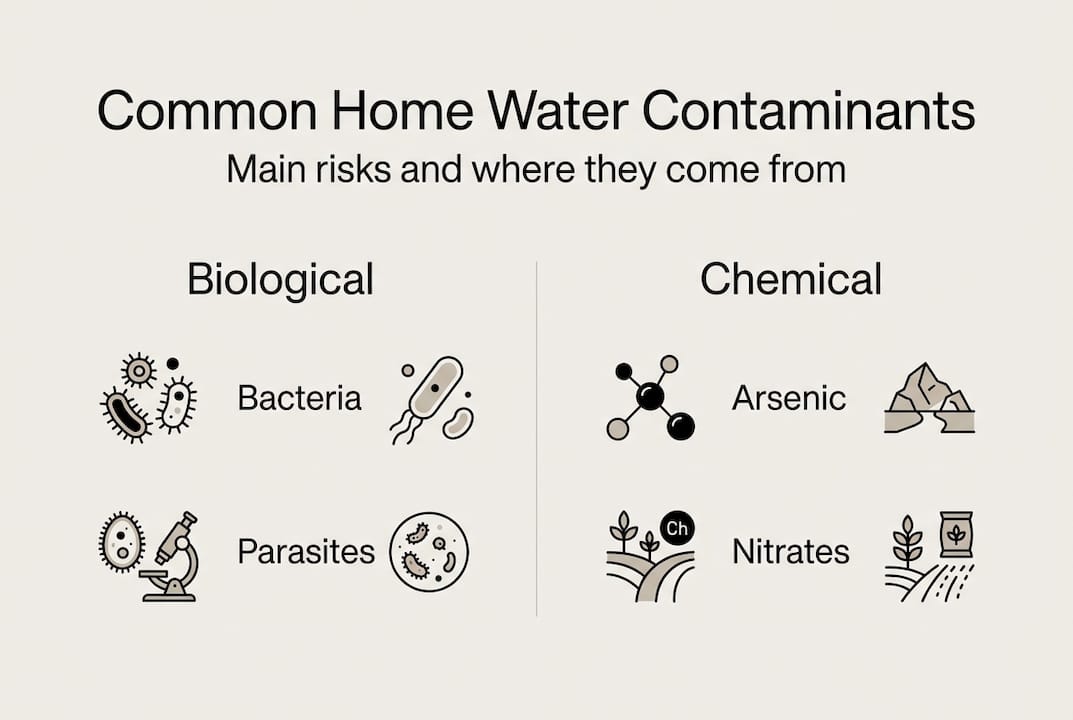
Private well owners face unique challenges because their water receives no public monitoring or treatment. Agricultural runoff introduces pesticides and fertilizers containing nitrates. Aging septic systems leak bacteria and pharmaceuticals. Industrial sites contribute solvents and heavy metals. Without regular testing, families consume these contaminants unknowingly for years before symptoms appear. Municipal water users aren’t immune either, as aging infrastructure allows lead to leach from pipes and joints, particularly in homes built before 1986.
Pro Tip: Test your water immediately after moving into a new home and annually thereafter, especially if you notice changes in taste, odor, or color. Early detection prevents long term health consequences.
Families with young children must exercise extra caution. Developing bodies absorb contaminants more readily and suffer greater harm from the same exposure levels that might cause only minor issues in adults. Pregnant women should prioritize healthy drinking water naturally to protect fetal development. The cumulative effect of multiple contaminants, even at individually low levels, can create synergistic health impacts that researchers are only beginning to understand.
“The greatest risk to human health from drinking water comes from microbiological contamination and chemical contaminants including heavy metals, nitrates, and emerging pollutants like PFAS that standard municipal treatment may not fully address.”
Key water purification methods for home safety: how they work and what they remove
Understanding how different purification technologies work helps you select the right system for your specific water quality challenges. Residential water treatment methods fall into three main categories: mechanical filtration, chemical purification, and biological disinfection, each targeting different contaminant types with varying effectiveness.
Mechanical filtration physically blocks particles based on size. Sediment filters with 5 to 50 micron pores remove sand, silt, rust, and larger particles that cloud water and damage downstream equipment. Reverse osmosis systems push water through semi permeable membranes with 0.0001 micron pores, small enough to reject dissolved salts, heavy metals, arsenic, fluoride, and most PFAS molecules. RO produces exceptionally pure water but wastes 3 to 5 gallons for every gallon purified and requires electricity for pressure pumps.
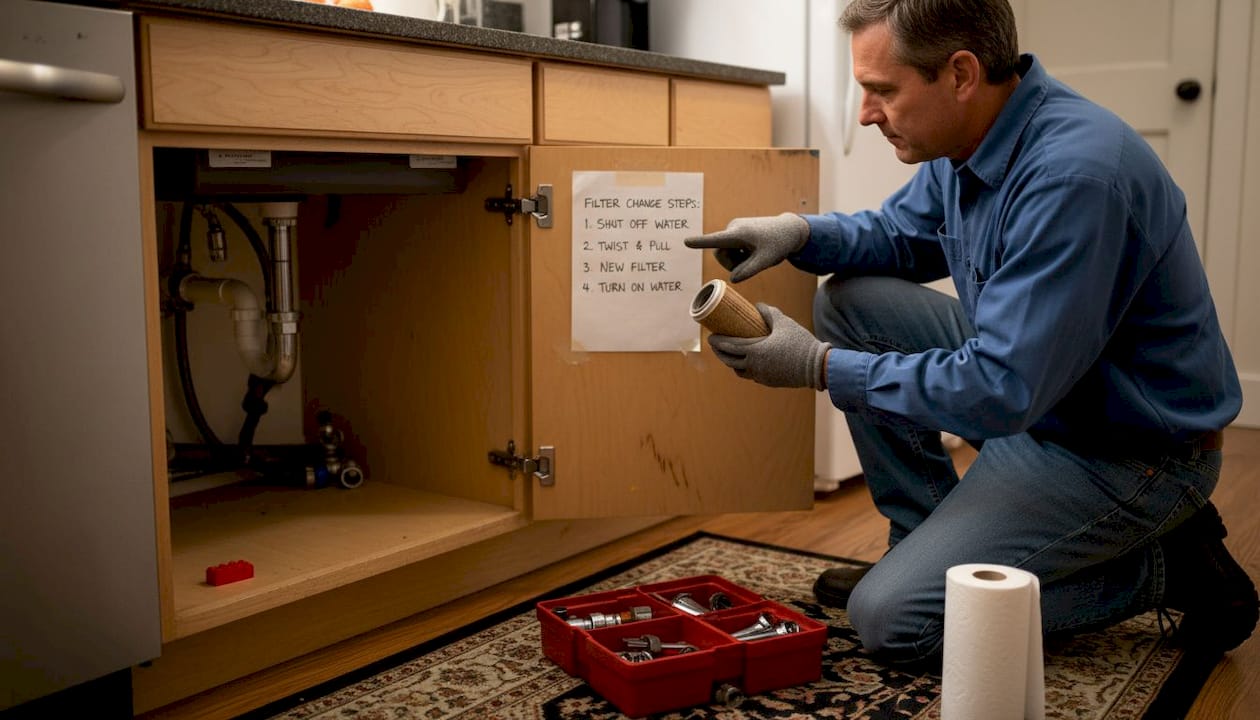
Chemical purification relies on adsorption and ion exchange. Activated carbon filters contain millions of microscopic pores that trap chlorine, volatile organic compounds, pesticides, and long chain PFAS through chemical bonding. Carbon excels at improving taste and odor but struggles with short chain PFAS, dissolved minerals, and microorganisms. Ion exchange resins swap harmful ions like lead or nitrates for harmless sodium or potassium, effectively reducing hardness and specific contaminants based on resin type.
Biological and UV disinfection target living organisms without adding chemicals. UV lamps emit 254 nanometer wavelength light that damages microbial DNA, preventing reproduction and rendering bacteria, viruses, and parasites harmless. UV requires clear water to work effectively, as particles can shield microorganisms from light exposure. This method adds no taste or byproducts but provides no residual protection once water leaves the treatment chamber.
| Method | Contaminants removed | Energy use | Wastewater | Limitations |
|---|---|---|---|---|
| Reverse osmosis | Dissolved solids, salts, heavy metals, PFAS, arsenic | High | 75% waste | Requires pressure, removes beneficial minerals |
| Activated carbon | Chlorine, VOCs, pesticides, long chain PFAS | Low | Minimal | Poor for salts, minerals, short chain PFAS |
| UV disinfection | Bacteria, viruses, parasites | Low | None | Requires clear water, no residual protection |
| Sediment filtration | Sand, silt, rust, particles | None | None | Only removes visible particles, not dissolved contaminants |
| Ion exchange | Hardness, lead, nitrates | Low | Minimal | Adds sodium, limited capacity before regeneration |
Pro Tip: Combining RO with UV disinfection and carbon pre filtration creates comprehensive protection, removing chemical contaminants, dissolved solids, and microorganisms while improving taste. This multi barrier approach addresses the widest range of threats.
Each technology has trade offs. Ultrafiltration advantages and disadvantages include lower energy consumption than RO but inability to remove dissolved salts and minerals. Ultrafiltration membranes with 0.01 micron pores block bacteria and suspended solids while allowing dissolved ions to pass through, making them suitable for microbiologically contaminated water with acceptable mineral content. Carbon filters require frequent replacement as pores saturate, typically every 3 to 6 months depending on water quality and usage volume.
Matching purification methods to your water purifier types explained water source and contaminant profile maximizes effectiveness and minimizes waste. Well water with high dissolved solids and microbial risk benefits most from RO plus UV. Municipal water with acceptable mineral content but chlorine and VOC concerns responds well to carbon filtration alone. Understanding these distinctions prevents both over treatment and inadequate protection. For comprehensive coverage of effective water purification methods, consider your specific water test results when selecting equipment.
Testing, maintenance, and choosing the right purification system for your home
Protecting your family’s health starts with knowing what’s in your water. Residential water treatment design recommends testing first, then selecting point of use systems matched to your source and contaminants. For municipal water users, request your annual Consumer Confidence Report from your utility, which lists detected contaminants and their levels. For well owners, purchase certified test kits from state laboratories or hire accredited testing services to analyze bacteria, nitrates, pH, hardness, and metals at minimum.
-
Test your water source thoroughly. Municipal users should review CCRs and consider additional testing for lead if your home was built before 1986 or you notice metallic taste. Well owners must test annually for bacteria and nitrates at minimum, with expanded testing every 3 to 5 years for arsenic, uranium, radon, pesticides, and volatile organic compounds. Test immediately after installing new wells, following flooding or nearby industrial activity, or when taste, odor, or appearance changes.
-
Match purification technology to your results. High total dissolved solids above 500 ppm, arsenic, or PFAS detection indicates RO necessity. Bacterial contamination requires UV disinfection. Chlorine taste or agricultural area location suggests activated carbon. Hard water with scale buildup benefits from ion exchange softening. Combine technologies as needed rather than relying on single method systems that leave gaps in protection.
-
Install systems at appropriate points. Point of entry systems treat all household water, protecting appliances and providing whole home coverage but requiring larger capacity and higher cost. Point of use systems installed under sinks or on countertops focus on drinking and cooking water, offering targeted protection with lower equipment and operating costs. Most families achieve adequate protection with point of use RO or carbon systems for consumption water.
-
Maintain equipment on strict schedules. Sediment pre filters require quarterly replacement to prevent clogging and maintain flow rates. Carbon filters need changing every 3 to 6 months as adsorption sites saturate. RO membranes last 2 to 3 years with proper pre filtration. UV lamps lose intensity after 9 to 12 months even while still glowing, requiring annual replacement to maintain disinfection effectiveness. Mark replacement dates on your calendar and keep spare filters on hand.
-
Monitor performance indicators. Declining water pressure suggests clogged filters. Returning taste or odor indicates exhausted carbon. Increased waste water from RO systems signals membrane fouling. Many modern systems include indicator lights or smartphone alerts for maintenance timing. Don’t wait for obvious problems, as contamination can occur before you notice symptoms.
-
Stay informed about emerging contaminants. PFAS are an emerging concern with RO and anion exchange offering effective home removal, but regulations continue evolving as scientists discover new variants. Subscribe to EPA updates and state environmental health notifications to learn when new contaminants are detected in your area. Technology advances rapidly, and systems installed years ago may not address newly recognized threats.
Pro Tip: Change sediment pre filters quarterly even if they look clean. Microscopic buildup reduces flow and forces your main filters to work harder, shortening their lifespan and increasing operating costs. This simple maintenance step extends overall system life significantly.
For practical guidance on assessing water quality at home, consider both laboratory analysis and sensory evaluation. Cloudy appearance, unusual colors, metallic or chemical tastes, and sulfur odors all warrant immediate testing. Don’t assume that clear, good tasting water is safe, as many dangerous contaminants have no sensory indicators. Following water purification best practices means testing first, treating appropriately, and maintaining consistently. Your family’s health depends on this systematic approach rather than guesswork or assumptions about water safety.
Explore reliable water purification solutions for your home
Protecting your family’s health requires both knowledge and the right equipment. Our website offers comprehensive guides and proven purification systems designed specifically for homeowners concerned about water safety. Whether you need detailed information about the water purification process explained guide or ready to invest in protection, we provide the resources and products to ensure your drinking water meets the highest safety standards.
Explore our countertop ice water purifier for convenient, space saving filtration that delivers clean, cold water without installation complexity. For families evaluating disinfection options, our top UV water purifiers comparison breaks down features, capacities, and effectiveness to help you choose confidently. Every product comes with detailed specifications, maintenance guidance, and support to keep your system performing optimally for years.
Frequently asked questions
How often should I test my well water for contaminants?
Test private wells at least annually for bacteria and nitrates, with comprehensive testing every 3 to 5 years for metals, pesticides, and other chemicals. Increase frequency after flooding, nearby construction, or changes in taste or appearance. Pregnant women and families with infants should test more frequently given their heightened vulnerability. For detailed guidance on testing tap water quality at home, use certified laboratories rather than home test strips for accurate results.
Can boiling water remove chemical contaminants like PFAS or heavy metals?
Boiling kills bacteria, viruses, and parasites but concentrates chemical contaminants by evaporating water and leaving dissolved solids behind. Lead, arsenic, PFAS, and nitrates remain in boiled water at higher concentrations than before heating. Use advanced filtration methods like reverse osmosis or activated carbon for chemical removal. Understanding ultrafiltration pros and cons helps you select appropriate technology for your specific contaminants.
What purification methods are best for homes with private wells?
Combine reverse osmosis with UV disinfection for comprehensive well water protection. RO removes dissolved solids, heavy metals, and PFAS while UV eliminates bacteria and parasites common in groundwater. Add sediment and carbon pre filters to extend RO membrane life and improve taste. This multi barrier approach addresses the diverse contamination risks in private wells. Review filtration methods for safer home water to understand how each technology contributes to overall safety.
How do I know if my municipal water needs additional purification at home?
Review your utility’s annual Consumer Confidence Report for detected contaminants and compare levels to EPA standards. Test independently for lead if your home was built before 1986 or you notice metallic taste. Municipal water often benefits from point of use carbon filtration to remove chlorine, improve taste, and reduce disinfection byproducts. Homes in agricultural areas should consider additional testing for pesticides and nitrates that may enter distribution systems. Learn more about ensuring healthy drinking water through layered protection strategies.
What maintenance does a home water purification system require?
Replace sediment filters quarterly, carbon filters every 3 to 6 months, and RO membranes every 2 to 3 years. Change UV lamps annually even if still glowing, as disinfection intensity decreases over time. Clean system housings during filter changes to prevent bacterial growth. Keep maintenance logs and spare parts on hand to avoid gaps in protection. Proper maintenance ensures consistent contaminant removal and extends equipment lifespan, protecting both your health and investment.
Recommended
- Why water quality matters for family health and wellness – Coway Water Purifier
- How to Assess Water Quality for Safer Homes – Coway Water Purifier
- How to Ensure Healthy Drinking Water at Home Easily – Coway Water Purifier
- Understanding waterborne contaminants for healthier water – Coway Water Purifier
- Why Lab-Grade Quality Matters When Buying Bacteriostatic Water in 2025 – Herbilabs Labware
