
Uncategorized
Understanding waterborne contaminants for healthier water
Mar
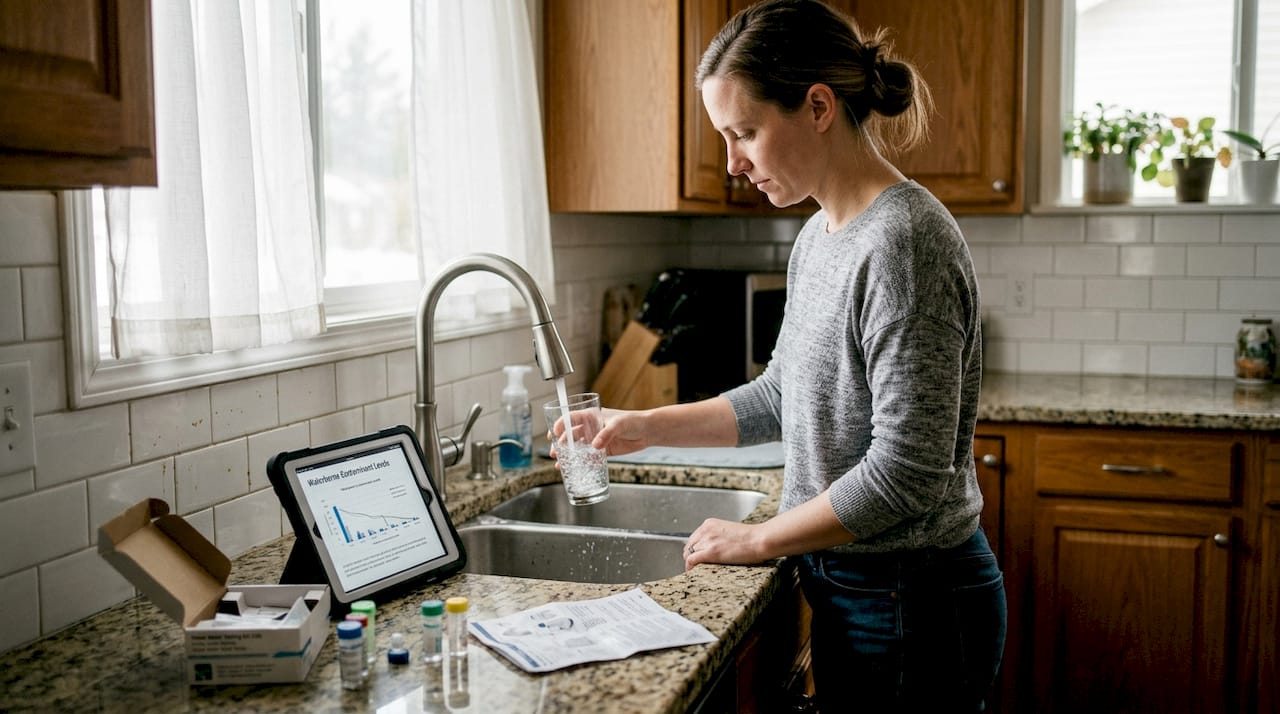
Most homeowners trust their tap water is safe, yet invisible contaminants can lurk in every glass. From heavy metals to persistent chemicals, waterborne threats pose real risks to family health. This guide reveals the types of contaminants hiding in your water, their health impacts, and how advanced filtration systems protect your home. You’ll learn to identify risks, interpret water quality data, and choose certified solutions that deliver cleaner, safer water for your family’s wellness.
Table of Contents
- Key takeaways
- What are waterborne contaminants and where do they come from?
- Health risks linked to common waterborne contaminants
- How home water filtration systems target waterborne contaminants
- Advanced considerations: testing, emerging contaminants, and local water variations
- Explore our water purification solutions
- FAQ
Key Takeaways
| Point | Details |
|---|---|
| Contaminant types | Water can contain chemical, biological, and physical contaminants that threaten health. |
| Health risks | Exposure to arsenic, lead, PFAS, and pathogens can cause cancer, developmental and immune problems, and acute illness. |
| Filtration options | RO filtration provides the strongest removal while carbon filters target chlorine and some PFAS. |
| Testing and certification | Test your water and use certified multi stage filtration systems to ensure reliable protection. |
What are waterborne contaminants and where do they come from?
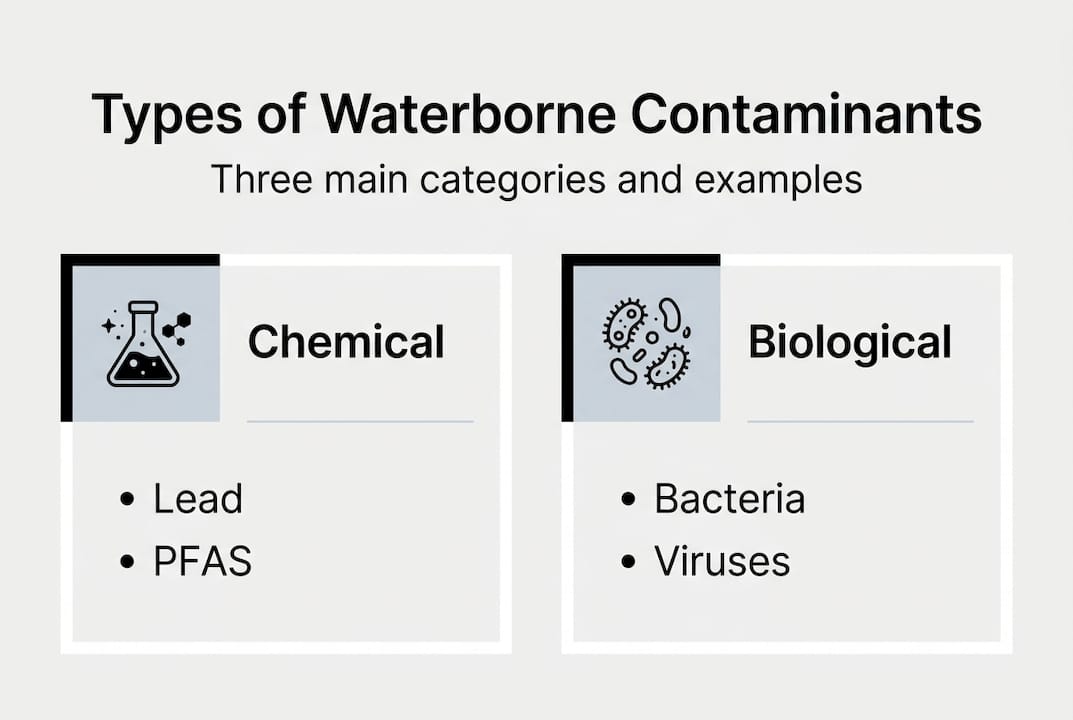
Waterborne contaminants fall into three categories that threaten your drinking water. Chemical contaminants include heavy metals like arsenic and lead, persistent PFAS compounds, agricultural pesticides, and emerging threats like microplastics. Biological contaminants encompass bacteria, viruses, and parasites that cause illness. Physical contaminants consist of sediment, rust particles, and debris that affect water clarity and taste.
These threats enter your water supply through multiple pathways. Waterborne contaminants include chemical substances from corroded household pipes, agricultural runoff carrying pesticides, industrial discharge, sewage system failures, and natural geological sources. Understanding these origins helps you assess your specific risk profile based on location and water source.
Key chemical contaminants to watch:
- Arsenic from natural deposits and industrial processes
- Lead leaching from aging pipes and plumbing fixtures
- PFAS chemicals from manufacturing and firefighting foam
- Pesticides washing into groundwater from farms
- Microplastics entering through various environmental pathways
Your home’s plumbing age, proximity to agriculture or industry, and whether you use well or municipal water all influence contamination risk. Older homes face higher lead exposure from legacy pipes. Rural properties near farms encounter more pesticide and fertilizer runoff. Urban areas see elevated PFAS levels from industrial activity. Recognizing your local risk factors empowers smarter filtration decisions.
Biological pathogens present immediate health dangers, especially for children and immunocompromised family members. Bacteria like E. coli and Legionella, viruses including norovirus, and parasites such as Giardia enter water through sewage contamination or inadequate treatment. Physical contaminants like sediment and rust may seem harmless but indicate infrastructure problems that allow more dangerous substances through.
Knowing contamination sources transforms how you approach water safety. If you live in an older neighborhood, lead testing becomes critical. Agricultural areas demand pesticide monitoring. Industrial zones require PFAS vigilance. This knowledge directs you toward filtration systems that target your specific threats rather than generic solutions that may miss key contaminants.
Health risks linked to common waterborne contaminants
Contaminants in your drinking water create serious health consequences that justify immediate action. Health effects range from cancer to developmental problems, immune system damage, and acute gastrointestinal illness. Understanding these risks motivates families to prioritize water quality as a cornerstone of home wellness.
Arsenic exposure through drinking water ranks among the most dangerous chemical threats. Long-term consumption increases cancer risk in the bladder, lungs, and skin. Even low-level exposure over years accumulates damage. Communities with natural arsenic deposits or mining activity face elevated risk, making testing and filtration essential for affected households.
Lead poses devastating risks to children’s developing brains and nervous systems. Young children absorb lead more readily than adults, and no safe exposure level exists. Cognitive impairment, learning disabilities, and behavioral problems stem from lead contamination. Pregnant women face additional risks as lead crosses the placental barrier, affecting fetal development. Homes built before 1986 require vigilant monitoring and filtration.
PFAS chemicals present insidious long-term dangers:
- Immune system suppression reducing vaccine effectiveness
- Reproductive harm including reduced fertility
- Thyroid dysfunction disrupting metabolism
- Developmental delays in children
- Increased cholesterol and liver damage
These “forever chemicals” persist in your body and environment, accumulating over time. Recent research links PFAS to more health problems as scientists uncover their widespread impact. Filtration’s role in family health becomes critical given these persistent threats.
Pesticides in drinking water affect neurological development, particularly in children. Organophosphates and other agricultural chemicals interfere with brain chemistry, potentially causing attention deficits and developmental delays. Rural families face higher exposure, but suburban areas near golf courses or parks using pesticides also show contamination.
“Families focused on wellness must recognize that invisible contaminants pose greater long-term risks than visible water quality issues. The absence of taste, odor, or cloudiness provides false reassurance when dangerous chemicals remain undetected.”
Microbial pathogens cause immediate, acute illness that strikes quickly. Bacteria like Campylobacter and Salmonella trigger severe diarrhea, vomiting, and dehydration. Viruses spread rapidly through households, affecting multiple family members. Parasites like Cryptosporidium resist chlorine treatment, requiring advanced filtration. While most healthy adults recover, young children, elderly family members, and those with compromised immunity face hospitalization risks.
The cumulative effect of multiple contaminants compounds health risks. Your water may contain low levels of several substances that individually meet regulatory limits but collectively burden your body’s detoxification systems. This cocktail effect particularly threatens children whose smaller bodies and developing systems are more vulnerable. Comprehensive filtration addresses multiple contaminant classes simultaneously, providing broader protection than single-purpose systems.
How home water filtration systems target waterborne contaminants
Filtration technology varies dramatically in effectiveness, cost, and maintenance requirements. Understanding how different systems work helps you match solutions to your specific water quality challenges and household needs.
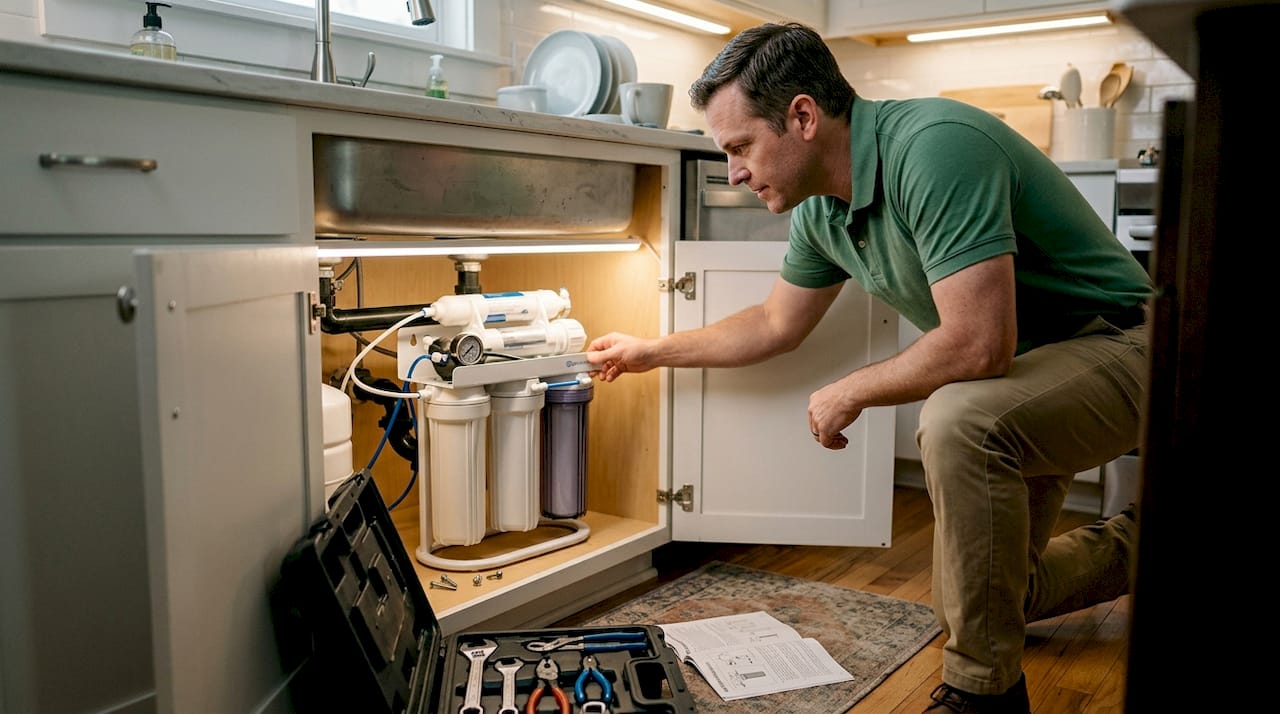
Reverse osmosis systems deliver the most comprehensive contaminant removal available for home use. RO systems reduce TDS from 285ppm to less than 12ppm, achieving 99% reduction in dissolved solids. The technology forces water through a semipermeable membrane that blocks contaminants while allowing pure water molecules through. RO excels at removing heavy metals, PFAS, microplastics, nitrates, and fluoride.
Carbon filtration uses activated carbon to adsorb contaminants through chemical attraction. These systems excel at removing chlorine, improving taste and odor, and capturing some pesticides and volatile organic compounds. Carbon filters handle about 80% of chlorine but show variable performance on PFAS depending on the specific compounds present. They work well for municipal water focused on taste improvement and basic chemical reduction.
Pitcher and bottle filters offer convenient, low-cost entry points but provide limited protection. These portable systems use basic carbon filtration that reduces some emerging contaminants variably. They work for renters or situations where installation isn’t possible, but don’t match the comprehensive removal of installed systems.
| System Type | Contaminant Removal | Cost | Maintenance | Water Waste |
|---|---|---|---|---|
| Reverse Osmosis | 99% TDS, PFAS, metals, microplastics | $200-800+ | Filter changes every 6-12 months | 3-4 gallons per gallon produced |
| Carbon Filter | 80% chlorine, some pesticides, variable PFAS | $50-300 | Filter changes every 3-6 months | Minimal |
| Pitcher/Bottle | Basic chlorine, some emerging contaminants | $20-50 | Filter changes monthly | None |
Certification matters more than marketing claims. NSF/ANSI 58 certifies at least 75% TDS reduction for RO systems, with rigorous testing for specific contaminants like lead and PFAS. NSF/ANSI 53 covers carbon filters for health-related contaminants. Always verify certification rather than trusting manufacturer statements alone.
Pro Tip: Test your water before buying filtration equipment. Results reveal which contaminants need removal, preventing wasted money on systems that don’t address your actual risks. Top under sink water purifiers vary in what they remove, so matching technology to testing results optimizes protection.
RO systems offer superior performance but create wastewater as a tradeoff. For every gallon of purified water, traditional RO produces 3-4 gallons of brine containing rejected contaminants. Newer efficient models reduce this ratio, but waste remains a consideration. The comprehensive removal justifies this cost for families facing serious contamination, particularly PFAS or heavy metals that carbon filters handle poorly.
Carbon filtration provides easier installation and lower costs but requires understanding its limitations. Short-chain PFAS compounds pass through carbon more readily than long-chain versions. Breakthrough occurs when carbon becomes saturated, allowing contaminants through until filter replacement. Regular maintenance prevents this failure mode. Certified filtration standards ensure systems meet performance claims throughout their service life.
Multi-stage systems combine technologies for optimal results. A typical configuration uses sediment pre-filters to remove particles, carbon stages for chlorine and organics, and RO membranes for dissolved contaminants. This approach extends membrane life while maximizing removal across contaminant classes. Role of filters in home health extends beyond single-purpose devices to comprehensive protection.
Installation location affects convenience and coverage. Under-sink systems provide filtered water at one tap, ideal for drinking and cooking. Whole-house systems treat all water entering your home, protecting appliances and providing filtered water at every outlet. Point-of-entry systems cost more but eliminate concerns about accidentally using contaminated water for food preparation or ice making.
Advanced considerations: testing, emerging contaminants, and local water variations
Water quality varies dramatically by location, source, and season, requiring tailored approaches beyond one-size-fits-all solutions. Advanced understanding helps you anticipate challenges and adapt filtration strategies to changing conditions.
Test water first using local reports and EPA resources to establish your baseline. Municipal water systems publish annual Consumer Confidence Reports detailing detected contaminants and compliance with regulations. Well water owners must conduct private testing since no regulatory oversight exists. Testing reveals specific threats that guide filtration investment toward maximum protection.
Short-chain PFAS compounds present unique challenges that standard carbon filtration struggles to address. These smaller molecules pass through activated carbon more easily than their long-chain counterparts, reducing removal efficiency. RO systems maintain high effectiveness regardless of PFAS chain length, making them superior for areas with documented PFAS contamination. Regulatory shifts complicate matters as EPA rollbacks on some PFAS maximum contaminant levels conflict with advancing state standards.
Contaminants of Emerging Concern operate at incredibly low concentrations that challenge detection and removal. CECs at nanogram per liter to picogram per liter levels require sensitive analytical methods beyond standard testing. Pharmaceuticals, personal care products, and industrial chemicals fall into this category. While health effects remain under study, precautionary filtration makes sense given uncertainty about long-term exposure.
Microbial contamination can spike rapidly during infrastructure failures or extreme weather. Sewage intrusion at just 1% concentration causes immediate pathogen levels requiring boil water advisories. Heavy rainfall overwhelms treatment plants, increasing breakthrough risk. Aging infrastructure in many communities elevates failure probability. Multi-barrier approaches using both chemical disinfection and physical filtration provide redundancy against these acute threats.
Well water versus municipal water creates distinct contamination profiles:
- Well water shows higher arsenic and pesticide risk from geological and agricultural sources
- Municipal water contains chlorine disinfection byproducts and potential PFAS from treatment
- Well water lacks regulatory monitoring, placing testing responsibility on homeowners
- Municipal systems provide treatment but aging distribution pipes introduce lead and copper
Steps for ongoing water quality monitoring:
- Review annual Consumer Confidence Reports from your water utility
- Conduct home testing every 2-3 years for key contaminants
- Test immediately after plumbing changes or nearby construction
- Monitor local news for contamination incidents or advisories
- Inspect and maintain filtration systems per manufacturer schedules
- Keep testing records to track changes over time
Seasonal variations affect contaminant levels in predictable patterns. Spring runoff carries agricultural chemicals and sediment into surface water sources. Summer heat increases microbial growth in distribution systems. Fall leaf decay adds organic matter that creates disinfection byproducts. Winter freezing can crack pipes, introducing contamination. Understanding these cycles helps you anticipate when additional filtration protection matters most.
The 7-step home water filtration checklist provides a systematic approach to evaluating and improving your water safety. Regular assessment catches emerging problems before they impact health. Proactive monitoring costs less than reactive responses to contamination incidents.
Regulatory changes create moving targets for protection standards. Federal agencies sometimes relax requirements under political pressure while states advance stricter limits. This patchwork means your local standards may exceed or fall short of what science suggests for safety. Staying informed about regulatory developments helps you maintain protection even when official requirements lag behind health research.
How filtration prevents disease extends beyond removing detected contaminants to providing insurance against unknowns. New chemicals enter commerce constantly, and testing lags behind introduction. Comprehensive filtration catches substances before they’re officially recognized as threats, offering precautionary protection for health-conscious families.
Geographic risk mapping helps prioritize concerns. Coastal areas face saltwater intrusion as sea levels rise. Agricultural regions deal with fertilizer and pesticide runoff. Industrial zones contain legacy contamination from decades of manufacturing. Mining areas show elevated heavy metals. Fracking regions experience unique chemical exposures. Your location determines which threats deserve primary attention in filtration selection.
Explore our water purification solutions
Protecting your family’s health starts with choosing certified, multi-stage filtration from trusted experts. Understanding waterborne contaminants and their risks empowers you to make informed decisions about water safety.
Coway’s top under sink water purifiers deliver comprehensive contaminant removal using advanced RO technology and multi-stage filtration. Our systems target the specific threats discussed in this guide, from PFAS and heavy metals to microplastics and pathogens. Each unit meets rigorous NSF certification standards, ensuring the performance claims you rely on for family wellness.
Explore our water purification process guide to understand how advanced filtration technology works and why multi-barrier approaches provide superior protection. Visit Coway Water Purifier to discover the latest innovations in home water treatment and find the ideal solution for your household’s needs.
FAQ
What are the most common waterborne contaminants in homes?
Chemical contaminants like lead from aging pipes and PFAS from industrial sources rank among the most widespread threats. Biological pathogens including bacteria and viruses enter through sewage contamination or treatment failures. Physical particles such as sediment and rust indicate infrastructure problems that may allow more dangerous substances through.
How can I test my home water for contaminants?
Request your annual Consumer Confidence Report from your municipal water utility to see detected contaminants and compliance levels. Purchase certified home testing kits for specific concerns like lead or bacteria. For comprehensive analysis, hire accredited laboratories that test for hundreds of substances including emerging contaminants.
Is reverse osmosis better than carbon filtration?
RO removes a wider range of contaminants with higher effectiveness, achieving 99% reduction in dissolved solids including PFAS, heavy metals, and microplastics. Carbon filters excel at chlorine removal and taste improvement but show variable performance on emerging contaminants like short-chain PFAS. Your choice depends on testing results and which specific threats require removal.
What is the impact of PFAS in drinking water?
PFAS are persistent chemicals that accumulate in your body over time, linked to immune system suppression, reproductive harm, thyroid dysfunction, and developmental issues in children. Short-chain PFAS variants prove especially difficult for carbon filters to capture. RO systems and advanced multi-stage filtration provide the most reliable PFAS reduction for concerned families.
Recommended
- Waterborne Contamination – How It Impacts Home Health – Coway Water Purifier
- Why water quality matters for family health and wellness – Coway Water Purifier
- 7 Essential Water Purification Facts 2025 for Healthy Homes – Coway Water Purifier
- How filtration prevents disease: homeowner’s guide 2026 – Coway Water Purifier
