
Uncategorized
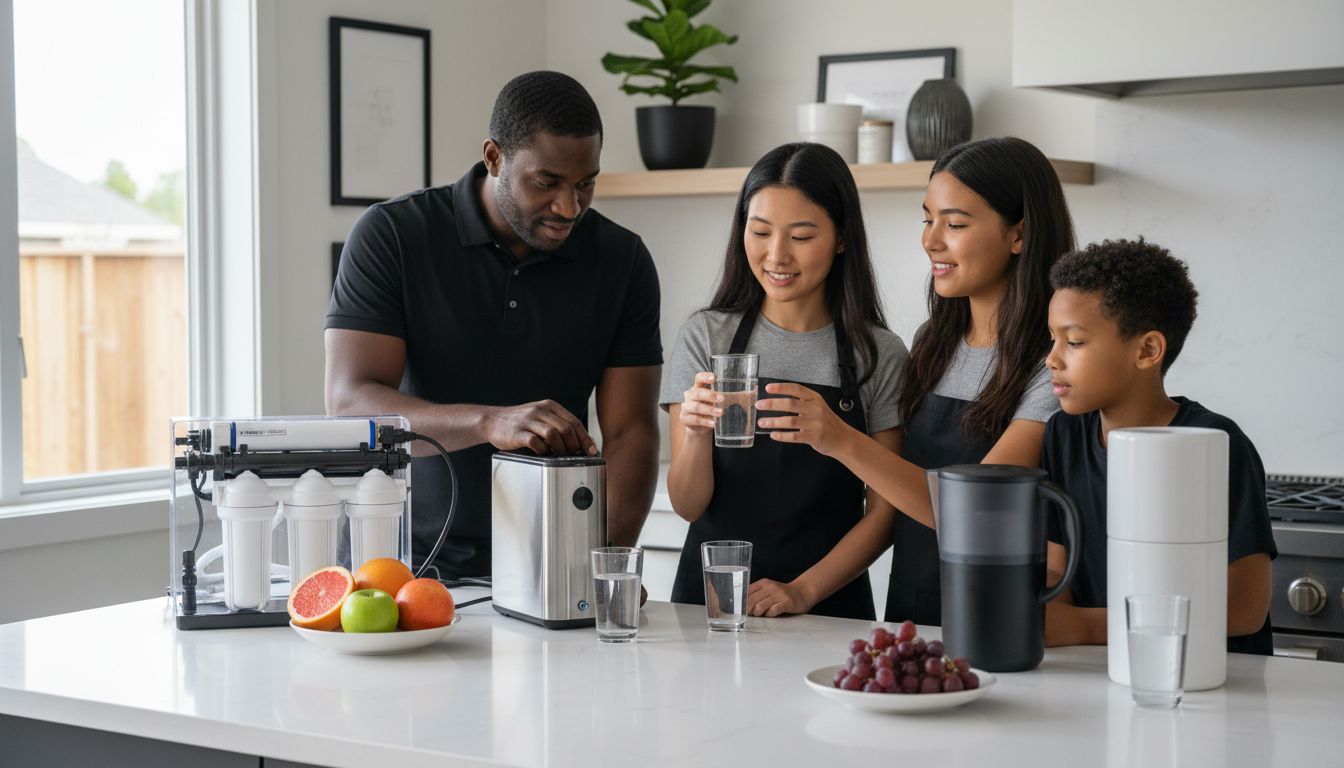
7 Types of Water Purifiers Every Homeowner Should Know
Oct
Did you know that over 2 billion people worldwide lack access to safely managed drinking water? The quest for clean water remains a vital concern for families everywhere, with tap water quality often leaving much to be desired. From filtering out microscopic particles to protecting against invisible germs, different water purification methods tackle a wide variety of problems found in household supplies. Understanding your options can make every glass safer, fresher, and better tasting.
Table of Contents
- 1. Reverse Osmosis Purifiers: Powerful Filtration for Homes
- 2. UV Water Purifiers: Effective Germ Protection
- 3. Activated Carbon Purifiers: Remove Odors and Chemicals
- 4. UF Water Purifiers: Simple and Chemical-Free
- 5. Sediment Filter Purifiers: First Step Particle Removal
- 6. Gravity-Based Water Purifiers: No Power Needed
- 7. Infrared and Alkaline Purifiers: Enhance Water Quality
Quick Summary
| Takeaway | Explanation |
|---|---|
| 1. Choose Reverse Osmosis for Pure Water | Reverse osmosis removes up to 95% of contaminants like lead, viruses, and chemicals, ensuring high water purity. |
| 2. UV Systems Safeguard Against Microorganisms | UV purifiers efficiently inactivate bacteria and viruses without chemical additives, enhancing drinking water safety. |
| 3. Activated Carbon Improves Water Taste | Activated carbon filters effectively eliminate chlorine and odors, improving the overall drinkability of your water. |
| 4. Combine Filtration Methods for Best Results | Utilizing multiple filtration methods ensures comprehensive contaminant removal for optimal drinking water quality. |
| 5. Maintain Regular Filter Replacements | Periodic maintenance and filter replacements are crucial to ensure all purification systems function effectively over time. |
1. Reverse Osmosis Purifiers: Powerful Filtration for Homes
Reverse osmosis water purification represents one of the most advanced home water treatment technologies available today. These sophisticated systems transform ordinary tap water into pristine drinking water by employing a highly specialized filtration process that removes an impressive range of contaminants.
At its core, a reverse osmosis system works by forcing water through an ultrafine semi permeable membrane that acts like an incredibly precise molecular filter. According to research from the EPA Water Guide, these systems can eliminate approximately 90 to 95 percent of dissolved solids including dangerous substances like:
- Lead
- Volatile organic compounds (VOCs)
- PFAS chemicals
- Arsenic
- Harmful bacteria
- Viruses
What makes reverse osmosis systems truly remarkable is their multilayered filtration approach. Most residential RO systems are installed under kitchen sinks and typically include multiple filtration stages beyond the primary membrane. This comprehensive approach ensures that water undergoes thorough purification before reaching your glass.
While incredibly effective, these systems do require periodic maintenance. The membrane can experience fouling over time, which means homeowners should plan for regular filter replacements to maintain optimal performance. Professional water quality experts recommend annual membrane inspections and replacements to keep your system functioning at peak efficiency.
For homeowners seeking the highest standard of water purity, reverse osmosis purifiers offer an unparalleled solution. By removing nearly all microscopic contaminants, these systems provide peace of mind with every glass of water you drink.
2. UV Water Purifiers: Effective Germ Protection
Ultraviolet water purification represents a cutting edge technology that delivers powerful microbial protection without chemical additives. These innovative systems utilize powerful ultraviolet light to neutralize harmful microorganisms lurking in your drinking water.
The science behind UV water purification is remarkably straightforward. When water passes through the UV chamber, it is exposed to intense ultraviolet radiation that penetrates the cellular structure of microorganisms. According to research from the Understanding UV Water Treatment guide, this process effectively inactivates dangerous pathogens such as:
- Bacteria
- Viruses
- Protozoa like Giardia
- Cryptosporidium
One of the most compelling advantages of UV purification is its ability to eliminate microbes without altering water’s fundamental characteristics. Unlike chemical treatments, UV light does not change water’s taste, odor, or clarity. The process happens rapidly with minimal contact time, making it an incredibly efficient water treatment method.
For homeowners concerned about waterborne illnesses, UV purifiers offer an exceptional layer of protection. Advanced UV systems can be integrated into existing water filtration setups or installed as standalone units. Most residential models are compact enough to fit under kitchen sinks or near main water entry points.
While incredibly effective against microbiological contaminants, UV systems work best when paired with other filtration methods. Sediment filters or carbon block filters can help remove physical particles before water enters the UV chamber, ensuring maximum purification efficiency.
By investing in a UV water purification system, you are choosing a scientifically proven method to safeguard your family’s drinking water against invisible yet potentially dangerous microorganisms.
3. Activated Carbon Purifiers: Remove Odors and Chemicals
Activated carbon water purification represents a powerful solution for transforming ordinary tap water into a more palatable and clean drinking experience. These remarkable filtration systems work like microscopic magnets, capturing unwanted chemicals and improving water quality with incredible precision.
The science behind activated carbon filtration is fascinating. Carbon filters contain extremely porous material with a massive internal surface area that traps and absorbs organic compounds. According to the water filtration methods guide, these filters are exceptionally effective at removing:
- Chlorine
- Volatile organic compounds (VOCs)
- Unpleasant odors
- Disagreeable tastes
- Organic chemical residues
What makes activated carbon filters particularly impressive is their ability to improve water without adding chemicals or altering its fundamental composition. The filtration process happens passively as water passes through the carbon cartridge, effectively capturing impurities while maintaining water’s natural mineral content.
Homeowners will appreciate that these filters are relatively low maintenance and can be integrated into various water purification systems. They work exceptionally well as standalone countertop units or as part of more comprehensive multi stage filtration setups.
While incredibly useful, activated carbon filters do have limitations. They cannot remove inorganic chemicals, heavy metals, or microorganisms. For comprehensive water treatment, many experts recommend combining carbon filtration with additional purification methods like UV or reverse osmosis.
By selecting an activated carbon water purifier, you are choosing a scientifically proven method to dramatically improve your drinking water’s taste, smell, and overall quality.
4. UF Water Purifiers: Simple and Chemical-Free
Ultrafiltration represents a remarkable water purification technology that combines simplicity with powerful contaminant removal. These innovative systems leverage advanced membrane technology to transform water quality without relying on complex chemical treatments.
The core mechanism of ultrafiltration is elegantly straightforward. Specialized membranes with microscopic pores act as precision filters, blocking unwanted particles while allowing clean water to pass through. According to the sustainable water purification methods guide, UF systems effectively remove:
- Bacteria
- Viruses
- Larger organic compounds
- Suspended solids
- Microorganisms
What sets ultrafiltration apart is its chemical free approach to water treatment. Unlike traditional purification methods, UF systems do not introduce additional chemicals into your drinking water. The filtration occurs purely through physical barriers, making it an environmentally friendly and health conscious option.
Homeowners will appreciate the low maintenance requirements of UF systems. These purifiers typically have longer membrane lifespans compared to other filtration technologies and operate without significant energy consumption. They work exceptionally well in residential settings where consistent water quality is a priority.
However, it is important to understand that ultrafiltration is not a complete water treatment solution on its own. For comprehensive water purification, experts recommend combining UF with additional filtration methods like activated carbon or reverse osmosis to address a broader range of potential contaminants.
By choosing an ultrafiltration water purifier, you are selecting a modern, efficient approach to ensuring your family drinks clean water without unnecessary chemical interventions.
5. Sediment Filter Purifiers: First Step Particle Removal
Sediment filters represent the unsung heroes of water purification systems protecting your home from unwanted microscopic intruders. These fundamental filtration components work tirelessly to capture and remove suspended particles before they can cause potential damage to your water supply.
The primary function of sediment filters is straightforward yet critical. Microscopic mesh networks trap larger particles that might compromise water quality. According to the filtration technology guide, these filters effectively remove:
- Sand
- Silt
- Rust particles
- Clay fragments
- Fine sediment debris
What makes sediment filters particularly valuable is their role as a protective barrier for downstream water treatment systems. By capturing larger particles first, they prevent potential clogging and damage to more sophisticated filtration components like activated carbon or reverse osmosis membranes.
Homeowners will appreciate that sediment filters are relatively low maintenance and can be easily integrated into existing water purification setups. They serve as an essential first line of defense in ensuring your water remains clean and clear before additional treatment stages.
To maximize effectiveness, experts recommend periodic filter replacement. The frequency depends on your specific water source and overall contamination levels. A good rule of thumb is to inspect and potentially replace sediment filters every six to twelve months.
By investing in a quality sediment filtration system, you are taking a proactive step toward protecting your home’s water infrastructure and ensuring cleaner drinking water for your family.
6. Gravity-Based Water Purifiers: No Power Needed
Gravity based water purifiers represent an ingenious solution for clean water access that requires zero electrical input. These remarkable systems leverage the simple power of gravity to transform potentially contaminated water into a safe drinking source.
The fundamental mechanism is beautifully straightforward. Gravity driven filtration systems use the natural downward force of water to push liquid through multiple purification layers. According to the water purifier features guide, these systems typically incorporate:
- Ceramic filters
- Activated carbon layers
- Sediment trapping meshes
- Multiple purification stages
- Self contained reservoir designs
What makes gravity based purifiers particularly appealing is their versatility. They work perfectly in scenarios with unreliable electricity like rural areas, camping trips, emergency preparedness situations or regions experiencing frequent power interruptions. The absence of electrical components means lower maintenance costs and improved reliability.
Homeowners and outdoor enthusiasts will appreciate the simplicity of these systems. Water is poured into the top chamber and naturally flows through different filtration media, with clean water collecting in the bottom reservoir. The entire process happens without pumps electrical connections or complex mechanisms.
While incredibly convenient, gravity based purifiers do have limitations. They typically process water more slowly compared to electric systems and may not remove all types of contaminants. For comprehensive water treatment, experts recommend combining these systems with additional purification methods.
By choosing a gravity based water purifier, you are selecting a reliable sustainable solution that provides clean drinking water through the most fundamental force in nature.
7. Infrared and Alkaline Purifiers: Enhance Water Quality
Infrared and alkaline water purifiers represent an innovative approach to water treatment that goes beyond traditional filtration methods. These advanced technologies aim to transform water at a molecular level, potentially offering unique health and wellness benefits.
The science behind these purification systems is intriguing. Molecular water transformation occurs through two primary mechanisms. According to the water purification methods guide, these technologies focus on:
- Reducing water molecule clustering
- Adjusting water pH levels
- Potentially improving hydration efficiency
- Modifying water’s molecular structure
- Enhancing mineral absorption
Infrared purifiers work by using electromagnetic waves to potentially restructure water molecules, theoretically making them more easily absorbed by the body. Alkaline purifiers increase water’s pH level, creating water with fewer acidic properties and potentially more mineral content.
Homeowners interested in these technologies should approach them with a balanced perspective. While manufacturers claim significant health benefits, scientific research remains limited. The potential advantages include improved hydration and potential antioxidant properties, but consumers should maintain realistic expectations.
It is important to note that these purification methods should complement rather than replace traditional filtration systems. They do not necessarily remove contaminants and should be viewed as a supplementary approach to water treatment.
By understanding the nuanced technology behind infrared and alkaline purifiers, you can make more informed decisions about your home water treatment strategy.
Below is a comprehensive table summarizing the main types of water purification systems discussed in the article, including their description, key features, and ideal use scenarios.
| Purification Type | Description | Key Features | Ideal Use |
|---|---|---|---|
| Reverse Osmosis | Advanced filtration using a semi-permeable membrane. | Removes 90-95% of solids, including lead and VOCs. | Homes requiring high water purity. |
| UV Purifiers | Uses ultraviolet light to kill microorganisms. | Neutralizes bacteria and viruses without chemicals. | Protecting against waterborne illnesses. |
| Activated Carbon | Traps chemicals and odors using porous carbon. | Removes chlorine and VOCs, preserves water’s mineral content. | Improving taste and smell of water. |
| Ultrafiltration | Filters with microscopic pores for physical barrier. | Removes bacteria and suspended solids, chemical-free. | Consistent water quality without chemicals. |
| Sediment Filters | Mesh networks that capture large particles. | Removes sand, silt, and rust; protects other filters. | Initial particle removal for water systems. |
| Gravity-Based | Uses gravity for filtration through multiple layers. | No electricity needed, incorporates ceramic and carbon filters. | Areas with unreliable power supply. |
| Infrared/Alkaline | Enhances water on a molecular level. | Potentially improves hydration; adjusts pH. | As a supplement to traditional methods. |
Discover the Perfect Water Purifier for Your Home Today
Choosing the right water purifier can be overwhelming with so many advanced technologies like reverse osmosis, UV purification, and activated carbon filters available. The key challenge most homeowners face is finding a system that combines effective contaminant removal with ease of maintenance and reliability. You want pure, safe water that tastes great without the hassle or uncertainty.
At Coway Water Purifier, we understand your concerns about water quality and health. Our carefully selected range of purifiers offers solutions that address each of the 7 types of filtration methods you need to know. Whether you want powerful multilayer purification or a simple chemical-free system we have options to suit every home and lifestyle. Stay confident in your water every day by exploring products that use the latest technology alongside trusted filtration principles.
Take the first step toward cleaner water now by visiting our Uncategorized Archives – Coway Water Purifier. Unlock expert guidance, detailed product info, and enjoy benefits like free delivery and installation. Explore your options at https://cowayswaterpurifier.com and get yours today to experience peace of mind with every sip.
Frequently Asked Questions
What are the main types of water purifiers every homeowner should know?
Reverse osmosis, UV water purification, activated carbon, ultrafiltration, sediment filters, gravity-based purifiers, and infrared and alkaline purifiers are the seven main types. Familiarize yourself with each type to choose the most suitable one for your household needs.
How does a reverse osmosis system work and what does it remove?
A reverse osmosis system works by forcing water through a semi-permeable membrane that removes up to 95% of dissolved solids, including lead, VOCs, and harmful bacteria. Consider scheduling annual inspections to ensure optimal performance and replacement of filters.
What advantages do UV water purifiers offer?
UV water purifiers provide effective microbial protection by using ultraviolet light to inactivate harmful microorganisms without altering the water’s taste or clarity. If you are concerned about microbial contaminants, integrate a UV purifier into your existing water system for enhanced safety.
Can activated carbon filters improve water taste and remove odors?
Yes, activated carbon filters capture unwanted chemicals, odors, and tastes, enhancing the overall quality of your drinking water without introducing chemicals. To maximize performance, install these filters in a multi-stage purification setup that may also include other types of filters.
How should I maintain my sediment filter?
To maintain a sediment filter, inspect it every six to twelve months and replace it as needed based on your water quality. Keeping your sediment filter clean will help protect more advanced filtration systems downstream and ensure cleaner water for your family.
What are the benefits of choosing a gravity-based water purifier?
Gravity-based water purifiers are energy-efficient and function without electrical input, making them ideal for locations with unreliable power. Use these purifiers in emergencies or remote areas, and keep in mind that they may be slower than electric systems.
Recommended
- 7 Essential Types of Water Filters for Every Home – Coway Water Purifier
- 7 Top Water Filtration Methods You Need to Know – Coway Water Purifier
- 7 Key Benefits of Water Purification for Your Home – Coway Water Purifier
- 7 Key Features of Modern Water Purifiers Explained – Coway Water Purifier
