
Uncategorized
The Role of Bacteria in Tap Water: What Homeowners Need to Know
May
TL;DR:
- Tap water is never completely sterile, and bacteria naturally enter distribution systems and household plumbing. Proper management, testing, and treatment—such as filtration and UV sterilization—are essential to control microbial risks and ensure water safety for healthy households. Regular testing and maintenance help detect system issues early, reducing health risks associated with opportunistic and pathogenic bacteria.
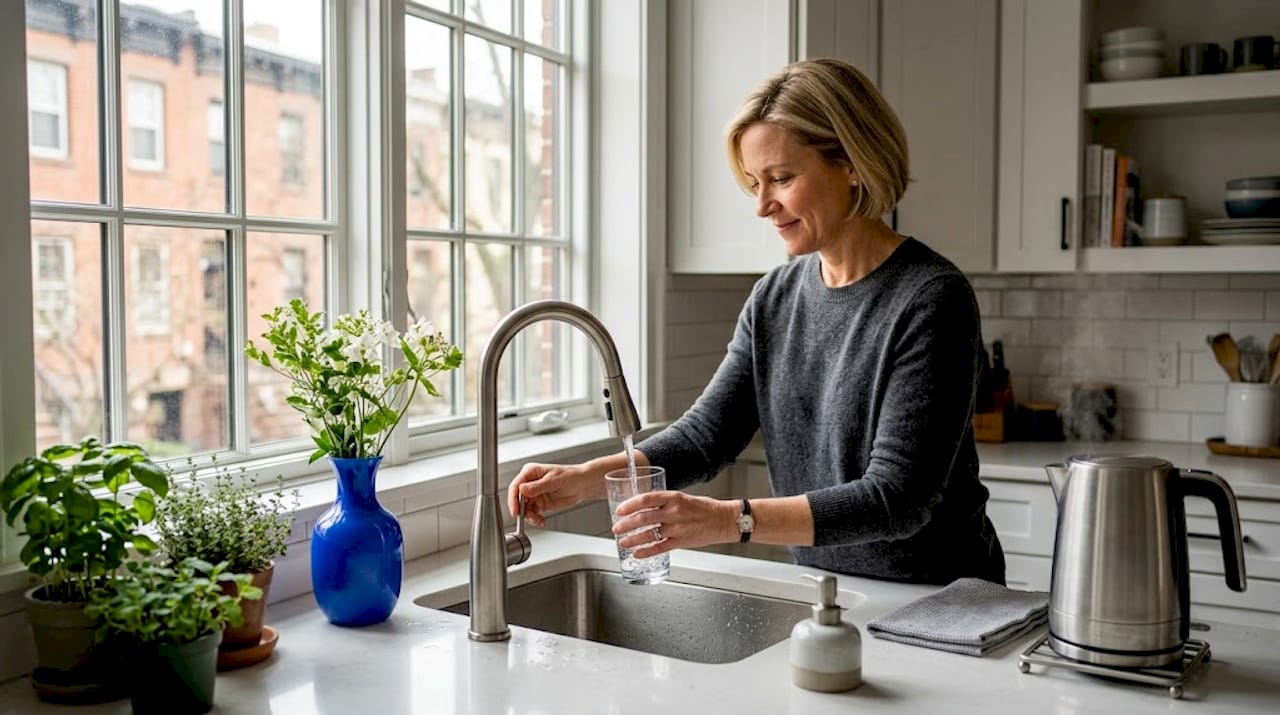
Your tap water has never been sterile. Not when it left the treatment plant, not as it traveled through miles of distribution pipes, and not when it came out of your faucet. Understanding the role of bacteria in tap water is not about learning to be afraid of what you drink. It is about understanding a complex microbial system that, when managed properly, poses little risk to most healthy adults. The science is more nuanced than “bacteria bad, no bacteria good,” and once you understand it, you will make much better decisions about your home’s water safety.
Table of Contents
- Key Takeaways
- The role of bacteria in tap water systems
- Types of bacteria in tap water and their roles
- How bacteria affect water quality and health risks
- Practical steps for controlling bacteria at home
- Making sense of your water test results
- My honest take on bacteria and tap water
- How Coway water purifiers help control tap water bacteria
- FAQ
Key Takeaways
| Point | Details |
|---|---|
| Bacteria are always present | Tap water is never completely sterile; the goal is control, not elimination. |
| Biofilms are the hidden threat | Bacteria inside household pipes form biofilms that resist disinfectants and release microbes intermittently. |
| Indicator bacteria guide safety | Detecting coliforms signals a system problem worth investigating, not automatic danger. |
| Testing frequency matters | Annual testing, especially for well water, catches microbial shifts before they become health risks. |
| Purification adds a final barrier | Filtration and UV treatment at the point of use reduce bacterial load when distribution systems fall short. |
The role of bacteria in tap water systems
Bacteria enter tap water from several directions at once, and very few of those entry points involve what most people picture: a contaminated source. Natural microbial communities exist in rivers, lakes, aquifers, and reservoirs long before water ever reaches a treatment facility. Treatment plants remove the majority of these organisms through coagulation, filtration, and disinfection, but the water’s journey does not end at the plant gate.
Distribution pipes, which in many cities are decades old, host their own internal microbial populations. Biofilms form on the interior surfaces of these pipes and act as a persistent bacterial reservoir. These are not random collections of cells. They are structured communities embedded in a protective matrix that shields bacteria from chlorine and other residual disinfectants. Even after flushing, a portion of this community remains.
Household plumbing adds another layer of complexity. Water that sits in pipes under sinks, inside water heaters set below 140°F, or in rarely used fixtures provides a warm, low-flow environment where bacteria multiply faster. Here is where the system factors that most homeowners overlook make the biggest difference:
- Pipe age and material (older galvanized pipes corrode, creating rough surfaces where biofilms attach more easily)
- Water temperature fluctuations, especially in summer
- Stagnant sections of plumbing such as guest bathroom fixtures used infrequently
- Poorly maintained appliances connected to the water line
Pro Tip: Flush any tap that has not been used for six or more hours before drinking from it. Running cold water for 30 seconds clears the standing water that has had the most contact time with pipe surfaces.
The EPA recommends that homeowners understand bacterial contamination as manageable rather than as a sign of assumed sterility. That framing matters. Your goal is not a zero count. Your goal is a controlled count within a safe range.
Types of bacteria in tap water and their roles
Not every bacterium in your tap water is a threat. In fact, understanding bacterial diversity in drinking water systems changes the way you interpret both test results and public health guidance entirely.
| Bacteria type | Examples | Role in water | Health relevance |
|---|---|---|---|
| Indicator bacteria | Total coliforms, E. coli | Signal fecal contamination or treatment breakdown | Not always pathogens, but their presence demands investigation |
| Harmless environmental bacteria | Pseudomonas fluorescens, Sphingomonas spp. | Part of natural microbial ecology in water systems | Generally no risk to healthy individuals |
| Opportunistic pathogens | Legionella, Mycobacterium, Pseudomonas aeruginosa | Grow in biofilms, low-flow areas, warm water | Risk rises for immunocompromised individuals and in specific plumbing conditions |
| Iron bacteria | Gallionella, Leptothrix | Oxidize iron compounds in well water | Nuisance organisms; cause taste and odor issues, staining, and clogging |
Indicator bacteria deserve special attention because they are widely misunderstood. When a water test comes back positive for total coliforms, many homeowners assume they have been drinking contaminated water for months. That is rarely accurate. Coliforms are used as safety markers precisely because they are easier to detect than actual pathogens, and their presence means a system integrity issue worth resolving, not a confirmed health crisis.
The ecological role of harmless bacteria in water systems is a genuinely underappreciated concept. Microbial community diversity, including beneficial and nuisance bacteria together, actually helps explain water quality challenges. Diverse communities can, in some cases, outcompete more dangerous organisms. They also interact with disinfectants, dissolved organics, and treatment byproducts in ways that affect the overall chemistry of what reaches your tap.
Opportunistic pathogens are the category that deserves real attention in household contexts. Legionella, for example, thrives in warm stagnant water inside hot water heaters and rarely used plumbing. The risk is not usually from drinking water directly but from inhaling aerosolized droplets during showering. Knowing this changes where you focus your maintenance energy.
How bacteria affect water quality and health risks
Chlorine is the most widely used tool for controlling bacterial growth in municipal water, and it does its job well under normal conditions. The critical concept here is residual disinfectant: the small amount of chlorine that remains in the water after treatment and continues suppressing bacterial regrowth throughout the distribution system. A 2026 Seoul study found no general bacteria detected after 24 hours in tap water due to residual disinfectant effects, even when water was repeatedly opened and consumed in warm summer conditions.
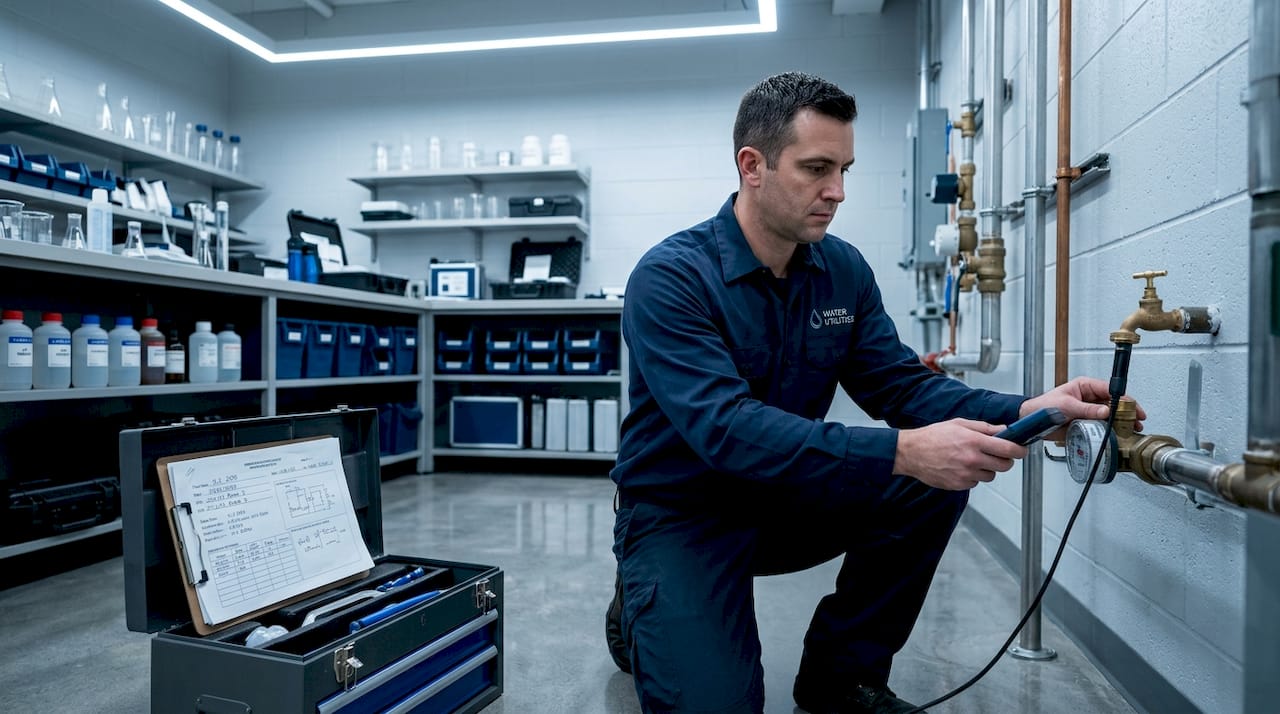
Biofilms, however, complicate this picture significantly. Biofilm protection allows bacteria to survive disinfectants and release cells intermittently into drinking water even after flushing. This means that residual chlorine, while effective in open water, cannot fully penetrate established biofilm structures inside pipes. The bacteria inside effectively hide from treatment.
Beyond direct infection risk, biofilms carry a broader public health concern that most homeowners have never heard of. Biofilms promote antibiotic resistant bacteria and horizontal gene transfer between organisms, which amplifies microbial threats well beyond what any single pathogen could represent alone.
When bacteria presence actually becomes a problem worth acting on, the conditions typically look like this:
- A confirmed coliform positive in a municipal supply, indicating a treatment or distribution failure
- Well water showing coliform or E. coli after flooding, heavy rain, or mechanical issues
- Immunocompromised household members who face elevated risk from organisms that healthy adults tolerate easily
- Unusual taste, odor, or discoloration in tap water that persists after flushing
Pro Tip: If your tap water smells musty or earthy after extended sitting, that is often a sign of bacterial activity in household plumbing, not the municipal supply. The fix starts with your pipes, not a call to the water company.
For households connected to safe drinking water systems with regular monitoring, the day-to-day risk from tap water bacteria remains low. The system is designed to fail safe, and the residual disinfectant acts as a continuous checkpoint.
Practical steps for controlling bacteria at home
Once you understand that bacteria management, not elimination, is the goal, the practical steps become much clearer. Here is a concrete sequence of actions that address the most common failure points in household water microbial health:
-
Test your water annually. Private well owners have the most to lose from skipped testing. Annual coliform testing is the standard recommendation, with additional testing after any flooding event, nearby construction, change in taste or odor, or new household members who may be more vulnerable.
-
Test after any plumbing event. A pipe repair, new fixture installation, or extended vacation period (with stagnant water sitting in pipes) each creates conditions for bacterial growth. Get a test before assuming normal operation has resumed.
-
Maintain your water heater. Set the temperature to 120°F to 140°F to suppress Legionella and other opportunistic bacteria. Flush the tank every six months to remove sediment where bacteria accumulate.
-
Keep stored water cold and covered. Water stored at room temperature in open containers becomes a bacterial growth medium within hours. If you store filtered water in the fridge, refrigerate stored water in clean, sealed containers and replace it every 24 to 48 hours.
-
Sanitize your dispensers and filters. Water dispensers, refrigerator water lines, and countertop filter units all have internal surfaces where biofilms can develop. Follow the manufacturer’s sanitization schedule without skipping it.
-
Consider point-of-use treatment. Filtration systems at the faucet level, especially those with UV sterilization, provide an additional barrier that catches what the distribution system misses. This matters most for older homes with aging internal plumbing.
Making sense of your water test results
Getting a water test back is only half the work. Interpreting it correctly is where most homeowners get stuck, and that gap in understanding can lead either to unnecessary panic or to ignored problems that deserve attention.
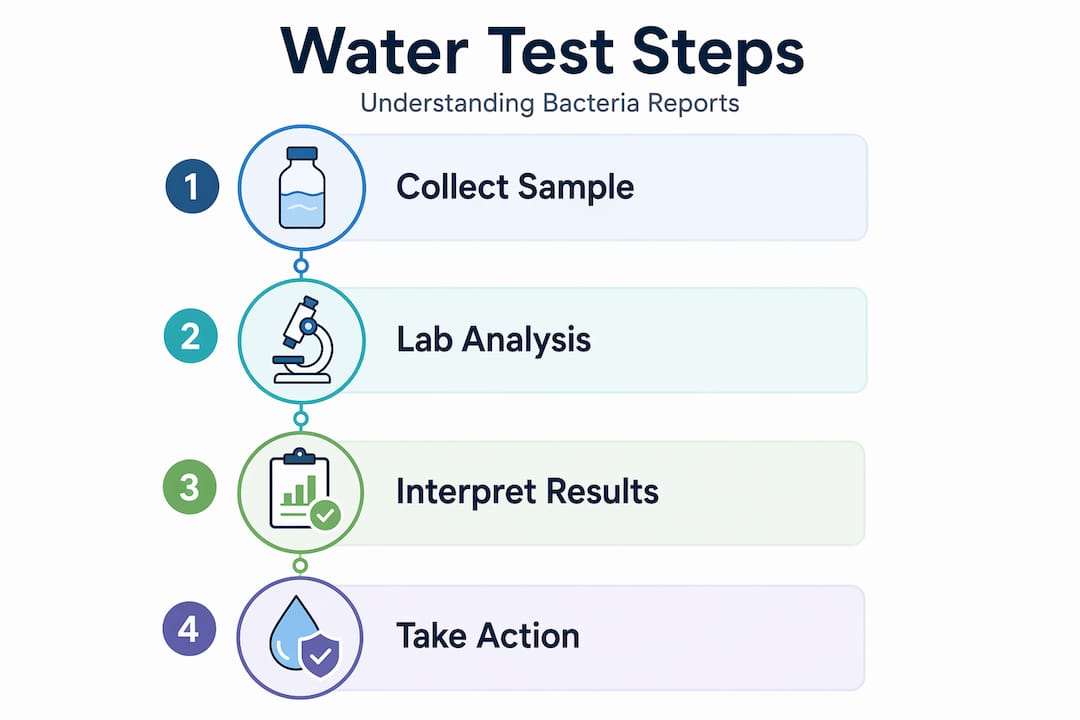
The most common source of confusion is the difference between DNA-based tests and culture-based viability tests. 16S rRNA gene sequencing can detect bacterial DNA in water without confirming that the organisms are alive or infectious. A positive DNA result for a pathogen signature does not mean you have a live pathogen in your tap. It means genetic material was present, which could come from dead cells, environmental contamination, or a transient detection.
Culture-based tests, by contrast, confirm live bacteria are present and can grow under test conditions. These results carry more direct health relevance but also have their own limitations, since not all dangerous bacteria grow easily in lab cultures. Here is how to read the most common scenarios:
- Total coliform positive, E. coli negative: System integrity issue likely. Investigate source but do not assume fecal contamination.
- E. coli positive: Treat this seriously. E. coli indicates fecal contamination, and the water should not be consumed until the source is identified and resolved.
- DNA positive for pathogen signatures only: Get a culture-based confirmatory test before drawing health conclusions.
- All clear on culture test, but taste or odor issues persist: The problem may be chemical, not microbial. Test for minerals, disinfection byproducts, or pipe corrosion.
When results are ambiguous, seek a certified water testing lab or contact your local health department. Do not base decisions on home test strips alone for anything beyond routine screening. And follow the guidance outlined in this safe drinking water workflow to stay ahead of problems before they appear in test results.
My honest take on bacteria and tap water
I have spent years reading the research on drinking water microbiology, and the thing that strikes me most is how much public anxiety gets directed at the wrong targets. People obsess over whether their tap water has bacteria at all, when the more productive question is: what kind, how many, and under what conditions?
The push for zero bacteria at the tap is not just unrealistic. It reflects a misunderstanding of how water systems work. The integrated system approach to safe drinking water, managing sources, treatment, distribution, and residual disinfection together, is what actually keeps people healthy. No single intervention achieves sterility, nor should it.
What I see homeowners consistently miss is the plumbing inside their own walls. Municipal water quality gets scrutinized constantly. Your internal pipes, your water heater, your rarely used guest bathroom? Those are where the real microbial action happens, and almost nobody tests them until something goes wrong. The most overlooked mistake is infrequent, symptom-driven testing when routine testing would catch issues before they become visible or harmful.
My advice: stay informed, test regularly, maintain your plumbing, and add a point-of-use purification layer if your home has old pipes or you have vulnerable household members. Alarm is optional. Attention is not.
— Soldierboy
How Coway water purifiers help control tap water bacteria
Knowing that bacteria presence in tap water is manageable is the first step. Acting on that knowledge at home is the next one.
Cowayswaterpurifier offers water purification systems built to address exactly the risks covered in this article. Their units combine multi-stage filtration with UV sterilization technology to neutralize bacteria, including the opportunistic pathogens that chlorine residual may not fully control inside household plumbing. If you want to understand the full process behind what makes purified water genuinely safe, start with Cowayswaterpurifier’s explanation of the water purification process. For a ready-to-use countertop solution that fits directly into your kitchen, the Countertop Ice Water Purifier delivers clean, filtered water at the point of use, the most practical defense against the bacterial issues this article describes.
FAQ
Are bacteria in tap water always dangerous?
No. Most bacteria found in tap water are harmless environmental organisms. Only specific pathogens pose health risks, and municipal treatment systems are designed to control these through disinfection and distribution monitoring.
What do coliform bacteria in my water test mean?
Coliform bacteria are indicator organisms that signal a potential system integrity problem, not a confirmed health crisis. Total coliform positives require follow-up testing, while E. coli positives indicate fecal contamination and demand immediate action.
How often should I test my tap water for bacteria?
Well water should be tested annually at minimum, plus after flooding, plumbing repairs, or any change in taste, odor, or appearance. Municipal water users should test if they suspect distribution or household plumbing issues.
Can a DNA water test confirm a bacterial infection risk?
Not definitively. DNA-based detection identifies genetic material from bacteria but cannot confirm whether organisms are alive or infectious. A culture-based test is required to assess actual health risk from live bacteria.
Does a water purifier remove bacteria from tap water?
Yes, when equipped with the right technology. Multi-stage filters combined with UV sterilization can neutralize bacteria and opportunistic pathogens that pass through distribution systems or grow inside household plumbing.
Recommended
- How to test tap water safety: homeowner’s step-by-step guide – Coway Water Purifier
- Essential Guide to Safe Drinking Water for Homeowners – Coway Water Purifier
- Why water quality matters for your health at home – Coway Water Purifier
- What is antibacterial filtration? Guide for cleaner water – Coway Water Purifier
