
Uncategorized
Silent Operation in Purifiers: Quiet, Healthier Homes

Apr
TL;DR:
- Silent purifiers operate with minimal noise, improving sleep, focus, and reducing stress at home.
- Advanced engineering features like insulated motors and smart sensors enable true silent operation.
- Regular maintenance ensures ongoing quiet performance by preventing filter clogs and mechanical issues.
Silent Operation in purifiers: quiet solutions for healthier homes
Most homeowners assume that a purifier working hard must sound like it’s working hard. The hum, the whir, the occasional rattle, these seem like proof that the machine is doing its job. But this belief is outdated and, frankly, holding a lot of families back from getting the clean air and water their homes deserve. Silent operation isn’t a premium luxury or a marketing gimmick. It’s a design achievement that makes purifiers safer, healthier, and far more livable, especially in bedrooms, nurseries, and home offices where noise isn’t just annoying but genuinely disruptive to your wellbeing.
Table of Contents
- Understanding silent operation: What does it really mean?
- How silent operation benefits your daily life and wellness
- Key features that make purifiers truly silent
- How to maintain silent operation over time
- What most guides miss about silent operation: our perspective
- Discover quiet purification solutions for your home
- Frequently asked questions
Key Takeaways
| Point | Details |
|---|---|
| Silent operation matter | Quiet purifiers deliver powerful filtration without disrupting sleep or work in home environments. |
| Look for proven features | Sound-dampening technology, smart sensors, and quality filters enable effective silent operation. |
| Maintenance is crucial | Routine care and timely filter changes are essential to preserve silent performance over time. |
| Real-life impact | Truly quiet purifiers help reduce stress, promote wellness, and support a healthier lifestyle. |
Understanding silent operation: What does it really mean?
With the stage set, it’s crucial to pinpoint what silent operation truly means for modern purifiers. At its core, silent operation refers to a purifier’s ability to clean air or water thoroughly while producing minimal or no audible noise during normal use. That sounds simple, but achieving it requires careful engineering across multiple components.
Noise in purifiers doesn’t come from one source. It comes from several, and each one can compound the others:
- Motors and fans spinning at high RPM generate friction and vibration
- Water flow through filtration membranes creates pressure sounds and low rumbles
- Vibrations from internal components travel through the housing and amplify against hard floors or countertops
- Clogged filters force fans and pumps to work harder, causing the unit to strain and produce louder, erratic sounds
- Poorly sealed housing allows mechanical sound to escape rather than being absorbed
The technologies that solve these problems are more advanced than most buyers realize. Insulated brushless motors, for example, run cooler and quieter than traditional motors because they create less friction. Improved fan blade geometry reduces turbulence, which is one of the primary sources of that familiar whooshing sound. Smart noise-dampening housing design uses layered materials to absorb vibrations before they reach the outer shell.
“Quiet purifiers are well suited for bedrooms and offices, and proper purifier maintenance importance prevents noise from rising due to clogs over time.”
Why does this matter room by room? In a bedroom, even 40 decibels (roughly the sound of a quiet library) can disrupt light sleep stages. In a home office, background mechanical noise raises cognitive load and makes it harder to focus. In a nursery, consistent loud sounds interfere with infant sleep cycles. Silent operation means the purifier becomes part of the background, like a well-designed appliance should be, doing its job without ever announcing itself.
What separates genuine silent operation from a marketing claim is measurable decibel output on the lowest and highest settings, combined with real-world use reports. Some units are whisper-quiet on low but roar on high. The best-designed models, as quiet purifier benchmarks confirm, stay quiet even when running at higher fan speeds while still delivering excellent Clean Air Delivery Rate (CADR) scores. CADR measures how quickly a purifier cleans a room, and high CADR at low noise is the gold standard for silent operation.
How silent operation benefits your daily life and wellness
With a clear grasp of what silent operation is, let’s explore why it’s not just a comfort but a serious wellness booster. The health benefits go well beyond a peaceful living room.
Sleep is where the impact is most immediate. Noisy appliances disrupt sleep architecture, the natural progression through light sleep, deep sleep, and REM cycles. When a purifier hums loudly, it triggers micro-arousals, brief moments of waking that you might not remember but that still drain your body’s recovery. A silent purifier, running all night, maintains continuous air quality without ever pulling you out of restorative sleep. Research also shows that sleep quality and air quality are closely linked, meaning the combination of clean, quiet air in the bedroom compounds the benefit.
Here’s a snapshot of the practical wellness benefits families notice after switching to silent-operation purifiers:
| Benefit area | Impact without silent operation | Impact with silent operation |
|---|---|---|
| Sleep quality | Frequent micro-arousals, lighter sleep | Deeper, uninterrupted sleep cycles |
| Daytime focus | Background noise raises cognitive load | Improved concentration and productivity |
| Stress levels | Chronic low-level noise elevates cortisol | Calmer, lower-stress home environment |
| Air/water quality | Inconsistent use due to noise avoidance | Continuous 24/7 purification |
| Family harmony | Disputes over running the unit at night | Everyone comfortable leaving it on |
One statistic worth noting: quiet purifiers with high CADR deliver strong filtration performance without the noise penalty, meaning families don’t have to choose between clean air and a peaceful home.
The productivity angle is equally important for remote workers and students. Constant low-frequency noise increases error rates and reduces the ability to retain information. Switching to a silent unit can feel like removing a mental tax you didn’t know you were paying.
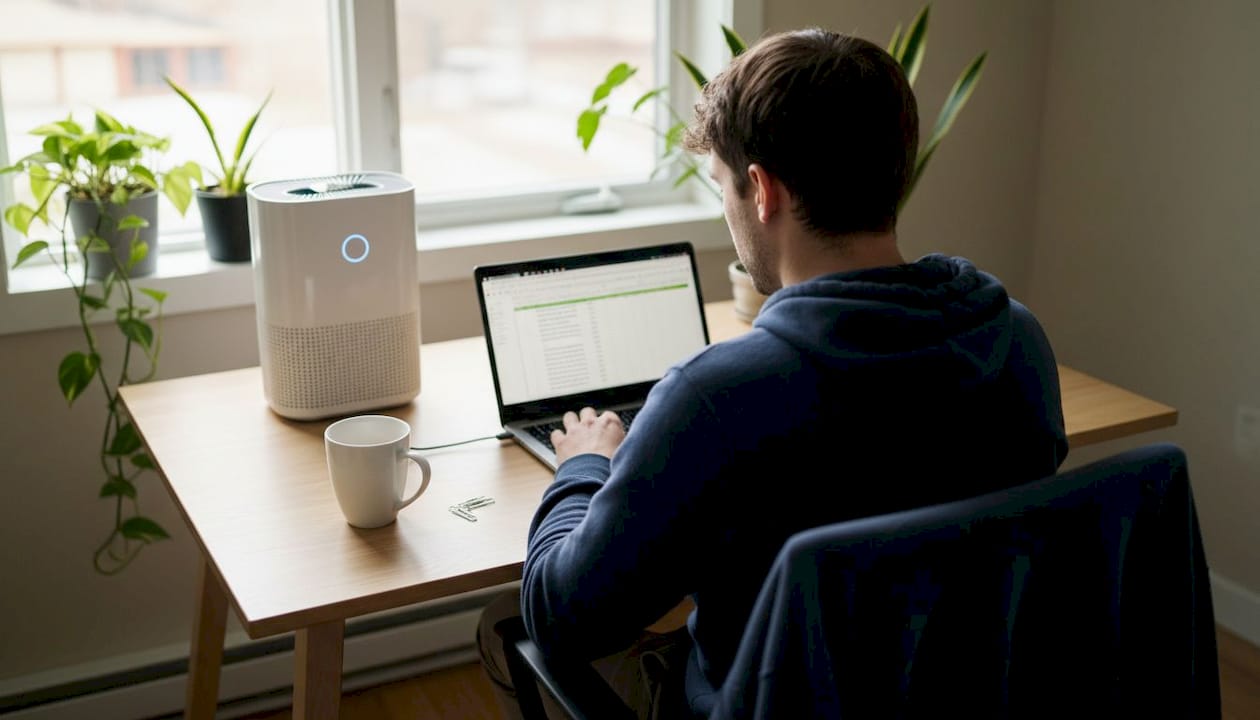
There’s also a synergy effect worth mentioning. Combining a silent purifier with houseplants that naturally reduce indoor pollutants creates a layered air quality system that works continuously and quietly, without adding noise or visual clutter to your space.
For families with young children, elderly members, or anyone sensitive to sound, the wellness case is even stronger. Uninterrupted purification enhances immune function by consistently reducing airborne allergens, mold spores, and fine particulate matter, the kind of invisible threats that accumulate when purifiers are switched off because they’re too loud to tolerate overnight.
Key features that make purifiers truly silent
The benefits are enticing, but what exactly lets a purifier run so quietly? Here’s how manufacturers achieve silence by design.
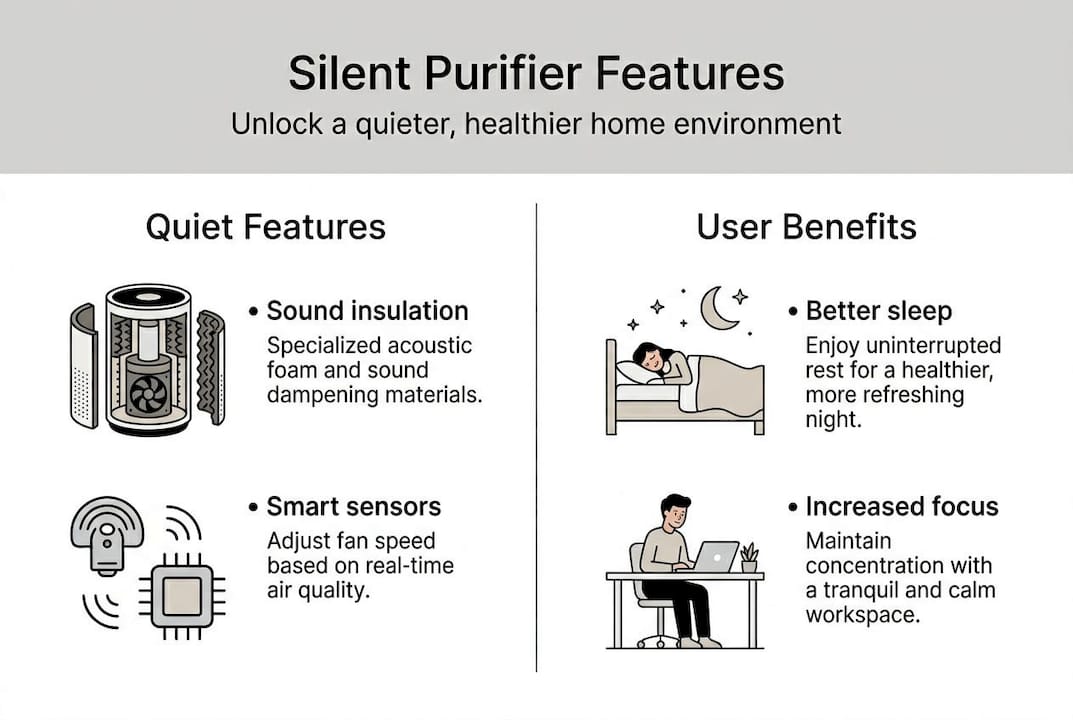
Not all quiet claims are equal. There are specific engineering features that separate genuinely silent purifiers from units that are merely labeled as quiet. Knowing what to look for gives you a real advantage when comparing models.
1. Sound-dampening motor housing. Premium purifiers wrap their motors in insulated, vibration-absorbing materials. This prevents motor hum from traveling into the main body of the unit. Without this, even a well-designed motor will produce noticeable sound at full load.
2. Advanced fan blade design. Blade geometry matters enormously. Wider, curved blades move the same volume of air at lower rotational speeds, reducing both friction and turbulence. You get strong airflow without the aggressive whirring that budget units produce.
3. High-quality, unclogged filters. Filters that allow efficient airflow without excessive resistance mean the fan doesn’t need to strain. This is why maintain purifier efficiency is directly tied to silent operation, not just filtration performance.
4. Smart auto-speed sensors. The best models use air quality sensors to auto-adjust fan speed in real time. When air is clean, the unit runs slow and silent. When pollutants spike, it briefly ramps up, then returns to low speed. This means most of your day involves near-silent operation.
5. Sealed, reinforced housing panels. Loose panels rattle. Quality builds use firm tolerances and interior dampening foam to prevent any resonance from the outer shell.
Here’s how leading models compare on these features:
| Feature | Budget models | Mid-range models | Premium models (e.g., Winix 5510) |
|---|---|---|---|
| Motor insulation | Minimal | Partial | Full insulation |
| Fan blade design | Standard | Improved geometry | Advanced low-turbulence |
| Auto-speed sensor | No | Basic | Multi-stage smart sensor |
| Filter airflow efficiency | Average | Good | Optimized for low resistance |
| Noise at high speed | 55+ dB | 45-54 dB | Under 45 dB |
The Winix 5510 benchmark illustrates this well: it’s exceptionally quiet at high speeds while still delivering an excellent CADR score. That combination is what separates engineered silence from simple low-speed hum.
For anyone shopping for a new unit, understanding the must-have air purifier features beyond decibel ratings will help you make a decision that lasts.
Pro Tip: When testing a purifier in-store or reviewing product videos, listen specifically to the sound at 75% and full speed, not just on low. A unit that only sounds quiet at minimum fan speed isn’t truly engineered for silent operation.
How to maintain silent operation over time
Silent design is just the start. Ongoing care is the real secret to keeping things quiet.
Even the best-engineered purifier will start making noise if it isn’t maintained properly. The good news is that keeping things quiet doesn’t require much, just consistency. As maintenance prevents noise from clogs confirms, most noise complaints from previously quiet units trace directly to skipped maintenance.
Signs your purifier’s silent operation may be fading:
- A noticeable increase in fan or motor hum over the past few weeks
- Rattling or vibration sounds that weren’t there before
- The unit running at high speed more frequently, even when air quality hasn’t changed
- A musty or stale smell accompanying increased noise, which can signal filter saturation
- Reduced airflow from the output vent despite the motor running loudly
Any one of these is a signal to act before the problem worsens.
Step-by-step routine for noise-minimizing care:
- Check filter condition monthly. Most manufacturers provide a filter indicator, but doing a visual check on the pre-filter (the first layer that catches large particles) every 30 days helps you catch buildup early.
- Clean or replace the pre-filter every 2 to 4 weeks. Many pre-filters are washable. Rinse under cold water, allow to air dry completely, and reinstall. Refer to a detailed filter maintenance guide for model-specific steps.
- Replace main HEPA and carbon filters on schedule. Usually every 6 to 12 months depending on usage. Don’t wait until the filter is visibly gray. By that point, the fan is already working overtime.
- Wipe down fan blades and vents. Dust accumulation on fan blades causes imbalance and vibration. A soft, slightly damp cloth every couple of months keeps blades balanced and quiet.
- Inspect placement and surface contact. A purifier sitting on an uneven or hollow surface amplifies vibration. Move it to a firm, flat surface or place a thin anti-vibration mat underneath.
- Apply the same logic to houseplants nearby. Cleaning plant leaves, as any cleaning plant leaves guide will confirm, keeps your natural air helpers working efficiently alongside your purifier.
For a full purifier maintenance checklist and schedule, following a structured routine removes the guesswork entirely.
Pro Tip: Always use the manufacturer-recommended replacement filters or certified equivalents. Off-brand filters often have denser media that restricts airflow, forcing the fan to strain and adding 5 to 10 decibels of unwanted noise.
For a deeper look at why this matters beyond just sound, the guide on why regular purifier maintenance matters explains how consistent care protects both performance and the long-term health benefits your purifier was built to deliver.
What most guides miss about silent operation: our perspective
Having covered the how-to, let’s address the biggest myths and our firsthand insights on what silent operation in purifiers really takes.
Most buyer guides reduce the silent operation question to a single number: decibels. Find the lowest dB rating, buy that unit, done. But decibel ratings are measured under controlled lab conditions at a single fan speed, usually the lowest. Real homes aren’t labs. Air quality spikes during cooking, cleaning, or when outdoor pollution creeps in, and that’s when fan speed climbs and the lab number becomes irrelevant.
The brands that get silent operation right don’t just engineer quiet motors. They design whole systems where filters, sensors, housing, and airflow work together so the unit rarely needs to run loud in the first place. That’s a fundamentally different approach than simply muffling a standard motor.
We also think buyers underestimate maintenance as a core part of the silent experience. A poorly maintained unit will always drift toward noise, regardless of how well it was designed at the factory. Choosing air purifier features that include quality filter indicators and easy access panels makes consistent maintenance far more likely to happen.
True silence isn’t a spec. It’s a combination of smart design and disciplined upkeep, and the brands that emphasize both are the ones worth your investment.
Discover quiet purification solutions for your home
If you’re ready to make the shift to silent operation, here are some expert-reviewed resources and options to guide your next step.
At Coway, we’ve built our purifier lineup around the principle that clean air and water should never come at the cost of your peace and quiet. Whether you’re exploring how the water purification process works behind the scenes, using a detailed air purifier selection guide to find your ideal model, or considering a compact solution like our countertop ice water purifier, you’ll find options that deliver both performance and genuine silence. Every model we feature is selected with your home’s wellness and noise environment in mind.
Frequently asked questions
Does silent operation affect purifier performance?
No, purifiers designed for silent operation still provide strong air or water purification. As quiet purifiers like Winix 5510 demonstrate, high CADR ratings are fully achievable alongside minimal noise through advanced engineering rather than trade-offs.
What causes a purifier to become noisy over time?
Filter clogs, fan blade dust buildup, and worn motor components all increase noise as a purifier ages. Regular maintenance prevents this by keeping airflow unobstructed and mechanical parts in good condition.
Can silent purifiers be used in nurseries or bedrooms?
Yes, modern silent-operation purifiers are specifically suited for sensitive spaces like nurseries and bedrooms. Quiet purifiers for bedrooms filter air continuously with virtually no noise disturbance, making them ideal for uninterrupted rest.
Are silent purifiers more expensive?
Some models cost more because of the advanced engineering, quality materials, and smart sensor systems required. However, prices are becoming competitive as demand grows and the technology becomes more accessible across mid-range models.
How do you clean and maintain a silent purifier?
Replace filters on the manufacturer’s recommended schedule, clean pre-filters monthly, and wipe fan blades every few months to prevent vibration-causing dust buildup. Following the included maintenance guide keeps your unit running quietly and efficiently for years.
Recommended
- Energy-Efficient Purification: Cleaner Air and Water at Home – Coway Water Purifier
- 7 Must-Have Air Purifier Features for Healthier Homes – Coway Water Purifier
- Understanding Why Regular Purifier Maintenance Matters – Coway Water Purifier
- How to Select Air Purifier for Healthy Home Air Quality – Coway Water Purifier
