
Uncategorized
Understanding particulate filtration for healthier home air

Apr
TL;DR:
- Genuine health benefits depend on certified filters meeting strict standards and proper maintenance.
- Proper installation, sealing, and timely replacement are crucial for maximum filtration effectiveness.
- PM2.5 particles pose the greatest health risks as they bypass upper respiratory defenses.
Most families assume that buying a filter means they have clean air and safe water. That assumption leads to a false sense of security. PM2.5 particles are so small they pass right through non-certified filters without resistance. The truth is, particulate filtration is a science with specific standards, certified ratings, and real consequences when done wrong. This guide explains what particulate filtration actually removes, how air and water filters work differently, and how to make choices that deliver genuine health benefits for your family.
Table of Contents
- What is particulate filtration and why does it matter?
- How particulate filtration works: Air vs. water filters
- How to choose the right particulate filters for your home
- How to maximize filter performance: Installation, maintenance, and common pitfalls
- The biggest mistake families make with particulate filtration
- Advanced air and water purification for your home
- FAQ
Key Takeaways
| Point | Details |
|---|---|
| Particulate filtration essentials | Capturing fine particles is critical for healthier air and water at home. |
| Filter standards matter | Certified MERV or HEPA filters are crucial for proven particulate removal. |
| Choose and maintain right filters | Proper selection, installation, and regular replacement maximize protection. |
| Look beyond ratings | True effectiveness depends on fit, certified performance, and ongoing care. |
What is particulate filtration and why does it matter?
Particulate filtration is the process of physically removing solid particles and liquid droplets from air or water. It sounds straightforward, but the range of particles involved is enormous. Some you can see, like dust floating in sunlight. Others, like bacteria and ultrafine combustion particles, are completely invisible and far more dangerous.
In your home, air-based particulates come from many sources. Pet dander drifts off your dog after every shake. Opening a window during high-pollen season floods your living room with allergens. Even cooking dinner releases grease aerosols and fine smoke particles that linger for hours. On the water side, particulates include sediment stirred up from aging pipes, rust flakes from corroding fixtures, organic matter from municipal supply lines, and microbial contamination in poorly maintained systems.
Common indoor air pollutants captured by effective filtration include:
- Fine dust and coarse dust: Two very different health hazards
- Pet dander and hair: Common triggers for asthma and allergies
- Indoor mold spores: Released from damp walls, basements, and appliances
- PM2.5 and ultrafine particles: The most dangerous category for lung and heart health
- Water sediment and rust: Physical contaminants that affect taste, color, and safety
“The smaller the particle, the deeper it penetrates into the body. PM2.5 particles are fine enough to bypass the nose and throat and enter the bloodstream directly.”
The health effects of PM2.5 include aggravated asthma, cardiovascular stress, and chronic respiratory disease. This is why filtration is not optional for health-focused families. It is foundational. A filter that only catches visible dust is doing a fraction of the real job.

How particulate filtration works: Air vs. water filters
The mechanisms behind air and water filtration share the same goal but operate very differently. Understanding these differences helps you pick the right technology for each need.
Air filters work through a combination of three physical processes:
- Direct interception: Medium-sized particles hit a fiber and stick.
- Impact: Large particles have too much momentum to follow airflow curves and collide with filter material.
- Electric attraction (electrostatic): Small particles are drawn to charged fibers within the filter media.
Water filters work primarily through straining, where particles larger than the filter’s rated pore size simply cannot pass through. Carbon block filters add a surface-adsorption layer that traps finer particles and some chemical compounds.
Air filtration standards like **True rated filters define exactly how much filtration efficiency a product must deliver. Here is a quick comparison:
| Filter type | Key standard | What it blocks | Best use case | Air or water? |
|---|---|---|---|---|
| True certified | 99.97% at 0.3µm | Fine particles, mold, bacteria | Room purifiers | Air |
| Carbon block | Sub-micron rated | Fine particles, some chemicals | Under-sink drinking | Water |
| True certified | 99.97% at 0.3µm | Fine particles, mold, bacteria | Room purifiers | Air |
| Filter type | Standard | What it targets | Use case | Medium |
|---|---|---|---|---|
| True certified | 99.97% at 0.3µm | PM2.5, allergens, bacteria | Room air purifiers | Air |
| True | 75%+ at 0.3–1µm | General dust, pollen | Central systems | Air |
| Carbon block | Sub-micron pore size | Fine particles, chemicals | Kitchen drinking lines | Water |
| 5–20µm sediment | Physical size exclusion | Sand, rust, sediment | Pre-filter for home | Water |
Pro tip: If an air purifier box says “True certified filter” or simply “certified filter” without stating 99.97% at 0.3 microns, it is probably not meeting the certified standard. That specific claim on the label is the only reliable indicator.
Benefits from properly certified air purifiers extend across indoor pollutant categories that most families underestimate. The benchmark that matters most in air filtration is not the brand name, it is the certification.
How to choose the right particulate filters for your home
Choosing filters does not need to be complicated, but it does need to be intentional. A few structured steps protect you from wasting money on products that underperform.
- Start with your household’s specific health needs. Do you have family members with asthma, seasonal allergies, or respiratory sensitivities? Multiple pets? Young children? These factors increase the priority for higher-efficiency filtration.
- Match the filter type to the system. For central air systems, selecting air purifiers in the true certified range means looking for units tested and rated for your household’s room size. For central units, look for a filter rated in the efficiency range designed for fine particle capture without overtaxing the fan motor.
- For water, identify what you are filtering. A whole-house sediment filter handles rust and sand from the supply line. A carbon block filter at the kitchen tap targets fine particles and taste-affecting compounds in your drinking and cooking water.
- Check that size and fit are correct. A filter that does not seal properly allows air or water to bypass the media entirely, called a bypass leak. An improperly fitted filter can underperform even if it carries a premium rating.
- Buy from verified retailers and look for visible certification marks, not just marketing language on packaging.
Key things to watch when evaluating options:
- Filter dimensions must match your housing exactly
- Check for third-party testing documentation
- Compare micron ratings for water filters against your specific concerns
- Look for must-have air purifier features like sealed filter housing and replaceable certified elements
Pro tip: Change filters on schedule even if they look clean. Fine particulates that are invisible to the eye can clog the media while the filter surface looks acceptable. Performance degrades well before visible signs appear.
How to maximize filter performance: Installation, maintenance, and common pitfalls
Buying the right filter is only step one. How you install and maintain it determines whether your family actually benefits.
The most common hidden failure in home filtration is improper sealing. A small gap between a filter frame and its housing creates a pathway for unfiltered air or water to flow around the media. According to a complete guide on certified filter performance, real-world results depend entirely on proper sealing and installation, not just on the filter’s rated efficiency.
“A certified filter poorly installed offers no more protection than a lower-rated filter that fits well.”
Avoid products labeled “certified-type” or “similar to certified.” These terms are not regulated and can describe filters that perform far below the standard they imply.
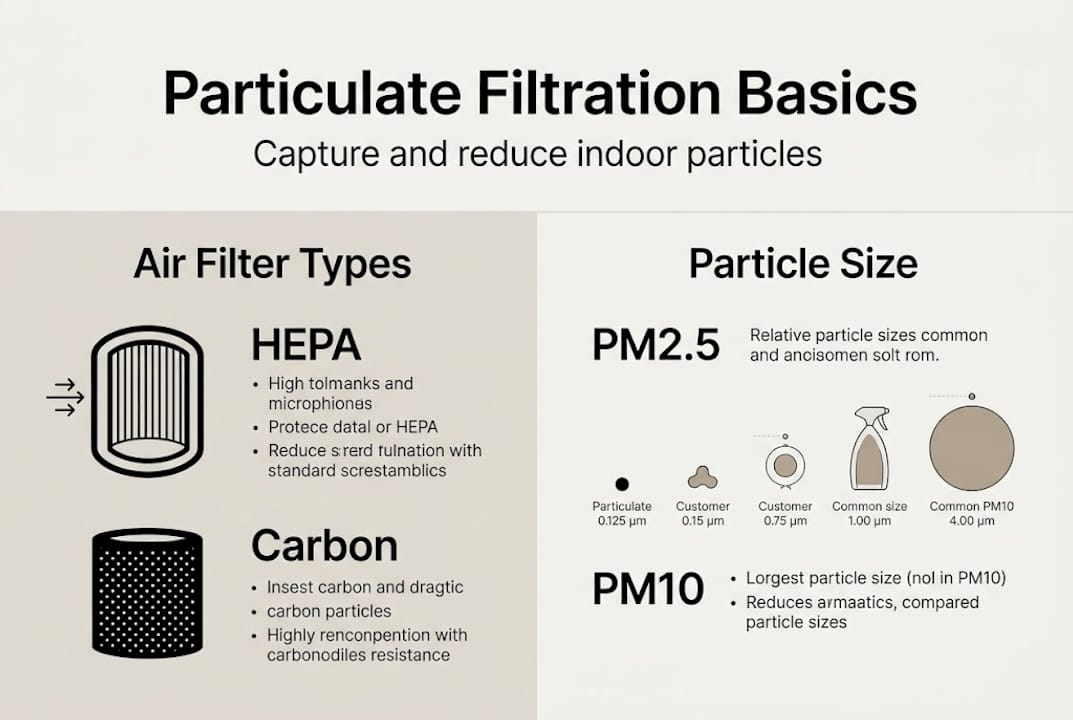
Understanding most penetrating particle size (or risk-weighted particle size) matters here. This refers to the particle size that is hardest for a filter to capture, typically around 0.3 microns in air. Products tested against this worst-case size give you a meaningful performance guarantee. Products that skip this benchmark should be skipped themselves.
Here is a quick reference for maintenance intervals across filter types:
| Filter type | Replace every | Sign of overdue replacement | Risk of delay |
|---|---|---|---|
| Air certified filter | 6–12 months | Higher dust presence | Chemical and particle bypass |
| Carbon block water | 6–12 months | Change in taste or odor | Fine particle and chemical pass-through |
| 5–20µm sediment water | 3–6 months | Drop in water pressure | System damage, contaminant release |
| Central system air | 3–6 months | Higher energy bills | Motor strain, reduced airflow |
Watch for these signs that your filter needs immediate attention:
- A noticeable drop in airflow from vents or purifiers
- Change in water taste, smell, or color
- An increase in dust accumulation on furniture
- Higher-than-normal energy use from your air system
For more help understanding the full guide to filtering indoor air, checking manufacturer maintenance schedules is a non-negotiable step that pays for itself in air quality.
The biggest mistake families make with particulate filtration
Here is the uncomfortable truth most air quality guides skip. The families who invest in premium certified filters and still breathe suboptimal air often have the same problem. They bought great technology and then stopped thinking about it.
A high-rated filter that has not been replaced in 18 months is not protecting anyone. A beautifully packaged air purifier with a loose-fitting filter housing delivers uncertified performance from day one. No filter eliminates the need for ongoing indoor air optimization.
The analogy we use: a certified filter is like a high-quality brake pad. It performs exactly as rated when new, properly installed, and replaced on time. Skip those steps and the rating becomes irrelevant.
Real protection comes from treating filtration as a system, not a purchase. That means tracking replacement dates, checking seals every season, and adjusting your filter type when household conditions change, like getting a new pet, doing renovations, or moving to an area with different outdoor air quality. The families who get consistent results are the ones who stay engaged with the process.
Advanced air and water purification for your home
Effective particulate filtration is the foundation of a healthier home, and choosing the right technologies makes the difference between filtered air and truly clean air.
At cowayswaterpurifier.com, we make it easier to understand and act on what your family needs. Start with our water purification process guide to see how modern filtration works from source to tap. If air quality is your priority, our air purifier selection guide walks you through certified options matched to your home size and health goals. For families considering UV treatment alongside filtration, explore our UV water purifier comparison to find the right combination for safe, great-tasting water every day.
FAQ
What is the difference between a certified and a standard air filter?
Certified filters must remove 99.97% at 0.3µm, which is the hardest particle size to capture. Standard filters are rated on a scale for general dust and do not meet that specific threshold.
How often should I replace my air and water filters?
Air filters typically need replacement every 3 to 6 months for central systems, and water filters every 6 to 12 months. Replace filters on schedule regardless of visible condition to maintain reliable performance.
Why is PM2.5 the most important benchmark in particulate filtration?
PM2.5 particles are small enough to pass through the upper respiratory system and reach the lungs and bloodstream directly, making them the most serious health hazard among common household air pollutants.
What should I look for when buying a certified air purifier filter?
Look for explicit certification stating 99.97% efficiency at 0.3 microns. Non-certified labels like “certified-type” carry no regulatory standard and may perform significantly below that threshold.
Recommended
- How to Clean Air Filters for Healthier Home Air – Coway Water Purifier
- How to Select Air Purifier for Healthy Home Air Quality – Coway Water Purifier
- Air purification checklist: 6 steps for healthier home air – Coway Water Purifier
- 7 Must-Have Air Purifier Features for Healthier Homes – Coway Water Purifier
- Role of appliance filters in maintaining home efficiency – Expert Appliance
- Humedad y Calidad del Aire: Impacto en Hogares Madrileños – Solo Humedad
