
Uncategorized
Cold and hot water dispensers: why they matter at home
Apr
TL;DR:
- Home dispensers increase water intake by providing instant hot and cold water access.
- Safety features like child locks and auto shut-off protect families from hot water burns.
- Cooling technology and installation type affect dispenser performance and suitability for households.
Most families assume a pitcher or a case of bottled water covers their hydration needs. That assumption is costing them more than they realize. Research shows that instant access to both cold and hot water boosts daily water intake and actively reduces the pull toward sugary drinks. Modern dispensers also include safety technology that a simple pitcher can never match, from child locks on hot taps to automatic shut-off. This article covers the wellness case for home dispensers, the safety features that protect your family, the technology choices worth understanding, and how they fit into real daily life across every season.
Table of Contents
- Why hydration matters and how dispensers support it
- Safety features: Protecting families with smart hot water technology
- Technology that matters: Compressor vs. thermoelectric and bottleless/POU options
- Seasonal and household needs: Dispensers in daily life
- The overlooked essentials: Beyond convenience, toward a wellness standard
- Upgrade your home wellness with trusted water technology
- Frequently asked questions
Key Takeaways
| Point | Details |
|---|---|
| Boosts daily hydration | Instant access to cold and hot water helps all ages meet healthy hydration goals. |
| Enhances family safety | Child locks and temperature controls protect kids from hot water accidents. |
| Adapts to modern needs | Compressor and bottleless dispensers fit busy family lifestyles with less hassle. |
| Seasonal water support | Dispensers help maintain optimal intake during hotter seasons and increased activity. |
Why hydration matters and how dispensers support it
Your family’s water needs shift constantly. Age, outdoor temperature, physical activity, and even what you ate for lunch all affect how much water each person needs. Many families underestimate these changes. For example, older adults need +640mL per day more water in summer compared to cooler months, and children’s needs rise sharply after outdoor play. Yet most households don’t adjust their habits to match.
The problem isn’t motivation. It’s friction. When cold water means waiting for a pitcher to chill or hot water means waiting for a kettle to boil, people skip it. They grab a soda, a juice, or just feel vaguely tired and don’t connect it to mild dehydration. There are several reasons behind dehydration that go beyond simply forgetting to drink, including poor accessibility at home and reliance on sweetened alternatives.
A dispenser removes that friction entirely. Cold water is ready the moment your child walks in from soccer practice. Hot water is available for your morning tea without standing over a stove. That immediacy changes behavior. When drinking water is the easiest option, people choose it more often.
Here are the key ways dispensers prompt more water intake across a household:
- Cold water after physical activity: Immediately accessible after workouts, yard work, or sports, making rehydration a natural next step rather than an afterthought
- Hot water for herbal teas and warm drinks: Encourages adults and older family members to stay hydrated through warm beverages, especially in cooler months
- Easy access for children: Lower-effort dispensing means kids can refill their own cups without help, building independence and healthy habits
- Older adult support: Seniors who feel thirst less intensely benefit from always-available water at the right temperature without heavy lifting
- Reducing sugary drink reliance: When cold water is instant and satisfying, the reach for a soda or juice loses its appeal
For deeper guidance on building hydration and wellness tips into your daily routine, the resources available can help you create sustainable habits.
Pro Tip: Place your dispenser centrally in your kitchen or home office, not tucked in a corner. Visibility drives use. The more often your family walks past it, the more often they’ll stop for a refill.
Safety features: Protecting families with smart hot water technology
Hot water is genuinely dangerous. Water at 160°F or above causes third-degree burns in seconds, and young children are especially vulnerable because their skin is thinner than adults’. A traditional kettle or stovetop pot offers no protection against a curious toddler. Modern dispensers are built differently.
Today’s reputable dispensers maintain hot water between 140°F and 160°F and include features like insulated spouts to reduce external heat, auto shut-off when not in use, and most critically, child safety locks that require a deliberate two-step activation before hot water flows. These aren’t minor add-ons. They are engineered safeguards that make a meaningful difference.
A dispenser without a child lock in a home with young children is a risk that’s completely avoidable. Modern safety features exist precisely because the consequences of hot water contact are serious and fast.
Here is how leading dispensers stack up on safety:
| Safety feature | What it does | Why it matters |
|---|---|---|
| Child safety lock | Requires deliberate two-step action | Prevents accidental hot water activation |
| Temperature control | Limits max temp to 140-160°F | Reduces severity of contact burns |
| Insulated spout | Keeps exterior cool to touch | Prevents burns from touching the nozzle |
| Auto shut-off | Powers down when idle | Eliminates risk from unattended activation |
| Install height options | Raises dispenser above child reach | Adds a physical barrier of protection |
For households with children, these features are not optional extras. They are the baseline. When evaluating options, look for models like the CHP-5722L hot and cold purifier, which integrates safety engineering with filtration performance.
Essentials for safe use in homes with kids:
- Always activate the child lock when the dispenser is not actively in use
- Teach children over eight the correct way to use the dispenser before allowing independent access
- Position the dispenser so the hot water tap is not at a young child’s eye level
- Check insulation and auto shut-off features before purchasing any model
Pro Tip: Choose models with third-party certified safety features. Certification isn’t just a label; it means the design has been independently verified to perform as claimed.
Technology that matters: Compressor vs. thermoelectric and bottleless/POU options
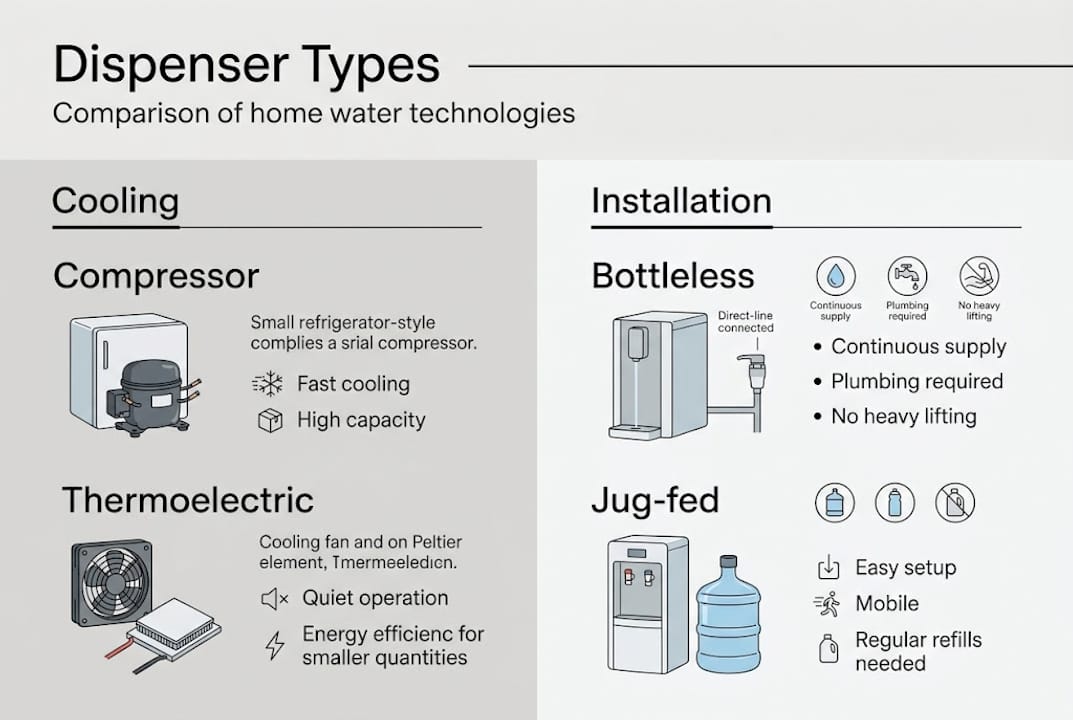
Not all dispensers cool the same way, and that difference matters more than most buyers expect. There are two primary cooling technologies: compressor and thermoelectric.
Compressor-cooled models outperform thermoelectric in busy households with consistent demand. They maintain cold temperatures reliably even when the dispenser is accessed frequently throughout the day. Thermoelectric models work through a different process and are quieter, but they struggle to keep up when usage is high. For a family of four with kids coming and going, a thermoelectric unit often delivers lukewarm water by afternoon.
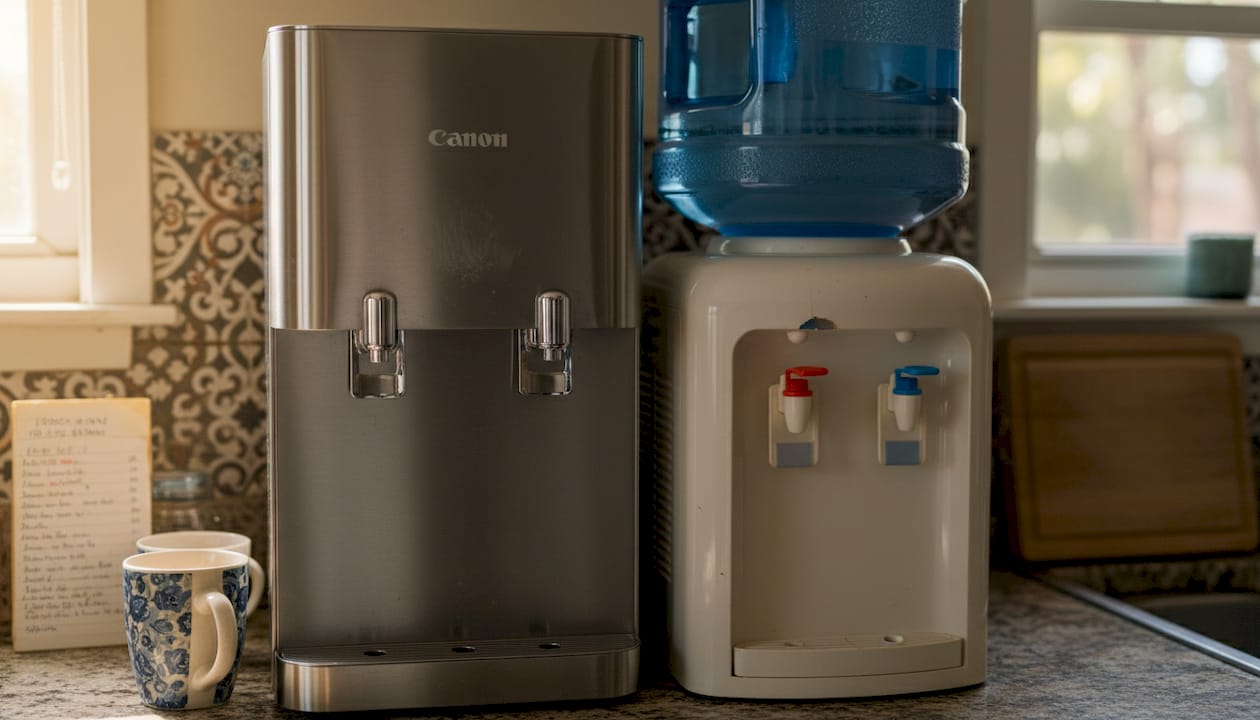
The installation type also shapes your experience significantly. Bottleless or Point-of-Use (POU) models connect directly to your home’s water supply. There are no heavy bottles to lift, no scheduled deliveries, and no running out. That matters enormously for older adults who cannot safely lift a five-gallon bottle, and for families who don’t want the disruption of a delivery schedule.
| Feature | Compressor | Thermoelectric | Bottleless/POU |
|---|---|---|---|
| Cooling consistency | Excellent | Moderate | Excellent (with compressor) |
| Noise level | Moderate | Very low | Moderate |
| Upfront cost | Higher | Lower | Varies |
| Ongoing cost | Low | Low | Filter replacements only |
| Child safety | Depends on model | Depends on model | Depends on model |
| Heavy lifting | Required (bottles) | Required (bottles) | None |
| Maintenance | Low | Low | Filter changes |
For more on how contactless and bottleless designs improve daily hygiene, see contactless dispenser health advantages. If you are still learning the fundamentals, the guide on water dispenser basics is a useful starting point, and for filtering through your options, choosing a water purifier walks through the decision criteria clearly.
Which households benefit most from each technology:
- Compressor models: Families with four or more people, high daily usage, or active households
- Thermoelectric models: Single adults or couples with light, predictable use
- Bottleless/POU models: Homes with older adults, families wanting zero delivery hassle, and anyone prioritizing long-term savings
Seasonal and household needs: Dispensers in daily life
Hydration isn’t a constant. Your body’s water needs are highest in summer and during illness, and lowest in cooler, sedentary periods. The problem is that most household hydration setups don’t adapt. A pitcher in the fridge stays a pitcher in the fridge, regardless of whether it is August or January.
Research confirms that older adults need significantly more water in summer, and young adults with higher activity levels show elevated total water intake needs during heat. Families with multiple generations under one roof face the challenge of meeting very different needs simultaneously.
A dispenser adapts without effort. In summer, the cold setting handles post-activity hydration for every family member. In winter, the hot setting supports herbal teas, warm lemon water, and evening drinks that help older relatives stay warm and hydrated. The dispenser itself doesn’t change, but the way your family uses it shifts naturally with the season.
Common daily scenarios where dispensers add real value:
- School mornings: Kids fill water bottles in seconds without help, making it easy to head out the door properly hydrated
- Family events and gatherings: A steady supply of cold water means guests aren’t reaching for sodas out of convenience
- Post-gardening or outdoor activity: Cold water is immediately available when you walk in hot and tired, preventing that stretch of dehydration before a drink finally happens
- Older adults’ afternoon tea: A hot cup of herbal tea is achievable without waiting for a kettle, keeping seniors engaged with a healthy habit
- Late-night hydration: Quiet, instant access means no noisy kettle waking the house when someone needs a warm drink before sleep
For families focused on safety alongside hydration, the guide on improving water safety for families covers key steps worth reviewing. And if you want context on common dehydration causes in families, that resource outlines the patterns most households overlook.
The overlooked essentials: Beyond convenience, toward a wellness standard
Here is the honest view: a pitcher and a case of bottled water are not a wellness strategy. They are a workaround. Pitchers go warm. Bottles run out at the worst time. Neither adapts to seasonal needs, neither includes safety engineering for hot water, and neither makes hydration genuinely effortless for every member of the household.
Dispensers that enhance wellness through effortless hydration and built-in safety features represent a different standard entirely. Choosing a dispenser for your home is a decision about reducing avoidable risks, not just about having cold water on demand.
We’ve seen families invest significantly in organic food, air quality monitors, and ergonomic furniture while pouring water from a plastic pitcher that hasn’t been cleaned in two weeks. The hydration piece often gets overlooked because it feels solved. It rarely is.
The real shift happens when families stop treating dispensers as a kitchen upgrade and start viewing them the same way they view a smoke detector. It is infrastructure for safety and wellbeing, not a lifestyle accessory. Investing in essential home filtration technology alongside a quality dispenser closes the gap between intention and actual daily wellness.
Upgrade your home wellness with trusted water technology
If this article has made one thing clear, it’s that the right water dispenser does more than chill or heat water. It supports your family’s daily hydration, protects children with real safety engineering, and adapts to seasonal needs without any extra effort on your part.
Coway’s range of water solutions is built around exactly these priorities. Whether you want to understand the water purification process guide before you decide, explore the countertop ice water purifier for a compact solution, or compare options through UV water purifier comparisons, there is a clear path to finding what fits your home. The best time to upgrade your family’s wellness setup is before the next heat wave, not after it.
Frequently asked questions
Do water dispensers really help families drink more water?
Yes, instant access to cold and hot water increases daily intake and supports habit-forming hydration, especially in children and older adults. Convenience meaningfully boosts intake by removing the effort barrier that causes people to skip water in favor of easier alternatives.
Are hot water dispensers safe to use around kids?
Modern dispensers feature child locks, temperature controls, and auto shut-off to prevent accidental burns when installed correctly. Child safety locks prevent scalds by requiring deliberate two-step activation before hot water is dispensed.
What type of dispenser is best for busy households?
Compressor-cooled and bottleless models offer the best performance for high-use homes, providing reliable cooling and less hassle. Compressor models outperform thermoelectric options when usage is frequent and consistent throughout the day.
Do dispensers reduce sugary drink consumption?
Easy access to filtered, cool water makes it much more likely people will choose water instead of sugary beverages. Convenience encourages water over sugary drinks because when water is instantly available and satisfying, the appeal of reaching for something else fades.
Recommended
- Why choose contactless water dispensers for health – Coway Water Purifier
- What is a Water Dispenser? Understanding Its Functionality – Coway Water Purifier
- CHP-5722L Hot & Cold Standing Water Purifier – Coway Water Purifier
- CHPI-620L Ultra Hot, Cold & Ice Standing Water Purifier – Coway Water Purifier
- What is a Humidifier Good For? Unveiling the Benefits
