
Uncategorized
What is a Water Dispenser? Understanding Its Functionality
Sep
Best selling products
-

P-160AL Under Sink Water Purifier
$700.00 -
CHP-5722L Hot & Cold Standing Water Purifier
Price range: $800.00 through $2,000.00 -
Yearly Rental Services
$500.00 -
coway water filter
$120.00 -

coway air filter
$120.00
Water dispensers are popping up in homes, offices, and schools all across the country and for good reason. Studies show that having easy access to a water dispenser can significantly increase daily water intake and help people stay hydrated throughout the day. Most assume these machines are just about convenience or cold drinks. The real surprise is how advanced they’ve become with filtration systems and smart features that turn an ordinary glass of water into something cleaner, safer, and way more appealing than you might expect.
Table of Contents
- Defining A Water Dispenser: Basic Concepts And Types
- The Importance Of Water Dispensers In Daily Life
- How Water Dispensers Function: An Overview Of Mechanisms
- Key Features Of Water Dispensers And Considerations
- Real-World Applications: Water Dispensers In Homes And Businesses
Quick Summary
| Takeaway | Explanation |
|---|---|
| Choose the right dispenser type | Select between bottled or point-of-use dispensers based on your needs and environment. |
| Maintenance is essential for hygiene | Regular cleaning and filter replacement are crucial for safe water quality. |
| Consider energy efficiency features | Look for models that minimize electricity use while providing hot and cold water options. |
| Promote hydration in workplaces | Installing dispensers can enhance employee health and productivity by encouraging water consumption. |
| Support sustainability efforts | Modern dispensers reduce reliance on single-use plastics, benefiting the environment. |
Defining a Water Dispenser: Basic Concepts and Types
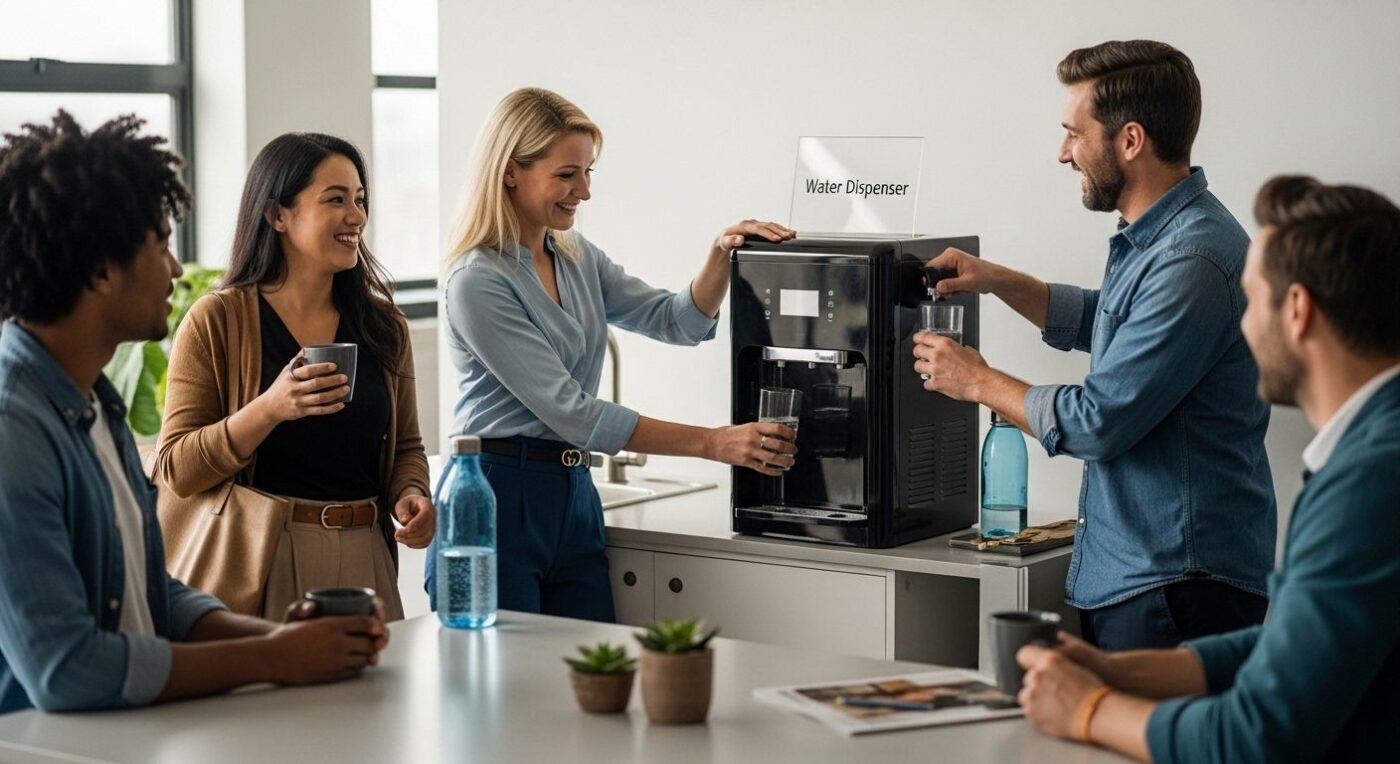
A water dispenser represents a specialized appliance designed to provide convenient and accessible drinking water through various mechanisms. According to HandWiki, these devices are engineered to dispense water in multiple temperatures and configurations, serving diverse residential and commercial needs.
Types of Water Dispensers
Water dispensers come in several distinct categories, each tailored to specific usage scenarios and environmental requirements
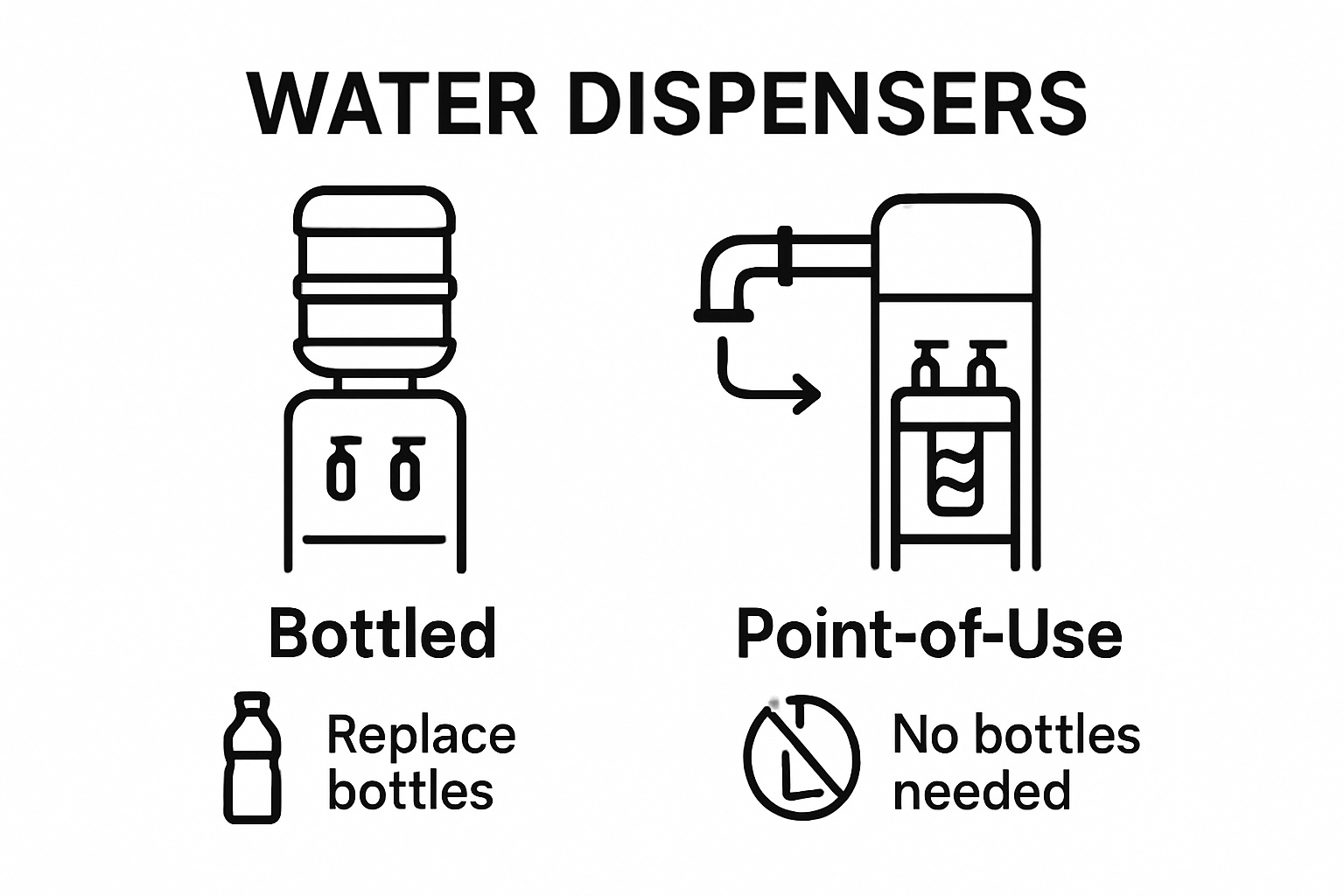 :
:
-
Bottled Water Dispensers: These traditional units use large water bottles placed upside down on a dispensing platform, typically offering both cold and hot water options.
-
Point-of-Use (POU) Water Dispensers: Directly connected to the building’s water supply, these systems eliminate the need for bottle replacements and provide continuous water access.
-
Countertop and Freestanding Models: Ranging from compact kitchen units to larger office configurations, these dispensers offer flexibility in placement and water delivery.
Functional Characteristics
Modern water dispensers are equipped with advanced features that extend beyond simple water distribution. They incorporate sophisticated filtration technologies, temperature control mechanisms, and safety systems designed to ensure water quality. Learn more about water purification technologies in our comprehensive guide on water filtration.
The core functionality of a water dispenser involves several key components: a water reservoir, cooling or heating elements, dispensing nozzles, and often an integrated filtration system. These components work synergistically to transform standard water into a readily consumable beverage at the user’s preferred temperature.
The following table compares the main types of water dispensers discussed in the article, summarizing their key characteristics and ideal usage scenarios.
| Type of Water Dispenser | Description | Key Features | Ideal Use Cases |
|---|---|---|---|
| Bottled Water Dispenser | Uses large water bottles; bottle placed upside down on platform | Cold & hot water, portable, easy setup | Homes, small offices |
| Point-of-Use (POU) Dispenser | Connects directly to water supply; no bottle replacement needed | Continuous water, filtration, less plastic waste | Offices, schools, institutions |
| Countertop Model | Compact, sits on counters; fits small spaces | Cold/hot options, portable, space-saving | Kitchens, apartments |
| Freestanding Model | Larger floor-standing units; offers flexible placement | High capacity, versatile features | Offices, public spaces |
Whether for home, office, or public spaces, water dispensers have become essential appliances that provide convenient, clean drinking water with minimal effort from the user.
The Importance of Water Dispensers in Daily Life
Water dispensers have transformed how we access and consume drinking water, offering more than just a convenient hydration solution. According to the Centers for Disease Control and Prevention, these devices play a critical role in promoting healthy drinking habits across various settings, from schools to workplaces.
Health and Hydration Benefits
Access to clean, readily available water is fundamental to maintaining optimal health. Water dispensers address this need by providing several key advantages:
-
Consistent Water Quality: Advanced filtration systems remove contaminants, ensuring safer drinking water.
-
Temperature Flexibility: Users can instantly access cold, room temperature, or hot water without additional preparation.
-
Encourages Increased Water Consumption: The convenience of water dispensers motivates individuals to drink more water throughout the day.
Practical Applications in Different Environments
The versatility of water dispensers makes them indispensable in multiple settings. Workplaces benefit from improved employee hydration and productivity, while educational institutions can support student health by providing easy water access. Explore our comprehensive guide on water purification technologies to understand the science behind these systems.
Moreover, water dispensers contribute to sustainability efforts by reducing reliance on single-use plastic bottles. Many modern units are designed with eco-friendly features, supporting both personal health and environmental conservation.
From home kitchens to corporate offices, water dispensers have become more than just appliances. They represent a commitment to accessible, clean drinking water that supports individual wellness and collective health standards.
How Water Dispensers Function: An Overview of Mechanisms
According to research from Cornell University, water dispensers represent complex systems integrating multiple technological components to deliver clean, temperature-controlled water efficiently. These appliances leverage sophisticated engineering principles to transform water delivery from a simple task into a precise, user-friendly experience.
Core Mechanical Components
Water dispensers operate through an intricate network of interconnected mechanisms designed to ensure optimal water quality and temperature control:
-
Water Reservoir System: A dedicated storage chamber that holds water before dispensing, often equipped with cooling and heating elements.
-
Temperature Control Mechanism: Advanced thermal regulation systems that enable instant heating or cooling of water.
-
Filtration Integration: Built-in filters that purify water before dispensing, removing potential contaminants and improving overall water quality.
Technological Interaction and Control
Modern water dispensers incorporate intelligent control systems that manage water flow, temperature, and purification processes. These systems utilize sensors and microprocessors to monitor water conditions, ensuring consistent performance and user safety. Learn more about water purification technologies in our comprehensive guide.
The dispensing mechanism itself involves precision-engineered valves and nozzles that control water release, allowing users to obtain water at their preferred volume and temperature with minimal effort. Some advanced models even include touchless dispensing options, enhancing hygiene and convenience.
From the initial water intake to the final dispensed drop, water dispensers represent a remarkable fusion of mechanical engineering, thermal dynamics, and user-centered design. These devices transform a basic necessity into an intelligent, responsive system that prioritizes human comfort and health.
Key Features of Water Dispensers and Considerations
According to the Lawrence Berkeley National Laboratory, maintaining water dispensers requires careful attention to hygiene and operational performance. Understanding the key features and critical considerations helps consumers make informed decisions about selecting and maintaining these essential appliances.
Essential Performance Features
Water dispensers have evolved to offer multiple sophisticated capabilities that extend beyond basic water delivery:
-
Temperature Variability: Advanced models provide multiple water temperature settings including cold, room temperature, and hot water options.
-
Filtration Capabilities: Integrated multi-stage filtration systems remove contaminants, ensuring water purity and taste.
-
Energy Efficiency: Modern dispensers incorporate energy-saving technologies to minimize electricity consumption.
Maintenance and Hygiene Considerations
Proper maintenance is crucial for ensuring optimal water dispenser performance and user safety. Regular cleaning, filter replacement, and sanitization prevent bacterial growth and maintain water quality. Learn more about understanding water filter lifespan in our comprehensive guide.
Consumers should consider factors such as water source compatibility, ease of maintenance, noise levels, and space requirements when selecting a water dispenser.
This table organizes the essential performance features and maintenance considerations for water dispensers, highlighting what users should look for and regularly maintain to ensure safe and effective operation.
| Feature/Consideration | Description or Importance |
|---|---|
| Temperature Variability | Offers cold, room temperature, and hot water for diverse needs |
| Filtration Capabilities | Removes contaminants to improve water quality and taste |
| Energy Efficiency | Minimizes electricity use, reduces operational cost |
| Regular Cleaning | Prevents bacterial growth and maintains hygienic conditions |
| Filter Replacement | Ensures consistent water purity; should be done as recommended |
| Child Safety Locks | Provides added safety, especially for households with children |
| Touchless Dispensing | Enhances hygiene by reducing direct contact |
Ultimately, a well-chosen water dispenser represents more than an appliance. It is an investment in convenient, clean water access that supports personal health and wellness standards.
Real-World Applications: Water Dispensers in Homes and Businesses
According to the General Services Administration, water dispensers represent critical infrastructure for delivering clean, accessible drinking water across various environments. Their applications extend far beyond simple hydration, serving diverse functional needs in residential and commercial settings.
Residential Applications
In home environments, water dispensers have transformed daily hydration routines by offering multiple benefits:
-
Convenience: Instant access to temperature-controlled water without refrigeration or waiting.
-
Health Optimization: Encourages increased water consumption through easy, appealing water delivery.
-
Space Efficiency: Compact designs that integrate seamlessly into kitchen and living spaces.
Commercial and Institutional Settings
Businesses and institutions leverage water dispensers as essential wellness and productivity tools. Offices, schools, and healthcare facilities recognize these devices as more than mere appliances. Learn more about advanced water purification technologies in our comprehensive guide.
From conference rooms to classrooms, water dispensers support collective hydration needs. They promote employee health, reduce plastic waste, and create shared spaces that prioritize well-being. Modern workplace design increasingly integrates these systems as standard infrastructure, reflecting a holistic approach to employee wellness and environmental responsibility.
Ultimately, water dispensers transcend their basic function. They represent intelligent solutions that connect technology, health, and human comfort across diverse environments.
Ready for Cleaner, Healthier Water at Every Touch?
If reading about water dispensers has made you rethink your daily hydration, you are not alone. Many people struggle with uncertainty about water quality at home or in the office. The article highlighted how advanced filtration, consistent temperature control, and reliable maintenance are crucial for clean drinking water. But finding a dependable, hassle-free system that blends powerful filtration with safety features can be overwhelming.
Experience real peace of mind with Coway water solutions. Our water purifiers are designed to meet the needs discussed in the article. They go far beyond standard dispensers by offering advanced filtration technologies, UV sanitization, and built-in safety features. With complimentary delivery, professional installation, and regular maintenance, it has never been easier to access pure water for you and your family. See the difference for yourself. Visit https://cowayswaterpurifier.com now to explore our latest models and secure your healthier lifestyle today.
Frequently Asked Questions
What are the main types of water dispensers?
Water dispensers primarily fall into three categories: Bottled Water Dispensers, which utilize large water bottles for dispensing; Point-of-Use (POU) Water Dispensers, which connect directly to the water supply; and Countertop and Freestanding Models, which vary in size and placement options.
How do water dispensers maintain water quality?
Modern water dispensers feature advanced filtration systems that remove contaminants, ensuring the water dispensed is safe and clean. These units often include built-in filters that purify water before it is served to users.
What temperature options do water dispensers typically offer?
Most water dispensers provide multiple temperature settings, allowing users to access cold, room temperature, or hot water, catering to different preferences for drinking and food preparation.
What are the key maintenance requirements for a water dispenser?
To ensure optimal performance and hygiene, water dispensers need regular cleaning, filter replacement, and sanitization. It is crucial to follow the manufacturer’s guidelines for maintenance to prevent bacterial growth and sustain water quality.
Recommended
- What is Water Filtration? Understanding Its Importance
- What is Under-Sink Water Purifier? Understanding Its Importance
- What is Water Purification? Understanding Its Importance
- Understanding Air vs Water Purifiers
