
Uncategorized
What energy efficiency means for air and water purifiers
Apr
TL;DR:
- Energy-efficient purifiers save money on electricity, water, and reduce appliance wear.
- Certifications like Energy Star and WaterSense verify measurable efficiency standards for purifiers.
- Properly matching the purifier’s capacity and checking efficiency metrics ensures long-term savings.
Most homeowners assume that buying a purifier automatically means buying an efficient one. That assumption can quietly cost you money every month. Air purifiers typically draw 30 to 100 watts, adding roughly $1.44 per month running eight hours a day, while efficient models stay under 20 watts. The gap between an efficient purifier and an inefficient one isn’t just about electricity. It affects your water bill, your appliance’s lifespan, and how much clean air or water you actually get per dollar spent. Understanding energy efficiency in purifiers is the fastest way to make a smarter purchase.
Table of Contents
- Defining energy efficiency in air and water purifiers
- How to evaluate energy efficiency: certifications, ratings, and standards
- Real-world impact: costs, savings, and environmental benefits
- Selecting the most efficient purifier for your home
- Why energy efficiency standards are changing the way we buy purifiers
- Explore the most efficient purifiers for your home
- Frequently asked questions
Key Takeaways
| Point | Details |
|---|---|
| Efficiency impacts costs | Choosing an energy-efficient purifier can save you money on electricity and water bills. |
| Certifications matter | Look for Energy Star, ASSE 1086, or WaterSense labels for verified efficiency. |
| Metrics to check | Check CADR/W for air and water recovery ratio for RO purifiers to compare efficiency. |
| Real-world benefits | Efficient models lower operating costs and reduce environmental impact over time. |
| Smart selection steps | Use a step-by-step approach to match purifier efficiency to your home’s needs. |
Defining energy efficiency in air and water purifiers
Energy efficiency in purifiers is not a vague marketing term. It has a specific, measurable meaning that varies depending on whether you’re cleaning air or water.
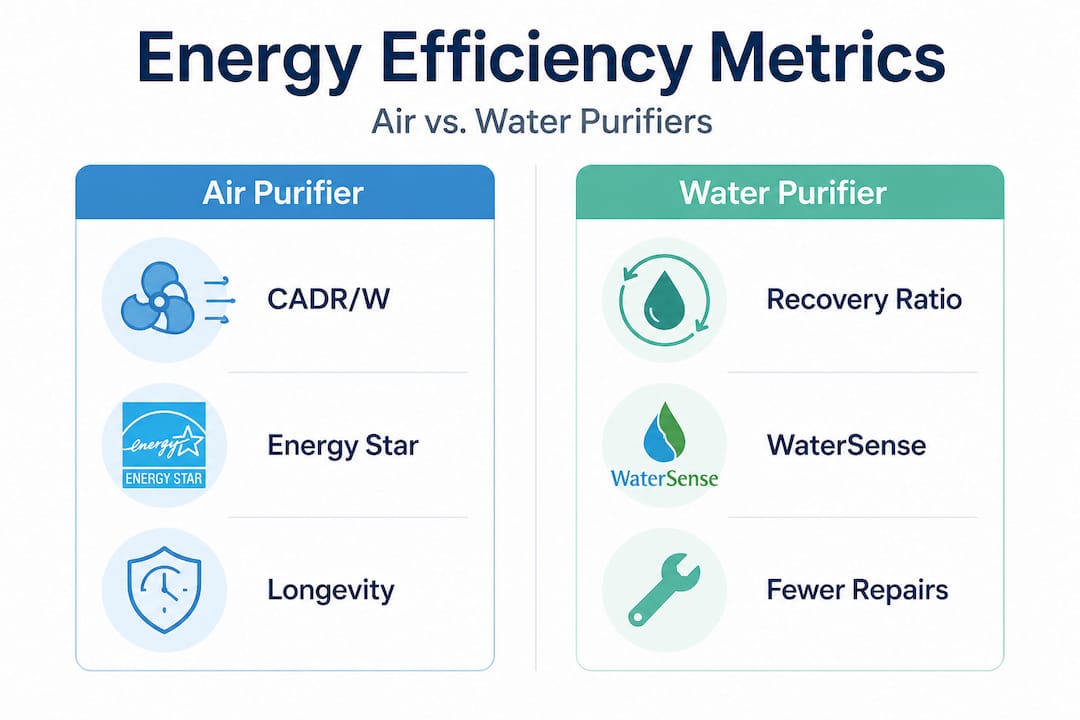
For air purifiers, efficiency is measured by the ratio of Clean Air Delivery Rate (CADR) to watts consumed. CADR measures how quickly a unit removes pollutants like dust, smoke, and pollen from a room. A high CADR/W ratio means you’re getting more clean air for every watt of electricity used. A unit that delivers 200 CADR at 20 watts is far more efficient than one delivering the same CADR at 80 watts.
For RO (reverse osmosis) water purifiers, the key metric is the water recovery ratio. This tells you how many gallons of clean water you get for every gallon of water that enters the system. Traditional RO systems can waste three to four gallons for every one gallon purified. A tankless, low-pressure RO system can dramatically reduce that waste, making it both more efficient and more affordable to operate over time. Learning energy efficient filtration basics helps you understand why these ratios matter so much in practice.
Here’s a quick comparison of efficiency metrics across purifier types:
| Purifier type | Key efficiency metric | What to look for |
|---|---|---|
| Air purifier | CADR per watt (CADR/W) | Higher ratio = more efficient |
| RO water purifier | Water recovery ratio | Higher % recovered = less waste |
| UV water purifier | Watts per gallon treated | Lower watts = more efficient |
| Countertop filter | Filter lifespan per gallon | Longer lifespan = lower cost |
Certifications are the fastest shortcut to identifying efficient models. For air purifiers, Energy Star certification requires a minimum CADR/W ratio, ensuring the unit meets a verified efficiency standard. For water purifiers, ASSE 1086 and WaterSense labels indicate that a unit meets water and energy efficiency benchmarks. These certifications aren’t just badges. They represent third-party testing that holds manufacturers accountable.
“Choosing a purifier with the right certification isn’t just about compliance. It’s about protecting your household budget and reducing your environmental footprint at the same time.”
Efficiency also affects appliance longevity. Units that run lean use less heat and mechanical stress, which means fewer breakdowns and longer filter life. An efficient purifier often pays for itself in reduced maintenance costs before you even factor in the energy savings.
How to evaluate energy efficiency: certifications, ratings, and standards
Knowing that certifications matter is one thing. Knowing which certifications matter for which device is where most buyers get confused.
Start with the basics. Not every certification label on a purifier box relates to energy efficiency. Some certifications only address contaminant removal. For example, NSF/ANSI 58 certifies RO contaminant reduction but says nothing about how much water the system wastes or how much electricity it uses. A unit can pass NSF/ANSI 58 with flying colors and still operate at a 4:1 waste ratio, meaning four gallons down the drain for every one gallon purified. Understanding purification industry standards helps you read these labels with more confidence.
Here’s a side-by-side look at the most common certifications and what they actually cover:
| Certification | Applies to | Covers efficiency? | What it actually tests |
|---|---|---|---|
| Energy Star | Air purifiers | Yes | CADR/W ratio minimum |
| WaterSense | RO water purifiers | Yes | Water recovery and waste |
| ASSE 1086 | RO water purifiers | Yes | Water and energy efficiency |
| NSF/ANSI 58 | RO systems | No | Contaminant reduction only |
| NSF/ANSI 42 | Carbon filters | No | Chlorine and taste reduction |
To evaluate a purifier properly, follow these steps:
- Identify the purifier type. Air purifier, RO system, UV unit, or countertop filter each have different efficiency benchmarks.
- Look for the right certification label. Energy Star for air, WaterSense or ASSE 1086 for RO water units.
- Find the CADR/W ratio on the product spec sheet for air purifiers. Anything above 1.0 CADR/W is a reasonable baseline; top models exceed 2.0.
- Ask for the water recovery ratio on RO systems. A good modern system recovers 50% or more of input water. Tankless systems often do better.
- Check for standby power draw. Some units consume energy even when idle. Look for models with auto-shutoff or sleep modes.
- Compare across similar room sizes or flow rates. An efficient unit for a 500-square-foot room may not be efficient for a 1,500-square-foot space.
Pro Tip: When shopping for an RO water purifier, always ask the retailer for the waste-to-product ratio, not just the filtration speed. A fast unit with a 4:1 waste ratio will cost you far more in water bills than a slightly slower unit with a 1:1 ratio. Pairing NSF/ANSI 58 with ASSE 1086 gives you both clean water and efficient operation. You can also explore energy-efficient purification in the home for more detailed guidance on layering certifications.
Real-world impact: costs, savings, and environmental benefits
Certifications make a difference because they translate to real dollars and real environmental impact. Let’s put some numbers to it.
For air purifiers: A standard unit drawing 60 watts running eight hours a day costs roughly $1.44 per month at the average U.S. electricity rate. An efficient model under 20 watts costs less than $0.50 per month under the same conditions. Over a year, that’s a savings of nearly $12 per unit. If you run two or three purifiers in your home, those savings add up fast.
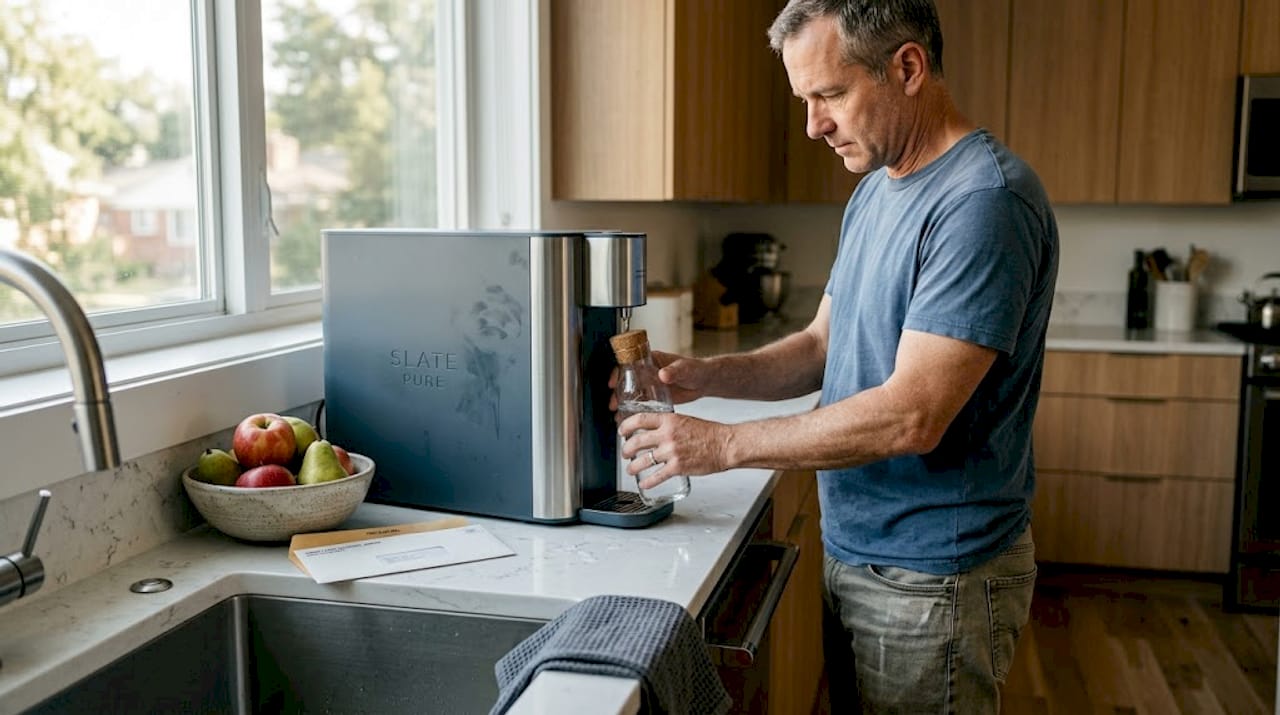
For RO water purifiers: A traditional system with a 4:1 waste ratio sends four gallons of water down the drain for every clean gallon it produces. If your household uses 10 gallons of purified water daily, you’re wasting 40 gallons every single day. That’s 1,200 gallons per month. At the average U.S. water rate, that’s a measurable hit to your utility bill every month, and it’s completely avoidable with a more efficient system.
Here are the key savings levers you can control right now:
- Run air purifiers on auto mode. Most modern units adjust fan speed based on air quality sensors, cutting energy use significantly during clean-air periods.
- Choose tankless RO systems. These operate without a pressurized storage tank, reducing both water waste and electricity use compared to traditional systems.
- Match unit size to room size. Oversized units running at low speed are less efficient than right-sized units running at optimal speed.
- Replace filters on schedule. Clogged filters force motors to work harder, increasing energy draw and reducing CADR output at the same time.
- Look for units with low standby draw. Some purifiers use 5 to 10 watts even when the fan is off. Over a year, that idle draw adds up.
The environmental side of efficiency is just as compelling. Every gallon of water saved reduces the energy needed to treat and pump municipal water. Every watt saved reduces demand on the power grid. Homes that invest in cutting energy bills with efficient purifiers aren’t just saving money. They’re reducing their household’s carbon footprint in a practical, measurable way.
Pro Tip: If you want to track your actual savings, use a smart plug with energy monitoring on your air purifier for one month. Compare it to the rated wattage on the label. If the real-world draw is consistently higher than rated, the unit may need a filter replacement or a service check. You can find more cost-saving purification tips that apply to both air and water systems. Understanding the cost-saving potential of purifiers before you buy helps you set realistic expectations.
Selecting the most efficient purifier for your home
All this information is only useful if you can put it into practice. Here’s a step-by-step decision framework that works whether you’re buying your first purifier or replacing an old one.
Step 1: Assess your actual needs. How large is the room you want to purify? What contaminants are you most concerned about? For air, common concerns include dust, pet dander, smoke, and VOCs (volatile organic compounds, which are gases released by household products). For water, concerns range from chlorine taste to heavy metals to bacteria.
Step 2: Match the unit to the space. For air purifiers, the CADR rating should be at least two-thirds of your room’s square footage. A 300-square-foot room needs a minimum CADR of 200. For water purifiers, estimate your daily purified water use and choose a system with enough flow rate to meet that demand without running continuously.
Step 3: Check for the right certifications. Energy Star for air purifiers and WaterSense or ASSE 1086 for RO systems are your non-negotiables. These certifications confirm that an independent body has verified the efficiency claims. Don’t rely on manufacturer marketing alone.
Step 4: Compare efficiency metrics directly. Put two or three models side by side. Compare CADR/W for air purifiers and water recovery ratios for RO systems. The unit with the better ratio will cost you less to operate every month, regardless of the upfront price difference.
Step 5: Factor in maintenance costs. Filter replacement frequency and cost are part of the total efficiency picture. A unit with cheap filters that need replacing every two months may cost more annually than a unit with expensive filters that last a year.
Common pitfalls to avoid:
- Ignoring standby energy modes. Always ask about idle power draw, not just operating wattage.
- Assuming all certifications cover efficiency. NSF/ANSI 58 does not. Always layer certifications.
- Buying for peak CADR without checking wattage. High CADR means nothing if the unit burns 150 watts to achieve it.
- Skipping the waste ratio question for RO systems. This single number can determine whether your water bill goes up or down.
- Overlooking room-to-unit mismatch. An undersized unit running at full speed constantly is less efficient than a properly sized unit running at medium speed.
Understanding how purifiers save energy at the design level helps you ask better questions before you buy. A good step-by-step air purifier selection process takes less than 30 minutes and can save you hundreds of dollars over the life of the appliance.
Why energy efficiency standards are changing the way we buy purifiers
The practical reality is clear, but a closer look at the market reveals a deeper shift that most buyers haven’t noticed yet.
Five years ago, energy efficiency was a secondary consideration for most purifier buyers. People chose based on price, brand recognition, or CADR numbers alone. That’s changing fast, and not just because electricity prices have risen. Consumers are more aware of what their appliances actually cost to run, and the industry is responding with better transparency and stricter certification requirements.
Here’s what we find genuinely interesting: the buyers who focus on certified efficiency from the start almost always report higher satisfaction over time. They’re not chasing the latest features or the highest CADR number. They’re asking the right questions about operating costs, water waste, and long-term value. That mindset shift produces better outcomes every time.
The market is also moving toward greater accountability. Manufacturers who rely on vague “eco” claims without third-party certification are losing ground to brands that can show verified CADR/W ratios and water recovery data. This is good for everyone. It raises the floor on what “efficient” actually means and makes it harder to sell an inefficient product with clever packaging.
Our observation, backed by what we see in customer feedback: homes that invest in real savings from efficient purifiers consistently outperform in both comfort and long-term cost control. The upfront investment in a certified, efficient unit pays back faster than most buyers expect, often within the first year of operation. Energy efficiency has moved from a nice-to-have feature to the single most important factor in a smart purifier purchase.
Explore the most efficient purifiers for your home
If you’re ready to invest in clean, efficient air and water, the next step is finding solutions that have already been vetted for performance and efficiency. Coway’s lineup is built around exactly the standards we’ve discussed here, from verified filtration technology to energy-conscious design.
The Countertop Ice Water Purifier is a strong example of efficiency meeting everyday convenience, delivering purified water without the waste ratios that plague older RO designs. If you’re focused on air quality, our best air purifier guide walks you through top-rated models by room size and efficiency rating. For a broader look at how to match any purifier to your home’s specific needs, the air purifier selection guide covers everything from CADR/W ratios to filter replacement schedules. Start with what matters most to you, and let the certifications guide the rest.
Frequently asked questions
How much can I really save with an energy-efficient air purifier?
Efficient air purifiers running under 20 watts can reduce your energy costs to under $0.50 per month, compared to roughly $1.44 per month for standard models drawing 30 to 100 watts at eight hours daily. Running multiple units amplifies those savings significantly over a full year.
What makes an air purifier “energy efficient”?
An air purifier earns the “energy efficient” label when it delivers a high CADR per watt and carries Energy Star certification, which requires meeting a verified minimum efficiency ratio tested by an independent third party.
Does NSF/ANSI 58 mean my RO purifier is energy efficient?
No. NSF/ANSI 58 only certifies that an RO system reduces specific contaminants. It does not evaluate water waste ratios or energy use. For efficiency, you need ASSE 1086 or WaterSense certification alongside it.
How can I easily check if a purifier is efficient?
Look for the Energy Star logo on air purifiers and the WaterSense label on RO water systems, then verify the CADR/W ratio or water recovery percentage in the product specifications before purchasing.
What’s the most common mistake buyers make with purifier efficiency?
Most buyers assume any certified purifier is an efficient one, but NSF/ANSI 58 certification covers contaminant removal only, not energy or water efficiency. Always check for the specific efficiency certifications that apply to your purifier type.
Recommended
- Energy Efficiency in Purifiers Saves 40% on Power Bills – Coway Water Purifier
- Energy-Efficient Purification: Cleaner Air and Water at Home – Coway Water Purifier
- What Is Energy Efficient Filtration? Cleaner Air and Water – Coway Water Purifier
