
Uncategorized
Streamline Air Purifier Selection Workflow for a Healthier Home
Apr
TL;DR:
- Indoor air pollution can be 2 to 5 times worse than outdoor air, affecting health.
- Choose air purifiers based on pollutants, room size, and proper filter technology like True HEPA and activated carbon.
- Regular maintenance and correct sizing are essential for effective long-term indoor air quality improvement.
Wildfire smoke drifting through window seals, seasonal allergies flaring up despite closed doors, a faint chemical smell from new furniture — millions of American families deal with these problems every day without a clear solution in sight. Indoor air can actually be 2 to 5 times more polluted than outdoor air, yet the air purifier aisle feels like a maze of conflicting specs, filter acronyms, and marketing promises. This guide cuts through that noise. You’ll learn how to assess your home’s specific air quality needs, size a purifier correctly, choose the right filter technology, and keep it running at full performance for years.
Table of Contents
- Identify your indoor air quality needs
- Calculate the right air purifier size: CADR and ACH explained
- Choose the right filter technology and features
- Verify performance and avoid common mistakes
- Maintain your air purifier for long-term results
- A realistic perspective: What most air purifier guides won’t tell you
- Explore more air and water purification solutions
- Frequently asked questions
Key Takeaways
| Point | Details |
|---|---|
| Start with your needs | Identify specific pollutants and room sizes before choosing an air purifier. |
| CADR is crucial | Make sure the purifier’s CADR matches your room size and addresses your main pollutants. |
| Go for true HEPA and carbon | True HEPA filters paired with activated carbon deliver the best all-round performance for homes. |
| Check verified tests | Use independent performance tests and certifications to avoid ineffective or gimmicky purifiers. |
| Maintain regularly | Replace filters and follow maintenance routines for reliable, long-term air quality improvement. |
Identify your indoor air quality needs
Before you spend a single dollar, you need to know what’s actually in your air. Most families are dealing with more than one type of pollutant at once, and treating the wrong target is a waste of money.
Common indoor pollutants fall into several categories:
- Allergens: Pollen, mold spores, and dust mite particles that trigger sneezing and respiratory irritation
- Pet dander: Microscopic protein particles shed by cats and dogs that linger in upholstered furniture and carpets
- Volatile organic compounds (VOCs): Gases released from paints, cleaning products, and pressed wood furniture
- Wildfire smoke: A mix of fine particles (PM2.5) and gases that penetrate deep into lungs
- General dust: Skin cells, fibers, and particulate matter that accumulate in any occupied room
Symptoms are often your best first clue. Persistent sneezing and itchy eyes point to allergens. Headaches or dizziness after moving into a new home often signal VOCs. A scratchy throat on high-pollution days outside means PM2.5 is getting inside.
Once you’ve identified your main concern, measure your room. Length times width gives you square footage. This number drives the core air purifier buying guide metric: CADR and ACH (more on those in the next section). A quick check using indoor air quality testing tools can also reveal specific pollutant levels you’d otherwise miss.
| Pollutant | Common symptoms | Best filter approach |
|---|---|---|
| Allergens (pollen, dust mites) | Sneezing, itchy eyes | True HEPA |
| Pet dander | Congestion, asthma flares | True HEPA |
| VOCs and odors | Headaches, nausea | Activated carbon |
| Wildfire smoke (PM2.5) | Scratchy throat, breathing issues | True HEPA + carbon |
| General dust | Stuffy air, visible buildup | True HEPA |
Special situations matter, too. Bedrooms and kids’ rooms deserve higher priority because people spend 7 to 9 hours there sleeping. High-traffic kitchens and living areas accumulate cooking odors, VOCs, and dust faster than other spaces. For guidance on building healthy home air quality habits around your layout, consider room-by-room planning from the start.
Pro Tip: If you have young children or a family member with asthma, start with their bedroom. That one room can deliver the biggest health return per dollar spent.
Calculate the right air purifier size: CADR and ACH explained
Knowing what you’re filtering is half the job. Knowing how much filtration power you need is the other half, and this is where most buyers make expensive mistakes.
Two ratings matter most:
- CADR (Clean Air Delivery Rate): This measures cubic feet of clean air delivered per minute for three pollutant types — smoke, dust, and pollen. Higher is better. The EPA guidance on CADR makes clear that smoke CADR is the most critical number for health because it reflects performance against fine particles like PM2.5.
- ACH (Air Changes per Hour): This tells you how many times the unit can cycle all the air in a room through its filters in 60 minutes. For allergy and asthma relief, aim for at least 4 to 5 ACH.
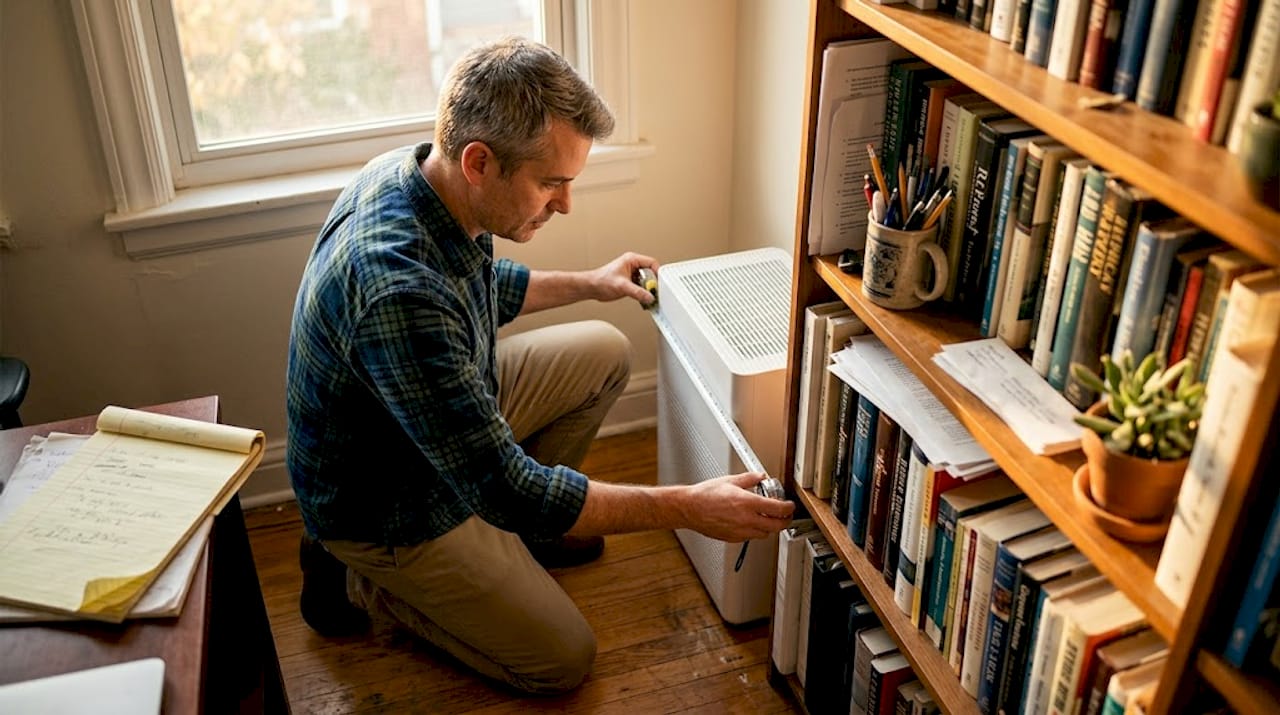
- Room square footage: Multiply your room’s length by width, then use manufacturer CADR tables to match the unit to that space.
- Ceiling height adjustment: Standard calculations assume 8-foot ceilings. For 10-foot ceilings, multiply your square footage by 1.25 when comparing to CADR ratings.
- Margin of safety: Choose a purifier rated for a room 20% larger than yours. This keeps the unit from running at maximum speed constantly, which reduces noise and extends filter life.
| Room size (sq ft) | Recommended CADR (smoke) | Target ACH | Best use case |
|---|---|---|---|
| Up to 150 | 100+ | 4 to 5 | Small bedroom |
| 150 to 300 | 150 to 250 | 4 to 5 | Master bedroom, office |
| 300 to 500 | 250 to 400 | 4 to 5 | Living room, open space |
| 500+ | 400+ | 4+ | Open-plan living, large areas |
A unit rated for 200 square feet running in a 400-square-foot room will cycle air only 2 times per hour — half what’s needed for real allergen relief. Oversizing is rarely a problem, but avoid going extreme: a unit rated for 1,000 square feet in a 150-square-foot room may run too aggressively and increase noise unnecessarily. Your air purification checklist should include room dimensions and target ACH before you finalize any purchase.
Pro Tip: Use the AHAM Verifide database online to confirm that a unit’s CADR is independently tested, not just self-reported by the manufacturer.
Choose the right filter technology and features
Filter technology determines what your purifier can and cannot remove. Getting this wrong means paying for performance you’ll never actually see.
Here’s how the main filter types stack up:
- True HEPA filters capture 99.97% of particles at 0.3 microns, including pollen, pet dander, mold spores, and smoke particles. This is the gold standard for allergen and PM2.5 removal.
- Activated carbon filters use porous carbon material to adsorb VOCs, cooking odors, and chemical gases that HEPA cannot trap. Carbon works differently from HEPA — it bonds gases to its surface rather than physically catching particles.
- Combination units pair both technologies in a single machine, delivering broad-spectrum protection for most households.
- Ionizers and ozone generators should be avoided. They can generate ozone as a byproduct, which is a lung irritant and potentially harmful indoors, particularly for children and people with asthma.
“Pair True HEPA with activated carbon for best all-round purification in real home environments.” — Air quality experts recommend this combo especially for homes near wildfires, busy roads, or with recent renovations.
Beyond filter type, key features worth prioritizing include:
- Noise level below 50 dB on the highest speed for bedrooms. At 50 dB, a purifier is roughly as loud as a quiet conversation, which most people tolerate during sleep.
- Auto mode with a built-in air quality sensor that adjusts fan speed based on real-time particle levels, so the unit does the thinking for you.
- Filter change alerts to prevent the common mistake of running an exhausted filter that provides little to no protection.
- Energy Star certification to keep electricity costs manageable over the years.
A health-focused selection guide can help you match these features to specific models that have been tested in real home conditions.
Pro Tip: If your household has both allergy sufferers and someone sensitive to chemical smells, a combination True HEPA and activated carbon unit is the only type that addresses both concerns simultaneously.
Verify performance and avoid common mistakes
Specs on a box tell you one story. Independent lab results often tell another. Smart buyers use both.
Consumer Reports and CNET conduct real-world air purifier tests that confirm some brands excel at both high and low speeds, while others perform well only at maximum — which is impractical for daily home use. These tests measure actual particle reduction in controlled rooms, not just rated CADR figures.
Steps to verify a model before you buy:
- Search the AHAM Verifide database to confirm independently certified CADR numbers.
- Read the independent testing methods used by reviewers to understand what conditions were tested.
- Check noise specs at both low and high fan speeds — many brands only advertise the quietest setting.
- Calculate annual filter replacement cost before committing to a model.
- Look for real user reviews that mention long-term filter costs and odor performance, not just first impressions.
| Model type | Verified CADR (smoke) | Key test result | Value rating |
|---|---|---|---|
| Budget portable (under $100) | 80 to 130 | Adequate for small rooms, limited carbon | Moderate |
| Mid-range combo ($150 to $300) | 150 to 300 | Strong particle and odor performance | High |
| Premium large-room ($300+) | 300 to 500+ | Excellent at all speeds, auto mode reliable | High for large homes |
“Brands that perform consistently at low speed are the ones you’ll actually want to live with day-to-day.”
Common mistakes to avoid: trusting marketing claims without AHAM verification, ignoring the annual cost of replacement filters, choosing ozone-generating units for “fresh air,” and placing a purifier in a room far larger than its rated capacity. For ideas on managing long-term costs, cost-saving air purification tips can make a real difference over time.
Maintain your air purifier for long-term results
A purifier with a clogged filter is barely better than open windows. Maintenance is not optional — it is the ongoing cost of clean air.
Annual operating costs typically run between $50 and $200, depending on the brand and how often filters need replacing. True HEPA filters generally last 6 to 12 months under normal use. Carbon filters may need replacement every 3 to 6 months in homes with strong odors or high VOC levels.
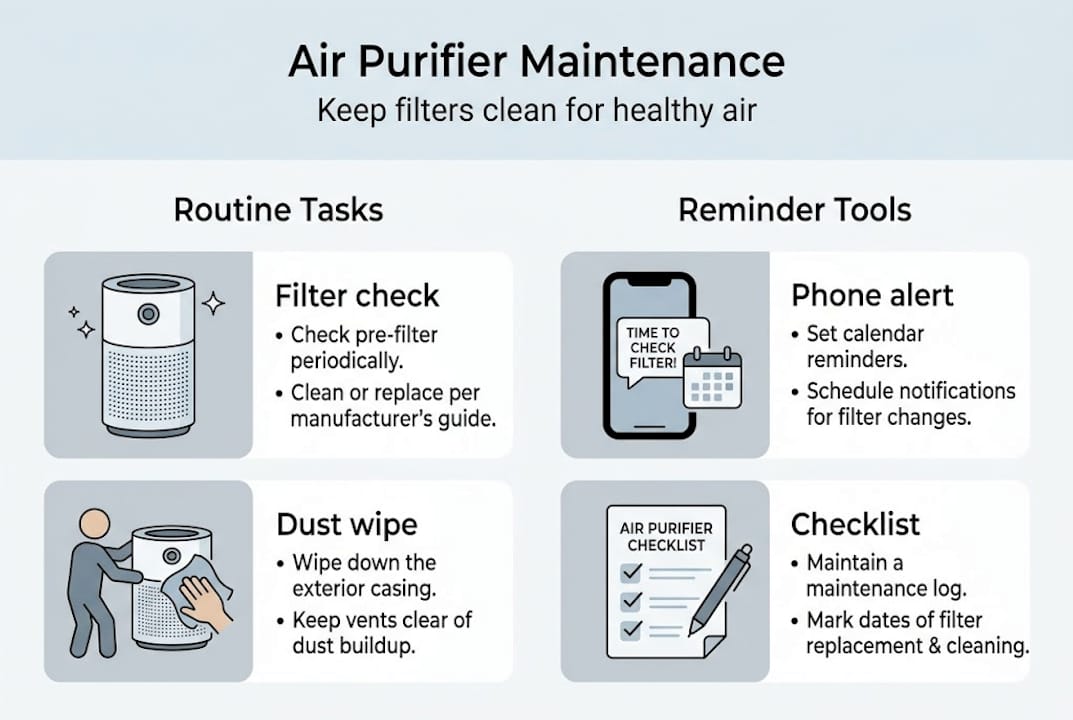
Here is a simple maintenance workflow to follow:
- Replace HEPA filters every 6 to 12 months. Check the manufacturer’s recommendation, but err on the shorter side if you have pets or live near wildfire-prone areas.
- Replace carbon filters every 3 to 6 months if odors or VOC reduction are a priority in your home.
- Wipe down the exterior and intake grilles monthly to prevent dust buildup that restricts airflow and stresses the motor.
- Monitor noise and airflow. A unit running louder than usual or moving less air is often signaling a filter that needs attention.
- Reset the filter indicator after every replacement so alerts remain accurate going forward.
For a complete step-by-step air purifier maintenance workflow, including visual checklists, bookmark a reliable reference before you buy. Details on the actual cleaning process guide for grilles, sensors, and pre-filters can also help you get more life from your unit between filter changes.
Pro Tip: Set a recurring phone reminder every 6 months labeled “check air purifier filter.” It takes 30 seconds to set and prevents the most common reason purifiers stop working well — forgotten, exhausted filters.
A realistic perspective: What most air purifier guides won’t tell you
Here’s something worth saying plainly: most families get paralyzed comparing models instead of just buying one and running it. The honest truth is that a mid-range True HEPA purifier in the right room, run consistently, will do more for your family’s health than the “perfect” premium model sitting in a shopping cart for six months.
For the vast majority of households, one portable HEPA unit in the bedroom delivers the biggest benefit. You sleep there for a third of your life. Cleaner air during sleep means better recovery, fewer allergy symptoms, and better rest for kids with respiratory sensitivities.
The second biggest mistake we see is neglecting filters after purchase. A purifier running on a year-old HEPA filter in a pet-heavy home is essentially a fan. The filter matters more than the brand name on the box.
If you live in a wildfire-prone region or have documented allergies, the practical air purifier selection process we’ve outlined here works. But adapt it to your reality: don’t wait for perfect conditions or the perfect model. Start with your most-used room, pick a verified CADR, and commit to a maintenance routine. That’s it.
Explore more air and water purification solutions
Ready to take the next step for your home’s air — and water — quality? We’ve built a library of guides designed to help families like yours make confident decisions without second-guessing every specification.
Start with our air purifier selection guide for a curated breakdown of top-performing models by room type and budget. If you want to see which units made the shortlist for 2026, our current best picks page is updated regularly with verified performance data. And if you’re thinking about the full picture of home wellness, take a few minutes to understand water purification — clean water and clean air together create a genuinely healthier home environment.
Frequently asked questions
What is the most important rating when choosing an air purifier?
The smoke CADR rating is the most critical number because it reflects real performance against fine particles like PM2.5, which directly affect lung health and overall air quality.
How do I know what filter technology I need?
Choose True HEPA for allergens and dust, add activated carbon if you have odors or VOC concerns, and skip any model that relies on ozone or unverified ionizer technology.
How often should I replace my air purifier filter?
Most HEPA filters need replacement every 6 to 12 months, but homes with pets, smokers, or high pollution levels may need more frequent changes to maintain effective filtration.
Is it better to get a portable purifier for each room or a whole-home system?
Portable HEPA units placed in bedrooms and key living spaces typically outperform undersized whole-home systems — the EPA recommends matching purifier capacity specifically to each room for best results.
Recommended
- How to Select Air Purifier for Healthy Home Air Quality – Coway Water Purifier
- Air purifier maintenance workflow for cleaner home air – Coway Water Purifier
- Air purifier selection guide for healthier home in 2026 – Coway Water Purifier
- Air purification checklist: 6 steps for healthier home air – Coway Water Purifier
- Home security setup workflow for maximum protection – Safes and Security Direct
