
Uncategorized
VOCs in Water: Health Risks and How to Remove Them
Jun
TL;DR:
- VOCs in water are carbon-based chemicals that dissolve and evaporate easily, posing health risks and often remaining undetected. Household filtration with activated carbon effectively reduces VOCs, but boiling water worsens contamination by releasing VOCs into the air. Regular testing, especially for private well owners, is essential for identifying and managing VOC exposure risks.
Volatile organic compounds (VOCs) in water are carbon-based chemicals that evaporate easily and dissolve into drinking water, making them one of the most common and underestimated contaminants in American homes. Sources range from industrial solvents and fuel leaks to the chlorination process used by your local utility. Benzene, trichloroethylene (TCE), and tetrachloroethylene (PCE) are among the most studied and most dangerous. Understanding what VOCs in water are, where they come from, and how to remove them is the first step toward protecting your family.
What are VOCs in water and why do they matter?
VOCs, or volatile organic compounds, are a broad class of carbon-based chemicals defined by their ability to evaporate at room temperature and dissolve readily in water. The term “VOCs meaning in water” refers specifically to this dissolved state, where compounds like benzene, chloroform, TCE, and PCE travel invisibly through your tap. They matter because chronic VOC exposure is linked to cancer, liver damage, kidney damage, and nervous system harm.
The EPA sets a Maximum Contaminant Level (MCL) for benzene, TCE, and PCE at 0.005 mg/L, with a safety goal of zero. That goal of zero tells you everything. Regulators know there is no truly safe threshold for these compounds, so the MCL is simply the lowest level current treatment technology can reliably achieve.
Approximately 1.2% of U.S. domestic wells report VOC levels that exceed health-based benchmarks. That figure sounds small, but it represents hundreds of thousands of households drinking water that fails federal safety standards.
How do VOCs enter drinking water?
VOCs reach drinking water through several distinct pathways, and knowing which ones apply to your area helps you assess your actual risk.
Industrial and commercial sources are the most significant contributors:
- Petroleum refining and fuel storage leaks release benzene and other hydrocarbons directly into soil and groundwater.
- Dry cleaning operations use PCE as a solvent, and improper disposal sends it into local aquifers.
- Manufacturing facilities that use industrial solvents like TCE contaminate nearby water supplies through spills and runoff.
- Landfills leach VOCs from improperly disposed household chemicals, paints, and adhesives.
Agricultural and household sources add another layer of risk. Pesticide formulations contain VOC carriers that migrate through soil into groundwater. Homeowners who pour paint thinner, cleaning solvents, or old gasoline down drains or onto the ground contribute to local contamination.
Disinfection byproducts are a major, often overlooked source of VOC exposure in public water supplies. When chlorine reacts with organic matter naturally present in source water, it forms trihalomethanes (THMs) and haloacetic acids. These are classified as VOCs and are present in virtually every chlorinated municipal system in the country.
Private wells face a different risk profile than public systems. A well located near a gas station, dry cleaner, or former industrial site carries significantly higher contamination risk. The waterborne contamination risks from industrial pollution and disinfection byproducts affect both urban and rural households, though through different pathways.
What are the health effects of VOCs in drinking water?
The health risks of VOCs in drinking water depend on the specific compound, the concentration, and the duration of exposure. Short-term exposure to high concentrations can cause headaches, dizziness, and nausea. The more serious concern is long-term, low-level exposure.
“Chronic exposure to VOCs is linked to increased cancer risk and damage to liver, kidneys, and nervous system.” — Tap Score Research
Benzene is a known human carcinogen. TCE is classified as carcinogenic to humans by the EPA and is associated with kidney cancer and non-Hodgkin lymphoma. PCE is a probable carcinogen linked to bladder cancer and neurological effects. Chlorinated hydrocarbons can cause harm at concentrations as low as 30 micrograms per liter, which is well within the range found in contaminated wells.
Vulnerable populations face greater risk:
- Children absorb contaminants at higher rates relative to body weight than adults do.
- Pregnant women face risks of fetal developmental harm from TCE and benzene exposure.
- Immunocompromised individuals process toxins less efficiently, increasing organ damage risk.
- Elderly adults with reduced kidney and liver function are less able to clear VOC metabolites.
Exposure does not only happen through drinking. Showering and bathing aerosolize VOCs, releasing them into indoor air where they are inhaled directly into the lungs. This inhalation route can actually deliver a higher dose than ingestion for some compounds. The health risks tied to waterborne contaminants extend well beyond what you drink.
How are VOCs in water detected?
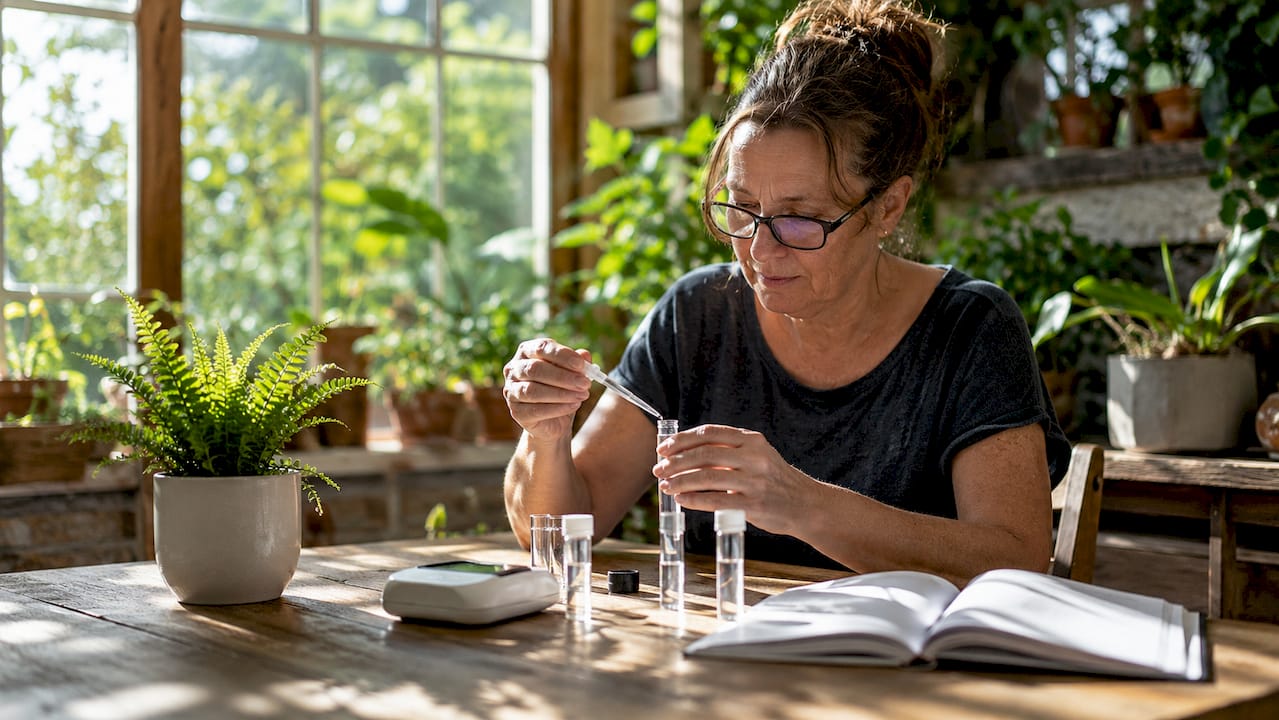
The single most important fact about VOC detection is this: many VOCs are odorless, tasteless, and invisible at concentrations that cause harm. You cannot smell benzene at 0.005 mg/L. You cannot taste TCE at levels that damage your liver. Sensory detection is not a reliable safety check.
Laboratory analysis is the only method that reliably identifies VOCs in drinking water. A certified lab uses gas chromatography/mass spectrometry (GC/MS) to identify and quantify individual compounds at parts-per-billion levels. This is the same standard the EPA uses for regulatory compliance testing.
Testing recommendations by water source:
- Private well owners should test annually for VOCs, especially if located near industrial sites, gas stations, dry cleaners, or agricultural operations. Private well testing responsibility falls entirely on the homeowner since no public reporting is required.
- Public water users receive annual Consumer Confidence Reports (CCRs) from their utility, which must disclose VOC levels. Read yours every year.
- New homeowners should test immediately regardless of water source, before establishing a baseline assumption of safety.
- Post-event testing is warranted after nearby industrial accidents, flooding, or known contamination events in your area.
Pro Tip: When ordering a water test, request a full VOC panel rather than a basic water quality test. Basic tests check for bacteria and minerals but typically skip organic compounds entirely.
Municipal water systems conduct mandatory VOC testing and must issue public notices when levels exceed standards. Private well owners bear full responsibility for their own testing. That asymmetry means well owners are statistically more likely to be drinking contaminated water without knowing it.
What are the most effective ways to reduce VOCs in water?
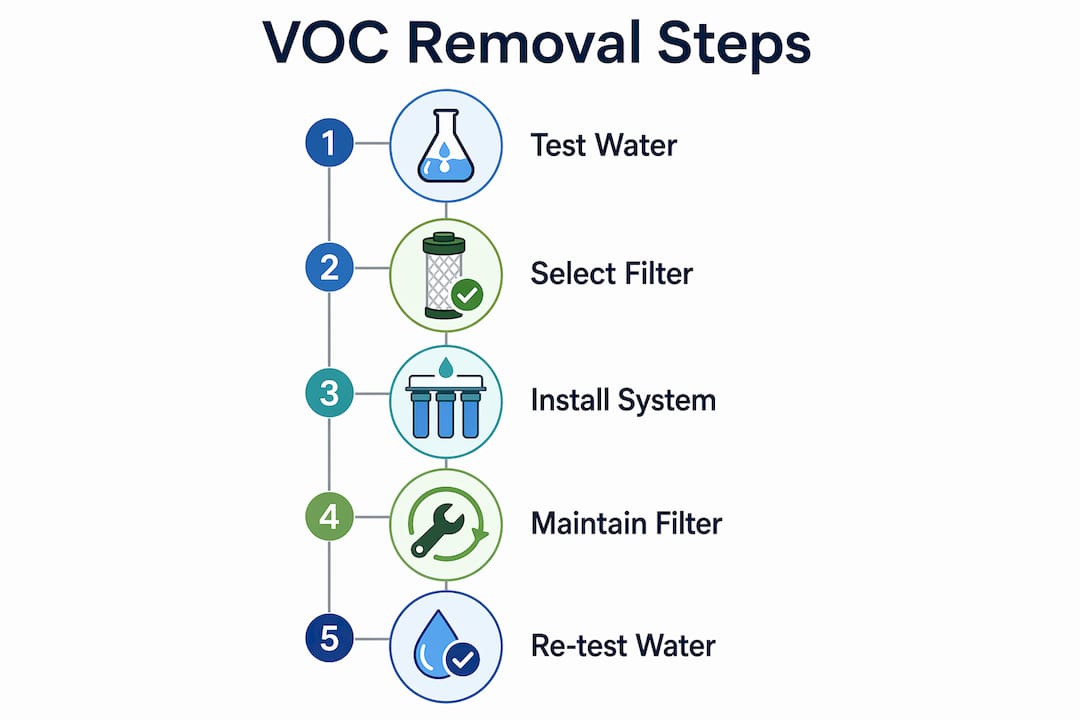
Not all filtration removes VOCs. Standard sediment filters and basic pitcher-style filters do not address dissolved organic compounds. Choosing the right technology matters.
| Treatment Method | VOC Removal Effectiveness | Key Limitation |
|---|---|---|
| Activated carbon (GAC) | High for most VOCs | Contact time and VOC type affect results |
| Reverse osmosis (RO) | Moderate to high | Removes some but not all VOCs; requires carbon pre-filter |
| Air stripping | Very high | Industrial scale; not practical for home use |
| UV treatment | Low for VOCs alone | Best combined with carbon filtration |
| Boiling water | None (counterproductive) | Concentrates non-volatile contaminants; releases VOCs into air |
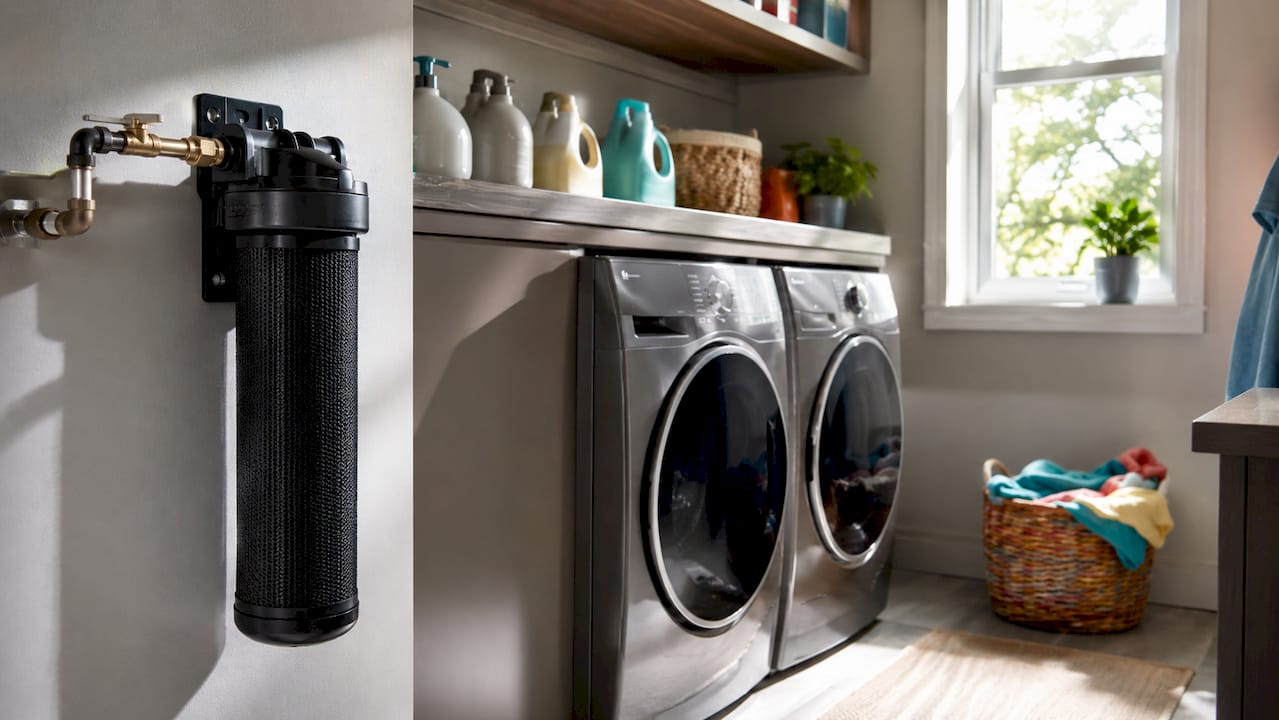
Activated carbon filtration is the most practical and widely proven method for household VOC removal. Carbon adsorbs VOC molecules onto its surface as water passes through. The effectiveness depends on two factors: contact time between water and carbon, and the specific chemical properties of the VOC being removed. Larger, heavier VOC molecules adsorb more readily than smaller ones.
Boiling water is not just ineffective for VOC removal. It actively makes the situation worse. Boiling concentrates non-volatile contaminants left behind and drives dissolved VOCs into your kitchen air, increasing inhalation exposure.
For households with confirmed VOC contamination, a multi-stage filtration system combining activated carbon with UV treatment provides the strongest protection. UV addresses microbial threats that carbon does not, while carbon handles the organic chemical load that UV cannot.
Pro Tip: Replace activated carbon filters on schedule, not just when water tastes different. A saturated carbon filter can release previously adsorbed VOCs back into your water. Follow the manufacturer’s replacement timeline strictly.
What precautions can families take to reduce VOC exposure?
Protecting your household from VOC exposure in drinking water requires a combination of awareness, testing, and the right equipment.
- Test your water before you treat it. Buying a filter without knowing what is in your water is guesswork. A certified lab test identifies which VOCs are present and at what levels, so you can match the treatment to the actual problem.
- Know your local contamination sources. The EPA’s Environmental Justice Screening Tool and your state’s environmental agency publish data on industrial facilities, Superfund sites, and known groundwater contamination near your address.
- Choose a purifier rated for VOC removal. Look for systems certified under NSF/ANSI Standard 53 (for health effects) or NSF/ANSI Standard 58 (for reverse osmosis). Certification means the system has been independently tested to remove specific contaminants at claimed levels.
- Ventilate during showering. Since VOC aerosolization during water use is a real exposure route, running a bathroom exhaust fan during and after showers reduces inhalation risk.
- Follow public water notices. If your utility issues a boil-water advisory or contamination notice, follow it immediately and check whether VOCs are among the identified contaminants.
For private well owners, periodic professional lab testing is the single most important protective action available. No regulation requires it, which means no one will tell you when your well is contaminated. You have to find out yourself.
Key takeaways
VOCs in drinking water are invisible, odorless at harmful levels, and detectable only through certified laboratory testing, making proactive testing the most critical protective action for any household.
| Point | Details |
|---|---|
| VOCs defined | Carbon-based chemicals that dissolve in water and cannot be detected by taste or smell at harmful levels. |
| Primary sources | Industrial solvents, fuel leaks, dry cleaning chemicals, and chlorination byproducts in public water. |
| Health risks | Benzene, TCE, and PCE are linked to cancer, liver damage, kidney damage, and nervous system harm. |
| Best removal method | Activated carbon filtration is the most effective household treatment; boiling water makes exposure worse. |
| Testing responsibility | Private well owners must arrange their own lab testing; public water users should read annual CCRs. |
Why I think most families are underestimating this risk
Most people I talk to assume their water is safe because it looks clear and tastes fine. That assumption is exactly what makes VOC contamination so dangerous. These compounds are specifically designed, by their chemistry, to be undetectable to human senses at the concentrations that cause long-term harm.
The disinfection byproduct issue is the one that surprises people most. You trust your municipal utility to chlorinate your water, which it should. But that chlorination process creates its own class of VOCs, trihalomethanes in particular, that are present in virtually every treated public water supply in the country. You are not choosing between contaminated and clean. You are choosing between different contamination profiles.
What I find genuinely reassuring is that the solutions are not complicated or expensive. A quality activated carbon system, properly maintained and replaced on schedule, handles the majority of VOC threats at the household level. The UV purification process adds a second layer of protection for microbial threats. Together, they cover most of what families face in real-world water quality.
The one thing I would push back on is the idea that this is only a rural or industrial problem. Urban households on public water face disinfection byproducts every day. Suburban homeowners near commercial strips face dry cleaning and fuel contamination. Test first, then treat. That sequence changes everything.
— Soldierboy
How Cowayswaterpurifier can help protect your home water
If your water test comes back with VOC concerns, the next step is a filtration system built to address them specifically.
Cowayswaterpurifier offers water purification systems that combine activated carbon filtration with UV sanitization, addressing both chemical contaminants like VOCs and microbial threats in a single unit. The water purification process guide at Cowayswaterpurifier walks through exactly how each stage of filtration works and which contaminants each stage targets. For families weighing countertop versus under-sink options, the countertop ice water purifier is a practical starting point that requires no plumbing modification. Cowayswaterpurifier backs every system with free delivery, installation, and maintenance support, so you are not managing filter replacements alone.
FAQ
What does VOC mean in water testing?
VOC stands for volatile organic compound. In water testing, it refers to carbon-based chemicals that dissolve in water and can evaporate, including benzene, TCE, PCE, and chloroform.
Can you taste or smell VOCs in drinking water?
Most VOCs are odorless and tasteless at concentrations that cause health harm. Laboratory testing using gas chromatography is the only reliable detection method.
Does a standard water filter remove VOCs?
Basic sediment filters and most pitcher filters do not remove VOCs. Activated carbon filters certified under NSF/ANSI Standard 53 are the recommended household treatment for VOC removal.
How often should I test my well water for VOCs?
Private well owners should test annually for VOCs, and immediately after any nearby industrial accident, flooding, or known contamination event in the area.
Is boiling water effective for removing VOCs?
Boiling water does not remove VOCs and is not recommended. It concentrates non-volatile contaminants and releases dissolved VOCs into indoor air, increasing inhalation exposure.
Recommended
- Office Water Pollution: Risks and Solutions for Managers – Coway Water Purifier
- How to Reduce Indoor Pollutants for a Healthier Home – Coway Water Purifier
- Understanding waterborne contaminants for healthier water – Coway Water Purifier
- Why water quality matters for your health at home – Coway Water Purifier
