
Uncategorized
What Is Water Remineralization and Why It Matters

Jun
TL;DR:
- Water remineralization adds essential minerals like calcium and magnesium to purified water, improving taste, pH balance, and corrosion resistance. It involves controlled mineral dissolution through media beds or dosing systems, with magnesium showing safety in studies at certain levels. Properly implemented systems provide both health benefits and better water quality, especially when integrated into home filtration setups.
Water remineralization is the intentional addition of minerals such as calcium and magnesium to purified water after filtration, restoring its taste, pH balance, and drinking quality. Reverse osmosis and desalination systems strip water of nearly all dissolved solids, including beneficial minerals. That stripped water tastes flat, sits at a low pH, and can corrode pipes and fixtures. Remineralization of drinking water solves all three problems in a single controlled step, making it a standard stage in modern home water purification systems.
What is water remineralization and how does it work?
Water remineralization is defined as the controlled reintroduction of dissolved minerals into water that has been stripped by reverse osmosis (RO) or desalination. The process is not about restoring every mineral removed. Mineral addition is modest and controlled, targeting taste improvement and pH correction rather than full mineral profile replacement. That distinction matters because it sets realistic expectations for anyone choosing a remineralization system.
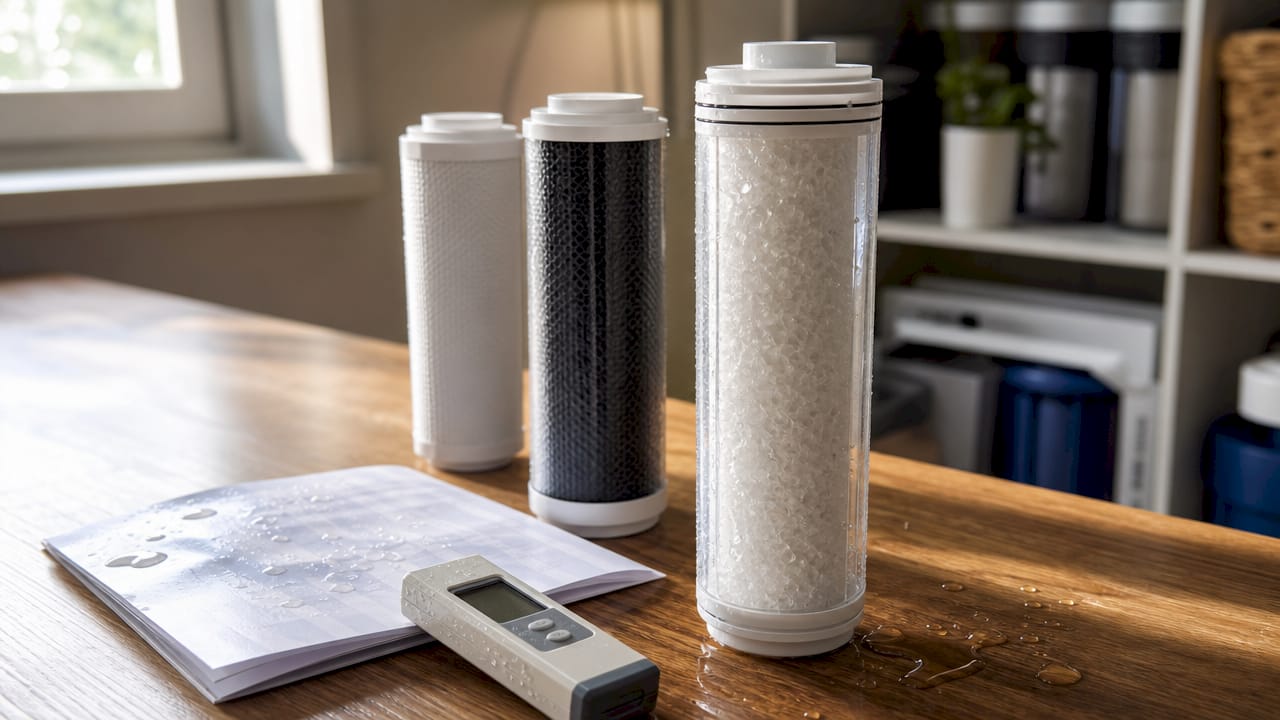
The most common approach uses a media bed or cartridge filled with calcite (calcium carbonate, CaCO3) or a blend of calcite and magnesium compounds such as dolomite. As RO permeate flows through the media, the acidic water dissolves the mineral surface and picks up calcium and magnesium ions. Calcite dissolves in acidic RO permeate, raising alkalinity and improving the Langelier Saturation Index, a standard measure of water stability and corrosivity.
Two variables control how much mineral the water picks up: pH and empty bed contact time. If the RO permeate pH is too high or the water moves through the media too quickly, mineral pickup from calcite media is limited. System designers account for both variables when sizing a remineralization stage for a home unit or a municipal desalination plant.
The key minerals added through this process are:
- Calcium from calcite media, which raises hardness and alkalinity
- Magnesium from dolomite or magnesium oxide compounds, which improves taste and corrosion control
- Bicarbonate formed as a byproduct of calcite dissolution, which buffers pH toward neutral or slightly alkaline
Pro Tip: Check the pH of your RO output before selecting a remineralization cartridge. Water with a pH below 6.5 dissolves calcite media faster, which means shorter cartridge life and more frequent replacements.
What are the health and taste benefits of remineralizing drinking water?
Calcium and magnesium are electrolytes. They support muscle function, bone density, nerve signaling, and cardiovascular health. Drinking water is not the primary source of these minerals for most people, but it contributes a meaningful supplemental dose, particularly for those with lower dietary intake. The WHO notes that mineral adjustment affects water acceptability, including taste and appearance, which directly influences how much water people drink each day.
Taste is the most immediate benefit most people notice. RO water without remineralization tastes thin and slightly acidic. Adding calcium and magnesium restores the mouthfeel and mild sweetness associated with good spring water. Magnesium additions improve taste and corrosion control without compromising biological stability, making it a dual-purpose addition in any remineralization system.
The pH benefit is equally practical. RO permeate typically sits at a pH of 5.5–6.5. That acidity makes water slightly corrosive to copper and lead pipes, which can leach trace metals into drinking water over time. Remineralization raises pH toward 7.0–7.5, reducing that corrosion risk and improving water quality and remineralization outcomes for the whole household.
Key benefits of remineralizing drinking water include:
- Better taste and mouthfeel from restored calcium and magnesium content
- Neutral to slightly alkaline pH that reduces pipe corrosion risk
- Electrolyte contribution supporting daily mineral intake
- Improved water stability measured by a higher Langelier Saturation Index
“Mineral adjustment is important not only for chemistry but also for consumer taste preferences.” — WHO Drinking-Water Quality Guidelines
How do different remineralization methods compare?
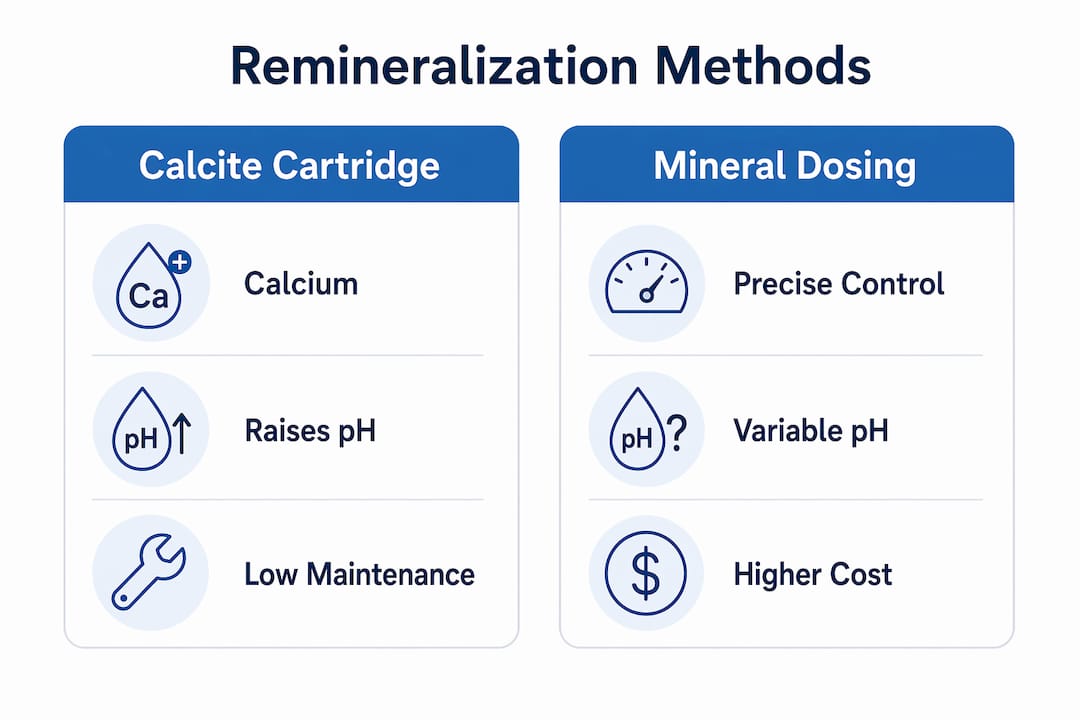
Several remineralization approaches exist for home use, and each has a different cost profile, maintenance requirement, and mineral output. The table below summarizes the most common options.
| Method | Primary minerals added | pH effect | Maintenance | Best for |
|---|---|---|---|---|
| Calcite media cartridge | Calcium | Moderate pH lift | Replace every 6–12 months | Standard RO systems |
| Dolomite media cartridge | Calcium and magnesium | Moderate pH lift | Replace every 6–12 months | Balanced mineral profile |
| Alkaline mineral cartridge | Calcium, magnesium, potassium | Strong pH lift | Replace every 3–6 months | High pH preference |
| Mineral dosing system | Magnesium, calcium (precise) | Controlled | Calibration required | Commercial or large home systems |
Calcite cartridges are the most widely used option in home RO systems. They are low cost, easy to replace, and reliably raise pH. Dolomite cartridges add magnesium alongside calcium, which is useful because RO removes magnesium more completely than some other minerals. Dolomite dissolution is temperature-dependent and can be adjusted to meet specific mineral dosing targets cost-effectively, a principle used in large-scale desalination operations in Saudi Arabia and elsewhere.
Mineral dosing systems inject a precise concentration of dissolved minerals directly into the water line. They offer the tightest control over final mineral content but require calibration and periodic maintenance. Engineered remineralization systems enable precise control of mineral dosing to meet regulatory and taste targets, unlike DIY methods such as adding Himalayan salt or mineral drops, which risk water chemistry imbalance.
Contact time is the most overlooked variable in home system selection. A cartridge rated for a high flow rate may underperform in a low-flow household because the water moves too slowly and over-dissolves the media. Conversely, a high-demand household may push water through too fast for adequate mineral pickup. Matching the cartridge to actual household flow rate is the single most practical step a buyer can take.
Pro Tip: Ask for the empty bed contact time specification when comparing remineralization cartridges. A minimum of 2–4 minutes of contact time produces consistent mineral pickup across most calcite and dolomite media types.
What does science say about remineralization safety and microbial risk?
The most common concern about remineralization is whether adding minerals back into purified water creates conditions for bacterial growth. A 2025 study addressed this directly. Magnesium remineralization up to 50 mg/L does not increase microbial abundance or the presence of harmful species including Legionella spp. in simulated water distribution conditions. That finding removes the primary safety objection to magnesium-based remineralization.
The study also found that magnesium addition shifted biofilm community composition without producing a more dangerous microbial profile. Biofilm communities changed, but no harmful species increased in prevalence. This matters because biofilm formation in pipes is a known water quality concern, and any remineralization method that worsened it would be disqualifying.
Regulatory frameworks reinforce the safety case. Saudi Arabia sets a minimum magnesium target of 5 ppm Mg in desalinated water, treating magnesium dosing as a water quality requirement rather than a risk factor. That regulatory posture reflects the scientific consensus that controlled remineralization improves water quality without introducing biological hazards.
Key safety conclusions from current research:
- Magnesium at up to 50 mg/L does not increase bacterial growth potential
- No Legionella spp. increase was observed with magnesium addition
- Remineralization raises the Langelier Saturation Index, reducing pipe corrosion and the risk of metal leaching
- Controlled mineral dosing through engineered systems is safer than unregulated DIY mineral additions
The corrosion protection benefit deserves emphasis. Soft, acidic RO water actively corrodes copper and lead plumbing. Remineralization raises pH and adds calcium, which forms a thin protective scale on pipe walls. That scale reduces metal leaching into drinking water, which is a direct health benefit beyond the mineral content of the water itself.
Key Takeaways
Water remineralization is the most effective way to restore taste, balance pH, and reduce corrosion risk in RO-purified water without compromising biological safety.
| Point | Details |
|---|---|
| Core definition | Remineralization adds calcium and magnesium to RO water to restore taste and correct pH. |
| Primary minerals | Calcite and dolomite media deliver calcium and magnesium through controlled dissolution. |
| Microbial safety | Magnesium up to 50 mg/L does not increase harmful bacteria or Legionella in drinking water. |
| Method selection | Match cartridge type and flow rate to household demand for consistent mineral pickup. |
| Health and taste | Remineralized water improves mouthfeel, supports electrolyte intake, and reduces pipe corrosion risk. |
Why I think most people underestimate the remineralization decision
Most buyers treat remineralization as an afterthought. They invest in a quality RO system, then grab the cheapest mineral cartridge available without checking contact time specs or whether the cartridge adds magnesium at all. That approach produces inconsistent results and leaves real benefits on the table.
The science is clearer than the marketing suggests. Magnesium is the mineral most people are deficient in, and it is also the one most aggressively removed by RO filtration. A calcite-only cartridge restores calcium but does nothing for magnesium. A dolomite or blended cartridge addresses both. That difference is worth paying attention to, especially if you rely on filtered water as your primary drinking source.
I have also seen people dismiss remineralization as unnecessary because they take mineral supplements. That logic misses the corrosion protection benefit entirely. Your pipes do not care about your supplement routine. Acidic RO water corrodes copper fittings and can leach lead from older solder joints regardless of what you drink alongside it. Remineralization protects the plumbing, not just the person drinking.
The future of home remineralization is moving toward real-time mineral monitoring and auto-dosing systems that adjust mineral output based on actual water chemistry. That technology exists at the commercial scale today. Home versions are coming. For now, the practical advice is simple: choose an engineered cartridge from a tested system, replace it on schedule, and verify your output pH with a basic test strip every few months.
— Soldierboy
Coway water purifiers with built-in remineralization stages
Cowayswaterpurifier offers water purification systems that integrate remineralization as a dedicated filtration stage, not a bolt-on accessory. Each system is designed so that mineral addition happens after the RO membrane removes contaminants, delivering water that is both clean and properly mineralized.
The water purification process at Cowayswaterpurifier covers each stage from sediment pre-filtration through RO membrane treatment to post-filtration remineralization, with UV sanitization available on select models. Countertop and under-sink options are available, with free delivery and installation included. If you want water that tastes right and protects your plumbing, the Coway water care range is a practical starting point for comparing systems built around verified mineral dosing.
FAQ
What is water remineralization in simple terms?
Water remineralization is the process of adding minerals like calcium and magnesium back into purified water after filtration. It restores taste, raises pH, and reduces water corrosivity.
Does remineralized water have health benefits?
Remineralized water provides electrolytes including calcium and magnesium, supports neutral pH, and reduces the risk of metal leaching from pipes. The WHO recognizes mineral content as a factor in water acceptability and consumer health.
Is remineralization safe from a microbial standpoint?
A 2025 study confirmed that magnesium remineralization up to 50 mg/L does not increase bacterial growth or Legionella presence in drinking water distribution systems. Controlled remineralization is biologically safe.
How often do remineralization filters need replacing?
Most calcite and dolomite cartridges require replacement every 6–12 months depending on water volume and flow rate. Alkaline mineral cartridges with higher mineral output may need replacement every 3–6 months.
Do I need remineralization if I already have an RO system?
RO water is typically acidic and mineral-free, which affects taste and can corrode pipes. Adding a remineralization filter after your RO membrane corrects both problems and is recommended for any household using RO as its primary drinking water source.
Recommended
- What Is a Remineralization Filter and Why It Matters – Coway Water Purifier
- The Importance of Water Taste for Health and Hydration – Coway Water Purifier
- Water Softening Explained: Healthier Home Water Benefits – Coway Water Purifier
- Mineralization in Water Filters: Impact on Home Wellness – Coway Water Purifier
