
Uncategorized
Different Types of Water Filtration Systems Explained
Jun
TL;DR:
- Water filtration systems remove contaminants and improve water quality using various technologies. Choosing the correct type depends on specific water issues, not just cost or popularity. Pairing filters like reverse osmosis with UV and carbon stages ensures broad contaminant removal and safe household water.
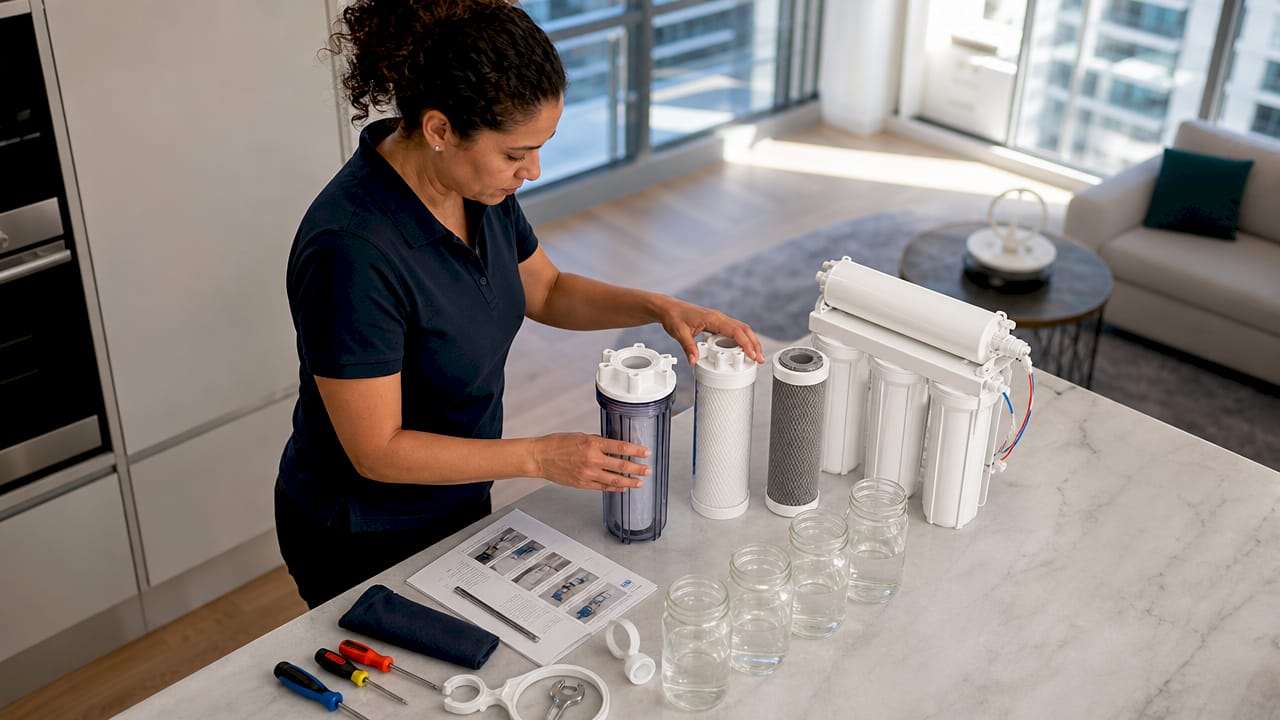
Water filtration systems are defined as devices that remove contaminants, sediment, chemicals, and microorganisms from water to make it safer and better tasting for household use. The U.S. EPA classifies water treatment technologies by removal mechanism, including adsorption, ion exchange, membrane separation, and ultraviolet photolysis. Understanding the different types of water filtration systems matters because each technology targets a specific set of contaminants. Choosing the wrong type means spending money on a system that does not solve your actual water problem. This guide covers all 10 major filter types so you can match the right technology to your home.
1. Different types of water filtration systems: an overview
The 10 main home water filter types are mechanical, activated carbon, reverse osmosis, ion exchange, ultraviolet, ceramic, distillation, infrared, activated alumina, and microfiltration. That list covers nearly every water quality concern a homeowner or renter will face. The most effective way to compare these systems is by their removal mechanism, not by where they install. A pitcher filter and an under-sink unit can both use activated carbon, but they serve very different volumes and flow rates. Knowing the technology first, then the installation format, leads to better decisions.
Water filtration system type and filtration technology are two separate choices. You pick the technology based on what contaminants you need to remove. You pick the installation format based on your home setup, budget, and whether you rent or own. Many homeowners skip the first step and buy based on format alone, then wonder why their water still tastes off or tests poorly.
2. Mechanical and sediment filters
Mechanical filters are the first line of defense in most home water systems. They physically trap suspended particles like dirt, rust, sand, and silt using a screen, cartridge, or depth medium. They do not remove dissolved chemicals, microbes, or heavy metals.
Key facts about mechanical filters:
- Screen filters catch large particles at the surface of a fine mesh.
- Cartridge filters use pleated or wound media and are common in whole-house housings.
- Depth filters trap particles throughout the filter body, not just at the surface.
- Micron rating determines what size particles the filter stops. A 5-micron filter stops finer particles than a 50-micron filter.
Mechanical filters protect downstream filters like carbon blocks and RO membranes from clogging prematurely. That makes them cost-effective even when used alone for basic sediment removal. They are standard at the entry point of whole-house systems and as a pre-filter stage in under-sink setups.
Pro Tip: Install a sediment pre-filter before any carbon or RO system. It extends the life of more expensive filter stages significantly.

3. Activated carbon filters
Activated carbon filters are the most widely used filter type in American homes. They work through adsorption, a process where contaminants bond to the surface of the carbon rather than being physically trapped. The result is water that tastes and smells noticeably better.
Activated carbon filters improve taste, reduce chlorine, and remove some chemicals but do not remove microbes or dissolved salts. That limitation is worth understanding before you rely on one as your only treatment method.
Two main formats exist:
- Granular activated carbon (GAC): Loose carbon granules allow water to flow through quickly. Common in pitcher filters and faucet mounts.
- Carbon block: Compressed carbon with a tighter structure. More effective at removing chloramines, some VOCs, and pesticides than GAC.
Activated carbon filters are found in Brita pitchers, PUR faucet mounts, and under-sink systems. They are affordable and easy to replace. Their main weakness is that a carbon filter alone is not certified to remove lead or PFAS unless the product specifically claims and verifies that removal. Always check the certification and contaminant claims on the product label before purchasing.
4. Reverse osmosis systems
Reverse osmosis, commonly called RO, is the best type of water filter for removing the widest range of dissolved contaminants. It forces water through a semipermeable membrane with pores small enough to block heavy metals, dissolved salts, fluoride, nitrates, and some microbes.
RO removes heavy metals, dissolved salts, fluoride, and some microbes but also strips out beneficial minerals like calcium and magnesium. That trade-off is real. Some RO systems add a remineralization stage to put those minerals back.
Key considerations for RO systems:
- Water waste: Standard RO units produce some wastewater for every gallon of filtered water produced. Newer models are more efficient.
- Mineral removal: The filtered water is very pure but slightly acidic without remineralization.
- Installation: Most RO units install under the sink with a dedicated faucet. Countertop RO units also exist for renters.
- Pre-filtration: RO membranes last longer when a sediment and carbon pre-filter removes chlorine and particles first.
Pro Tip: Pair your RO system with a carbon post-filter. It polishes the taste of the water after it passes through the membrane, removing any residual flat or plastic notes.
5. Ion exchange and water softeners
Ion exchange filters solve a specific problem: hard water. Hard water contains high levels of calcium and magnesium, which cause scale buildup in pipes, water heaters, and appliances. Ion exchange replaces calcium and magnesium with sodium or hydrogen ions, which do not cause scale.
What ion exchange does and does not do:
- Does: Reduce water hardness, extend appliance lifespan, improve soap lathering, and prevent limescale.
- Does not: Remove bacteria, viruses, heavy metals, chlorine, or most chemical contaminants.
Ion exchange systems come in point-of-use formats for a single tap and whole-house water softeners that treat every faucet and appliance. Whole-house softeners are the more common choice for homes with severe hard water. Many households combine a water softener with a carbon or RO filter to address both hardness and chemical contaminants together. If your main complaint is scale on fixtures and short appliance lifespans, ion exchange is the right starting point.
6. Ultraviolet (UV) filtration
UV filtration kills bacteria, viruses, and protozoa by exposing water to ultraviolet light. The UV light disrupts the DNA of microorganisms, preventing them from reproducing. UV filters inactivate bacteria, viruses, and pathogens but do not remove any physical or chemical contaminants.
Important points about UV systems:
- UV is not a physical filter. It adds no media, produces no waste water, and uses no chemicals.
- Water must be clear before UV treatment. Turbid or sediment-heavy water blocks UV light and reduces effectiveness.
- UV systems require a power source and a periodic lamp replacement, typically once a year.
- They are most effective as the final stage in a multi-barrier system, after sediment and carbon filtration.
Pro Tip: Always install a sediment pre-filter before a UV unit. Particles in the water cast shadows that protect microorganisms from the UV light.
For homeowners on well water or in areas with known microbial concerns, UV is a strong addition. Cowayswaterpurifier offers UV-equipped purifiers that combine this technology with other filtration stages. You can read more about UV microbial control to understand how it fits into a complete treatment plan.
7. Ceramic filters
Ceramic filters use a porous ceramic material to physically block bacteria, protozoa, and sediment. The pores are small enough to trap most biological contaminants but large enough to allow water to pass through without pressure. They do not remove dissolved chemicals, heavy metals, or viruses.
Ceramic filters are common in gravity-fed countertop systems like Berkey and similar brands. They are popular in areas with unreliable electricity because they need no power. Ceramic elements are cleanable and reusable, which lowers long-term costs. Many ceramic filters are impregnated with colloidal silver to prevent bacterial growth within the filter itself.
8. Distillation systems
Distillation produces some of the purest water available at home. The process boils water, captures the steam, and condenses it back into liquid, leaving behind most contaminants. Heavy metals, dissolved salts, nitrates, and many chemicals stay in the boiling chamber.
Distillation is slow and energy-intensive. A countertop distiller typically produces about one gallon per hour. Like RO, distillation removes beneficial minerals along with contaminants. Distillers are best suited for households with specific purity needs, such as those with immune-compromised members, rather than as a primary source for all household water.
9. Activated alumina filters
Activated alumina targets two contaminants that most other filters handle poorly: fluoride and arsenic. It works through adsorption, similar to activated carbon, but the alumina medium has a high affinity for these specific ions. It does not remove bacteria, sediment, or most other chemicals.
Activated alumina filters are used in point-of-use setups, often as a dedicated stage in a multi-filter system. They are particularly relevant for households in regions where groundwater contains elevated arsenic levels. The filter medium requires periodic replacement based on water volume processed, not just time elapsed.
10. Microfiltration and other membrane types
Microfiltration uses a membrane with pores in the 0.1–10 micron range to remove bacteria, protozoa, and some larger particles. It sits between mechanical filtration and the tighter nanofiltration or RO membranes in terms of pore size. Point-of-use home water filters often combine multiple filtration methods, including granular activated carbon, ceramic, and microfiltration membranes, for broader contaminant coverage.
Microfiltration does not remove viruses or dissolved contaminants. It is commonly used as a stage within larger multi-barrier systems rather than as a standalone solution. Infrared filters, another less common type, use infrared rays to soften water molecules and are often marketed for improving water absorption and taste, though their contaminant removal claims are limited compared to membrane or carbon technologies.
| Filter type | Primary target | Key limitation |
|---|---|---|
| Ceramic | Bacteria, protozoa, sediment | Does not remove viruses or chemicals |
| Distillation | Heavy metals, salts, nitrates | Slow, energy-intensive, removes minerals |
| Activated alumina | Fluoride, arsenic | Narrow contaminant range |
| Microfiltration | Bacteria, protozoa, particles | Does not remove viruses or dissolved contaminants |
Key takeaways
Choosing the right water filtration system requires matching the filter technology to your specific water contaminants, not just picking the most expensive or most popular option.
| Point | Details |
|---|---|
| Match technology to contaminants | Read your water utility report before buying any filter system. |
| RO covers the widest range | Reverse osmosis removes heavy metals, salts, fluoride, and some microbes in one system. |
| UV requires pre-filtration | UV light only works in clear water; always pair it with a sediment filter first. |
| Carbon filters have limits | Activated carbon improves taste and removes chlorine but does not remove lead or PFAS without specific certification. |
| Installation type is a separate choice | Whole-house and point-of-use systems serve different goals; point-of-use achieves tighter contaminant removal for drinking water. |
What I’ve learned after years of researching home water treatment
Most people overbuy. They read about PFAS or lead in the news, panic, and purchase a whole-house RO system when a certified under-sink unit would have solved the problem at a fraction of the cost and without wasting water on every toilet flush.
The advice I give consistently is this: match your filter to your actual water data. Your water utility publishes an annual quality report. Read it. If your water shows elevated chlorine and no heavy metals, a quality carbon block filter is all you need. If you are on a private well, UV plus sediment filtration is the minimum starting point.
Renters get overlooked in most filtration guides. If you cannot modify plumbing, a countertop RO unit or a certified pitcher filter addresses the most common concerns without a single tool. Renters should prioritize easily installable point-of-use filters that focus on taste, odor, and specific contaminants rather than whole-house scope.
The other thing most guides skip: certification matters more than filter media type. A carbon filter that is not certified to remove lead will not reliably remove lead, regardless of how premium the marketing sounds. Look for NSF/ANSI certification on the specific contaminants you care about. That single check saves more money and health risk than any brand comparison.
— Soldierboy
Coway water purifiers: multi-technology filtration for your home
Cowayswaterpurifier builds water purifiers that combine RO membranes, activated carbon stages, and UV sanitization into single units designed for home use. That multi-barrier approach addresses the most common household water concerns without requiring separate systems for each contaminant type.
Whether you need a countertop unit for a rental apartment or a full under-sink water purifier for a family home, Cowayswaterpurifier offers models built around the filtration technologies covered in this guide. The water purification process guide on the Cowayswaterpurifier site breaks down exactly how each stage works in their systems, so you can verify the technology before you buy.
FAQ
What are the main types of water filtration systems?
The 10 main types are mechanical, activated carbon, reverse osmosis, ion exchange, ultraviolet, ceramic, distillation, infrared, activated alumina, and microfiltration. Each targets different contaminants through distinct removal mechanisms.
What is the best water filtration system for home use?
Reverse osmosis is the best type of water filter for removing the widest range of contaminants, including heavy metals, fluoride, and dissolved salts. Pairing RO with a carbon pre-filter and UV stage covers nearly all common household water concerns.
Do I need a whole-house filter or a point-of-use system?
Whole-house filters improve general water quality and protect plumbing, while point-of-use systems deliver tighter contaminant removal for drinking and cooking water. Most households benefit more from a high-quality point-of-use unit at the kitchen tap.
Can renters install a water filtration system?
Yes. Countertop RO units and certified pitcher filters require no plumbing modifications and work well in rental apartments. These point-of-use options address taste, odor, and specific contaminants without permanent installation.
Does a carbon filter remove all contaminants?
No. Activated carbon filters reduce chlorine, some VOCs, and improve taste, but they do not remove microbes, dissolved salts, or heavy metals unless the product carries specific NSF/ANSI certification for those contaminants.
Recommended
- 7 Essential Types of Water Filters for Every Home – Coway Water Purifier
- Complete Water Filtration Process Guide for Homeowners – Coway Water Purifier
- 7 Effective Examples of Filtration Technologies Explained – Coway Water Purifier
- 7 Top Water Filtration Methods You Need to Know – Coway Water Purifier
