
Uncategorized
Mineralization in Water Filters: Impact on Home Wellness

Jan
More than 60 percent of American households now seek advanced filtration solutions to protect their families from unwanted contaminants and improve hydrate quality. For health-conscious homeowners in metropolitan areas, understanding how mineralization works in water filters is not just a passing trend but a key strategy for supporting wellness. Discover what sets mineralized water apart and how choosing the right filtration system empowers you to provide safer, nutrient-enhanced drinking water every day.
Table of Contents
- Defining Mineralization In Water Filtration
- Types Of Mineralization Cartridges And Media
- How Mineralization Works In Filters
- Health Benefits And Potential Drawbacks
- Comparing Mineralized And Non-Mineralized Water
Key Takeaways
| Point | Details |
|---|---|
| Importance of Mineralization | Mineralization enhances the nutritional profile of purified water by reintroducing essential minerals like calcium and magnesium, supporting overall health. |
| Variety of Mineralization Techniques | Various advanced methods exist for mineralizing water, including mineral bed filtration and advanced cartridges, each tailored to specific water quality needs. |
| Health Benefits and Considerations | Mineralized water can improve hydration and support metabolic functions, but consumers should be aware of potential drawbacks, including variability in mineral concentrations. |
| Choosing Mineralized Water | Individuals should evaluate their personal health needs and local water quality when selecting between mineralized and non-mineralized water for consumption. |
Defining Mineralization in Water Filtration
Mineralization represents a critical process in water filtration that transforms ordinary water into a nutrient-rich resource capable of supporting human health. At its core, mineralization involves introducing essential minerals like calcium, magnesium, and potassium into filtered water through carefully controlled techniques. These minerals play a fundamental role in enhancing water quality and providing potential wellness benefits.
The process of water mineralization goes beyond simple filtration by strategically reintroducing beneficial ions that might have been removed during initial purification stages. Natural mineralization processes are particularly important for alternative water sources that lack essential nutrients, helping to adjust water hardness and supplement drinking water with valuable minerals. This approach supports sustainable water treatment strategies, especially in regions with limited water resources.
Water mineralization typically occurs through several sophisticated methods, including:
- Mineral bed filtration
- Ceramic mineral technology
- Reverse osmosis remineralization
- Activated carbon mineral integration
Each technique offers unique advantages in restoring essential mineral content to purified water, ensuring that consumers receive both clean and nutritionally balanced hydration. The goal is not just removing contaminants, but creating water that actively contributes to human wellness.
Pro tip: When selecting a water filtration system, prioritize models that offer integrated mineralization capabilities to ensure you’re drinking water that’s not just pure, but also nutritionally enhanced.
Types of Mineralization Cartridges and Media
Water mineralization cartridges represent sophisticated filtration technologies designed to strategically reintroduce essential minerals into purified water. These specialized media play a crucial role in transforming standard filtered water into a more nutritionally balanced hydration source. By carefully selecting specific mineral compositions, these cartridges can address water quality challenges and enhance overall drinking water characteristics.
Filter media types range from traditional mineral substances to advanced engineered materials, each offering unique benefits for water treatment. Common mineralization media include:
- Calcite: Neutralizes water pH and increases calcium content
- Ceramic mineral media: Provides gradual mineral release
- Magnesium-based cartridges: Enhances magnesium ion concentration
- Alkaline mineral beds: Supports water alkalinity and mineral enrichment
The selection of appropriate mineralization media depends on specific water quality goals, local water composition, and desired mineral enhancement strategies. Professional water treatment experts carefully evaluate factors such as existing water mineral content, pH levels, and potential contaminants to recommend the most suitable cartridge type. Advanced cartridges can simultaneously purify water while strategically reintroducing beneficial minerals like calcium, magnesium, and potassium.
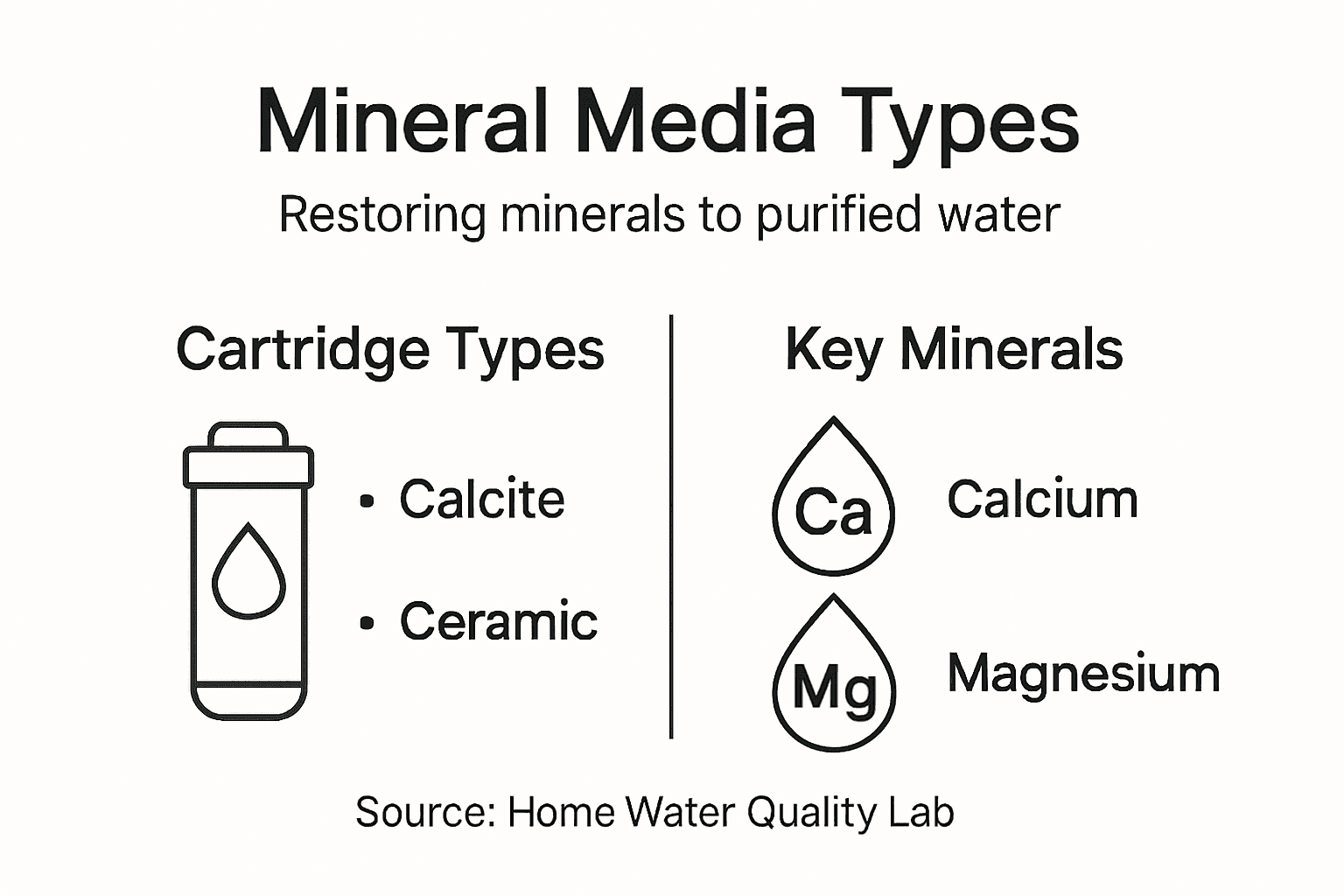
Understanding the nuanced differences between mineralization media helps homeowners make informed decisions about water filtration systems. Each cartridge type offers specific advantages, from improving taste to supporting potential health benefits through targeted mineral supplementation.
Here is a summary of common mineralization cartridge types and their unique roles:
| Cartridge Type | Main Contribution | Example Water Issue Addressed |
|---|---|---|
| Calcite Media | Balances pH, adds calcium | Acidic water, low calcium levels |
| Ceramic Mineral Media | Slow mineral release | Flat taste, lack of minerals |
| Magnesium Cartridges | Boosts magnesium ions | Low magnesium, electrolyte deficit |
| Alkaline Mineral Bed | Raises alkalinity | Low pH, high acidity |
Pro tip: Consult a water quality professional to perform a comprehensive water analysis before selecting a mineralization cartridge to ensure optimal mineral balance and filtration performance.
How Mineralization Works in Filters
Mineralization in water filtration represents a sophisticated process of strategic mineral reintroduction designed to transform purified water into a more nutritionally complete beverage. When water undergoes intensive filtration methods like reverse osmosis, essential minerals are often stripped away, creating water that is technically pure but lacking in nutritional value. The mineralization process serves as a critical restoration mechanism to rebalance water’s mineral composition and improve its overall quality.
Remineralization techniques involve passing purified water through specialized cartridges containing carefully selected mineral media. These advanced filtration components are engineered to gradually release beneficial minerals such as calcium, magnesium, and potassium back into the water stream. The process follows a precise mechanism:
- Water enters the mineralization chamber
- Mineral media strategically dissolve essential ions
- Controlled mineral transfer occurs through microscopic interactions
- Enriched water exits with restored nutritional profile
The scientific principles underlying mineralization focus on precise ion exchange and controlled mineral dissolution. Water passes through layers of mineral media, with each layer contributing specific nutrients and helping to stabilize the water’s pH levels. Water mineralization technology ensures that the reintroduced minerals are balanced and bioavailable, addressing potential nutritional deficiencies created during initial filtration processes.

Understanding the nuanced mechanics of mineralization helps consumers appreciate the complex science behind creating high-quality drinking water. By strategically reintroducing minerals, water filtration systems transform standard purified water into a more holistic hydration solution that supports overall wellness.
Pro tip: Regularly replace your mineralization cartridges to maintain optimal mineral transfer efficiency and ensure consistent water quality performance.
Health Benefits and Potential Drawbacks
Mineralized water offers a complex array of health implications that extend far beyond simple hydration. Mineral water compositions provide essential nutrients that can significantly impact overall wellness, delivering bioavailable minerals directly through drinking water. The strategic introduction of calcium, magnesium, and other trace minerals represents a nuanced approach to supporting human physiological functions.
The primary health benefits of mineralized water include:
- Enhanced bone density and strength
- Improved cardiovascular health
- Balanced electrolyte levels
- Potential blood pressure regulation
- Support for metabolic processes
Health implications of mineral water reveal both promising advantages and potential concerns. While mineralized water can contribute positively to nutritional intake, consumers must remain aware of potential drawbacks such as:
- Variability in mineral concentrations
- Potential sodium content fluctuations
- Risk of microplastic contamination in bottled sources
- Possible mineral overdose with excessive consumption
- Inconsistent regulatory standards across different water sources
Understanding the delicate balance between mineral benefits and potential risks requires careful consideration of individual health needs, water source quality, and personal nutritional requirements. Consumers should approach mineralized water as a complementary component of a balanced diet rather than a standalone solution for nutritional supplementation.
Pro tip: Consult a healthcare professional to understand how mineralized water might specifically interact with your personal health profile and existing nutritional intake.
Comparing Mineralized and Non-Mineralized Water
The fundamental distinction between mineralized and non-mineralized water lies in their nutritional composition and potential health impacts. Mineral water characteristics reveal critical differences that extend beyond simple hydration, highlighting the importance of understanding water’s mineral content for optimal wellness.
Key comparative aspects include:
Mineralized Water Characteristics:
- Contains bioavailable essential minerals
- Enhanced nutritional profile
- Supports metabolic functions
- Improved taste and flavor complexity
- Natural electrolyte balance
Non-Mineralized Water Characteristics:
- Lacks essential mineral content
- Potential flat or bland taste
- Minimal nutritional contribution
- Requires additional mineral supplementation
- May have lower hydration efficiency
Water mineralization processes demonstrate that water can be naturally mineral-rich or artificially remineralized. Natural mineral sources like aquifers provide inherent mineral content, while reverse osmosis and advanced filtration systems can strategically reintroduce essential minerals after purification. This approach ensures water remains clean while restoring its nutritional potential.
Consumers must recognize that water is not merely a hydration source but a potential nutritional supplement. The choice between mineralized and non-mineralized water depends on individual health requirements, local water quality, and personal wellness goals.
The following table contrasts filtered water outcomes with and without mineralization:
| Aspect | Mineralized Water | Non-Mineralized Water |
|---|---|---|
| Mineral Content | Naturally or artificially enriched | Often depleted or absent |
| Taste & Mouthfeel | Crisp, full-bodied | Often flat or bland |
| Wellness Contribution | Supports health functions | Few nutritional benefits |
| Best Use Case | Daily drinking, wellness | Cooking, specific appliances |
Pro tip: Conduct a local water quality test to understand your current water’s mineral composition and make informed decisions about mineralization strategies.
Elevate Your Home Wellness with Mineralized Water Solutions
The article highlights a common challenge many face after water purification: the loss of essential minerals that support health and improve taste. If you are concerned about drinking water that lacks calcium, magnesium, and other beneficial minerals, you are not alone. Mineralization in water filters is the key to restoring those vital nutrients and providing water that actively contributes to your well-being. Understanding terms like “mineralization cartridges” and “reverse osmosis remineralization” empowers you to make informed choices about your hydration.
At Coway Water Purifier, we specialize in advanced filtration systems designed with integrated mineralization features. Our products combine cutting-edge technology with the science of mineral restoration to deliver clean, refreshing water that supports your family’s health. Discover options from countertop units to large-capacity models that ensure balanced mineral content with every glass. Explore our selection and comprehensive service offerings at Uncategorized Archives – Coway Water Purifier to find the perfect fit for your home.
Don’t wait to upgrade your drinking water experience. Visit https://cowayswaterpurifier.com now and choose a water filtration system that not only purifies but intelligently mineralizes your water. Take control of your health with every sip and embrace the full benefits of mineralized hydration today.
Frequently Asked Questions
What is mineralization in water filtration?
Mineralization in water filtration is the process of adding essential minerals like calcium, magnesium, and potassium back into purified water, enhancing its nutritional quality and providing potential health benefits.
How does mineralization improve water quality?
Mineralization improves water quality by reintroducing beneficial ions that might have been removed during purification, thereby balancing the mineral composition, enhancing the taste, and supporting overall wellness.
What are the different types of mineralization cartridges used in water filters?
Common types of mineralization cartridges include calcite, ceramic mineral media, magnesium cartridges, and alkaline mineral beds, each designed to fulfill specific water quality goals and enhance mineral content.
What are the health benefits of drinking mineralized water?
Drinking mineralized water can lead to benefits such as enhanced bone density, improved cardiovascular health, balanced electrolyte levels, and support for metabolic processes, making it a potentially valuable addition to a healthy diet.
Recommended
- 7 Must-Have Filtration Technologies for Home Wellness – Coway Water Purifier
- Water Softening Explained: Healthier Home Water Benefits – Coway Water Purifier
- 7 Benefits of Water Filtration for Your Home and Health – Coway Water Purifier
- Advanced Filtration Technology: Cleaner Home Wellness – Coway Water Purifier
- Hair Analysis Test 2025: Discover Your Health Insights | MyHair
