
Uncategorized
Hard Water vs Soft Water: A Homeowner’s Guide
Jun
TL;DR:
- Hard water contains high levels of calcium and magnesium minerals that can cause scale buildup, reduce appliance efficiency, and dry out skin and hair. Soft water has low mineral content, improves cleaning, prolongs appliance lifespan, and enhances skin and hair health but may add sodium and be more corrosive to plumbing. Testing your water chemistry first helps determine the appropriate treatment to avoid unnecessary costs and potential issues.
Hard water is defined by elevated calcium and magnesium mineral content, while soft water contains significantly lower levels of these minerals either naturally or through treatment. That single difference in mineral content drives a chain of effects across your plumbing, appliances, skin, hair, and monthly utility bills. Whether you rent an apartment or own a home, understanding the hard water vs soft water distinction helps you make smarter decisions about water treatment, cleaning products, and long-term maintenance costs.
What is hard water and how does mineral content affect your home?
Hard water forms when groundwater passes through limestone, chalk, or gypite deposits and picks up calcium and magnesium ions along the way. The U.S. Geological Survey classifies water hardness in grains per gallon (GPG) or parts per million (PPM). The standard scale looks like this:

| Hardness Level | GPG | PPM |
|---|---|---|
| Soft | 0–1 | 0–17 |
| Slightly hard | 1–3.5 | 17–60 |
| Moderately hard | 3.5–7 | 60–120 |
| Hard | 7–10.5 | 120–180 |
| Very hard | 10.5+ | 180+ |
Most American cities pull from groundwater sources, which means a large share of U.S. households deal with at least moderately hard water every day.
How hard water affects cleaning and soap performance
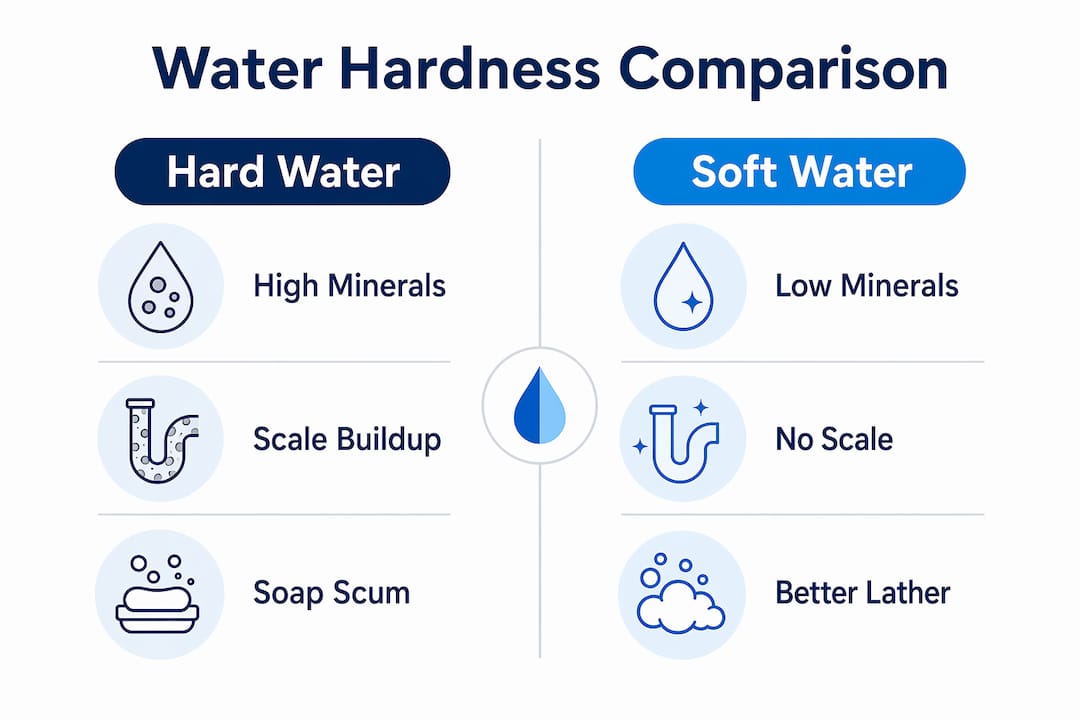
Hard water minerals interfere with soap lathering, causing soap scum and a poor cleaning feel on dishes, skin, and laundry. The calcium ions bond with soap molecules before the soap can do its job, which is why you need more detergent to get the same result. You have probably noticed the white film on your shower doors or the gray tinge on white laundry. Both are classic hard water signatures.
Scale buildup and appliance damage
Scale is the chalky mineral deposit that forms when hard water is heated. Scale acts as an insulator on water heater elements, forcing the unit to consume more energy to reach the same temperature. Over time, this cuts a water heater’s lifespan from a typical 12–15 years down to 6–8 years. Dishwashers, washing machines, and coffee makers all suffer the same fate when scale coats their internal components.
Hard water effects on skin and hair
Hard water is linked to increased eczema incidence and dry skin, particularly in people with sensitive skin. The minerals disrupt the skin’s natural barrier, leaving it feeling tight and rough after showering. Hair washed in hard water often feels stiff and looks dull because mineral deposits coat the hair shaft and block moisture absorption.
Pro Tip: Check your water bill or contact your local utility provider. Most publish annual water quality reports that include hardness levels in GPG or PPM. If your reading is above 7 GPG, a softening solution is worth serious consideration.
What defines soft water, and what are its advantages and drawbacks?
Soft water is water that contains low concentrations of calcium and magnesium. It occurs naturally in regions with granite or other non-porous bedrock, such as parts of the Pacific Northwest and New England, where rainwater does not pick up significant mineral content before reaching the tap. Treated soft water is produced through an ion-exchange water softening process, where a resin tank swaps calcium and magnesium ions for sodium ions.
Soft water advantages for your home
The benefits of soft water show up quickly in daily household tasks:
- Soap performance: Soap forms a rich lather and rinses more completely in soft water, leaving skin feeling smooth rather than stripped.
- Appliance longevity: Without scale buildup, water heaters, dishwashers, and washing machines run at full efficiency and last longer.
- Cleaner surfaces: Shower doors, faucets, and sinks stay cleaner with far less scrubbing.
- Detergent savings: Softening systems deliver long-term savings on energy bills and detergent use across the life of the system.
- Laundry results: Clothes come out softer, brighter, and with less wear on fabric fibers.
Potential drawbacks you should know
Soft water is not without trade-offs. Ion-exchange softening increases sodium content in treated water, which can be a concern for people on low-sodium diets or those with hypertension. The added sodium is typically low, but if you are sensitive to sodium intake, a dedicated reverse osmosis drinking water filter at the kitchen tap is a practical solution.
Naturally soft, low-alkalinity water can also be corrosive to copper and lead plumbing because it lacks the buffering minerals that prevent pipes from leaching metals. This is a different problem than ion-exchange softened water, which does not typically carry the same corrosion risk. If you live in a region with naturally soft water, ask your utility about pH and alkalinity levels before assuming your plumbing is safe.
Pro Tip: Before installing a water softener, get a full water chemistry test, not just a hardness reading. Knowing your pH, alkalinity, and iron levels helps you choose the right softening technology and avoid creating new problems while solving old ones.
How do hard and soft water compare for skin and hair health?
The difference between hard and soft water shows up most clearly on your body. Hard water consumption and bathing is linked to higher rates of skin barrier disruption, with studies connecting it to greater eczema severity in children and adults. The calcium and magnesium ions react with skin’s natural oils and soap residue, leaving a film that clogs pores and dries out the outer skin layer.
Soft water produces a noticeably different experience. The slippery feeling you get after showering in soft water is not soap residue left on your skin. It comes from improved soap bonding to skin oils, which means the soap is actually working as intended. Many people mistake this sensation for uncleanliness, but it is the opposite.
Here is a quick comparison of how each water type affects your body:
- Hard water on skin: Tightness, dryness, potential eczema flare-ups, and clogged pores from mineral and soap scum residue.
- Soft water on skin: Smoother feel, better moisture retention, and less irritation for sensitive skin types.
- Hard water on hair: Stiff texture, dullness, and mineral buildup that blocks conditioning products from penetrating the hair shaft.
- Soft water on hair: Softer, shinier results, though some people notice product buildup over time because conditioners bond more aggressively to hair in low-mineral water.
One nuance worth noting: drinking water is not a meaningful source of dietary calcium or magnesium for most people. The mineral contribution from tap water is small compared to food sources, so choosing soft water for drinking does not create a nutritional gap.
What are the real costs of hard water in your home?
The economic case against hard water is concrete and measurable. Hard water scale reduces water heater efficiency by 29% to 48% and shortens appliance lifespan by 4–7 years. That efficiency loss translates directly into higher monthly energy bills, and the shortened lifespan means you replace expensive appliances years earlier than you should have to.
Here is how the costs stack up across a typical household:
- Water heater replacement: A unit that should last 12–15 years may fail in 6–8 years due to scale damage, costing $800–$1,500 for a new tank unit plus installation.
- Increased detergent use: Hard water households use significantly more laundry and dish detergent to compensate for poor lathering, adding up over months and years.
- Plumbing repairs: Scale narrows pipe diameter over time in severe hard water areas, reducing water pressure and eventually requiring pipe replacement or descaling service.
- Cleaning products: Extra limescale removers, descaling tablets, and specialty shampoos add recurring costs that soft water households avoid entirely.
The cost-benefit math on a water softener depends on your local water hardness and household size. A whole-house ion-exchange softener typically costs $500–$2,500 installed, with ongoing salt costs of roughly $5–$10 per month. For households with very hard water above 10 GPG, the system often pays for itself within a few years through appliance savings and reduced detergent spending alone. Testing your water first gives you the data to make that calculation accurately rather than guessing.
Key Takeaways
The most important fact in the hard water vs soft water comparison is this: water type is not a safety issue but a household efficiency and comfort issue that has measurable financial consequences.
| Point | Details |
|---|---|
| Mineral content defines the difference | Hard water contains elevated calcium and magnesium; soft water has low levels of both. |
| Scale costs real money | Hard water scale cuts water heater efficiency by 29–48% and shortens lifespan by 4–7 years. |
| Soft water has trade-offs | Ion-exchange softening adds sodium; naturally soft water can corrode older plumbing. |
| Skin and hair respond to water type | Hard water worsens dry skin and eczema; soft water improves soap performance and skin feel. |
| Test before you treat | A full water chemistry test, not just hardness, guides the right treatment choice for your home. |
Why I think most homeowners get this decision backwards
I have seen a lot of households rush to install a whole-house water softener the moment they notice white spots on their faucets. That instinct is understandable, but it skips the most important step: actually knowing what is in your water. Hardness is one variable. pH, iron content, and alkalinity are others that determine whether a standard ion-exchange softener is the right tool or whether you need something more targeted.
The other thing I have noticed is that people treat hard and soft water as a binary choice, as if one is always better. The reality is more nuanced. If you have hard water above 7 GPG, softening makes financial sense. If your water is only moderately hard at 3–5 GPG, the cost of a softener may not justify the savings. And if you are on a low-sodium diet, you need to factor in a drinking water filter alongside any softening system.
My honest recommendation: spend $30–$50 on a professional water test before spending hundreds on equipment. The water softening process works well when matched to the right water chemistry. When it is not matched correctly, you can trade one problem for another. Know your water first, then choose your solution.
— Soldierboy
How Cowayswaterpurifier can help you get the right water quality
If your water test reveals hard water, scale damage, or concerns about contaminants beyond mineral content, Cowayswaterpurifier offers a range of water treatment systems designed for home use. From countertop units to under-sink purifiers with advanced multi-stage filtration, the product lineup addresses both hardness-related issues and broader water quality concerns including sediment, chlorine, and microbial contaminants.
Understanding the water purification process is the first step toward choosing the right system for your household. Cowayswaterpurifier provides detailed guides, product comparisons, and expert support to help you match the right technology to your specific water chemistry. Whether you need a dedicated softening solution, a UV-based purifier, or a combination system, the right starting point is always knowing exactly what you are dealing with.
FAQ
What is the main difference between hard and soft water?
Hard water contains elevated calcium and magnesium minerals picked up from rock and soil, while soft water has low concentrations of these minerals either naturally or through treatment. This mineral difference drives all other distinctions in cleaning performance, appliance wear, and skin effects.
Is hard water bad for your skin?
Hard water is linked to increased skin dryness and higher eczema severity because its minerals disrupt the skin’s natural barrier and react with soap to leave residue on the skin. People with sensitive skin or eczema typically see noticeable improvement after switching to soft water for bathing.
How do you soften hard water at home?
The most common method is an ion-exchange water softener, which replaces calcium and magnesium ions with sodium ions using a resin tank. Alternatives include template-assisted crystallization systems, which condition minerals without adding sodium, and point-of-use filters for drinking water.
Does soft water taste different from hard water?
Hard water has a mineral or chalky taste due to its calcium and magnesium content, while soft water tastes cleaner or slightly salty if treated with an ion-exchange softener. Many people prefer the taste of filtered water regardless of hardness level.
Is it safe to drink softened water every day?
Ion-exchange softened water is generally safe for most people, but the added sodium can be a concern for those on medically restricted low-sodium diets. Installing a reverse osmosis filter at the kitchen tap removes the added sodium and provides clean drinking water alongside the whole-house softening system.
Recommended
- Water Softening Explained: Healthier Home Water Benefits – Coway Water Purifier
- Understanding TDS in Water: A Homeowner’s Guide – Coway Water Purifier
- Essential Guide to Safe Drinking Water for Homeowners – Coway Water Purifier
- All Water Filters: A Homeowner’s Buying Guide for 2026 – Coway Water Purifier
