
Uncategorized
Filtration’s Role in Family Health: 15% Fewer GI Illnesses

Mar
Protecting your family’s health starts with the air you breathe and the water you drink. Installing effective water filtration reduces children’s gastrointestinal illness risk by up to 15%, while advanced air filters remove allergens that trigger respiratory distress. This guide reveals how filtration technologies remove harmful contaminants from your home, which systems deliver proven health benefits, and how to choose the right solutions for your family’s wellbeing.
Table of Contents
- How Water Filtration Protects Family Health
- How Air Filtration Improves Indoor Air Quality and Health
- Common Misconceptions and Limitations of Filtration
- Comparative Analysis of Filtration Technologies for Family Use
- Maintenance and Longevity: Ensuring Lasting Health Benefits from Filtration
- Choosing the Right Filtration Solutions for Your Family
- Conclusion: Enhancing Family Health Through Informed Filtration Choices
- Explore Expert Filtration Solutions for Your Home
Key Takeaways
| Point | Details |
|---|---|
| Filtration reduces toxins | Water and air filtration removes lead, microbes, allergens, and volatile organic compounds threatening family health. |
| Proven health improvements | Proper filtration decreases gastrointestinal illnesses by 12 to 15% and significantly lowers allergy symptoms. |
| Technology matters | HEPA filters, reverse osmosis, and UV sterilization target different contaminants requiring matched solutions. |
| Maintenance is critical | Regular filter replacement prevents microbial growth and maintains contaminant removal effectiveness. |
| Multi-stage protection | Combining technologies provides comprehensive defense against diverse household pollutants. |
Introduction to Filtration and Family Health
Filtration systems actively remove contaminants from water and air before they enter your body. Water filtration targets dissolved solids, heavy metals, microorganisms, and chemical byproducts, while air filtration captures particles, allergens, and airborne pathogens.
American homes face distinct contamination challenges. Aging infrastructure introduces lead from old pipes, municipal treatment creates chlorine byproducts, and industrial activities release volatile organic compounds into groundwater. Indoor air quality suffers from outdoor pollution infiltration, off-gassing from building materials, and biological contaminants like mold spores and pet dander.
Common water contaminants threatening families include:
- Lead leaching from plumbing fixtures causing developmental issues in children
- Microbial pathogens like Giardia and Cryptosporidium triggering gastrointestinal distress
- Trihalomethanes formed during chlorine disinfection linked to long-term cancer risk
- Nitrates from agricultural runoff affecting infant oxygen transport
Air pollutants compromising respiratory health encompass:
- Particulate matter PM2.5 penetrating deep into lungs causing inflammation
- Allergens including pollen, dust mites, and pet dander exacerbating asthma
- Volatile organic compounds from furniture and cleaners irritating airways
- Mold spores triggering allergic reactions and respiratory infections
Unfiltered exposure creates measurable health consequences. Children drinking contaminated water experience higher rates of stomach illnesses and developmental delays from neurotoxins. Breathing polluted indoor air worsens asthma attacks, increases allergy medication dependence, and elevates cardiovascular disease risk over time. Understanding why water filters are important helps families prioritize protection strategies.
The EPA guide on air filtration confirms that HEPA air purifiers reduce airborne allergens by filtering 99.97% of particles ≥0.3 microns, demonstrating measurable improvements in indoor environments.
How Water Filtration Protects Family Health
Water filtration technologies employ distinct mechanisms to eliminate specific contaminants. Reverse osmosis forces water through semi-permeable membranes blocking dissolved solids, heavy metals, and most microorganisms. Activated carbon adsorbs chlorine, volatile organic compounds, and organic chemicals through porous surface binding. UV sterilization destroys bacterial and viral DNA preventing reproduction without chemical additives.
Each technology targets different threats:
- Reverse osmosis removes lead, arsenic, fluoride, nitrates, and cryptosporidium cysts
- Activated carbon eliminates chlorine taste, pesticides, herbicides, and pharmaceutical residues
- UV light kills E. coli, Giardia, viruses, and other pathogens resistant to chemical treatment
Health benefits become quantifiable when families implement proper filtration. Water filters lead to a 12 to 15% reduction in gastrointestinal illnesses among children by removing microbial contaminants and chlorine byproducts that irritate digestive systems. Lead removal protects neurological development in young children whose brains remain vulnerable to heavy metal exposure. Eliminating trihalomethanes reduces long-term cancer risk accumulation from daily consumption.
Multi-stage systems combining these technologies provide comprehensive protection. An advanced water filtration guide reveals how sequential treatment addresses broader contaminant spectrums than single-technology approaches.
Understanding filtration stages in water purification helps families appreciate why quality systems cost more initially but deliver superior health outcomes. The NIH study on water filtration and GI illness provides evidence backing these health claims with rigorous research methodology.
Pro Tip: Install point-of-use reverse osmosis systems under kitchen sinks for drinking and cooking water, then use whole-house activated carbon filters to remove chlorine protecting skin during bathing.
How Air Filtration Improves Indoor Air Quality and Health
HEPA filtration stands as the gold standard for removing airborne particles. These filters trap microscopic contaminants through three mechanisms: impaction captures large particles, interception snags medium particles, and diffusion catches tiny particles in random molecular motion. This triple-action approach achieves exceptional efficiency without requiring electrical charge.
The health improvements from air filtration directly address common family concerns:
- Asthma attack frequency decreases when triggers like dust mites and pet dander disappear from breathing zones
- Seasonal allergy symptoms diminish as pollen counts drop inside filtered homes
- Respiratory infections spread less readily when airborne viral particles get captured before inhalation
- Sleep quality improves in bedrooms with cleaner air reducing nighttime coughing and congestion
Activated carbon layers in quality air purifiers complement HEPA filtration by adsorbing odors, cooking fumes, and volatile organic compounds that particles filters cannot capture. UV-C light chambers add pathogen destruction for comprehensive biological protection.
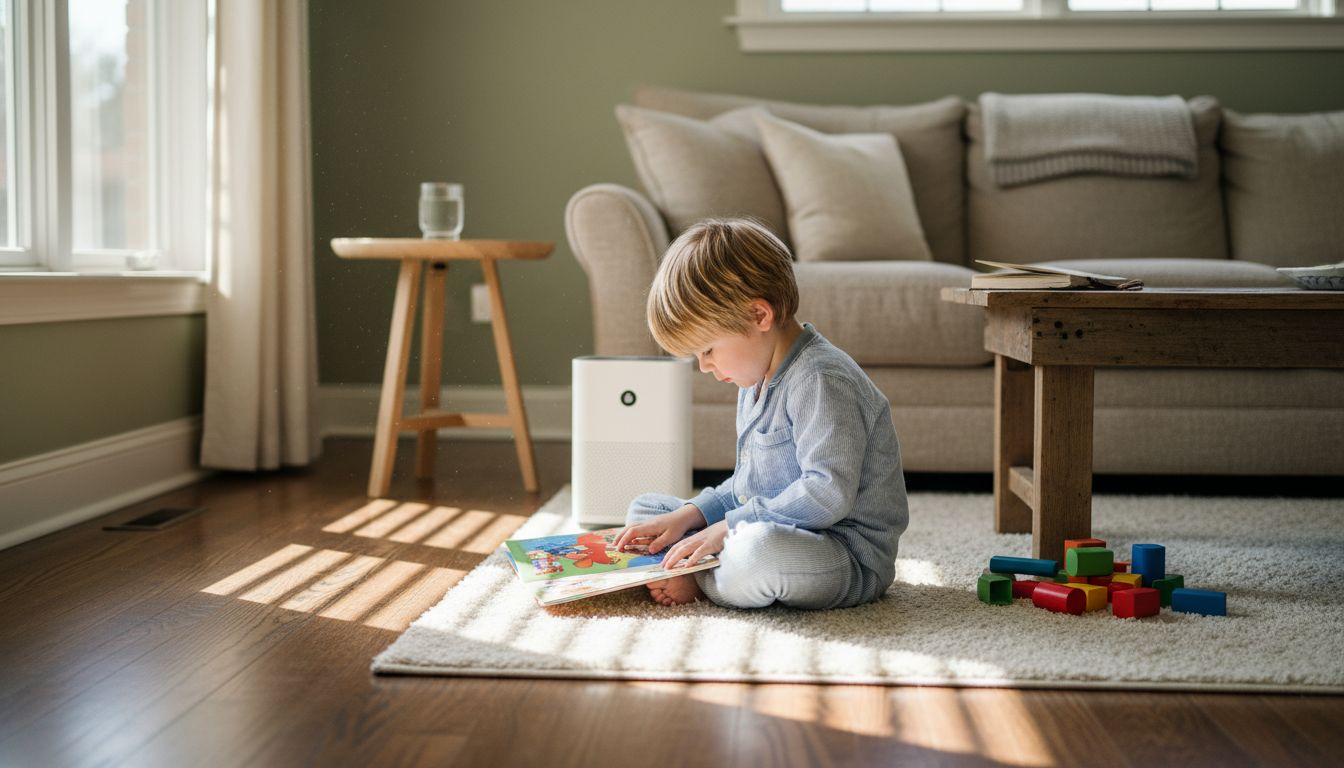
Important limitations require realistic expectations. Air filters excel at removing particles and biological contaminants but struggle with gases like carbon monoxide or radon requiring different mitigation strategies. Proper ventilation remains essential even with excellent filtration since stale air accumulates carbon dioxide affecting concentration and comfort.
The air filtration process explained details how different technologies work together in modern purifiers. Learning how air purifiers remove allergens helps families match capabilities to specific health needs.
Review the EPA air filtration effectiveness guide for independent verification of performance claims before purchasing any air cleaning device.
Pro Tip: Position air purifiers in bedrooms where family members spend eight hours breathing filtered air nightly, maximizing daily exposure reduction to allergens and particles.
Common Misconceptions and Limitations of Filtration
Many families believe all water filters remove fluoride, but only specific technologies like activated alumina and reverse osmosis effectively reduce fluoride levels while standard carbon filters leave it largely untouched. This misconception leads to inappropriate filter selection when fluoride reduction matters for specific health concerns.
Activated carbon excels at removing chlorine and organic chemicals but provides minimal bacterial protection. Families relying solely on carbon filtration remain vulnerable to microbial contamination during infrastructure failures or well water quality issues. Reverse osmosis or UV sterilization becomes necessary for pathogen elimination.
Air filtration faces similar capability limits:
- Particle filters cannot remove gases, vapors, or volatile organic compounds requiring activated carbon
- Ionic purifiers produce ozone as a byproduct potentially irritating sensitive respiratory systems
- No air cleaner eliminates carbon monoxide, radon, or other dangerous gases needing source control
- Undersized units fail to process room air volumes frequently enough for meaningful improvement
Maintenance neglect destroys filtration effectiveness regardless of initial quality. Saturated carbon filters stop adsorbing contaminants allowing chemicals to pass through untreated. Clogged particle filters restrict airflow reducing room coverage. Worst of all, dirty filters become breeding grounds for bacteria and mold that then disperse into filtered output creating health hazards worse than no filtration.
The importance of regular filter replacement cannot be overstated for maintaining health protection. Consult the CDC report on fluoride removal for authoritative guidance on water treatment capabilities. The EPA guidance on air filter limits helps set realistic expectations about what air cleaning can and cannot accomplish.
Comparative Analysis of Filtration Technologies for Family Use
Choosing between water filtration approaches requires understanding performance trade-offs:
| Technology | Contaminants Removed | Initial Cost | Ongoing Maintenance | Best For |
|---|---|---|---|---|
| Reverse Osmosis | Heavy metals, dissolved solids, most microbes | High | Membrane replacement every 2-3 years | Comprehensive contaminant removal |
| Activated Carbon | Chlorine, VOCs, pesticides, taste/odor | Low to Moderate | Filter change every 3-6 months | Chemical and organic removal |
| UV Sterilization | Bacteria, viruses, protozoa | Moderate | Bulb replacement annually | Pathogen destruction |
Air filtration technologies present different considerations:
| Technology | Particles Removed | Gases/Odors | Maintenance | Drawbacks |
|---|---|---|---|---|
| HEPA Filter | 99.97% ≥0.3 microns | No | Replace every 6-12 months | Higher cost, no gas removal |
| Activated Carbon | Limited particles | Yes | Replace every 3-6 months | Poor particle capture alone |
| Ionic/Electrostatic | Variable efficiency | No | Plate cleaning monthly | May produce ozone |
Key trade-offs families must evaluate:
- Effectiveness versus affordability: comprehensive systems cost more upfront but provide broader protection
- Maintenance frequency versus convenience: some technologies require professional servicing while others allow DIY replacement
- Whole-house versus point-of-use: treating all water costs more but protects bathing and laundry alongside drinking
Multi-stage solutions combining complementary technologies deliver optimal family health protection. Pairing reverse osmosis with UV sterilization addresses both chemical and biological water threats. Combining HEPA filtration with activated carbon layers in air purifiers captures particles while neutralizing odors and volatile organic compounds.
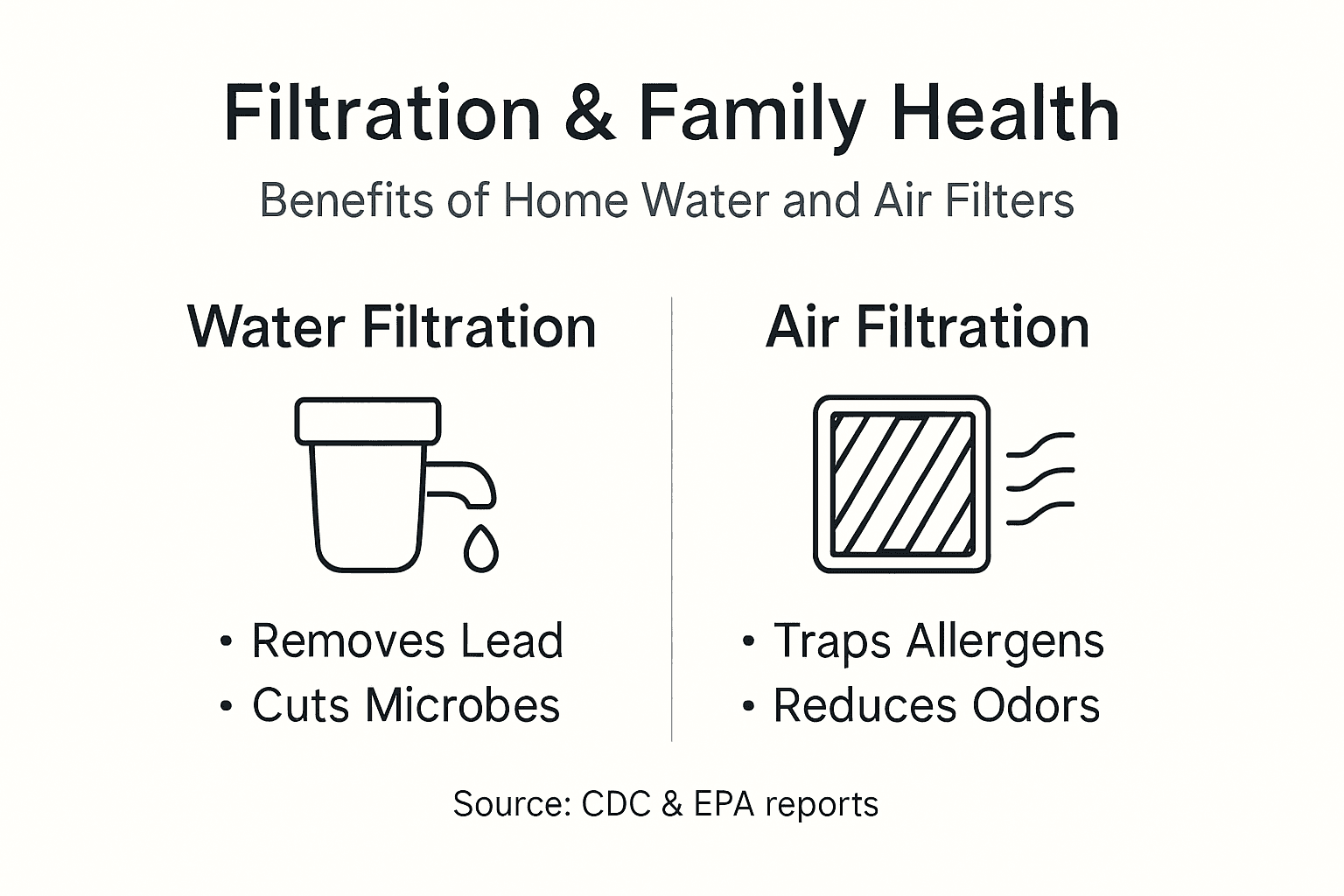
Compare specific under sink water purifiers to identify models matching your contamination concerns and budget constraints. Review essential air purifier features before purchasing to ensure you get technologies addressing your specific indoor air quality issues.
Maintenance and Longevity: Ensuring Lasting Health Benefits from Filtration
Neglecting maintenance transforms protective filtration systems into contamination sources. Saturated filters allow contaminants to pass through untreated, negating any health benefits. Worse, stagnant water in unchanged filters breeds bacteria that multiply and release into filtered output. Clogged air filters restrict airflow allowing pollutants to bypass filtration entirely.
Follow these maintenance schedules for sustained protection:
- Replace activated carbon water filters every three to six months depending on usage volume and contamination levels
- Change reverse osmosis membranes every two to three years as flow rate decreases indicating saturation
- Replace UV sterilization bulbs annually since effectiveness degrades even when lights still illuminate
- Change HEPA air filters every six to twelve months monitoring pressure indicators for early warning
- Clean pre-filters monthly to extend main filter lifespan and maintain airflow efficiency
- Schedule professional water quality testing annually to verify filtration effectiveness and catch emerging issues
Professional installation ensures proper system sizing, leak-free connections, and optimal placement for maximum effectiveness. Technicians can identify installation locations avoiding common pitfalls like inadequate water pressure for reverse osmosis or poor air circulation for purifiers. Annual professional servicing catches component failures before they compromise health protection.
Document replacement dates and set calendar reminders since visual inspection rarely reveals saturated filters. Many modern systems include electronic indicators tracking usage and alerting when maintenance becomes due, removing guesswork from the equation.
Review regular filter replacement importance for detailed replacement protocols. Learn how to maintain purifier efficiency naturally using simple cleaning techniques extending filter life between replacements.
Pro Tip: Buy filters in multi-packs when installing new systems, storing spares where you will remember them. This eliminates the temptation to delay replacement when filters run out.
Choosing the Right Filtration Solutions for Your Family
Effective filtration starts with understanding your specific contamination risks. Request water quality reports from municipal suppliers identifying detected contaminants and their concentrations. Well water owners should conduct comprehensive laboratory testing for bacteria, heavy metals, nitrates, and volatile organic compounds. Air quality concerns vary by location, with urban homes facing more outdoor pollution infiltration while rural properties battle agricultural chemical drift.
Match filtration technology to your priority health concerns:
- Families with young children should prioritize lead removal through reverse osmosis given developmental vulnerability
- Asthma sufferers benefit most from HEPA air filtration removing triggers like dust mites and pollen
- Homes with immune-compromised members need UV sterilization eliminating waterborne pathogens
- Allergy-prone families require both water and air filtration addressing multiple exposure routes
Budget considerations extend beyond purchase price. Calculate total cost of ownership including filter replacements, electricity consumption, and professional servicing over five years for realistic comparison. Sometimes higher initial investment in quality systems reduces long-term costs through better efficiency and durability.
Family size influences system capacity requirements. Large households need higher flow rate water filters preventing pressure drops during peak usage. Air purifier coverage must match room sizes with units rated for spaces 20% larger than actual dimensions ensuring adequate air changes per hour.
Verify independent certification from NSF International, Water Quality Association, or Association of Home Appliance Manufacturers confirming performance claims. Third-party testing validates contaminant removal percentages preventing deceptive marketing from compromising family health decisions.
Complete a home water filtration checklist before shopping to identify must-have features versus nice-to-have extras, focusing budget on capabilities delivering measurable health improvements.
Conclusion: Enhancing Family Health through Informed Filtration Choices
Filtration technology provides families with powerful tools for reducing toxic exposures and allergen burdens threatening wellbeing. Water systems removing lead, microbes, and chemical contaminants prevent gastrointestinal illness and protect neurological development. Air purifiers capturing allergens and particulate matter reduce asthma attacks and improve respiratory function. These health benefits require informed technology selection matching specific contamination risks plus diligent maintenance sustaining effectiveness.
Avoid common pitfalls by verifying independent performance certification, sizing systems appropriately for household needs, and establishing replacement schedules before filters fail. Reject marketing claims lacking scientific backing or third-party validation.
Take action today by testing your water quality, assessing indoor air concerns, and researching certified filtration solutions matching your family’s unique health priorities. The knowledge you have gained empowers confident decisions protecting those you love most through cleaner water and air at home.
Explore Expert Filtration Solutions for Your Home
Ready to transform your family’s health through advanced filtration? Coway delivers proven water and air purification systems combining multiple technologies for comprehensive protection.
Discover how the water purification process removes contaminants through sequential treatment stages. Explore our countertop ice water purifier offering reverse osmosis filtration with UV sterilization in space-saving designs. Compare types of home air purifiers featuring HEPA filtration and activated carbon layers targeting your specific indoor air quality concerns. Coway’s commitment to scientific innovation and rigorous testing ensures your family receives reliable protection backed by comprehensive service including free delivery, professional installation, and ongoing maintenance support.
FAQ
What types of contaminants do home water filters typically remove?
Home water filters remove heavy metals like lead and mercury, microbial pathogens including bacteria and cysts, chlorine and its byproducts, plus volatile organic compounds depending on the technology employed. Multi-stage filters combining reverse osmosis, activated carbon, and UV sterilization cover the broadest contaminant spectrum. Single-technology filters address specific threats, so matching your water quality test results to filter capabilities ensures effective protection.
How often should I replace or maintain my filtration systems?
Water filter replacement intervals range from three months for activated carbon to three years for reverse osmosis membranes depending on usage volume and contamination levels. Air filters typically need changing every six to twelve months based on runtime and particle load. Regular filter replacement prevents microbial growth and maintains contaminant removal efficiency, making adherence to manufacturer schedules essential for sustained health protection.
Can a single filtration system remove all types of contaminants in home air or water?
No single filtration technology removes all contaminant types due to diverse pollutants including dissolved solids, microorganisms, particles, gases, and volatile compounds requiring different treatment mechanisms. Multi-stage systems combining complementary technologies like reverse osmosis with UV sterilization or HEPA filtration with activated carbon provide comprehensive protection. Families facing multiple contamination threats benefit most from integrated solutions addressing varied pollutant categories simultaneously.
Are there specific filtration solutions better for families with children or asthma sufferers?
HEPA air purifiers combined with reverse osmosis water filters featuring UV sterilization best protect children and asthma sufferers from allergens, pathogens, and developmental toxins like lead. Children face heightened vulnerability to contaminants due to developing immune and neurological systems, while asthmatics require aggressive allergen reduction preventing respiratory attacks. Selecting certified filters addressing specific health vulnerabilities improves outcomes, as detailed in this water filtration checklist for families prioritizing pediatric and respiratory health concerns.
Recommended
- Role of Filtration in Health – Why It Matters – Coway Water Purifier
- Understanding the Role of Filtration Technology – Coway Water Purifier
- Why Regular Filter Replacement Matters for Families – Coway Water Purifier
- Certified Filtration: Safeguarding Your Home Health – Coway Water Purifier
