
Uncategorized
Water Quality Checklist 2026: 30% More Confident Choices
Mar
Many homeowners are unaware that 30% of U.S. households lack knowledge about contaminants in their water supply. Choosing the right filtration system feels overwhelming when you’re facing dozens of options claiming to remove everything from chlorine to PFAS. This article provides a structured checklist to help you make confident, health-focused decisions about your home’s water quality. You’ll learn exactly what to test, which technologies match your needs, and how to verify claims before spending a dollar.
Table of Contents
- How to Choose the Right Water Filtration System: Key Selection Criteria
- Water Quality Parameters to Test Before Buying a Filter
- Types of Water Purifiers: Technologies and Features
- Technology Comparison: Effectiveness and Use Cases
- Certification and Standards: What to Look For
- Maintenance and Filter Replacement Guidelines
- Cost and Accessibility Considerations
- Situational Recommendations: Choosing the Right System for Your Home
- Explore Coway Water Purification Solutions for Your Home
Key Takeaways
| Point | Details |
|---|---|
| Test First | Identify contaminants like lead and PFAS before selecting any filtration system. |
| Match Technology | Different filters target different contaminants; reverse osmosis handles PFAS while carbon removes chlorine. |
| Verify Certifications | NSF/ANSI certifications confirm tested performance and product safety. |
| Plan Maintenance | Regular filter replacement maintains effectiveness and prevents health risks. |
| Consider Your Situation | Renters, well owners, and homeowners face different water challenges requiring tailored solutions. |
How to Choose the Right Water Filtration System: Key Selection Criteria
Selecting the right water filtration system starts with understanding what makes one filter better than another for your specific situation. You need to evaluate several factors before making a purchase decision.
First, identify what contaminants are present in your water and at what concentrations. Contaminant type and concentration are the most important factors when selecting filtration technology. A filter that excels at removing chlorine might fail against lead or bacteria.
Match filtration technology effectiveness to those specific contaminants. Different technologies target different problems, and understanding this match saves you from buying the wrong system. Check NSF/ANSI certifications to verify manufacturer claims rather than relying on marketing promises.
Consider these critical factors:
- Installation complexity and whether it suits your home setup
- Maintenance frequency and filter lifespan for long-term convenience
- Initial cost plus ongoing filter replacement expenses
- Available space for countertop, under-sink, or whole-house systems
- Flow rate requirements for your household size
- Warranty and service availability in your area
Pro Tip: Create a spreadsheet comparing three to five systems side by side with columns for contaminant removal, cost per year, and maintenance requirements. This visual comparison makes the best choice obvious.
Balance your budget by calculating total cost of ownership over five years, not just the sticker price. A cheaper system with frequent filter changes often costs more than a premium system with longer-lasting filters. The water filtration process guide explains how different systems handle contaminant removal at each stage.
Water Quality Parameters to Test Before Buying a Filter
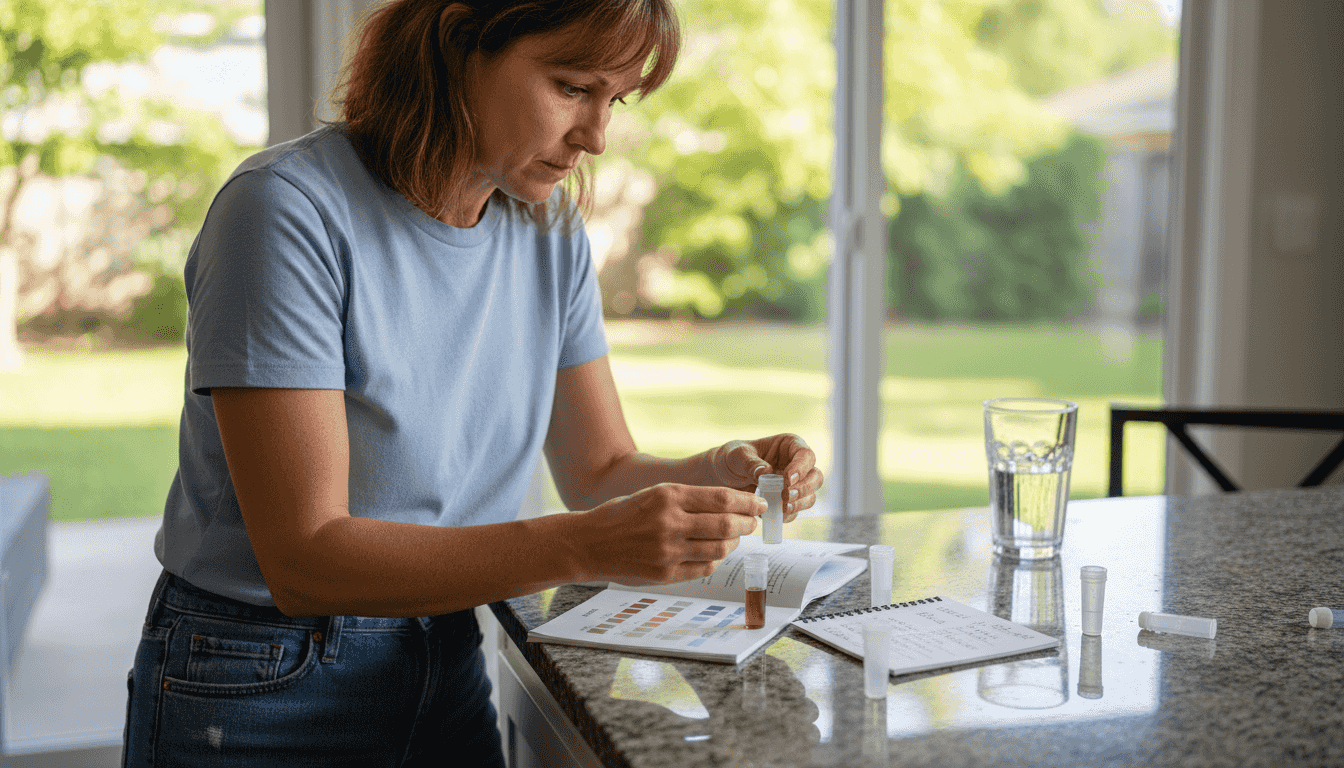
Testing your water reveals exactly what you’re fighting against. Without test results, you’re guessing which filtration system you need.
Common harmful contaminants include lead from old pipes, chlorine added during municipal treatment, and bacteria that thrive in untreated wells. Testing for lead, chlorine, bacteria, PFAS, hardness, and pH is crucial to understanding water safety before making filtration decisions. Each contaminant requires specific removal methods.
Emerging contaminants like PFAS (forever chemicals) require specialized testing beyond standard water quality panels. These synthetic chemicals persist in the environment and accumulate in your body over time. Standard municipal water reports often don’t test for PFAS, so you need to request specific testing.
Water hardness and pH impact both filtration effectiveness and your overall water quality. Hard water causes scale buildup that can damage some filtration systems, while pH outside the 6.5 to 8.5 range affects taste and pipe corrosion.
Municipal water and private well water face different contamination risks:
- Municipal water typically contains chlorine and treatment byproducts
- Well water often has bacteria, nitrates, and naturally occurring minerals
- Urban wells face industrial contaminant risks
- Rural wells may contain agricultural runoff and pesticides
- Both sources can have lead from household plumbing
Use certified laboratories or reputable home testing services for accurate results. Mail-in test kits from certified labs cost $150 to $300 but provide comprehensive analysis. The home water filtration checklist walks you through the complete testing process step by step.
Types of Water Purifiers: Technologies and Features
Understanding filtration technologies helps you match solutions to your water quality problems. Each technology excels at removing specific contaminants while having limitations you need to know.
Activated carbon filters are ideal for removing chlorine, volatile organic compounds, and improving taste and odor. They work through adsorption, trapping chemicals in tiny pores. However, carbon filters don’t effectively remove dissolved minerals, heavy metals, or microorganisms.
Reverse osmosis systems push water through a semipermeable membrane that blocks contaminants down to 0.0001 microns. Activated carbon filters remove chlorine and VOCs, reverse osmosis removes broad contaminants including PFAS, and UV treats microbes. RO systems effectively tackle heavy metals, PFAS, nitrates, and dissolved salts.
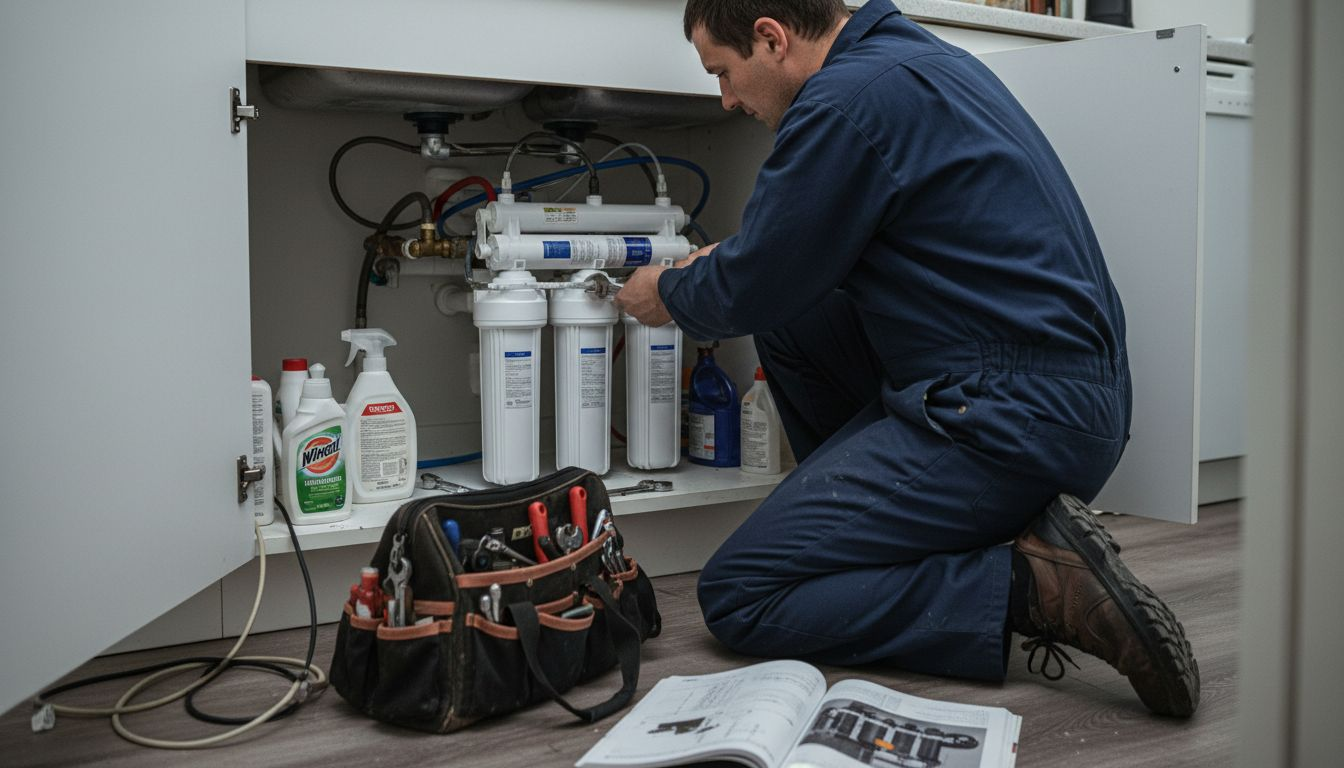
Ultraviolet purification kills bacteria, viruses, and other microorganisms using UV-C light. This technology provides excellent disinfection without chemicals but doesn’t remove particles, chemicals, or dissolved contaminants. UV systems work best when combined with other filtration methods.
Combination systems integrate multiple technologies for comprehensive purification:
- Carbon pre-filters remove chlorine and sediment
- RO membranes tackle dissolved contaminants and PFAS
- UV post-treatment ensures microbiological safety
- Remineralization stages add healthy minerals back
Pro Tip: If your water test shows multiple contaminant types, a combination system prevents you from buying and maintaining separate filters for each problem.
Systems vary from portable pitchers requiring no installation to whole-house systems treating water at your main line. Pitcher filters offer convenience but limited capacity and slower filtration. Under-sink systems provide high capacity and better filtration but require installation. Explore filtration technology examples to see how each method handles different water quality challenges.
Technology Comparison: Effectiveness and Use Cases
Comparing filtration technologies side by side reveals which system matches your water quality needs and lifestyle constraints. Performance varies dramatically across contaminant types.
| Technology | Lead Removal | PFAS Removal | Bacteria Removal | Maintenance | Best Use Case |
|---|---|---|---|---|---|
| Activated Carbon | 60-70% | 40-60% | Minimal | Every 3-6 months | Chlorine and taste improvement |
| Reverse Osmosis | 95-99% | 95-99% | 99%+ | Every 6-12 months | Comprehensive contaminant removal |
| UV Purification | 0% | 0% | 99.99% | Annual bulb replacement | Well water disinfection |
| Ceramic Filters | 90-95% | Minimal | 99.9% | Monthly cleaning | Bacteria and sediment |
| Ion Exchange | 95%+ | Minimal | Minimal | Every 3-6 months | Hard water and heavy metals |
Reverse osmosis removes 95-99% contaminants including PFAS, making it the most comprehensive option for serious water quality issues. Carbon filters excel at chemical removal but struggle with dissolved minerals and microbes.
Maintenance frequency impacts your real-world experience with any system. Reverse osmosis filters last longer but cost more to replace. Carbon filters need frequent changes but cost less per replacement. UV systems require annual bulb replacement regardless of water usage.
Installation complexity ranges from simple faucet attachments to systems requiring professional plumbing. Countertop systems need only a faucet adapter. Under-sink systems require drilling and connecting to your cold water line. Whole-house systems need installation at your main water line.
Cost considerations over five years:
- Pitcher filters: $200-400 total (low upfront, high ongoing)
- Countertop carbon: $300-600 total (moderate both)
- Under-sink RO: $800-2,000 total (high upfront, moderate ongoing)
- Whole-house systems: $2,000-5,000+ total (very high upfront, low ongoing per gallon)
The advanced filtration guide provides detailed comparisons of how each technology performs against specific contaminants you might face.
Certification and Standards: What to Look For
Certifications separate proven filtration systems from empty marketing promises. Independent testing confirms whether a filter actually removes what manufacturers claim.
NSF/ANSI standards cover both contaminant removal performance and general product safety. NSF/ANSI certifications confirm tested contaminant removal and product safety, ensuring reliability. Standard 53 addresses health-related contaminants like lead and cysts, while Standard 42 covers aesthetic issues like chlorine and taste.
Different certifications target different contaminants. NSF/ANSI 401 specifically addresses emerging contaminants including prescription drugs and PFAS. NSF/ANSI 58 covers reverse osmosis systems. Understanding which standard applies to your water quality concerns helps you choose the right certified product.
Verify certification claims through official NSF or WQA databases rather than trusting manufacturer websites alone. Some companies display certification logos without actually holding valid certifications. The NSF website lets you search by brand and model to confirm current certification status.
Key certifications to recognize:
- NSF/ANSI 42: Aesthetic effects (taste, odor, chlorine)
- NSF/ANSI 53: Health effects (lead, cysts, VOCs)
- NSF/ANSI 58: Reverse osmosis systems
- NSF/ANSI 401: Emerging contaminants including PFAS
- WQA Gold Seal: Independent verification of performance claims
Lack of certification serves as a warning sign to avoid unproven filters. While certification costs money for manufacturers, reputable companies invest in testing to prove their products work. Uncertified filters might remove nothing despite bold claims. Learn more about certified filtration standards and how they protect your family’s health.
Maintenance and Filter Replacement Guidelines
Proper maintenance keeps your filtration system working effectively and prevents it from becoming a contamination source. Neglected filters can harbor bacteria and release trapped contaminants back into your water.
Filter replacement intervals vary by technology and your household water usage. Carbon filters typically need replacement every three to six months. Reverse osmosis membranes last two to five years, though pre and post-filters need more frequent changes. UV bulbs require annual replacement even if still glowing, as UV output degrades over time.
Signs indicating your filter needs immediate replacement include changes in water taste or odor, visible discoloration, reduced flow rate, and unusual particles in filtered water. Delayed filter replacement reduces effectiveness and can pose health risks; adherence to replacement schedules is critical for maintaining water safety.
Risks of overdue maintenance extend beyond reduced effectiveness:
- Bacterial growth within saturated carbon filters
- Channel formation allowing unfiltered water bypass
- Membrane damage from sediment buildup
- Complete filtration failure without obvious symptoms
- Contaminant release from oversaturated media
Pro Tip: Set phone calendar reminders for filter changes rather than relying on memory. Most people underestimate how quickly months pass, leading to overdue maintenance.
Service and warranty options vary significantly between brands and retailers. Some manufacturers offer subscription filter delivery, removing the hassle of remembering to order replacements. Extended warranties cover parts and labor but may require professional installation to remain valid. Consider these service options before purchasing, as they affect long-term convenience.
Regular maintenance ensures sustained water safety and extends system longevity. A well-maintained reverse osmosis system can last 10 to 15 years. Neglected systems fail within a few years. The tips for clean drinking water include detailed maintenance schedules for different filtration technologies.
Cost and Accessibility Considerations
Understanding the complete financial picture helps you choose a system you can actually afford to maintain. Upfront price tells only part of the story.
Costs vary dramatically by technology and installation requirements. Pitcher filters start at $30 but require $40 to $80 in annual filter replacements. Reverse osmosis systems range from $500-$1,200 upfront with higher maintenance costs; activated carbon filters are lower cost and easier to maintain. Whole-house systems cost $1,500 to $4,000 plus installation.
Professional installation adds $200 to $500 for under-sink systems and $500 to $1,500 for whole-house systems. While DIY installation saves money, improper installation can cause leaks, void warranties, and reduce filtration effectiveness. Professional installation often includes testing and adjustments to optimize performance.
Filter replacement costs accumulate as the largest ongoing expense:
- Pitcher filters: $40-80 annually
- Countertop carbon: $60-120 annually
- Under-sink carbon: $80-150 annually
- RO system filters: $100-200 annually
- Whole-house filters: $150-400 annually
Some local water utilities offer rebates for installing certified filtration systems. Federal tax credits occasionally cover water quality improvements as part of home efficiency upgrades. Check with your water utility and tax advisor about available programs in your area.
Balancing upfront versus ongoing costs requires calculating total five-year ownership cost. A $200 pitcher system with $80 annual filters costs $600 total over five years. A $900 under-sink RO system with $150 annual filters costs $1,650 total but treats far more water with better contaminant removal. The complete water filtration guide helps you understand these cost tradeoffs.
Situational Recommendations: Choosing the Right System for Your Home
Tailored recommendations help you move from understanding options to making a confident purchase decision. Your specific water quality issues and living situation determine the best filtration approach.
-
Lead Contamination from Old Pipes: Under-sink reverse osmosis systems are best for lead removal, providing 95-99% reduction at your primary drinking water tap. Install at your kitchen sink for cooking and drinking water. Combine with a carbon filter at other taps if needed.
-
Chlorine and Taste Issues: Affordable activated carbon filters effectively remove chlorine, improve taste, and eliminate odors. Countertop or faucet-mounted models work well for renters. Whole-house carbon systems benefit households using water for cooking and bathing.
-
Renters and Small Households: Countertop carbon filters suit renters needing effective filtration without permanent installation. These portable systems move with you and require no landlord approval. Models with built-in storage provide convenience in small kitchens.
-
Private Wells with Microbial Risks: UV plus carbon combo recommended for well water microbial concerns, addressing both bacteria and chemical contaminants. Add sediment pre-filtration to protect UV bulbs from particle blocking. Test quarterly to monitor ongoing water quality.
-
PFAS Contamination: Reverse osmosis systems with NSF/ANSI 401 certification provide reliable PFAS removal. Point-of-use RO systems treat drinking and cooking water cost-effectively. Whole-house RO is expensive but addresses exposure through all water uses.
-
Hard Water Areas: Ion exchange softeners remove calcium and magnesium causing scale buildup. Combine with carbon filtration for comprehensive treatment. Salt-free conditioners offer an alternative that doesn’t remove minerals but prevents scale formation.
Consider cost, available space, and your willingness to perform maintenance within each recommendation. A busy household might prefer a low-maintenance RO system over frequent carbon filter changes. Visit the advanced filtration guide for additional scenario-based recommendations.
Explore Coway Water Purification Solutions for Your Home
Now that you understand how to evaluate water filtration systems, explore solutions designed to meet your specific needs. Coway offers certified water purifiers combining multiple technologies for comprehensive contaminant removal.
Our countertop and under-sink systems provide convenient installation options whether you rent or own your home. Advanced filtration stages target chlorine, heavy metals, bacteria, and emerging contaminants. Understanding the water purification process explained helps you see how each stage protects your family.
Explore the countertop ice water purifier for a complete solution providing filtered water and ice without installation. Compare models in our top under sink water purifiers guide to find the system matching your water quality test results and household needs.
Frequently Asked Questions
What is the best way to test my home’s water quality?
Use certified laboratory testing for accurate results covering lead, bacteria, PFAS, and other contaminants of concern. Mail-in test kits from accredited labs provide comprehensive analysis for $150 to $300. Regular testing is especially important for private well users who lack municipal monitoring. Test your tap water quality at least annually or after noticing changes in taste, odor, or appearance.
How often should I replace filters in my water purifier?
Most filters require replacement every three to twelve months depending on filter type and household water usage. Carbon filters typically need changing every three to six months, while RO membranes last two to five years. Changes in taste, odor, or water color signal a filter change is overdue. Follow manufacturer guidelines and clean drinking water filter tips to maintain optimal performance.
Are all water filters effective against emerging contaminants like PFAS?
No, filtration effectiveness varies widely across technologies. Only certain methods like reverse osmosis and activated carbon specifically designed for PFAS reliably remove these persistent chemicals. Check for NSF/ANSI 401 certification specifically addressing emerging contaminants including PFAS, pharmaceuticals, and industrial chemicals. Standard carbon filters without this certification may provide minimal PFAS removal.
Can renters install effective water filtration systems?
Countertop activated carbon filters offer effective, easy-to-install options perfect for rental situations. These systems connect to your faucet with a simple adapter and remove when you move. No permanent plumbing changes are needed, making them ideal for renters who want better water quality without landlord approval or installation costs.
Recommended
- How to Assess Water Quality for Safer Homes – Coway Water Purifier
- Essential Water Purification Maintenance Schedule for 2025 – Coway Water Purifier
- Understanding Why Test Drinking Water for Safety – Coway Water Purifier
- Understanding Water Purification Trends in 2025 – Coway Water Purifier
