
Uncategorized
Water safety standards explained for healthier homes

May
TL;DR:
- Water safety standards in the U.S. rely on regulations like the Safe Drinking Water Act, which set enforceable limits for contaminants and require ongoing testing. The WHO employs a preventative Water Safety Plan approach emphasizing hazard identification, control measures, and system verification to ensure continuous safe water delivery worldwide. Home filtration choices should be guided by specific contaminant testing, certified filtration standards, and rigorous maintenance to effectively protect families from evolving water risks.
Clear water looks safe. But appearances are deeply misleading when it comes to what’s actually flowing from your tap. Water safety standards explained in plain language reveal a layered system of regulations, testing, and treatment that works behind the scenes to protect your family. This guide walks you through U.S. federal law, global health guidelines, home filtration certifications, and how emerging contaminants are changing the conversation. Understanding these standards gives you the knowledge to move beyond guesswork and choose filtration that actually matches your home’s real risks.
Table of Contents
- Understanding U.S. water safety standards and regulations
- WHO drinking water guidelines: a global preventive risk management approach
- Navigating home water filtration certifications and what they mean
- Applying water safety standards at home: tailored filtration for your family’s health
- Emerging contaminants and the future of water safety standards
- A practical perspective on water safety standards for your home
- Explore trusted water purification solutions for your home
- Frequently asked questions
Key Takeaways
| Point | Details |
|---|---|
| EPA regulations protect public water health | The Safe Drinking Water Act sets enforceable limits and monitoring to keep municipal water safe. |
| WHO guidelines promote preventive risk management | Global frameworks emphasize continuous safety through Water Safety Plans and multiple control barriers. |
| NSF certifications ensure filter effectiveness | Different NSF standards target specific contaminants; matching certifications to water issues is crucial. |
| Home plumbing can affect water safety | Municipal compliance doesn’t guarantee tap water safety due to potential in-home contamination. |
| Stay informed about emerging contaminants | EPA tracks new chemical risks to update standards, highlighting ongoing water safety vigilance. |
Understanding U.S. water safety standards and regulations
The foundation of public drinking water safety in the United States is the Safe Drinking Water Act (SDWA), enacted in 1974 and updated multiple times since. It grants the Environmental Protection Agency authority to set legally enforceable contaminant limits called Maximum Contaminant Levels (MCLs). These limits are the legal ceiling for how much of a given substance can appear in drinking water delivered to your tap.
EPA sets enforceable limits for over 90 contaminants and specifies testing schedules that water systems must follow. Those contaminants fall into broad categories:
- Microbial contaminants: Bacteria, viruses, and protozoa like Cryptosporidium and Giardia
- Chemical contaminants: Nitrates, pesticides, industrial chemicals, and disinfection byproducts
- Radiological contaminants: Radium, uranium, and alpha/beta particle emitters
- Lead and copper: Addressed specifically under the Lead and Copper Rule, which governs corrosion control in pipes
Monitoring doesn’t happen in one place. Water utilities sample at the source, during treatment, throughout the distribution network, and sometimes at consumer taps. Results feed into Consumer Confidence Reports, which your utility is required to send you annually.
A crucial detail many homeowners miss: states can earn primacy, meaning they take over federal enforcement and can add stricter rules than EPA requires. California and New Jersey, for example, regulate additional contaminants beyond federal MCLs. Check your state’s environmental agency website to know what extra protections may apply to you.
Pro Tip: Read your annual Consumer Confidence Report carefully. It discloses detected levels for regulated contaminants, even when those levels are technically within legal limits. “Compliant” and “zero” are not the same number.
For a broader look at what makes water genuinely safe to drink, the safe drinking water guide covers practical considerations beyond regulatory basics.
WHO drinking water guidelines: a global preventive risk management approach
While the EPA operates through enforceable law, the World Health Organization takes a different angle. The WHO’s guidelines are not legally binding, but they are the blueprint most nations use to build their own national standards. Understanding water safety at a global level means understanding how the WHO thinks about risk.
“WHO guidelines emphasize health-based targets and Water Safety Plans for continuous preventive management across the entire water supply system, from catchment to tap.”
The Water Safety Plan (WSP) model is the WHO’s most important contribution to water quality thinking. Rather than relying on endpoint testing (checking the water after it reaches you), WSPs focus on identifying hazards early and controlling them at every stage. Here’s how that framework breaks down:
- System assessment: Identify all potential hazards from source water to consumer tap
- Control measures: Assign protective actions at each identified risk point
- Operational monitoring: Continuously verify that each control measure is working
- Verification: Conduct periodic testing to confirm the system is delivering safe water
- Management plans: Document corrective actions for when something goes wrong
This isn’t just regulatory theory. It reflects the reality that water safety involves multiple, simultaneous threats across microbiological, chemical, radiological, and even aesthetic categories like taste and odor.
Key hazard categories the WHO framework addresses:
- Pathogenic bacteria and viruses from human and animal waste
- Agricultural runoff carrying pesticides and nitrates
- Industrial discharge introducing heavy metals and solvents
- Natural geological contamination, including arsenic and fluoride
- Distribution system failures that reintroduce contamination after treatment
The practical takeaway for homeowners is this: even world-class treatment systems rely on multiple barriers, not one single protective layer. That principle directly applies to what you choose to install in your own home. For concrete strategies on applying this thinking at home, explore healthy drinking water strategies.
Navigating home water filtration certifications and what they mean
Water safety certification for home filters is where the gap between marketing and reality is widest. A product can claim to “purify” your water without removing a single health-relevant contaminant. NSF International and ANSI set the standard certifications that tell you precisely what a filter actually removes.
| Certification | What it covers | Typical filter types |
|---|---|---|
| NSF/ANSI 42 | Chlorine, taste, odor, and particulates | Pitcher filters, basic faucet filters |
| NSF/ANSI 53 | Health contaminants: lead, PFAS, VOCs, cysts | Carbon block filters, under-sink units |
| NSF/ANSI 58 | Reverse osmosis: removes fluoride, arsenic, nitrates | RO systems, countertop RO units |
| NSF/ANSI 401 | Emerging contaminants: pharmaceuticals, hormones | Advanced carbon and RO systems |
The most common mistake families make is purchasing a filter rated only for NSF 42 when their concern is lead. NSF certifications differ significantly: 42 handles taste and odor, 53 covers health-critical contaminants like lead and PFAS, and 58 applies to reverse osmosis systems including fluoride and arsenic removal. Buying on aesthetics when you have a chemistry problem is an expensive non-solution.
Pro Tip: Verify any filter’s certification directly on the NSF product database at nsf.org before purchasing. Some products display certification logos without being actively listed in the database, which means the certification may be expired or fabricated.
Key questions to guide your selection:
- What specific contaminants appear in your water quality report?
- Does the filter’s NSF certification address those specific contaminants or just general categories?
- What is the filter’s rated flow capacity, and does it match your household usage?
- Has the filter been tested at the correct pH and temperature range for your water supply?
Installation quality also matters. A certified professional water filter installation ensures the system performs as tested, especially for under-sink or whole-home configurations where incorrect plumbing can bypass filtration entirely.
For homeowners ready to match certified options to their specific situation, certified filtration standards provides detailed guidance.
Applying water safety standards at home: tailored filtration for your family’s health
Municipal compliance is a starting line, not a finish line. When water leaves the treatment plant meeting all EPA standards, it still travels through miles of aging distribution pipes and then through your home’s plumbing before reaching your glass. That journey adds risk, particularly from lead and copper.
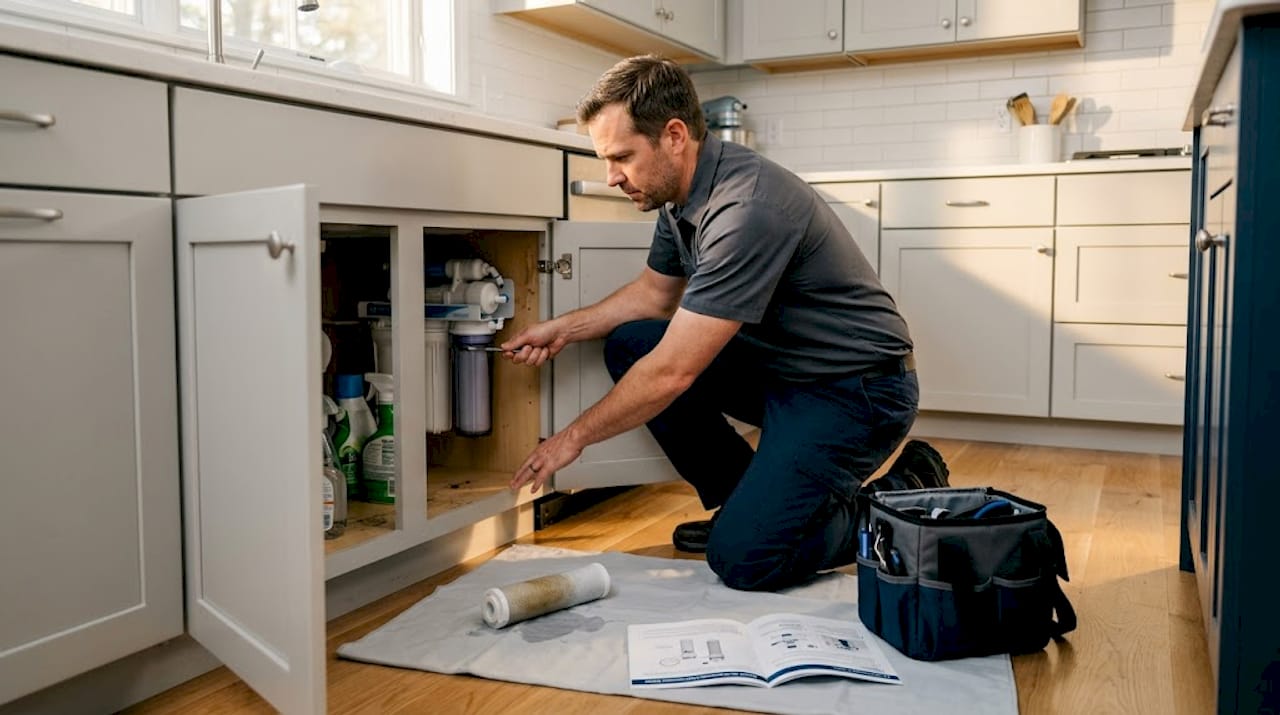
Household plumbing corrosion introduces contaminants not present in the treated municipal supply. Homes built before 1986 may have lead solder at joints or lead service lines. Even brass fixtures installed more recently can leach trace amounts of lead into standing water. The fix is not aesthetic filtration. It’s targeted filtration based on what your water actually contains.
Here’s a practical process for applying water safety standards in your home:
- Request your Consumer Confidence Report from your utility and note any contaminants detected, even below MCL levels
- Test your tap water directly using a certified lab (not a mail-order strip test) to catch plumbing-specific issues your utility won’t identify
- Match filter certifications to detected contaminants rather than choosing based on price or marketing claims
- Verify correct flow rate sizing so the filter handles your household’s peak demand without bypass
- Schedule cartridge replacement based on manufacturer guidelines and your actual water volume, not just calendar time
A critical but often overlooked detail: filter effectiveness depends entirely on correct installation, sizing, and maintenance. A well-chosen filter that’s overdue for cartridge replacement may pass more contaminants than no filter at all, because the media becomes saturated and potentially harbors bacteria.
Key maintenance practices that protect your family:
- Replace filter cartridges on schedule, or earlier if water usage exceeds the rated volume
- Flush new cartridges for the manufacturer-recommended duration before consuming water
- Sanitize filter housings during every cartridge change
- Monitor water pressure and flow rate as indicators of filter performance
For guidance on choosing a water purifier that fits your home’s specific conditions, the right starting point is always your water test results.
Pro Tip: Keep a maintenance log with cartridge change dates and your household’s monthly water volume. This simple record helps you catch when your usage exceeds the filter’s rated capacity well before any performance issue becomes visible.
Emerging contaminants and the future of water safety standards
The 90-plus contaminants currently regulated under the Safe Drinking Water Act represent what we knew was dangerous decades ago. Science moves faster than regulation. Thousands of chemicals in active use have never been formally evaluated for drinking water health effects.
“EPA’s Contaminant Candidate List identifies emerging contaminants before formal regulation; regulatory determinations follow a science-based review process to determine whether new standards are warranted.”
PFAS (per- and polyfluoroalkyl substances) are the most visible current example. This family of thousands of industrial chemicals was used in everything from nonstick cookware coatings to firefighting foam, and they accumulate in human tissue over time. EPA published new enforceable PFAS limits in 2024, but the Contaminant Candidate List (CCL) continues tracking additional compounds that have not yet reached that regulatory threshold.
What the CCL process means practically for your family:
- CCL 6, the most recent list, includes microplastics, certain pharmaceuticals, and dozens of industrial chemicals under active scientific review
- EPA reviews and updates the CCL every five years, so new regulations can emerge within a planning horizon relevant to your current filtration choices
- Filters certified under NSF/ANSI 58 (reverse osmosis) and NSF/ANSI 401 provide documented reduction of several CCL-listed compounds
- Staying connected to EPA announcements and your utility’s annual reports keeps you ahead of regulatory changes
The practical response isn’t panic. It’s choosing filtration certified to address emerging contaminant categories now, rather than waiting for regulation to catch up. For homeowners who want to act on this, certified filtration for emerging threats is worth exploring in detail.
A practical perspective on water safety standards for your home
Here’s what the regulatory language rarely says plainly: municipal compliance is a population-level guarantee, not a household-level one. The EPA’s MCLs are designed to protect public health across an entire water system serving thousands of people. They are not designed to account for the specific age of your pipes, the chemistry of your fixtures, or whether your building has lead solder at every joint.
EPA rules and WHO’s framework both emphasize multiple barriers and preventive system management rather than relying on a single endpoint test. Yet most homeowners treat their filter as a one-time purchase and forget about it until something tastes wrong. That’s the equivalent of installing a smoke detector and never replacing the battery.
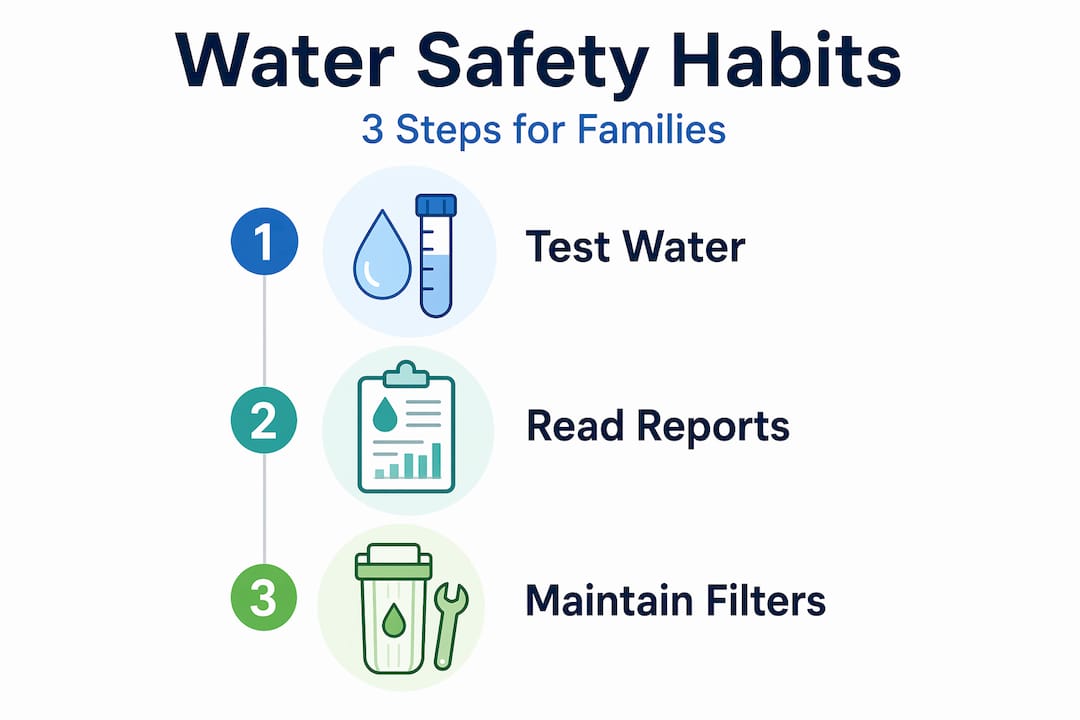
The families who genuinely protect their health from water contaminants share three habits. First, they know what’s actually in their water, not just what’s legally permitted to be there. Second, they match their filtration to specific, confirmed contaminants rather than choosing based on brand recognition or taste improvement. Third, they treat filter maintenance as a non-negotiable routine, the same way they treat changing their HVAC filters.
Understanding standards also gives you protection against marketing manipulation. The home filtration market is full of products making dramatic claims with no certified verification behind them. Knowing the difference between NSF 42 and NSF 53 is not trivia. It’s the difference between spending money on peace of mind and actually protecting your family.
Explore healthy drinking water naturally for practical steps that extend beyond filtration into the broader habits that support water safety at home.
Explore trusted water purification solutions for your home
Understanding water safety standards is only valuable when it leads to action. Choosing the right filtration system for your family requires products built around genuine certification, not just marketing claims, which is exactly where Coway’s range of home water purifiers stands apart.
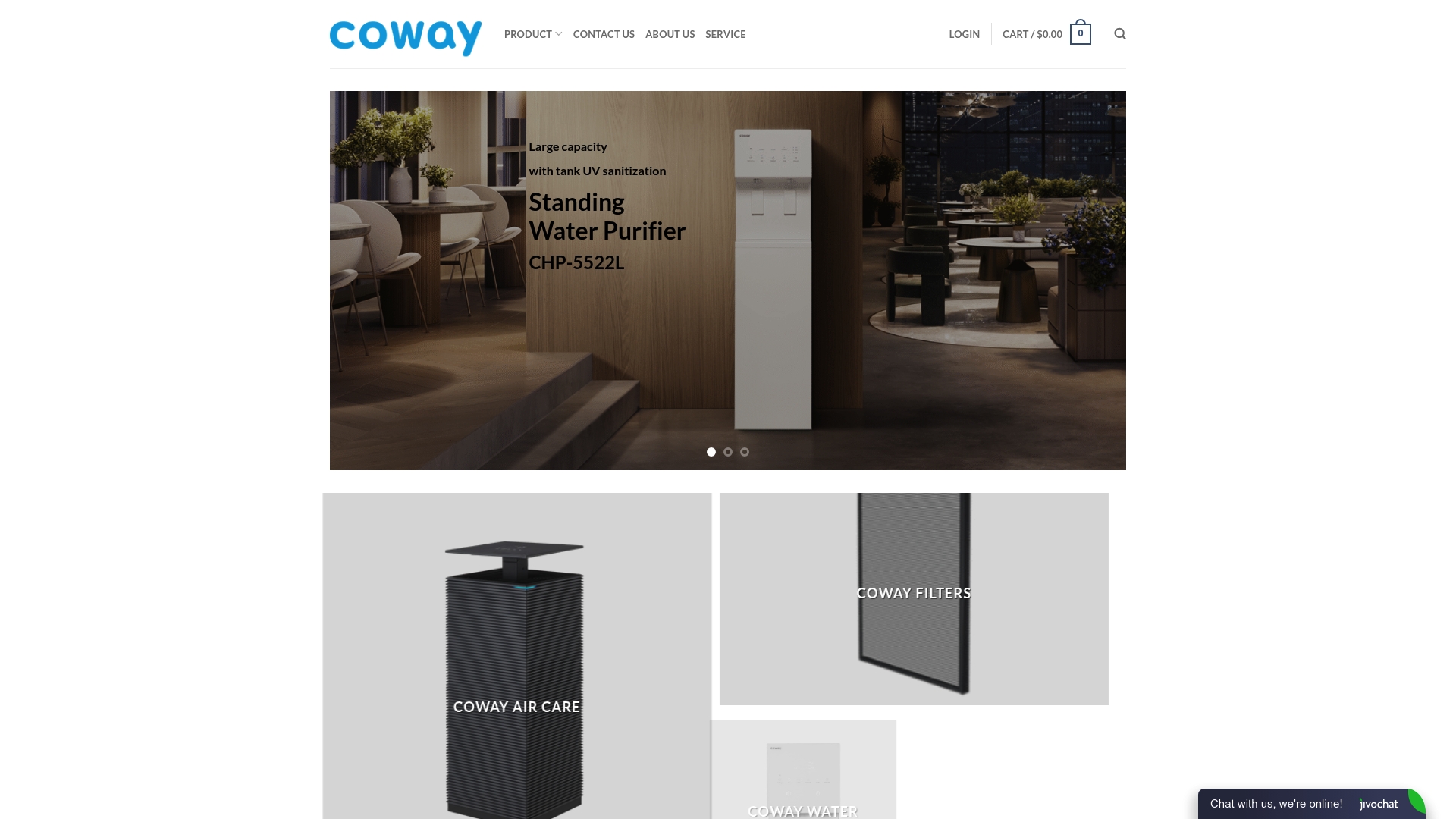
Coway offers countertop and under-sink water purifiers designed to address real contaminant concerns, not just taste improvement. Their systems incorporate multi-stage filtration and UV sanitization technology, addressing both chemical and microbial risks in a single unit. If you’re researching how filtration technology works before deciding, the water purification process guide is a useful starting point. And if you want to compare what separates modern purifiers from basic filters, features of modern water purifiers breaks down exactly what to look for. Regular maintenance services come included, so your system keeps performing as designed, without shortcuts.
Frequently asked questions
What are the main water safety standards protecting my home’s drinking water?
In the U.S., the Safe Drinking Water Act establishes enforceable contaminant limits through EPA regulations covering over 90 substances, while WHO guidelines provide a global risk management framework that many countries use to shape their own national rules.
How do NSF certifications help me choose a water filter?
NSF 53 and 58 certify filters for health-related contaminants like lead and PFAS, while NSF 42 only addresses taste and odor. Always match the certification to the specific contaminant concern identified in your water test, not to the filter’s price or marketing language.
Can municipal water safety standards guarantee my home’s water is safe?
Municipal compliance confirms that treated water met standards when it left the plant, but household plumbing can introduce lead and other contaminants before water reaches your tap. Home-specific testing and targeted filtration remain important even when your utility’s annual report shows clean results.
What should I know about emerging contaminants in drinking water?
EPA’s CCL process tracks unregulated contaminants including PFAS, microplastics, and pharmaceuticals for potential future regulation. Using filters certified to NSF 58 or NSF 401 gives you measurable protection against several of these compounds before formal regulation is in place.
Recommended
- The ultimate water safety checklist for healthy homes – Coway Water Purifier
- How to Assess Water Quality for Safer Homes – Coway Water Purifier
- Your step-by-step guide to household water safety – Coway Water Purifier
- Why water quality matters for your health at home – Coway Water Purifier
