
Uncategorized
Emerging Air Purification Trends 2025: Smart, Sustainable Solutions
Feb
Urban air feels clean until allergies strike and breathing gets tough. With nearly half of Americans living in areas with failing air quality grades, it’s clear that indoor air demands more attention than ever. Most people spend almost their entire day indoors surrounded by elevated pollutants, making purification a priority for American families. This article reveals the smart strategies and new technologies behind effective air purification in 2025, guiding you toward real relief and healthier living.
Table of Contents
- What Defines Air Purification Trends in 2025
- Smart Features and AI Integration Advancements
- New Filtration Technologies and Key Innovations
- Focus on Sustainability and Eco-Friendly Design
- Choosing Systems for Urban Allergies and Clean Living
Key Takeaways
| Point | Details |
|---|---|
| Impact of Indoor Air Quality | Poor indoor air quality significantly affects health, with systems now focusing on comprehensive solutions for various pollutants. |
| Smart Technology Integration | Modern air purifiers utilize AI for real-time monitoring and automated adjustments, enhancing efficiency and usability. |
| Sustainability Focus | Manufacturers are prioritizing eco-friendly materials and energy-efficient designs to reduce environmental impact while maintaining performance. |
| Personalized Solutions | Customized air purification systems address specific allergies and pollutants, essential for effective management in urban environments. |
What Defines Air Purification Trends in 2025
Air purification in 2025 centers on one critical reality: indoor air quality directly impacts your family’s health. Nearly half of Americans live in areas with failing air quality grades, yet most people spend about 90% of their time indoors where pollutant concentrations run two to five times higher than outdoor levels. This gap between outdoor and indoor air quality defines the entire landscape of modern purification solutions.
The challenge isn’t just about dust anymore. Today’s air contains complex contaminants that demand comprehensive strategies rather than single-filter solutions.
Key pollutants shaping 2025 trends include:
- PM2.5 particles that penetrate deep into your lungs
- Volatile organic compounds from household products
- Airborne pathogens including COVID-19 variants and resurgent diseases
- Allergens that trigger year-round symptoms
Smart technology integration now defines how purifiers operate. Rather than passive filtration, 2025 systems actively monitor, adapt, and communicate with your devices. Real-time air quality sensors detect changes instantly, triggering automated responses without you lifting a finger.
Sustainability shapes every decision manufacturers make. Energy-efficient motors, recyclable filter materials, and extended filter life reduce your environmental footprint while lowering operating costs. Urban homeowners increasingly reject disposable approaches in favor of systems engineered for responsible long-term use.
Rising health awareness from poor indoor air quality drives consumer demand for transparency. People want to see real-time data about what their purifiers remove. Manufacturers now publish specific pollutant reduction percentages and independent certifications to prove claims.
In 2025, air purification isn’t about hiding the problem—it’s about measuring, tracking, and continuously improving indoor air quality with documented results.
The role of air purifiers has fundamentally shifted from luxury appliances to health infrastructure. Understanding the complete role of air purifiers in modern homes helps you recognize why they’re becoming standard in health-conscious households.
Personalization matters more than generalized solutions. Your specific needs—pet allergies, asthma triggers, or urban pollution exposure—determine which purification features actually benefit you. Mass-market products no longer cut it for urban residents managing multiple air quality challenges simultaneously.
Pro tip: Check your local air quality index before purchasing; homeowners in areas with persistent PM2.5 or ozone issues need different filtration capabilities than those in moderate pollution zones.
Smart Features and AI Integration Advancements
Your air purifier is no longer a passive appliance sitting in the corner. Modern systems now think, learn, and adapt to your home’s specific air quality patterns. AI-driven air quality monitoring enables predictive analytics and dynamic adjustment to pollutant levels, transforming how purifiers respond to real-time threats.
Intelligent sensors form the foundation of smart purification. These devices continuously scan your air, detecting subtle changes in pollutant concentrations before you notice any difference in air quality.
What smart features actually do for you:
- Monitor PM2.5, VOCs, and humidity 24/7 without manual checking
- Automatically adjust fan speed based on current pollution levels
- Send real-time alerts to your phone when air quality drops
- Schedule operation around your daily routines for optimal coverage
- Learn your patterns and predict future air quality issues
AI-powered automation eliminates guesswork from air purification. Rather than running at constant speed, your system ramps up when outdoor pollution spikes from traffic or wildfires. When air quality improves, it reduces power consumption, cutting energy bills while maintaining health protection.
Integration with smart home ecosystems completes the picture. Your purifier now communicates with your thermostat, humidifier, and security system. When outdoor air quality worsens, your system automatically closes windows and triggers purification without touching anything.
Real-time data transparency addresses urban homeowners’ need to understand what they’re breathing. Smartphone dashboards show exactly which pollutants your purifier removed today, weekly trends, and filter saturation levels. No more guessing when to replace filters—the system tells you.
Machine learning algorithms remember your home’s pollution patterns, predict future quality issues, and automatically prepare your system before problems develop.
Predictive maintenance prevents breakdowns that compromise air quality. Your purifier alerts you about filter replacement timing weeks in advance, not after performance degrades. This proactive approach keeps your system operating at peak efficiency.
Voice control integration adds convenience for busy households. Simply tell Alexa or Google Home to check your air quality or adjust purification levels without reaching for your phone.
Pro tip: Enable weekly data reviews in your purifier’s app to identify pollution patterns unique to your neighborhood; this helps you understand which times require maximum purification and when you can reduce energy consumption.
To clarify how modern air purifier features differ, here is a summary table of cutting-edge smart and traditional functions:
| Feature Type | Smart Purifiers (2025) | Traditional Purifiers |
|---|---|---|
| Air Quality Monitoring | Real-time sensors with mobile alerts | Manual checks only |
| Automation | Predictive, AI-powered adjustments | Basic on/off operation |
| Integration | Works with smart home devices | Standalone appliances |
| Maintenance Alerts | Predictive filter replacement reminders | Manual schedule/no alerts |
| Data Transparency | App dashboards with live pollutant data | No digital reporting |
New Filtration Technologies and Key Innovations
Filtration technology has evolved far beyond simple mesh screens trapping dust. Modern purifiers stack multiple filtration layers, each targeting different pollutants to create comprehensive protection against the varied threats in your indoor air.
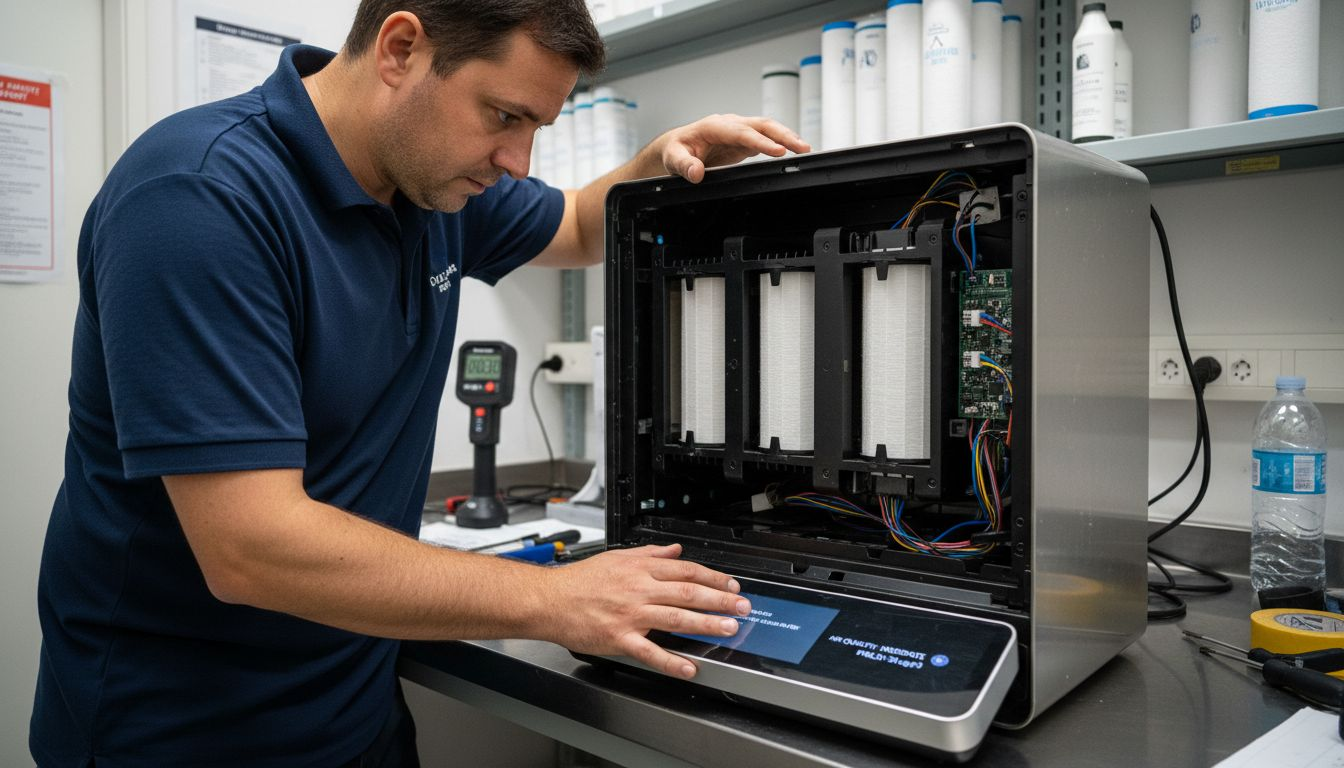
HEPA filtration remains the backbone of air purification, commanding more than 68% market share in 2025. These filters capture 99.97% of particles 0.3 microns or larger, making them essential for allergy relief and particulate matter removal.
But HEPA alone isn’t enough anymore. Hybrid multi-stage filtration systems rapidly expand market options by combining multiple technologies into single units that address broader contamination challenges.
What modern filtration layers actually accomplish:
- Pre-filters catch large particles like pet hair and dust
- HEPA filters target fine particulates and allergens
- Activated carbon removes odors and volatile organic compounds
- UV-C light neutralizes bacteria and viruses
- Photocatalytic oxidation breaks down chemical pollutants
Advanced material innovations push purification beyond traditional approaches. Emerging technologies leverage photocatalytic oxidation, plasma-based purification, and novel nanomaterials that enhance filtration effectiveness while reducing energy consumption.
Photocatalytic oxidation uses light-activated catalysts to destroy pollutants at the molecular level. When UV light strikes titanium dioxide surfaces, it triggers chemical reactions that obliterate VOCs and biological contaminants rather than simply trapping them.
Plasma-based purification creates ionized gas that neutralizes airborne particles without generating harmful ozone. This technology works faster than traditional methods and requires less filter replacement, reducing maintenance headaches.
Nanomaterial innovation represents the cutting edge. Nanofibers create denser filter weaves that capture smaller particles while maintaining airflow efficiency. Your system purifies faster without sounding like an airplane engine.
Modern filtration stacks deliver maximum purification performance with minimum noise and energy consumption, addressing urban homeowners’ demands for health protection without lifestyle compromise.
Integration of multiple technologies creates synergistic effects. HEPA handles particulates while activated carbon addresses chemical pollutants, and UV-C eliminates biological threats simultaneously. This comprehensive approach prevents pollutants from hiding in filters.
Pro tip: When comparing purifiers, check whether they specify filtration efficiency for PM2.5, VOCs, and biological contaminants separately; single-metric claims often hide weaknesses in specific pollutant categories critical to your household.
The following table compares leading filtration technologies, highlighting each method’s primary use and unique benefit:
| Technology | Primary Target | Key Advantage |
|---|---|---|
| HEPA | Fine particles & allergens | 99.97% removal efficiency |
| Activated Carbon | Odors, gases, VOCs | Absorbs chemicals and smells |
| UV-C Light | Bacteria, viruses, mold | Neutralizes biological hazards |
| Photocatalytic Ox. | VOCs, chemical pollutants | Destroys pollutants at molecule |
| Plasma Purification | Particles, pathogens | Fast, low-maintenance operation |
| Nanomaterial Filters | Ultra-fine particles | Maintains high airflow |
Focus on Sustainability and Eco-Friendly Design
Your air purifier shouldn’t come at the expense of the environment. In 2025, manufacturers are rethinking every component—from filter materials to energy consumption—to create systems that protect both your home and the planet.
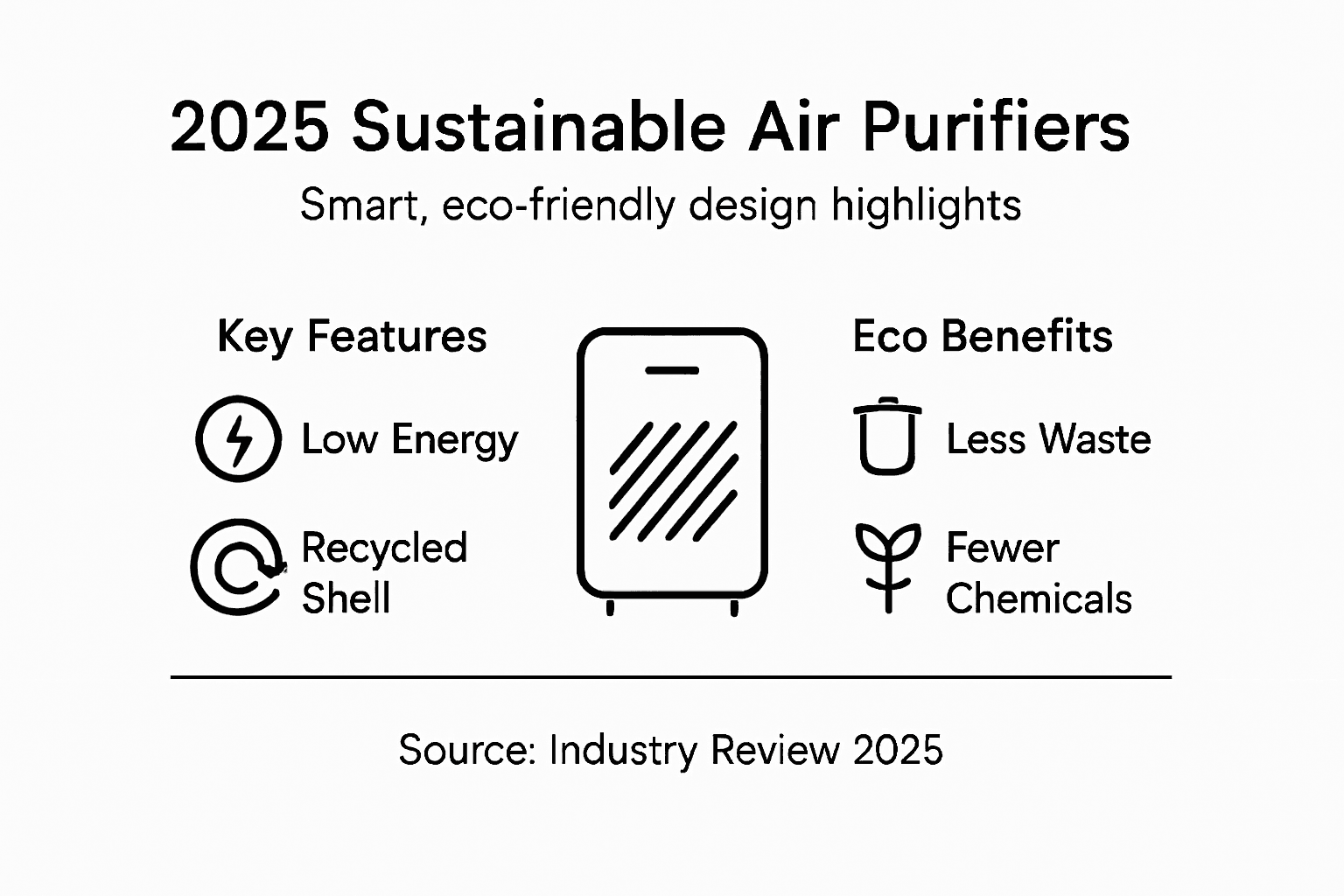
Sustainable innovation starts with material choices. Instead of synthetic polymers destined for landfills, innovations now utilize natural and eco-friendly components such as algae-based filters and biodegradable materials that reduce environmental impact during manufacturing and disposal.
Why material selection matters:
- Algae-based filters grow naturally without chemical processing
- Biodegradable media breaks down instead of persisting in landfills
- Recyclable housing reduces plastic waste significantly
- Non-toxic manufacturing processes eliminate chemical byproducts
- Extended filter life means fewer replacements over time
Energy efficiency directly impacts your environmental footprint. Modern purifiers consume 30-50% less electricity than 2022 models by using smarter motors that adjust speed based on actual air quality rather than running constantly at maximum power.
Regulatory pressure and consumer demand drive sustainability adoption across the industry. Urban homeowners increasingly refuse to choose between health protection and environmental responsibility.
Sustainable air purification reduces energy consumption, minimizes chemical byproducts, and adopts recyclable or biodegradable filter media that support broader environmental objectives while maintaining air quality standards.
Manufacturers now publish lifecycle assessments showing environmental costs from production through disposal. This transparency lets you calculate the true impact of your purchase, not just immediate air purification benefits.
Filter replacement presents the biggest sustainability opportunity. Rather than buying disposable filters monthly, some systems use washable pre-filters that last years and replaceable core filters that cost less and generate less waste.
Sustainability in air purification means effectiveness without environmental compromise—systems designed to clean your air while supporting ecological balance for decades.
Smart design reduces consumption patterns. Automated operation triggered only when needed cuts wasted energy running purifiers through empty homes. Voice-controlled scheduling ensures your system operates during peak pollution hours, not during your weekend trip.
Pro tip: When comparing sustainable options, calculate the true cost of ownership including filter expenses and energy bills over five years; upfront prices don’t reflect total environmental impact.
Choosing Systems for Urban Allergies and Clean Living
Urban living brings unique air quality challenges that generic purifiers can’t solve. Allergies triggered by city pollution, pet dander, and mold require systems designed specifically for your environment and health needs.
Start with your specific allergies. Pet owners need different filtration than those affected by pollen. People with asthma require systems targeting smaller particles than those managing general dust sensitivities. Your purifier should address your actual triggers, not just common pollutants.
Key factors for urban allergy sufferers:
- HEPA filters capture 99.97% of allergen particles you breathe
- Activated carbon removes chemical odors from traffic and industry
- UV-C light neutralizes biological allergens like mold spores
- Real-time monitoring shows which pollutants affect your specific home
- Noise levels matter for bedroom and work-from-home spaces
HEPA filters and activated carbon capture fine particulate pollutants and allergens essential for urban environments where allergen concentrations run significantly higher than suburban areas.
Smart systems transform allergy management. Rather than hoping your purifier works, real-time air quality feedback lets you see exactly when pollution spikes. You’ll notice patterns—rush hour traffic worsening afternoon allergies or mold growth during humid seasons.
Maintenance demands matter more in cities. Urban dust accumulates faster than suburban settings, requiring more frequent filter changes. Systems with washable pre-filters reduce long-term costs while biodegradable core filters minimize environmental guilt.
Advanced air filtration technologies including HEPA and UV-C light combined with lifestyle adaptations reduce indoor exposure for comprehensive protection against urban allergen threats.
Noise concerns often get overlooked until you’re sleeping three feet from a jet-engine fan. Modern urban systems operate at 25-35 decibels during normal cycles—quieter than refrigerators—while maintaining serious purification power.
Urban allergy relief requires matching your specific triggers with filtration capabilities, not buying the most expensive system or most popular brand.
Placement strategy directly impacts effectiveness. Bedroom purifiers should run all night if you wake with congestion. Living room systems work better during daytime hours when you’re gathering outdoor pollutants. Kitchen placement handles cooking odors and grease particles.
Pro tip: Test your system’s real-time air quality monitor against a standalone meter for the first week; compare readings to ensure accuracy before trusting automated adjustments.
Experience Smart and Sustainable Air Purification Solutions Today
The clear challenge in 2025 is protecting your home from complex indoor air pollutants while embracing smart technology and sustainability. With rising concerns about PM2.5 particles, volatile organic compounds, and airborne pathogens, your family’s health depends on more than just basic filters. You need dynamic systems that monitor air quality in real time, adjust automatically, and use eco-friendly materials to reduce your environmental impact.
At Coway, we understand these evolving needs and offer advanced air purifiers designed to meet them head on. Explore our range of health-focused, energy-efficient products that combine HEPA filtration, UV sanitization, and smart features that work seamlessly with your lifestyle. Discover how cutting-edge innovation and reliable performance come together to create safer, cleaner indoor air.
Take the first step toward breathing easier by visiting Uncategorized Archives – Coway Water Purifier to see our latest models.
Improve your home’s air quality now by choosing Coway’s smart and sustainable purifiers. Visit https://cowayswaterpurifier.com to explore products, benefit from free delivery and installation, and join health-conscious homeowners prioritizing lasting protection. Don’t wait until air quality issues affect your well-being—act today to safeguard your family and environment.
Frequently Asked Questions
What are the key pollutants that influence air purification trends in 2025?
In 2025, air purification trends are primarily influenced by pollutants like PM2.5 particles, volatile organic compounds (VOCs), airborne pathogens, and allergens that trigger various health issues.
How do smart features enhance the performance of air purifiers?
Smart features in air purifiers allow for real-time air quality monitoring, automated adjustments to fan speed based on pollution levels, and integration with smart home systems. This ensures optimal air quality management without manual intervention.
What advancements are being made in air filtration technologies for 2025?
Advancements in air filtration technologies include hybrid multi-stage systems utilizing HEPA filters, activated carbon, UV-C light, and photocatalytic oxidation, which effectively capture and neutralize a wider range of pollutants compared to traditional filters.
How important is sustainability in the design of modern air purifiers?
Sustainability is crucial in modern air purifier design, with manufacturers focusing on eco-friendly materials, energy efficiency, and reduced waste through longer-lasting and biodegradable filters, aiming to minimize environmental impact while maintaining air quality.
Recommended
- 2025 Water Filtration Trends: Complete Guide – Coway Water Purifier
- Understanding Water Purification Trends in 2025 – Coway Water Purifier
- Energy-Efficient Purification: Cleaner Air and Water at Home – Coway Water Purifier
- How to Select Air Purifier for Healthy Home Air Quality – Coway Water Purifier
