
Uncategorized
The Role of Activated Carbon in Filtration at Home

May
TL;DR:
- Activated carbon filters contaminants through adsorption on their surface, not physical straining.
- They effectively remove chemicals, odors, and VOCs but do not eliminate dissolved minerals or microbes.
Most people assume filtration means straining out particles, like running water through a fine mesh. That mental model explains why so many families buy a filter and expect it to handle everything from chlorine taste to heavy metals to bacteria. But the role of activated carbon in filtration is something entirely different. Activated carbon doesn’t screen anything. It attracts contaminants to its surface through a process called adsorption, and that distinction changes what it can do, what it can’t, and why every serious home filtration system uses it.
Table of Contents
- Key takeaways
- The role of activated carbon in filtration explained
- Activated carbon in water filtration
- Activated carbon in air filtration
- Practical considerations for home use
- My honest take on activated carbon at home
- How Cowayswaterpurifier uses activated carbon for your home
- FAQ
Key takeaways
| Point | Details |
|---|---|
| Adsorption, not filtration | Activated carbon traps contaminants on its surface, not through physical screening. |
| Best for chemicals and odors | It removes chlorine, VOCs, pesticides, and taste compounds in water and air. |
| Real limitations exist | It does not remove dissolved minerals, nitrates, or kill microbes in water. |
| Pair it with other technologies | Carbon works best alongside HEPA filters for air and UV or reverse osmosis for water. |
| Replacement timing matters | Carbon beds exhaust gradually, so timely replacement prevents contaminant breakthrough. |
The role of activated carbon in filtration explained
What activated carbon actually is
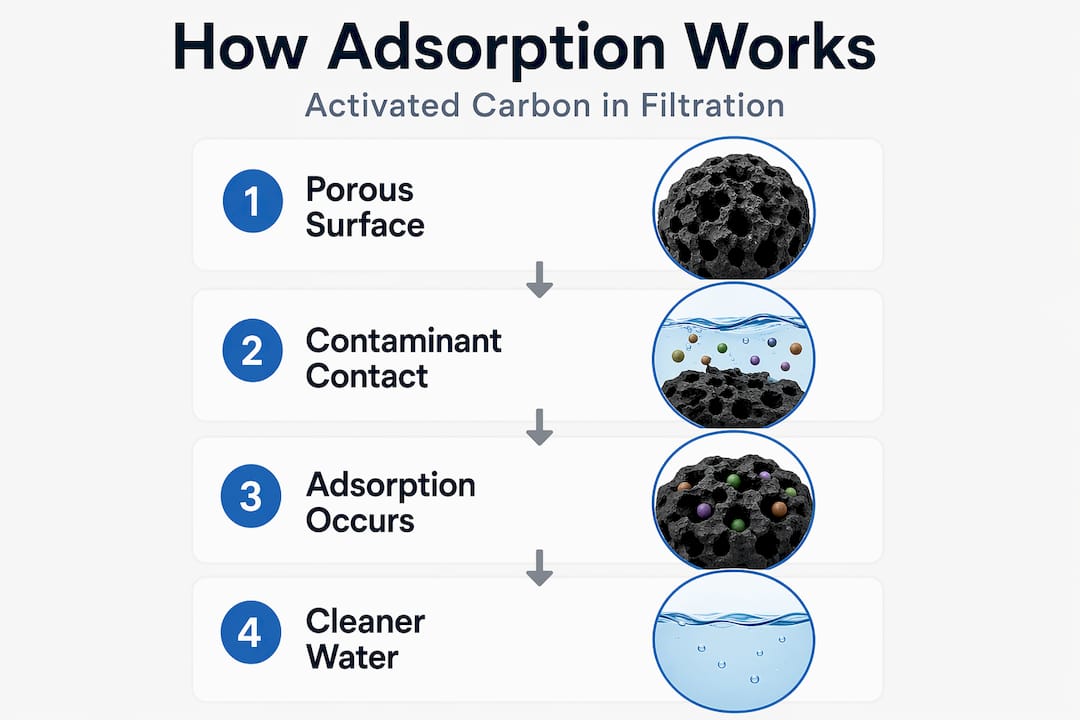
Activated carbon is a processed form of carbon material, most often derived from coconut shell, coal, or wood, that has been treated with heat or steam to create an enormous internal pore structure. One gram of activated carbon can have a surface area exceeding 1,000 square meters. That number sounds extreme, but it’s what makes the material so effective. All those pores create millions of tiny sites where contaminant molecules can lock in.
The mechanism is adsorption, not absorption. Absorption means a material soaks something up (think of a sponge with water). Adsorption means molecules stick to a surface through weak attractive forces called van der Waals forces, or in some cases through stronger chemical bonding. Activated carbon works primarily through adsorption, which is why its effectiveness depends so heavily on pore size, surface chemistry, and how long the contaminant stays in contact with the carbon.
Types of activated carbon used in home filtration
Not all activated carbon is the same, and the type matters for performance:
- Granular activated carbon (GAC): Loose irregular granules used in water filters and air purifiers. Water flows through the bed, giving contaminants time to adsorb. Most home under-sink and countertop filters use GAC.
- Powdered activated carbon (PAC): Very fine particles with a larger immediate surface area. Used in water treatment plants for acute contamination events but impractical for home point-of-use systems.
- Extruded or block carbon: Carbon compressed into a solid block. Offers more consistent contact time and acts as a physical pre-filter for sediment at the same time.
Feedstock also shapes performance. Coconut shell carbons have high micropore volume, making them excellent at capturing small molecules like chlorine and many VOCs. Coal-based carbons tend to have larger mesopores and work better for bigger organic molecules.
Pro Tip: If you’re buying a home water filter, look for coconut shell-based activated carbon. It consistently outperforms coal-based carbon for the chlorine taste and odor issues most households actually notice.
Activated carbon in water filtration
What it removes and what it doesn’t
Activated carbon water filtration handles a specific and important list of contaminants. It removes taste and odor compounds, VOCs, pesticides, and many organic micropollutants, including certain PFAS compounds. The reason chlorinated tap water tastes and smells better after passing through a carbon filter is straightforward: chlorine adsorbs readily onto carbon surfaces.
Here’s a practical breakdown of what GAC handles well versus where it falls short:
| Contaminant type | Activated carbon effective? |
|---|---|
| Chlorine and chloramines | Yes, highly effective |
| VOCs and organic solvents | Yes, effective |
| Pesticides and herbicides | Yes, for most compounds |
| Long-chain PFAS | Yes, with adequate contact time |
| Short-chain PFAS | Limited effectiveness |
| Nitrates and dissolved minerals | No |
| Heavy metals (lead, arsenic) | Minimal to none |
| Bacteria and viruses | No |
This table matters because activated carbon is not effective for dissolved inorganic contaminants or microbial pathogens. Families relying on carbon alone for well water with bacteria or high nitrates are not protected. That’s where pairing carbon with UV sanitization or reverse osmosis becomes necessary, as covered in detail in this advanced water filtration guide.
Design parameters that determine real-world performance
The concept of empty bed contact time (EBCT) is worth understanding, even for home users. EBCT measures how long water stays in contact with the carbon bed before exiting. Municipal GAC systems target 10 to 30 minutes EBCT for removing micropollutants like PFAS and trace organics. For chlorine and basic taste and odor removal, shorter contact times are sufficient, which is why small home filters work for that purpose even with limited bed volume.
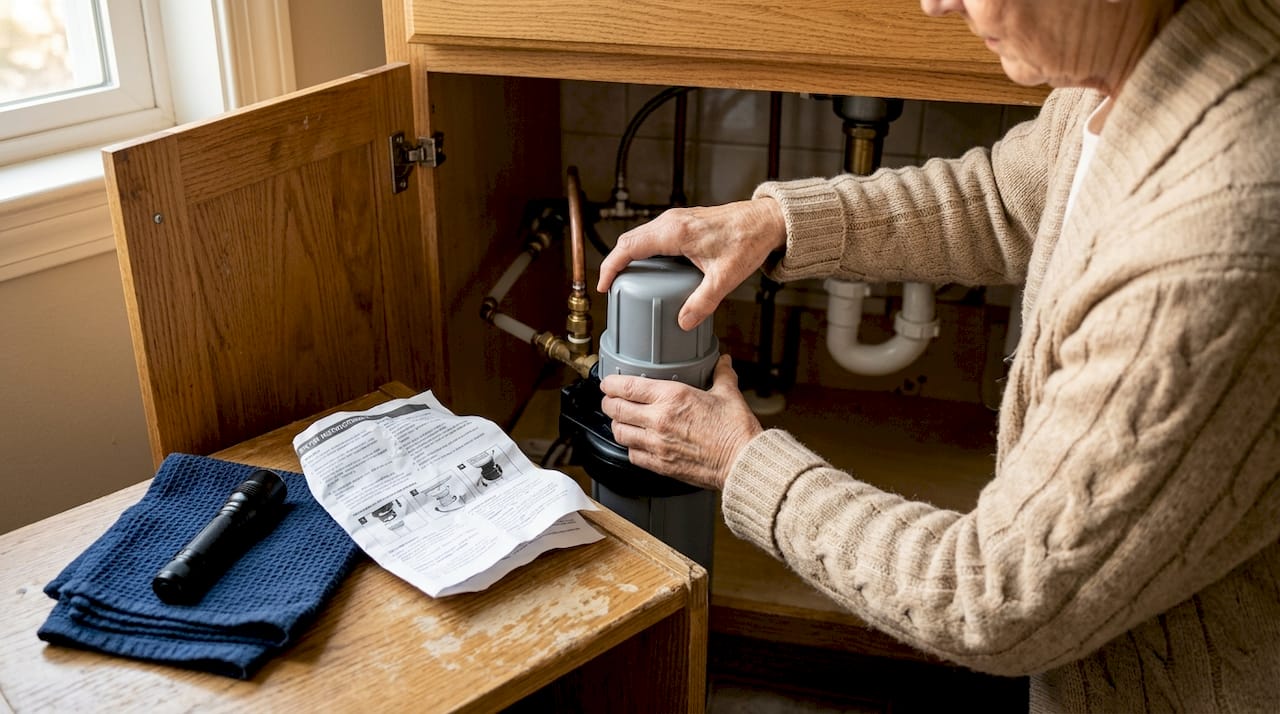
The mass transfer zone (MTZ) concept explains why filters don’t fail overnight. Adsorption capacity decreases gradually through the bed depth as the carbon exhausts. This means your filter still removes some contaminants after the carbon is technically saturated, but at increasingly lower efficiency. Families often don’t notice the performance drop until it’s significant.
Pro Tip: Don’t wait for bad taste to return before replacing your carbon filter. By that point, the carbon is well past its effective capacity. Follow the manufacturer’s replacement schedule and treat it as non-negotiable.
Natural organic matter in source water complicates things further. It competes for adsorption sites, reducing carbon capacity and causing earlier exhaustion. A good pre-filter that removes sediment and organic particles before the carbon stage extends carbon life significantly and improves overall performance.
Activated carbon in air filtration
How it targets chemical pollutants in indoor air
When people talk about air purifiers, the conversation usually centers on HEPA filters and particle removal. But activated carbon adsorbs gas-phase contaminants that HEPA simply cannot capture. Those include VOCs, odors, and toxic industrial gases. The carbon layer handles what HEPA ignores. That’s the partnership that makes a real difference in indoor air quality.
Here’s a ranked list of common household air pollutants that activated carbon addresses effectively:
- Formaldehyde: Off-gassed by furniture, flooring, and paint. One of the most common indoor VOCs.
- Benzene and toluene: Found in cleaning products, paints, and adhesives. Both carcinogenic with chronic exposure.
- Hydrogen sulfide (H2S): The compound responsible for that rotten egg smell. Activated carbon removes H2S and similar gases effectively.
- Ammonia: Released from cleaning agents and some pets. Standard activated carbon handles low concentrations.
- Cooking odors and tobacco smoke compounds: The carbon layer captures the chemical components of these odors, not just masking them.
Impregnated carbons and targeted removal
Standard activated carbon works well for general VOC and odor removal. For specific gases, impregnated activated carbons are chemically modified to target compounds like hydrogen sulfide or ammonia with greater precision. A home near agricultural land or a family managing strong chemical odors would benefit specifically from an air purifier using impregnated carbon.
The pairing with HEPA matters because the two technologies operate on completely different principles. Activated carbon and HEPA have complementary roles in any well-designed air purification system. HEPA captures dust, pollen, pet dander, and airborne particulates down to 0.3 microns. The carbon layer handles gases and odors. You can read more about how these two filter types compare in this HEPA vs carbon filter breakdown.
Pro Tip: When shopping for an activated carbon air purifier, check the weight of the carbon bed, not just whether carbon is listed as a feature. A thin carbon layer woven into a filter mat exhausts within weeks. A dedicated, thick carbon bed lasts months and actually removes chemical pollutants.
Practical considerations for home use
What families often get wrong about carbon filtration
The biggest misconception is treating activated carbon as a universal solution. It is not. Understanding what it does and doesn’t do helps you build a filtration setup that actually protects your family:
- Carbon does not kill microbes. A water filter with carbon alone does nothing against bacteria or viruses. If you’re on a well or have concerns about biological contamination, you need UV treatment or another disinfection stage.
- Carbon does not remove particles. In air systems, carbon targets gases. Dust and pollen require a separate particulate filter.
- Exhausted carbon can desorb contaminants. When a carbon bed is fully saturated and conditions change (temperature, flow rate), some contaminants can release back into the water or air. This is rare with properly maintained home systems, but it is a real phenomenon that reinforces why timely replacement matters.
- More contact time means better results. Rushing water through a carbon filter (high flow rate) reduces effectiveness. Slow filtration, especially for micropollutant removal, lets adsorption actually occur.
- Water chemistry affects performance. High levels of natural organic matter, competing contaminants, or unusual pH can all reduce how much your carbon filter accomplishes. The importance of matching system design to specific contaminants applies to home systems just as much as municipal plants.
Pro Tip: If your household water has a heavy sediment load or you’re on well water with high organic content, install a sediment pre-filter before the carbon stage. It will double or triple your carbon filter’s useful life.
On the cost side, used carbon media is not easily regenerated at home. Thermal regeneration requires industrial equipment. Budget for regular replacement as a running cost of home filtration, and consider it part of your household health investment rather than an optional expense.
My honest take on activated carbon at home
I’ve spent years helping families sort through filtration options, and activated carbon remains the technology I recommend most consistently. Not because it does everything, but because it does something no other common home technology does as well: it quietly handles the chemical and odor pollution that makes water taste bad and indoor air uncomfortable.
What I’ve seen trip people up most often is buying a carbon filter and assuming the job is done. In my experience, the families who get the most value from carbon filtration are the ones who treat it as one layer in a system. Combine carbon with UV for water. Combine carbon with HEPA for air. And replace the carbon on schedule, not when you notice a problem.
The uncomfortable reality I’ve observed is that filter replacement is where most people cut corners. A carbon filter that’s three months past its replacement date isn’t protecting you nearly as well as you think it is. The bed is still there, the filter looks fine, but the adsorption capacity is largely gone. I’ve watched families report “our filter stopped working” when the actual issue was simply deferred maintenance.
Activated carbon’s effectiveness also depends heavily on matching the right carbon type to the actual contaminants in your water or air. Pilot testing matters at a municipal scale, but at home, knowing your water report and reading product specs carefully gets you most of the way there.
— Soldierboy
How Cowayswaterpurifier uses activated carbon for your home
At Cowayswaterpurifier, every water purifier in the Coway lineup uses dedicated activated carbon stages designed to address chlorine, VOCs, and organic taste compounds before water reaches you. Coway’s air purifiers combine an activated carbon layer with certified HEPA filtration so your family gets protection against both chemical pollutants and airborne particles in one unit. If you want to understand the full water purification process behind clean drinking water, or find the right air purifier for your home, Cowayswaterpurifier offers detailed guides and product options built around real filtration science, not marketing claims.
FAQ
What is an activated carbon filter?
An activated carbon filter uses a porous carbon material to remove contaminants from water or air through adsorption, where pollutant molecules stick to the carbon’s surface rather than being physically screened out.
What does activated carbon filtration remove from water?
Activated carbon water filtration effectively removes chlorine, chloramines, VOCs, pesticides, and many taste and odor compounds. It does not remove nitrates, dissolved minerals, heavy metals, or bacteria.
How do activated carbon filters work in air purifiers?
In an activated carbon air purifier, air passes through a porous carbon bed where gas-phase pollutants like formaldehyde, benzene, and odors adsorb onto the carbon surface. The process works passively and does not capture particles, which is why pairing it with a HEPA filter is necessary for comprehensive indoor air quality.
How often should activated carbon filters be replaced?
Replacement schedules vary by product and water or air quality, but most home carbon filters need replacement every three to six months. Waiting until you notice taste or odor returning means the carbon has been exhausted for some time already.
Can activated carbon remove PFAS from drinking water?
Activated carbon can adsorb certain PFAS compounds, particularly longer-chain variants, but effectiveness varies by contaminant type, carbon grade, and contact time. Short-chain PFAS are more difficult to remove with standard GAC systems.
Recommended
- 7 Must-Have Filtration Technologies for Home Wellness – Coway Water Purifier
- Advanced Filtration Technology: Cleaner Home Wellness – Coway Water Purifier
- 7 Effective Examples of Filtration Technologies Explained – Coway Water Purifier
- Certified Filtration: Safeguarding Your Home Health – Coway Water Purifier
