
Uncategorized
How to improve water taste at home: proven methods
May
TL;DR:
- Water that meets safety standards can still have unpleasant taste qualities caused by chemicals, minerals, or pH imbalance. Diagnosing taste symptoms helps identify specific chemical drivers like chlorine, metals, or organic matter, guiding appropriate treatment choices. Implementing simple fixes first and selecting targeted filtration systems improves taste and overall water quality effectively.
Most people assume that if their tap water is safe to drink, it should taste fine. That assumption leads to a lot of confusion at the kitchen sink. Even water that fully passes municipal safety testing can carry a sharp chlorine bite, a faint metallic edge, or a flat, almost hollow flavor that makes you reach for a bottled alternative instead. The cause is rarely dangerous, but it is almost always fixable. This guide walks you through the real science behind water flavor, practical diagnostic steps you can run at home, and the treatment methods that actually work for each specific problem.
Table of Contents
- Why does water taste bad? The surprising science
- Diagnosing water taste issues: Symptoms and what they mean
- Home treatment options for better water taste
- Clarification and filtration: The foundation for great-tasting water
- What most water taste guides miss: Taste science versus real-life satisfaction
- Upgrade your water taste and quality with Coway solutions
- Frequently asked questions
Key Takeaways
| Point | Details |
|---|---|
| Identify the real cause | Most water taste issues stem from minerals, disinfectants, or plumbing changes—not health hazards. |
| Symptom-guided treatment | Diagnosing your water’s taste helps you pick the right filter or treatment for your problem. |
| Combine clarification and filtration | For the best-tasting water, use both sediment removal and chemical filtration tailored to your taste concerns. |
| Expect natural variation | Seasonal, temperature, or supply changes can temporarily impact taste without making water unsafe. |
Why does water taste bad? The surprising science
Water flavor is shaped by chemistry, not just cleanliness. The EPA Secondary Drinking Water Standards are built around the idea that water taste is primarily driven by aesthetic factors like mineral content, disinfectants, pH, and contamination, not biological hazards. This is a critical distinction. Secondary standards are non-mandatory guidelines designed to protect palatability, meaning your water can meet every health requirement and still taste like a swimming pool.
The main flavor culprits fall into a few categories. Chlorine and chloramine, both used as disinfectants, are the most common source of that chemical, bleach-like taste. Minerals affect flavor significantly too. TDS and water taste are closely linked: water with very low total dissolved solids (TDS) tastes flat or empty, while water with high TDS tastes mineral-rich, salty, or even bitter depending on the dominant ions. Iron and copper from aging pipes add a metallic flavor. Organic matter, including decaying leaves or algae in source reservoirs, produces musty or earthy odors that translate directly to taste.
| Flavor Type | Common Chemical Driver | Primary Source |
|---|---|---|
| Chlorine or pool-like | Chlorine or chloramine | Municipal disinfection |
| Metallic | Iron, copper, manganese | Old pipes, well water |
| Salty | High chloride or sodium | Soil runoff, softeners |
| Musty or earthy | Geosmin, algae | Reservoir or source water |
| Flat or empty | Very low TDS | Over-filtered or RO water |
| Bitter | Low pH, copper, zinc | Acidic water, plumbing |
pH matters more than most homeowners realize. Slightly acidic water (below 7.0) can dissolve copper from pipes and carry a metallic bitterness. Slightly alkaline water often tastes smoother. Neither extreme is automatically a health concern, but both change how water registers on your palate.
“Water that meets every federal safety standard can still taste unpleasant. Secondary standards for taste and odor exist precisely because palatability is not the same as safety.”
Understanding these drivers is the first step toward fixing the problem. For a deeper look at what else might be lurking beyond taste, understanding waterborne contaminants provides useful context on the full spectrum of what water can carry.
Diagnosing water taste issues: Symptoms and what they mean
With a better sense of what’s causing the flavor, let’s connect your taste symptoms to their likely water chemistry sources.
The smart approach to fixing water taste is treating it like a symptom-to-cause investigation. Each off-flavor points to a specific chemical or condition, and each off-taste has a likely chemical driver: chloride produces saltiness, copper creates a metallic flavor, chlorine or disinfectants give that pool-like quality, hydrogen sulfide generates a rotten egg smell, and imbalanced pH delivers bitter or sharp notes.
| Taste or Smell | Most Likely Cause | Action to Consider |
|---|---|---|
| Pool or bleach | Chlorine or chloramine residual | Carbon filtration |
| Rotten egg | Hydrogen sulfide | Aeration or carbon filter |
| Metallic | Iron, copper, or manganese | Sediment and carbon filter |
| Salty | High chloride or sodium | Reverse osmosis |
| Earthy or musty | Algae, geosmin | Activated carbon |
| Flat | Very low TDS | Remineralization filter |
| Bitter | Low pH, copper leaching | pH adjustment, carbon filter |
One thing many homeowners overlook: water from the same utility can taste noticeably different in winter versus summer, or after a heavy rainstorm. Municipal plants often shift between source waters or adjust disinfectant levels seasonally, which changes the chemical makeup at your tap. These temporary shifts are rarely a health issue, but they can be disorienting if you’re used to a consistent taste.
Here’s a quick checklist to sharpen your diagnosis before you invest in any equipment:
- Run cold water for at least 30 seconds before tasting. Standing water in pipes concentrates metals and off-flavors.
- Use a clean glass that hasn’t been washed with scented dish soap. Residual fragrance distorts taste perception.
- Compare water temperature. Cold water suppresses many off-flavors; warm water makes them more obvious.
- Note whether the off-taste appears right after a storm, after plumbing work, or seasonally.
- Compare your tap water to a filtered or bottled version to isolate whether the issue is system-wide or localized.
Pro Tip: Run your tap for 30 seconds before you judge taste. Water sitting in indoor plumbing picks up metallic notes that don’t reflect your actual supply. This single step eliminates a huge source of false readings.
For a direct comparison of what filtration actually changes, the difference between tap and filtered water is worth reviewing. If you suspect mineral content specifically, the piece on mineralization and water taste breaks down the role of calcium, magnesium, and bicarbonates in flavor balance.
Home treatment options for better water taste
Knowing the root cause, you can pick the right treatment. Here’s a practical guide matched to each taste issue.
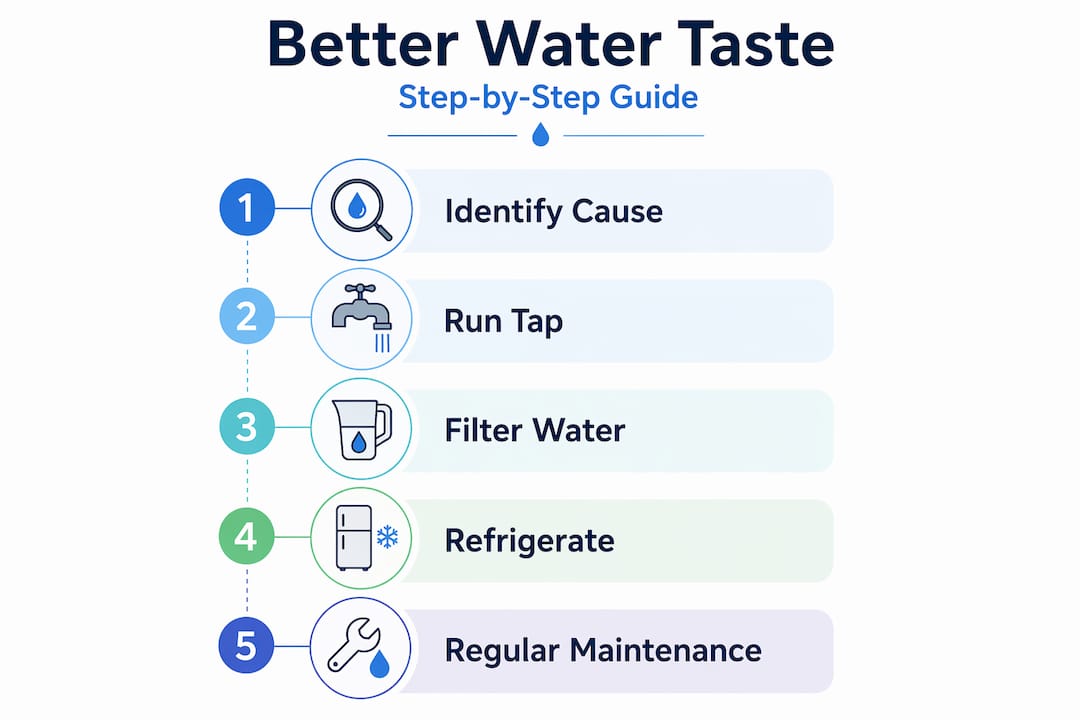
Not every taste problem needs an expensive system. The fix should match the cause, and that means starting with the simplest solution and escalating only if necessary.
Step-by-step approach:
-
Diagnose the specific taste symptom using the table above. Write down whether the flavor is chemical, metallic, salty, earthy, or flat. This matters more than you might think because using the wrong filter for the wrong problem wastes money.
-
Try the no-cost fixes first. Chill your water in a clean pitcher in the refrigerator. Cold temperatures suppress most off-flavors dramatically. Flushing your pipes for 30 to 60 seconds removes metal buildup from standing water. These two steps fix a surprising number of complaints without any equipment.
-
Choose a filter type matched to your diagnosis. Activated carbon (also called GAC, or granular activated carbon) is the gold standard for chlorine, chloramine, and organic odors. It works by adsorbing (binding) chemical compounds to its porous surface. However, activated carbon improves taste for chlorine and many organic odors but special media or longer contact times may be needed for chloramine, which is a more stable compound than chlorine. If your water company uses chloramine, look specifically for catalytic carbon filters or systems that advertise chloramine reduction.
-
For high TDS, minerals, or saltiness, reverse osmosis (RO) is the most effective option. RO systems push water through a semi-permeable membrane that strips out dissolved salts, heavy metals, nitrates, and most other dissolved solids. The trade-off is that RO water can taste flat because it also removes beneficial minerals, so many RO systems include a remineralization stage to add calcium and magnesium back in.
-
For turbid or cloudy water, use a sediment pre-filter before any chemical filtration stage. Clarification, or reducing turbidity, improves both taste and enables further treatment. Turbidity is simply cloudiness caused by suspended particles like sediment, rust, or organic matter. These particles interfere with both taste and the effectiveness of downstream filters.
-
Maintain your equipment consistently. A carbon filter past its service life can actually release trapped contaminants back into water, making taste worse than before you started filtering. Follow manufacturer change schedules religiously.
Treatment quick-reference:
- Chlorine taste: Standard activated carbon filter or pitcher
- Chloramine taste: Catalytic carbon or extended-contact carbon block
- Metallic taste: Sediment filter plus carbon; check for pipe corrosion
- Rotten egg smell: Aeration or carbon filter; check water heater if limited to hot water
- Salty or mineral taste: Reverse osmosis system
- Flat taste: Remineralization stage on existing RO setup
Pro Tip: If your water is both cloudy and chemical-tasting, always address turbidity first. Suspended particles coat activated carbon media and reduce its effectiveness by up to 40%. Clarify, then filter, for the best results.
For a thorough breakdown of filter categories and how they perform, water filtration for taste covers the full landscape. If you’re weighing pre-filtration specifically, the article on sediment filtration benefits explains how that first stage sets up everything downstream.
Clarification and filtration: The foundation for great-tasting water
With treatment options in mind, foundational clarification and filtration boost both health and taste. Here’s why both matter together.
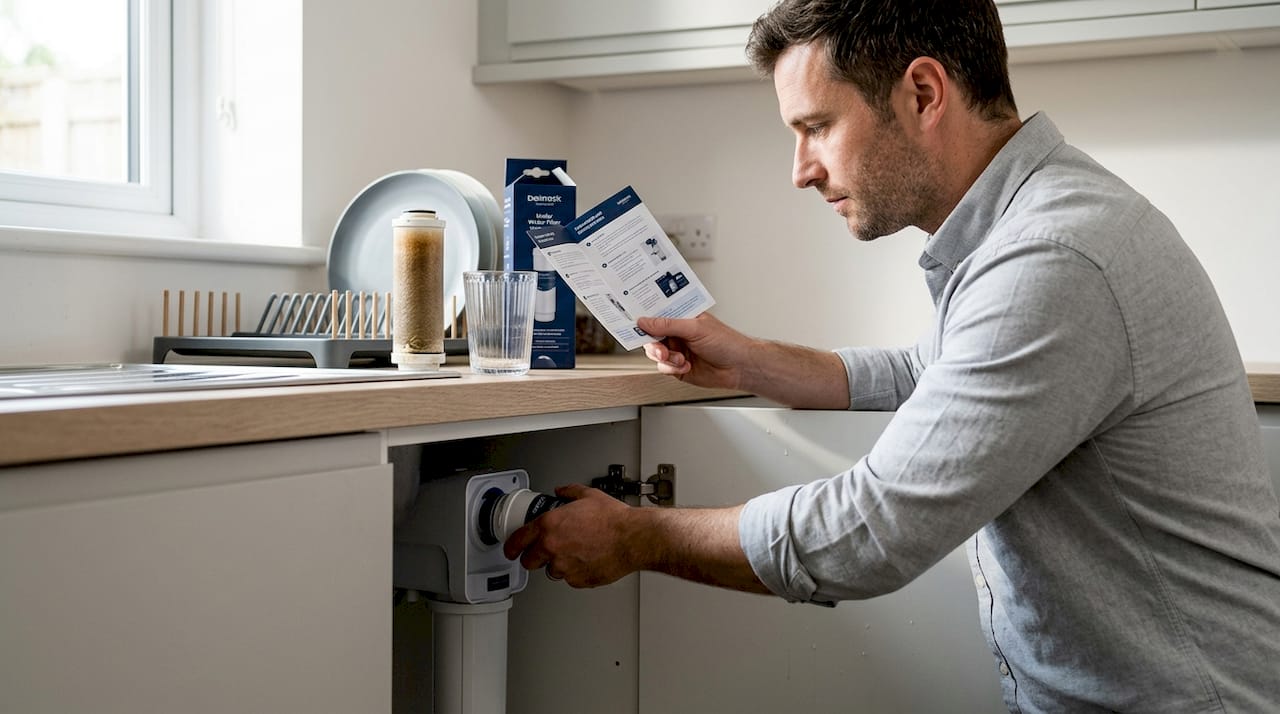
There’s a persistent myth that if water looks clear, it’s ready to drink or filter. That’s not accurate. Clarity and taste are related but separate qualities. Water can look perfectly clear and still carry dissolved minerals, disinfectant residuals, or trace metals that affect flavor. Conversely, slightly cloudy water isn’t always unsafe, but it does interfere with filtration efficiency.
According to the CDC, clarifying water by removing turbidity improves both taste and disinfection effectiveness. Suspended particles block UV light (used in UV purification systems), reduce the contact area for carbon media, and can carry organic compounds that cause earthy or musty tastes. Removing them first is foundational, not optional.
“Clear water isn’t always great-tasting water, and great-tasting water isn’t always clear. Clarity and flavor require separate but overlapping solutions.”
Key benefits of sediment pre-filtration:
- Removes rust, sand, silt, and suspended particles before they reach finer filter stages
- Extends the service life of carbon filters and membranes significantly
- Reduces earthy or gritty taste caused by organic particle matter
- Improves the effectiveness of UV sanitization in multi-stage systems
- Lowers chlorine demand, meaning your disinfection filter works less hard and lasts longer
One underappreciated point: some taste changes are temporary and require no treatment at all. Seasonal algae blooms in reservoirs create a geosmin spike that produces a strong earthy or fishy taste, but it dissipates naturally as source water changes. Knowing the difference between a structural water problem and a passing seasonal variation saves you from investing in equipment you don’t need.
To understand how pre-filtration fits into a complete system, the guide on pre-filters in water purification explains the mechanics clearly. If you’re trying to decide which filtration approach fits your home, compare filtration technologies lays out the options side by side.
What most water taste guides miss: Taste science versus real-life satisfaction
Most articles about improving water taste focus almost entirely on technology: which filter removes which compound, what TDS reading is optimal, which system earns the highest lab certification. These details matter. But they consistently miss something equally important: the gap between measured water quality and perceived enjoyment.
Even perfectly safe water can still taste unpleasant due to lingering disinfectant residuals or local variation. We’ve spoken with homeowners who installed multi-stage filtration systems, measured pristine TDS numbers, and still found their water unsatisfying. Why? Because taste perception is partially subjective and partially about expectation management.
If you grew up drinking high-mineral spring water, low-TDS filtered water will always taste thin to you, regardless of how “pure” it measures. If your household switched from a chlorinated city supply to well water, that absence of chemical taste might initially register as odd or flat rather than pleasant. Palates adapt, but they take time.
Seasonal and geographic variation also plays a role that most homeowners aren’t prepared for. Cities blend water from multiple sources throughout the year. Your utility may draw from a reservoir during wet months and a river intake during dry months. Each source has a different mineral profile and disinfectant requirement. The mineral balance and taste preference dynamic shifts every time that blend ratio changes, and no home filter completely compensates for it without regular adjustment.
The practical takeaway is this: great-tasting home water is an ongoing project, not a one-time installation. Filters need replacement on schedule. Taste should be evaluated periodically, not just at the initial setup. Seasonal taste shifts should prompt a diagnostic review rather than immediate equipment upgrades. And your family’s subjective preferences deserve real weight in the decision, not just lab measurements.
Upgrade your water taste and quality with Coway solutions
If you’re serious about improving your home’s water taste and quality, having the right system in place makes all the difference. Knowing what your water needs, whether it’s chlorine reduction, sediment removal, or full TDS management, is only half the equation. The other half is choosing a filtration solution built to address those needs consistently and reliably.
Coway’s range of water purification systems is engineered to handle the full spectrum of taste and quality challenges described in this guide. Whether you’re curious about how the water purification process works or ready to compare specific products, the resources are there to support an informed decision. Explore under-sink water purifiers for whole-household taste improvement, or review the features of modern water purifiers to understand what today’s technology can deliver for your family’s health and daily enjoyment.
Frequently asked questions
Does a bad water taste mean my water is unsafe to drink?
Not usually. Taste and odor issues fall under secondary, non-mandatory EPA standards aimed at palatability rather than safety, so most tap water that tastes off still meets all health-based requirements.
What is the best filter for chlorine taste in tap water?
Activated carbon filters are the most effective choice for chlorine, while catalytic or longer-contact carbon filters perform significantly better for persistent chloramine, which requires more than standard carbon can provide.
Can cold water taste better than warm?
Yes. Colder temperatures suppress volatile compounds responsible for off-flavors and odors, which is why refrigerated water almost always tastes cleaner and fresher than room-temperature tap water.
Why does my water taste different throughout the year?
Seasonal blending, treatment adjustments, and temperature changes in source water cause temporary taste fluctuations at the tap. These shifts are common, usually harmless, and often resolve on their own as source conditions stabilize.
Recommended
- 7 Effective Water Purification Methods for Your Home – Coway Water Purifier
- How to Ensure Healthy Drinking Water at Home Easily – Coway Water Purifier
- Understanding How Water Filters Affect Taste – Coway Water Purifier
- 7 Top Water Filtration Methods You Need to Know – Coway Water Purifier
