
Uncategorized
Proven benefits of clean air at home for family health

May
TL;DR:
- Indoor air pollution is often worse than outdoor pollution and poses significant health risks to families, especially children and the elderly. Improving air quality through strategic filtration, ventilation, and source control offers immediate benefits like allergy relief and better sleep, alongside long-term health gains. Proper maintenance of air purifiers and targeted room placement maximize these benefits, making clean indoor air a worthwhile investment for health and wellness.
Most families assume their biggest air pollution threat comes from traffic or factory smoke outside. The reality is far more unsettling. Americans spend about 90% of their time indoors, where air can be two to five times more polluted than the air outside. That means the very space where your family sleeps, eats, and relaxes may be working against your health every single day. This article breaks down exactly what poor indoor air does to your family, what clean air actually gives you in return, and the specific steps you can take to protect the people you love most.
Table of Contents
- Why indoor air quality matters for your family’s health
- Immediate and long-term benefits of clean air at home
- How air purification technology makes a difference
- Maximizing air quality: Layered strategies for cleaner indoor living
- A practical perspective: What most families get wrong about indoor air
- Ready to breathe easier? Choose the right air solutions for your home
- Frequently asked questions
Key Takeaways
| Point | Details |
|---|---|
| Indoor air risks | Indoor air can be several times more polluted than outdoor air, raising health concerns for families. |
| Quick health wins | Reducing indoor air pollution immediately cuts allergy symptoms, headaches, and helps everyone breathe easier. |
| Long-term protection | Clean air at home lowers future risks of asthma, heart disease, and other chronic health issues. |
| Tech matters, but so do habits | A layered approach—purifiers, ventilation, regular cleaning—delivers the best results for household air. |
| Smart investments | The gains from improving indoor air far exceed the costs, benefiting both health and household budgets. |
Why indoor air quality matters for your family’s health
Walk through any home and you’ll find pollutants hiding in plain sight. Cooking fumes, scented candles, cleaning sprays, pet dander, dust mites, mold spores, and off-gassing from new furniture or carpets all release particles and chemicals into the air you breathe indoors. These aren’t rare edge cases. They’re everyday realities in most American homes, and their effects range from annoying to genuinely dangerous.
“Air pollution indoors raises health risks for families especially for children, the elderly, and people with asthma or heart conditions.”
Children are particularly vulnerable because their lungs are still developing and they breathe more air relative to their body weight than adults do. A toddler playing on the floor spends hours close to the ground where settled dust and allergens are most concentrated. Seniors face compounding risks because aging immune and respiratory systems are slower to recover from irritation. People with existing asthma or cardiovascular conditions can experience serious flare-ups from exposures that a healthy adult might barely notice.
The most common indoor pollutants include:
- Particulate matter (PM2.5 and PM10): Tiny particles from cooking, candles, and tobacco smoke that penetrate deep into lung tissue
- Volatile organic compounds (VOCs): Gases released by paints, cleaning products, and adhesives that irritate airways and affect the nervous system
- Biological pollutants: Pet dander, dust mite waste, mold, and pollen that trigger allergies and asthma
- Carbon monoxide and nitrogen dioxide: Byproducts of gas stoves and poorly ventilated combustion appliances
- Radon: A naturally occurring radioactive gas that seeps through foundations and is the second leading cause of lung cancer in the U.S.
Understanding indoor air pollutants and family health is the first step toward protecting your household from risks you cannot always see, smell, or taste.
Immediate and long-term benefits of clean air at home
Improving your indoor air quality delivers results you can feel almost right away, along with protection that compounds over years. Clean indoor air reduces symptoms like eye, nose, and throat irritation, headaches, dizziness, and fatigue, while also cutting long-term risks of heart disease and respiratory illness.
Here is a clear breakdown of what cleaner air actually delivers:
| Timeframe | Benefit | How you notice it |
|---|---|---|
| Within days | Fewer allergy symptoms | Less sneezing, itchy eyes, congestion |
| Within weeks | Reduced asthma flare-ups | Fewer inhaler uses, better breathing |
| Within weeks | Better sleep quality | Waking up more rested, fewer nighttime disturbances |
| Within months | Lower headache frequency | Clearer thinking, less fatigue |
| Long-term (years) | Reduced cardiovascular risk | Lower inflammation markers, healthier heart function |
| Long-term (years) | Lower cancer risk | Fewer VOC and radon exposures that damage DNA over time |
| Long-term (years) | Stronger immune resilience | Children develop more robust immune responses |
The connection between air quality and sleep quality is something most families never consider. When you breathe cleaner air at night, your body spends less energy fighting off irritants and more energy on cellular repair and recovery. That’s why families often report that better sleep is one of the first noticeable improvements after adding air filtration.
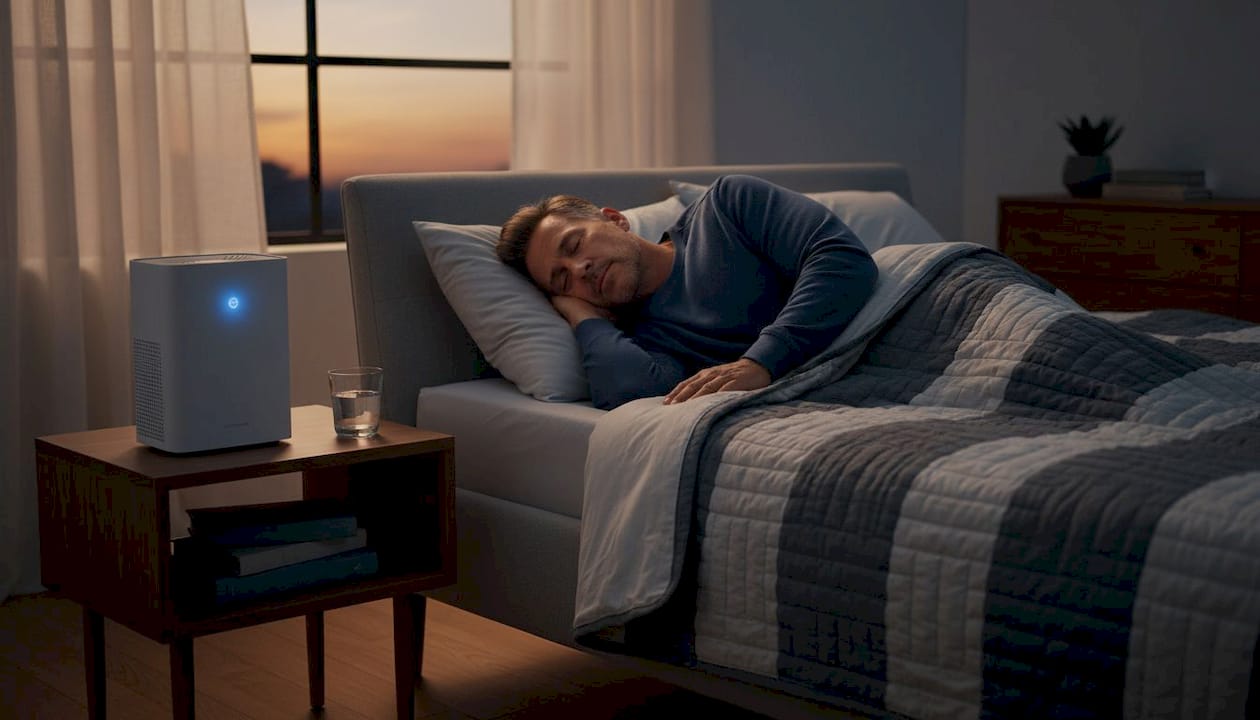
Pro Tip: If you or your kids regularly wake up with a stuffy nose, dry throat, or feel unexpectedly tired despite a full night’s sleep, air quality in the bedroom may be the culprit worth investigating before anything else.
The process of optimizing home air quality doesn’t require dramatic renovations. Strategic, targeted upgrades make the biggest difference with the least disruption to your daily routine.
How air purification technology makes a difference
Not all air purifiers are created equal, and understanding the key technologies helps you make a choice that actually fits your family’s needs. The most important distinction is between what different filtration methods capture and what they leave behind.
| Technology | What it removes | What it misses |
|---|---|---|
| HEPA filter | Dust, pollen, pet dander, mold spores, PM2.5 | Gases, VOCs, odors |
| Activated carbon filter | Odors, VOCs, gases, smoke smell | Particles, biological pollutants |
| UV-C light | Bacteria, viruses, mold spores (inactivation) | Particles, gases, allergens |
| Ionizer | Some particles (charges them to fall) | Gases, may produce ozone as a byproduct |
HEPA air purifiers reduce PM2.5 by over half, improve sleep quality, and decrease asthma flare-ups in households where they are used consistently. However, HEPA filters capture 99.97% of 0.3-micron particles but are less effective against gases and VOCs without an added activated carbon layer. This is why the best air purifiers on the market combine both technologies in a single unit, giving you broad spectrum protection.
Here is exactly what happens when you run an air purifier in a bedroom overnight:
- The fan draws room air through a pre-filter that catches larger particles like hair and lint, extending the main filter’s life.
- Air passes through the HEPA layer, which traps fine particles including allergens, dust mite debris, and mold spores down to 0.3 microns.
- If the unit includes activated carbon, gases and odors (VOCs from furniture, cleaning products) are adsorbed into the carbon matrix.
- Some units pass air through a UV-C chamber that disrupts the DNA of bacteria and viruses, inactivating them.
- Clean, filtered air is released back into the room, gradually lowering the overall particle and pollutant concentration through repeated cycles.
- By morning, particle counts in the room are measurably lower, and you’ve spent eight hours breathing significantly cleaner air.
Understanding what HEPA filters actually do at a mechanical level helps you recognize why filter maintenance matters so much. A clogged or degraded filter stops doing its job, and you’re running a device that gives you a false sense of protection without the actual benefit.
Pro Tip: Place your HEPA air purifier in the bedroom rather than a common living area if you have to choose only one location. You spend roughly a third of your life sleeping, and that sustained, uninterrupted exposure to cleaner air compounds health benefits faster than daytime use in a room you cycle in and out of. Families with young children should prioritize allergy symptom relief with air purifiers in kids’ rooms where the payoff is highest.
City-dwellers and suburban families alike can benefit enormously from the urban home air purifier advantages that modern filtration technology delivers, particularly in areas with higher traffic pollution infiltration.
Maximizing air quality: Layered strategies for cleaner indoor living
Technology alone won’t get you all the way there. The most effective approach to clean indoor air uses three strategies working together, because each one addresses a different piece of the problem.
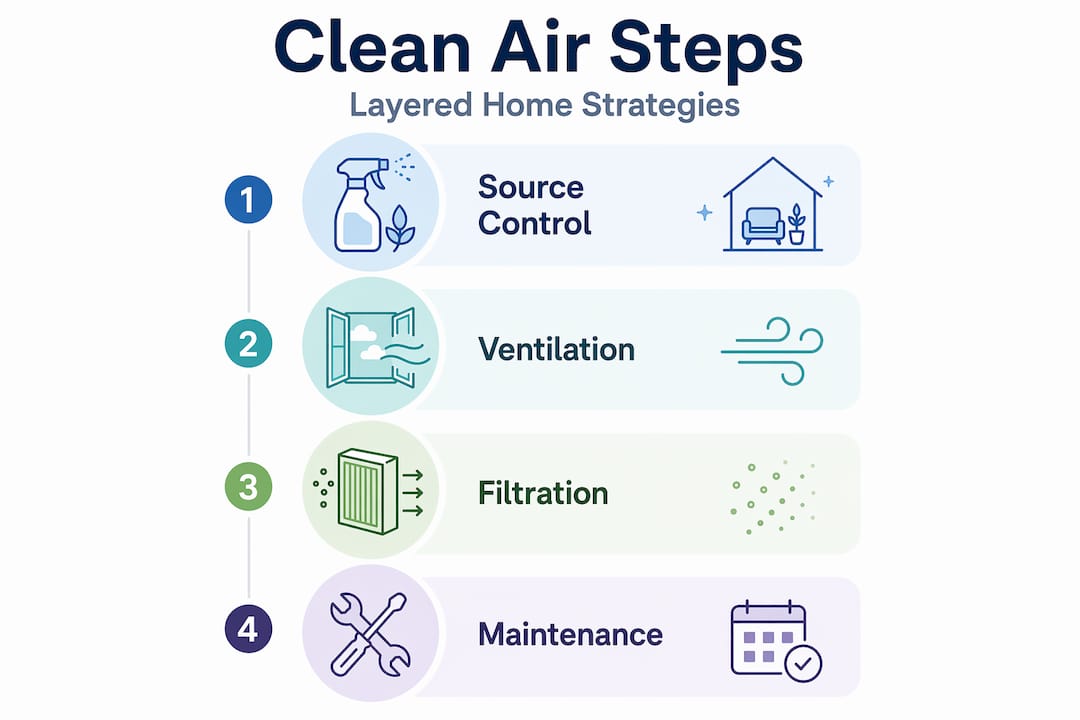
Source control, ventilation, and filtration are the three key strategies for improving indoor air quality, and skipping any one of them limits how much the others can do.
Here’s what each layer looks like in practice:
- Source control: Switch to fragrance-free or low-VOC cleaning products. Use the range hood every time you cook, especially when frying or broiling. Don’t smoke indoors. Choose low-emission furniture and flooring materials when remodeling. Vacuum with a HEPA-equipped vacuum cleaner at least twice a week to prevent settled allergens from becoming airborne again.
- Ventilation: Open windows strategically when outdoor air is actually cleaner than indoor air. This is most beneficial on calm, low-humidity mornings away from rush hour traffic. Running bathroom fans during and after showers reduces moisture that feeds mold. Heat recovery ventilators (HRVs) bring in fresh air without losing conditioned air temperature, making them a smart option for tightly sealed modern homes.
- Filtration: Use a properly sized air purifier for each room’s square footage. Upgrade your HVAC system’s filter to at least a MERV-11 rating to catch finer particles as air circulates through the system. Replace filters on schedule, because a dirty filter doesn’t just stop working, it can actually restrict airflow and strain your HVAC system.
Pro Tip: Before opening your windows to air out the house, check a weather or air quality app for your zip code. On days when outdoor air quality is rated “unhealthy for sensitive groups” or worse, keeping windows closed and running filtration is safer than ventilating. This is especially important during wildfire season, high pollen days in spring, and humid summer days when ozone levels spike in many American cities.
Following a reliable indoor air quality tips checklist helps you build these habits systematically rather than reacting only when someone in the household gets sick. Pairing that with a detailed air quality improvement checklist gives you a concrete roadmap to work through room by room.
A practical perspective: What most families get wrong about indoor air
Here’s the honest truth that most content on this topic skips: families often do several things right and still miss the most important one. They buy a purifier, put it in the living room because that’s where everyone spends time during the day, and then wonder why allergy symptoms haven’t improved much. Meanwhile, the bedroom where everyone sleeps eight hours a night remains unaddressed.
The other common mistake is treating air quality as a one-time fix. You buy the device, you feel good about the decision, and then six months later the filter is completely clogged and the unit is essentially decorating your nightstand. Filter replacement isn’t optional maintenance. It’s the entire mechanism through which your investment actually works.
Research shows the cost-to-benefit ratio of clean air is overwhelmingly favorable. Historically, clean air measures have saved approximately $30 for every $1 spent on compliance. Mechanical ventilation alone reduces indoor CO2 and VOC concentrations by 20 to 30 percent. These are not marginal gains. They’re the kind of improvements that show up in how your family feels every single day.
The conventional wisdom that says “just open your windows and clean more often” isn’t wrong, but it’s incomplete. Cleaning without a HEPA vacuum often stirs settled allergens back into the air rather than removing them. Opening windows during high pollen days or when wildfire smoke is present makes indoor air dramatically worse, not better. Good intentions executed with incomplete information can actually backfire.
The families who see the biggest results are those who focus their upgrades strategically. Start with the rooms where your family spends the most hours in sustained exposure. Get the right size unit for the room. Set a filter replacement reminder. Build the habit of checking outdoor air quality before ventilating. These small, deliberate actions deliver real, measurable health returns without requiring you to turn your home into a cleanroom. The value of air purifiers for city homes is particularly strong for families in metro areas where outdoor pollution frequently infiltrates even well-sealed buildings.
Ready to breathe easier? Choose the right air solutions for your home
Knowing the science is only as valuable as what you do with it. The difference between a family that actually benefits from better air quality and one that stays stuck in the research phase is taking one concrete next step.
Start with the air purifier selection guide to find the right match for your home’s size, your family’s specific needs (allergies, asthma, pets), and your budget. From there, the home air purification checklist walks you through placement, maintenance schedules, and room-by-room strategies so nothing falls through the cracks. When you’re ready to see what’s available, explore the full range of Coway air purification devices built with advanced multi-stage filtration to cover every room in your home. Small changes to the air your family breathes every day add up to major gains in energy, comfort, and long-term wellness.
Frequently asked questions
How do I know if my home’s air quality is bad?
You might notice frequent headaches, worsening allergies, or heavy dust buildup on surfaces, but an indoor air quality monitor gives you actual data on particle counts and VOC levels. Indoor air health risks are often invisible until symptoms appear, so monitoring proactively makes sense for any family.
Are all air purifiers effective for every type of pollutant?
No. HEPA filters capture 99.97% of particles down to 0.3 microns, but they don’t address gases or VOCs, which require an activated carbon filter to handle effectively.
Is there a best room to place an air purifier?
Bedrooms and children’s rooms deliver the highest health returns because of the sustained overnight exposure. Prioritizing HEPA purifiers in bedrooms and playrooms for children reduces allergies and asthma triggers while improving sleep quality for the whole family.
Can I just open windows to improve indoor air?
Sometimes, but not always. Source control, ventilation, and filtration work together, and opening windows on high-pollution or high-pollen days can make indoor air quality significantly worse rather than better.
Is clean air really worth the investment?
Absolutely. Research consistently shows that benefits outweigh costs by a wide margin, with clean air measures historically returning roughly $30 in health and economic savings for every $1 invested.
Recommended
- Essential air quality improvement checklist for a healthier home – Coway Water Purifier
- How to Clean Air Filters for Healthier Home Air – Coway Water Purifier
- Indoor Air Optimization Process for Healthier Homes – Coway Water Purifier
- Spot the signs of poor air quality for a healthier home – Coway Water Purifier
