
Uncategorized
How Pre-Filters Enhance Home Water Purification Health

Mar
Most homeowners believe their main water filter does all the heavy lifting when it comes to purification. That’s a dangerous misconception. The truth is, pre-filters are your first and most critical line of defense against contaminants that threaten your family’s health. These often-overlooked components determine whether your purification system thrives or fails prematurely. By understanding how pre-filters work and why they matter, you can dramatically extend your filter’s lifespan, improve water quality, and protect your household from hidden dangers lurking in your tap water. This guide reveals the science, benefits, and best practices that transform ordinary filtration into exceptional protection.
Table of Contents
- What are pre-filters and why do they matter?
- How pre-filters work: The science behind cleaner water
- Key benefits of pre-filters for home water systems
- Types of pre-filters: Which one is best for you?
- Best practices for pre-filter use and maintenance
- Achieve safer, healthier water with advanced pre-filtration
- Frequently asked questions
Key Takeaways
| Point | Details |
|---|---|
| First line of defense | Pre-filters capture the largest contaminants, protecting your water system from the start. |
| Boosts main filter life | Using a pre-filter means your primary filter lasts longer and requires less frequent replacement. |
| Improves water quality | Pre-filtered water tastes and looks better, while lowering health risks from sediment and debris. |
| Easy maintenance steps | Regularly checking and replacing your pre-filter is simple and prevents costly repairs. |
What are pre-filters and why do they matter?
Pre-filters serve as the first stage in multi-filter water purification systems, capturing larger particles before water reaches your primary filter. Think of them as the security checkpoint that screens out troublemakers before they can cause real damage. These components trap sediments, rust, sand, and debris that would otherwise clog and destroy your expensive main filters.
Modern purification systems, including reverse osmosis and UV purifiers, depend on pre-filters for optimal function. What is a pre-filter explains that without this initial screening, your main filter faces an impossible workload. The result? Reduced water quality, skyrocketing maintenance costs, and potential health risks from overwhelmed filtration stages.
Many families skip or neglect pre-filter maintenance, assuming it’s optional. That’s like ignoring the oil change in your car because the engine still runs. Eventually, the damage becomes catastrophic and far more expensive to fix.
Key reasons pre-filters are essential:
- Protect expensive main filters from premature clogging and failure
- Remove visible contaminants that affect taste, odor, and appearance
- Enable primary filters to focus on microscopic threats like bacteria and chemicals
- Reduce overall system maintenance frequency and costs
- Maintain consistent water flow and pressure throughout your home
Pro Tip: Check your pre-filter monthly by examining water flow rate. A noticeable slowdown often signals it’s time for cleaning or replacement, even if you haven’t hit the recommended timeline.
How pre-filters work: The science behind cleaner water
Water enters your purification system carrying a complex mixture of contaminants. Pre-filters use physical barriers, typically made from pleated polyester, spun polypropylene, or activated carbon, to screen out particles based on size. This mechanical filtration happens before water encounters more delicate purification stages.
The process is elegantly simple yet scientifically precise. As water flows through the pre-filter media, larger particles get trapped in the filter’s pores while smaller molecules pass through. This initial screening prevents sediment buildup that would otherwise coat and damage your main filter’s surface, reducing its effectiveness and lifespan.
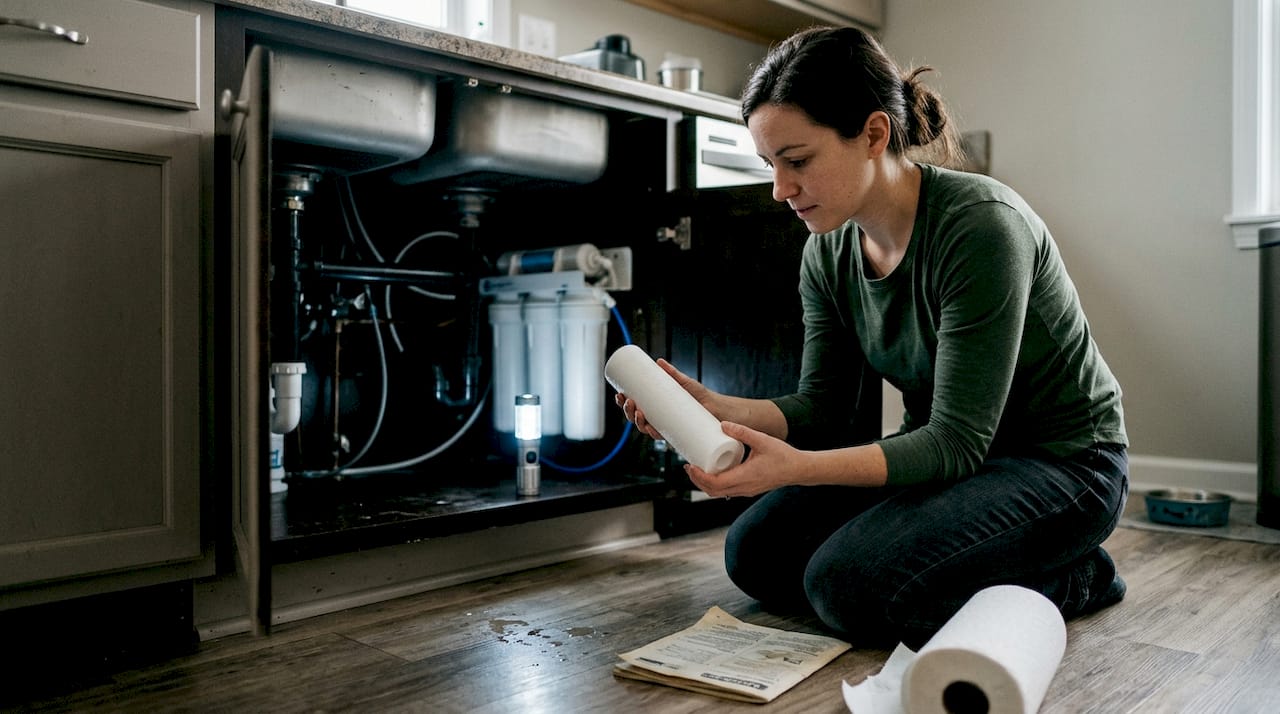
Advanced water filtration guide shows how different contaminants require different filtration approaches. Pre-filters handle the heavy, visible work so your carbon filters, reverse osmosis membranes, or UV chambers can focus on invisible threats like lead, viruses, pesticides, and pharmaceutical residues.
| Contaminant Type | Particle Size | Filter Stage | Health Impact |
|---|---|---|---|
| Sand and sediment | 50-1000 microns | Pre-filter | Cloudiness, taste issues |
| Rust particles | 10-100 microns | Pre-filter | Discoloration, metallic taste |
| Chlorine | Molecular level | Pre-filter (carbon) | Chemical taste, skin irritation |
| Lead and heavy metals | 0.01-1 microns | Main filter (RO) | Neurological damage, organ failure |
| Bacteria and viruses | 0.02-10 microns | Main filter (UV/RO) | Illness, infection |
| Pesticides and chemicals | Molecular level | Main filter (carbon/RO) | Long-term health risks |
Skipping pre-filters forces your main filter to handle everything at once. Imagine trying to strain soup through a coffee filter. The filter clogs immediately, and nothing gets properly cleaned. Your expensive reverse osmosis membrane or activated carbon filter faces the same fate without pre-filtration protection.
“Pre-filters are the unsung heroes of water purification. They handle the dirty work so precision filters can perform at peak efficiency. Without them, even the most advanced systems fail prematurely.”
Key benefits of pre-filters for home water systems
The advantages of proper pre-filtration extend far beyond simple particle removal. These components deliver measurable improvements to your health, finances, and daily water experience. Understanding these benefits helps you appreciate why pre-filter maintenance deserves priority attention.
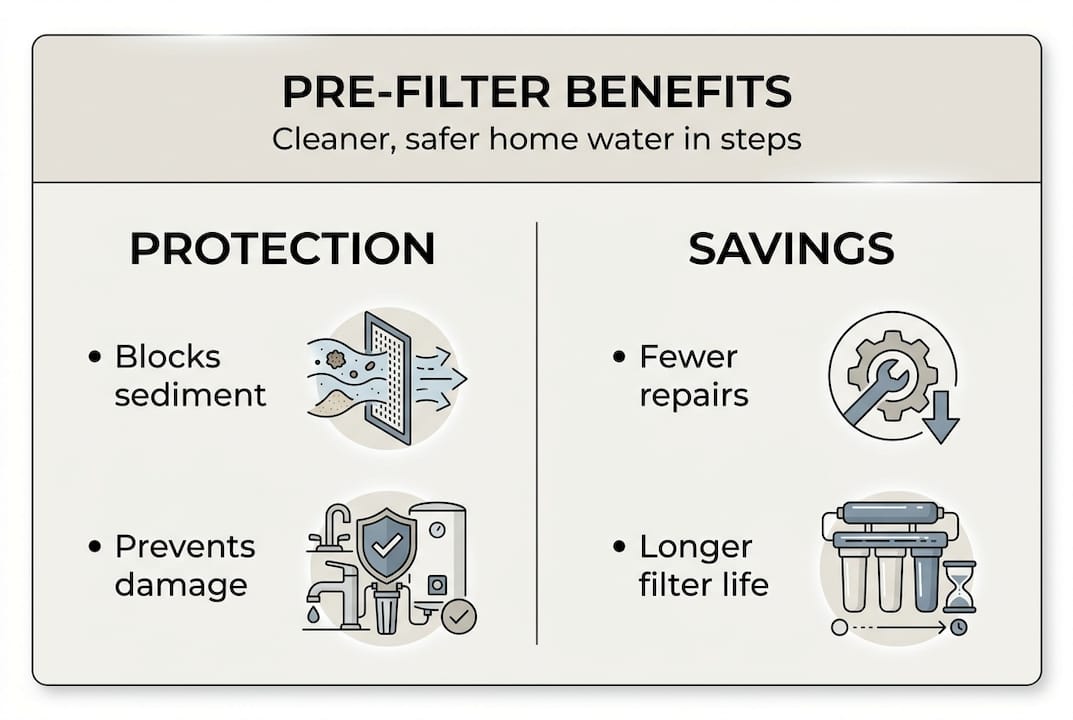
First and most importantly, pre-filters dramatically extend the life of your main filters. By removing sediments and larger contaminants early, they prevent the clogging that forces premature replacement of expensive purification stages. Maintain purifier efficiency research shows homes with properly maintained pre-filters experience 50% longer main filter lifespan compared to systems without pre-filtration.
Water clarity, taste, and odor improve immediately when pre-filters remove visible particles and chlorine. Your morning coffee tastes better. Ice cubes look crystal clear instead of cloudy. Cooking water doesn’t carry that metallic or chemical aftertaste that makes you reach for bottled water instead.
Top benefits for your family:
- Extended filter life: Pre-filters can double or triple the lifespan of expensive main filters
- Better tasting water: Early removal of chlorine and sediments eliminates unpleasant flavors
- Health protection: Reduces bacterial growth and contaminant exposure throughout your system
- Lower costs: Fewer main filter replacements mean significant long-term savings
- Consistent performance: Maintains optimal water flow and pressure for your entire household
- System reliability: Prevents breakdowns and emergency repairs from clogged components
The financial impact deserves special attention. Main filters for reverse osmosis systems can cost $100-300 per replacement. Carbon block filters run $50-150. Pre-filters typically cost $10-30 and last 3-6 months. By investing in regular filter replacement, you protect components that cost 10 times more.
Statistic callout: Families who maintain pre-filters on schedule report 60% fewer emergency service calls and system failures compared to those who neglect this simple maintenance step.
Pro Tip: Mark your calendar for pre-filter checks every three months. Set a recurring reminder on your phone with the filter model number and where to buy replacements. This simple habit prevents the “out of sight, out of mind” problem that leads to system damage.
Types of pre-filters: Which one is best for you?
Pre-filters come in several varieties, each designed for specific water conditions and contaminant profiles. Choosing the right type depends on your water source, quality concerns, and existing purification system. Understanding these options helps you make an informed decision that matches your family’s needs.
Sediment pre-filters use pleated polyester or spun polypropylene to trap visible particles. These work best for well water or municipal supplies with high sediment loads. They’re rated by micron size, typically ranging from 1 to 50 microns. Lower numbers catch smaller particles but may clog faster in heavily contaminated water.
Activated carbon pre-filters tackle chlorine, volatile organic compounds, and odors while also catching some sediments. Filtration technologies for home explains these dual-purpose filters excel in municipal water treatment where chlorine is the primary concern. They improve taste and smell while protecting downstream filters from chemical damage.
Membrane pre-filters offer the finest filtration at the pre-filter stage, removing particles down to 0.1 microns. These work well in multi-filter systems where you need maximum protection for sensitive main filters like reverse osmosis membranes.
| Filter Type | Best For | Contaminants Removed | Maintenance Frequency | Cost Range |
|---|---|---|---|---|
| Sediment (5-50 micron) | Well water, high sediment | Sand, rust, dirt, large particles | 3-6 months | $10-25 |
| Activated carbon | Municipal water, chlorine | Chlorine, odors, some chemicals, sediment | 3-6 months | $15-35 |
| Membrane (0.1-1 micron) | Sensitive systems, fine filtration | Very small particles, some bacteria | 6-12 months | $25-50 |
| Combination (sediment + carbon) | General home use | Wide range of contaminants | 3-6 months | $20-40 |
Choosing the right pre-filter for your home:
- Test your water to identify primary contaminants and sediment levels
- Match the micron rating to your water quality (higher sediment needs larger micron size)
- Consider your main filter type and choose pre-filters that protect it best
- Evaluate your budget for both initial cost and ongoing replacement expenses
- Check compatibility with your existing system’s housing and connections
- Plan for seasonal changes if your water quality varies throughout the year
Many homeowners benefit from combination approaches. A sediment pre-filter followed by an activated carbon stage provides comprehensive protection for most residential systems. This two-stage pre-filtration setup costs slightly more upfront but delivers superior results and longer main filter life.
Best practices for pre-filter use and maintenance
Proper installation and consistent maintenance determine whether your pre-filter protects your system or becomes a liability. Neglected pre-filters can harbor bacteria, reduce water flow, and even release trapped contaminants back into your water supply. Following these best practices ensures optimal performance and protects your investment.
Start with correct installation. Pre-filters must be sized appropriately for your system’s flow rate and installed in the right sequence. Most systems place sediment filters first, followed by carbon filters, then the main purification stage. Check your manufacturer’s specifications and follow them precisely.
Essential maintenance steps for peak performance:
- Inspect monthly by checking water flow rate and pressure at your faucets
- Look for visible signs of clogging like reduced flow, discolored water, or unusual tastes
- Replace on schedule even if the filter looks clean (hidden contamination isn’t visible)
- Clean the housing when changing filters to prevent bacterial growth in the canister
- Check O-rings and seals for wear or damage that could cause leaks
- Keep spare filters on hand so you’re never caught without a replacement
- Document replacement dates to track actual lifespan in your specific water conditions
Filter maintenance steps provides detailed instructions for safe filter changes. Always shut off water supply before opening the housing. Release pressure by opening a downstream faucet. Use the proper wrench to avoid damaging plastic threads.
Timing matters more than you might think. Overused pre-filters become breeding grounds for bacteria and can release trapped contaminants back into your water. The filter replacement importance guide shows that filters left in place too long actually reduce water quality below baseline levels.
Pro Tip: Take a photo of your filter when you install it, then compare monthly. Visible discoloration or buildup signals it’s time for replacement, even if you haven’t reached the recommended interval. Your water conditions may require more frequent changes than average.
Don’t wait for obvious problems before checking your pre-filter. By the time you notice reduced flow or taste changes, damage to your main filter may already be occurring. Preventive maintenance costs far less than emergency repairs or premature main filter replacement.
Achieve safer, healthier water with advanced pre-filtration
You now understand why pre-filters are essential for protecting your family’s health and your purification investment. The next step is ensuring your system includes robust pre-filtration stages that match your water quality needs. Upgrading to advanced multi-stage systems with properly designed pre-filters delivers cleaner water, lower maintenance costs, and peace of mind.
Exploring comprehensive water purification process guide resources helps you understand how each filtration stage works together. Modern systems like the countertop ice water purifier integrate advanced pre-filtration with powerful main filters and UV sanitization for complete protection. These solutions make it easy to maintain your system and ensure consistent water quality for your entire household. Visit Coway Water Purifier to discover how advanced filtration technology can transform your home’s water safety and give your family the protection they deserve.
Frequently asked questions
How often should I replace my pre-filter at home?
Most experts recommend replacing your pre-filter every 3 to 6 months, but frequency depends on your water quality and usage level. Homes with well water or high sediment may need monthly changes.
Can I use my water purifier without a pre-filter?
You can, but skipping the pre-filter leads to faster clogging, poorer water taste, and reduced lifespan for your main filter. The short-term savings cost far more in premature replacements.
What are the signs that my pre-filter needs changing?
A drop in water flow, visible buildup, or cloudy water indicates it’s time to check or replace your pre-filter. Don’t wait for obvious problems before inspecting.
Do all water purifiers use pre-filters?
Not all purifiers include pre-filters, but multi-stage systems and those designed for higher contaminant loads almost always do. Single-stage filters often skip this critical protection.
What happens if I don’t maintain my pre-filter?
Neglected pre-filters can grow harmful bacteria and cause your entire purification system to work less effectively. They may even release trapped contaminants back into your water supply.
Recommended
- Role of filters in health: Improve your home quality – Coway Water Purifier
- 7 Must-Have Filtration Technologies for Home Wellness – Coway Water Purifier
- 7 Essential Water Purification Facts 2025 for Healthy Homes – Coway Water Purifier
- Advanced Water Filtration Guide for Healthier Homes – Coway Water Purifier
- Czym jest filtracja wody do kawy
