
Uncategorized
Why choose contactless water dispensers for health
Mar
Studies show that contact points on traditional water dispensers harbor up to 2.7 million bacteria per square inch, making them potential hotspots for contamination. If you’re a homeowner or small business owner who values health and hygiene, this statistic should concern you. Contactless water dispensers eliminate these risks by removing the need to touch shared surfaces, offering a smarter solution for wellness-focused environments. In this article, you’ll discover why contactless technology is revolutionizing water dispensing, how it enhances hygiene and convenience, and what features to prioritize when choosing the right system for your home or workplace.
Table of Contents
- How Contactless Water Dispensers Promote Better Hygiene
- Convenience And Health Benefits For Homeowners And Small Businesses
- Comparing Contactless Water Dispensers With Traditional Models
- Practical Tips For Choosing And Maintaining Contactless Water Dispensers
- Explore Coway’s Contactless Water Purifiers For Your Home Or Business
- FAQ
Key takeaways
| Point | Details |
|---|---|
| Hygiene enhancement | Contactless water dispensers eliminate touch points, drastically reducing germ transfer and cross-contamination risks. |
| Convenience boost | Touchless activation makes dispensing effortless for all users, from children to elderly individuals. |
| Energy and cost efficiency | These systems typically consume less energy and require less maintenance than traditional models. |
| Ideal for health-conscious settings | Perfect for homeowners and small businesses prioritizing wellness, safety, and modern convenience. |
How contactless water dispensers promote better hygiene
Traditional water dispensers require you to press buttons, pull levers, or turn knobs every time you need a drink. Each touch transfers oils, bacteria, and viruses from your hands to the surface, creating a breeding ground for pathogens. In multi-user environments like offices or shared living spaces, these surfaces become contamination hotspots. Contact points on dispensers can harbor dangerous microorganisms including E. coli, norovirus, and staph bacteria.
Contactless water dispensers solve this problem through sensor-based or foot-activated mechanisms. You simply place your glass under the spout, and the system detects your presence and dispenses water automatically. No touching required. This technology eliminates the primary vector for germ transmission, making it especially valuable in settings where multiple people access the same dispenser throughout the day.
The hygiene benefits extend beyond just avoiding surface contact. Touchless systems reduce the frequency of cleaning needed for high-contact areas, though regular maintenance remains essential for internal components. When you remove the manual interface, you eliminate the constant recontamination cycle that plagues traditional dispensers. This is particularly important during flu season or when household members have compromised immune systems.
Common pathogens found on traditional dispenser surfaces include:
- Bacteria like E. coli and Salmonella from unwashed hands
- Viruses including influenza and common cold strains
- Staph bacteria that can cause skin infections
- Mold spores from moisture accumulation around buttons
Pro Tip: Even with contactless technology, clean the dispenser’s exterior and sensors weekly with a mild disinfectant to prevent dust buildup and maintain optimal sensor performance.
“The shift to touchless water dispensing represents a fundamental change in how we approach shared hydration systems. By removing physical contact points, we’re not just preventing today’s contamination but creating a safer baseline for tomorrow.”
Understanding water dispenser functionality helps you appreciate why contactless models represent such a significant advancement. The technology isn’t just about convenience, it’s about fundamentally rethinking how we interact with shared resources in health-conscious ways.
Convenience and health benefits for homeowners and small businesses
Beyond hygiene, contactless water dispensers transform daily hydration habits through effortless operation. When getting water requires zero physical effort beyond positioning your glass, you naturally drink more throughout the day. Contactless dispensers offer user-friendly operation that removes barriers to regular hydration, encouraging healthier habits for everyone in your household or workplace.

Accessibility becomes a major advantage for diverse user groups. Children can fill their cups without struggling with stiff levers or hard-to-reach buttons. Elderly family members or employees with arthritis avoid the pain of pressing manual controls. People carrying items in both hands can dispense water without setting everything down. This universal design philosophy makes hydration accessible to everyone, regardless of physical capability.
For health-focused homeowners, contactless dispensers align perfectly with wellness-oriented lifestyles. You’re already investing in purified water and clean eating, so why compromise on delivery methods? The touchless interface complements your commitment to reducing exposure to germs and maintaining a pristine home environment. In small business settings, providing contactless water demonstrates care for employee health and creates a modern, professional atmosphere.
Integrating contactless dispensers into your wellness routine:
- Position the dispenser in a central, high-traffic area where it’s easily accessible throughout the day.
- Set personal hydration goals and use the effortless dispensing to meet them consistently.
- Encourage family members or employees to use reusable bottles, making the touchless feature even more convenient.
- Monitor usage patterns to ensure everyone is staying properly hydrated, especially during hot weather.
- Combine with other wellness initiatives like healthy snacks or standing desks for comprehensive health benefits.
Pro Tip: Place your contactless dispenser near your morning routine area, like the kitchen counter or office break room entrance, to make hydration an automatic part of your day.
The psychological impact shouldn’t be underestimated either. When you know the water source is clean and the dispensing method is hygienic, you feel more confident about your family’s or team’s health. This peace of mind translates to better overall wellness and reduced anxiety about contamination risks. Understanding purified water benefits helps you see how contactless delivery completes the health equation.
Small businesses particularly benefit from the professional image contactless dispensers project. Clients and visitors notice modern amenities that prioritize health and safety. For offices implementing purified water for offices, adding touchless technology demonstrates a comprehensive commitment to employee wellbeing that can improve morale and productivity.
Comparing contactless water dispensers with traditional models
Understanding the practical differences between contactless and traditional dispensers helps you make an informed decision. While both deliver water, the experience, hygiene standards, and long-term value differ significantly. Let’s break down the key comparison points.
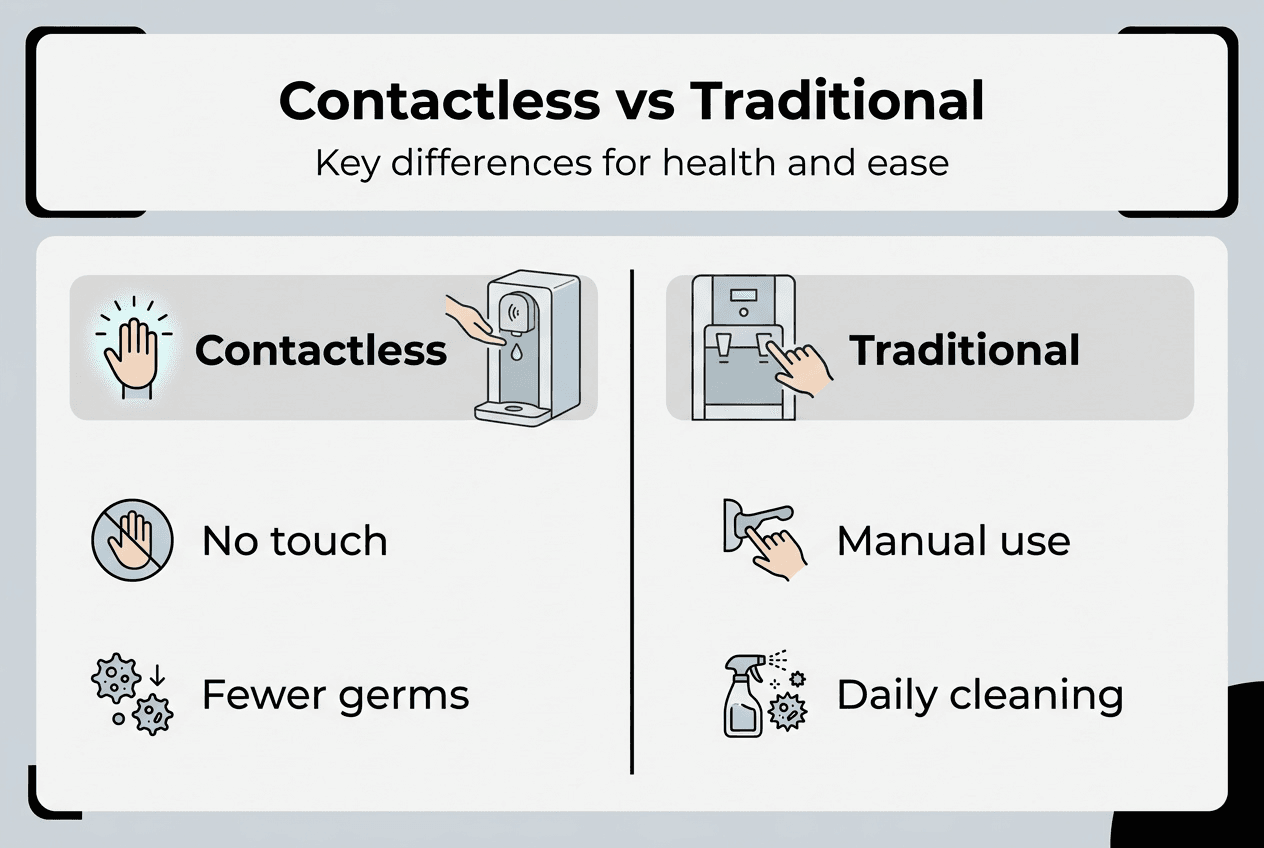
| Feature | Contactless Dispensers | Traditional Dispensers |
|---|---|---|
| Hygiene level | Excellent, no touch points for germ transfer | Moderate, shared surfaces require frequent cleaning |
| User convenience | Hands-free operation, accessible to all | Manual controls may be difficult for some users |
| Energy efficiency | Often includes smart sensors that reduce waste | Constant readiness mode can consume more power |
| Initial cost | Higher upfront investment | Lower purchase price |
| Maintenance effort | Sensor cleaning, standard filter changes | Surface disinfection plus filter changes |
| Longevity | Durable with fewer mechanical parts to wear | Buttons and levers may degrade with heavy use |
Contactless dispensers are more energy-efficient because smart sensors activate only when needed, reducing unnecessary power consumption. Traditional models often maintain heating or cooling elements continuously, regardless of actual usage patterns.
From a hygiene perspective, the difference is stark. Traditional dispensers require daily disinfection of touch surfaces to maintain acceptable cleanliness standards. Even with diligent cleaning, the surfaces become contaminated again within hours in multi-user settings. Contactless models eliminate this constant battle, requiring only periodic sensor cleaning and routine internal maintenance.
Cost considerations present an interesting trade-off. Contactless dispensers typically cost 20 to 40 percent more initially, but the investment pays dividends through reduced cleaning supplies, lower maintenance labor, and improved energy efficiency. For small businesses, the professional image and employee health benefits often justify the higher upfront cost within the first year.
Key advantages of contactless dispensers:
- Zero cross-contamination from shared touch surfaces
- Universal accessibility for all physical abilities
- Modern aesthetic that enhances any space
- Reduced cleaning time and supply costs
- Lower long-term energy consumption
Potential considerations:
- Higher initial purchase price
- Sensors require occasional calibration
- May need electrical outlet access for sensor power
- Learning curve for first-time users, though minimal
Exploring modern water purifier features reveals how contactless technology integrates with advanced filtration systems to create comprehensive health solutions. The combination of pure water and hygienic delivery represents the gold standard for health-conscious households and businesses.
Practical tips for choosing and maintaining contactless water dispensers
Selecting the right contactless water dispenser requires evaluating several critical factors. Start by assessing your water source compatibility. Some models connect directly to water lines, while others work with bottled water systems. Direct-connect models offer unlimited water but require professional installation. Bottled systems provide flexibility but need regular bottle replacement.
Dispenser size matters significantly for your space and usage needs. Countertop models work beautifully in compact kitchens or small offices, while freestanding units suit larger spaces with higher traffic. Consider daily water consumption patterns. A family of four or a small office with ten employees needs different capacity than a single person household.
Filtration technology deserves careful attention. Look for multi-stage systems that remove contaminants, improve taste, and provide minerals. Advanced options include UV sterilization, reverse osmosis, and activated carbon filters. The best choice depends on your local water quality and specific health concerns. Testing your water helps identify which filtration approach addresses your needs most effectively.
| Dispenser Type | Maintenance Frequency | Key Features | Best For |
|---|---|---|---|
| Countertop contactless | Filter change every 6 months, sensor clean monthly | Compact, portable, easy install | Small households, apartments |
| Freestanding touchless | Filter change every 8-12 months, quarterly deep clean | High capacity, hot and cold options | Families, small offices |
| Under-sink with touchless faucet | Filter change every 12 months, annual system check | Hidden system, dedicated faucet | Kitchen remodels, clean aesthetic |
| Bottled water touchless dispenser | Bottle swap as needed, sensor clean monthly | No plumbing required, flexible placement | Temporary setups, rentals |
Maintenance remains essential even with contactless technology. Regular cleaning prevents mineral buildup and ensures sensors function accurately. Wipe sensor areas weekly with a soft, damp cloth to remove dust that can interfere with detection. Schedule filter replacements according to manufacturer guidelines, typically every six to twelve months depending on usage and water quality.
Pro Tip: Set calendar reminders for filter replacement dates when you first install your dispenser, and order replacement filters a month in advance to avoid gaps in water quality.
Monitor water taste and flow rate as indicators of filter condition. If you notice changes in taste, reduced flow, or unusual odors, check your filter status even if the scheduled replacement date hasn’t arrived. Heavy usage or particularly contaminated source water may require more frequent changes.
Key selection criteria:
- Water source compatibility with your home or office setup
- Capacity matching your daily consumption needs
- Filtration technology appropriate for your water quality
- Sensor reliability and ease of calibration
- Warranty coverage and customer support availability
- Energy efficiency ratings and operating costs
Understanding the office water safety checklist helps you implement proper maintenance protocols that maximize your investment. Proper selection and maintenance ensure your contactless dispenser delivers clean, safe water for years while maintaining the hygiene benefits that justified your purchase.
Explore Coway’s contactless water purifiers for your home or business
Now that you understand the compelling benefits of contactless water dispensing technology, it’s time to explore solutions designed specifically for health-conscious homeowners and small businesses. Coway offers an impressive range of water purifiers featuring touchless activation combined with advanced multi-stage filtration systems.
Their countertop ice water purifier delivers the convenience you need without requiring permanent installation, perfect for renters or those who prefer flexibility. Each Coway system incorporates the modern water purifier features we’ve discussed, from touchless dispensing to comprehensive filtration that removes contaminants while preserving beneficial minerals. Understanding the complete water purification process helps you appreciate how Coway’s technology protects your family’s or team’s health at every stage. Explore their full product line to find the perfect match for your space, usage patterns, and wellness goals.
FAQ
Are contactless water dispensers harder to clean than traditional ones?
Contactless dispensers are actually easier to maintain for hygiene purposes. They reduce surface contact points, which means fewer areas where germs accumulate and spread. You still need to clean internal components and sensors regularly, but the overall contamination risk drops significantly. Most users find that weekly sensor wipes and standard filter changes keep their systems perfectly clean with less effort than constantly disinfecting buttons and levers on traditional models.
Can contactless water dispensers be used in small businesses safely?
Absolutely, contactless dispensers are ideal for small business environments. They enhance workplace hygiene by eliminating shared touch surfaces that spread illness among employees. The touchless operation accommodates diverse employee needs, from those with mobility challenges to anyone carrying items. When maintained according to manufacturer guidelines, these systems comply with health safety standards and often exceed the hygiene levels of traditional dispensers. Many small businesses find that purified water for offices with contactless delivery reduces sick days and improves overall workplace wellness.
What features should I look for in a contactless water dispenser?
Prioritize reliable touchless activation that responds quickly and accurately to your glass or bottle. Advanced filtration technology is essential, look for multi-stage systems that remove contaminants while improving taste. Energy-saving functions like smart sensors that power down when not in use reduce operating costs. Ease of maintenance matters too, choose models with accessible filter compartments and clear replacement indicators. The features of modern water purifiers include these elements plus additional benefits like temperature control and UV sterilization that enhance your long-term satisfaction.
How often should filters be replaced in contactless water dispensers?
Filter replacement frequency varies by model, usage intensity, and source water quality, but most manufacturers recommend changes every six to twelve months. Heavy usage or particularly contaminated water may require more frequent replacements. Follow your specific model’s guidelines and monitor water taste and flow rate as indicators. If you notice reduced flow, off-tastes, or unusual odors before the scheduled replacement date, check your filter status immediately. Setting calendar reminders when you first install your dispenser helps ensure you never miss a replacement deadline and always enjoy optimal water quality.
Recommended
- What is a Water Dispenser? Understanding Its Functionality – Coway Water Purifier
- Understanding Why Choose Countertop Purifiers for Wellness – Coway Water Purifier
- CHP-5722L Hot & Cold Standing Water Purifier – Coway Water Purifier
- P-09CL Under Sink Water Purifier – Coway Water Purifier
- 6 Environmentally Friendly Habits for a Greener Dental Visit | Paynless
- Natural Electrolyte Supplements Comparison – Top Picks 2025 – Interval
