
Uncategorized
The Essential Guide to Purified Water for Offices
Nov
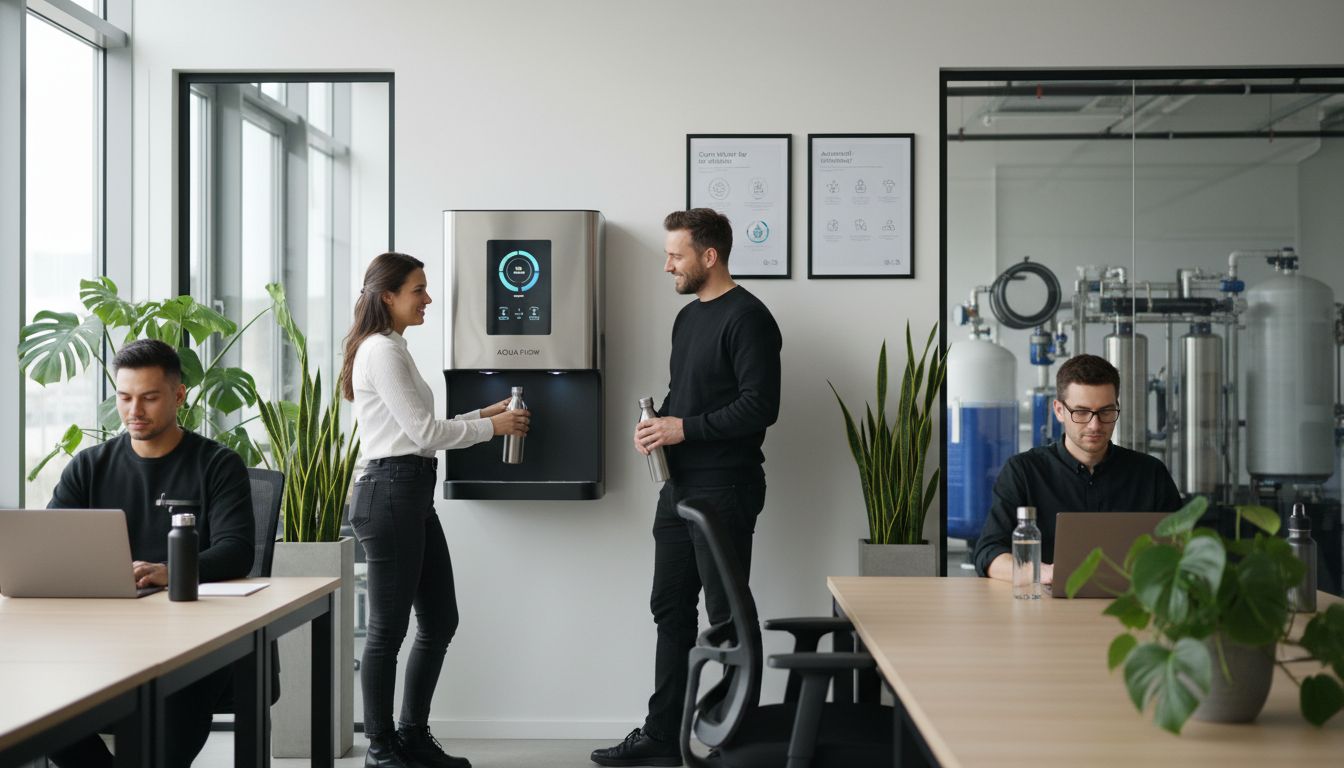
Over 60 percent of office workers report concerns about the safety of their drinking water. Clean, reliable hydration is more than a perk—it shapes daily health and performance. Many believe purified water strips away all minerals, yet the truth is surprisingly complex. This article sheds light on what purified water really means, dispels common myths, and guides you toward safer water choices for your workplace.
Table of Contents
- Purified Water Defined And Common Misconceptions
- Types Of Purification Methods For Offices
- Health And Productivity Benefits For Workplaces
- Compliance, Safety, And Industry Standards
- Cost, Maintenance, And Comparison To Alternatives
Key Takeaways
| Point | Details |
|---|---|
| Purification Methods Matter | Understanding purification techniques like reverse osmosis and carbon filtration is essential for selecting optimal water solutions for office environments. |
| Health Benefits Enhance Productivity | Access to purified water improves hydration, cognitive function, and reduces sick days, positively impacting employee performance. |
| Compliance is Essential | Adhering to water safety regulations is critical, involving regular monitoring, maintenance, and documentation to ensure employee health and avoid legal risks. |
| Strategic Investment | While upfront costs exist, in-office purification systems can lead to significant long-term savings compared to bottled water alternatives, benefitting organizational efficiency. |
Purified Water Defined And Common Misconceptions
Purified water represents a critical resource for offices seeking clean, safe drinking water. According to Wikipedia, it is water that has been mechanically filtered or processed to remove impurities, making it suitable for consumption and various uses.
The purification process involves multiple advanced techniques. As research indicates, common methods include:
- Distillation: Boiling water and collecting condensed steam
- Reverse Osmosis: Forcing water through specialized membranes
- Carbon Filtering: Removing contaminants through activated carbon
- Ultraviolet Oxidation: Using UV light to neutralize microorganisms
- Electrodeionization: Removing ionic compounds through electrical currents
A prevalent misconception about purified water is that it lacks all minerals. However, Wikipedia clarifies that depending on the purification method, certain beneficial minerals may actually be retained. Some processes are more selective, allowing trace minerals while eliminating harmful contaminants.
For offices considering water purification systems, understanding these nuanced processes becomes crucial. What is Water Purification? Understanding Its Importance provides deeper insights into selecting the right purification approach for your specific workplace needs. The goal isn’t just removing impurities, but creating a water solution that supports employee health and workplace wellness.
Types Of Purification Methods For Offices
Point-of-use water filtration represents a critical solution for offices seeking to improve drinking water quality. Wikipedia highlights that these systems are specifically designed to provide filtration close to the point of consumption, ensuring employees have access to clean, safe drinking water.
The most common purification methods for office environments include:
- Activated Carbon Filtration
- Removes chlorine and sediment
- Improves water taste and odor
- Eliminates volatile organic compounds (VOCs)
- Reverse Osmosis Systems
- Removes dissolved salts
- Filters out pathogens
- Provides comprehensive water purification
- Multimedia Filtration
- Uses multiple filter layers
- Targets different types of contaminants
- Enhances overall water quality
According to Wikipedia, media filters like activated carbon are particularly effective in drinking water treatment. These systems can be strategically installed to remove impurities and significantly improve water quality for office environments.
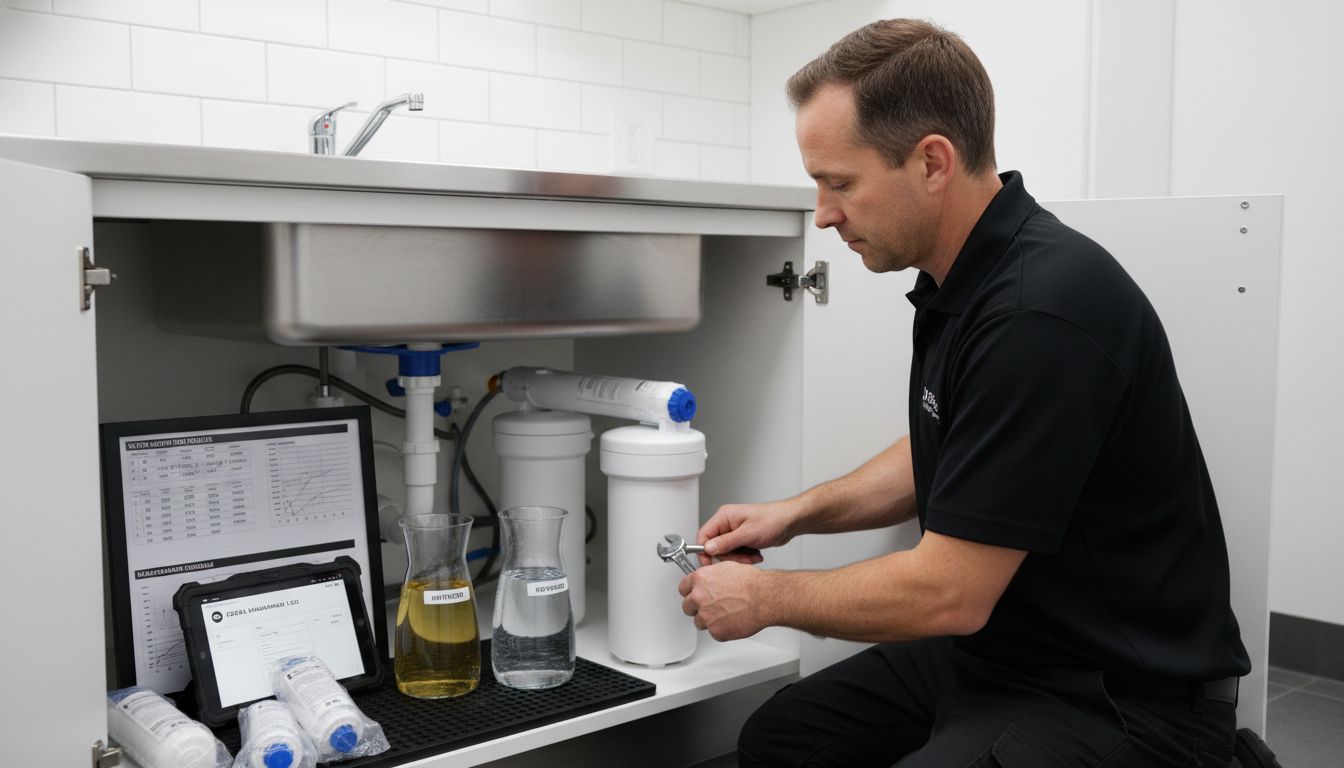
For offices looking to implement the most effective water purification strategy, Complete Office Water Purification Guide for Healthier Spaces offers comprehensive insights into selecting the right filtration approach. The ultimate goal is creating a workplace hydration solution that prioritizes employee health and water quality standards.
Health And Productivity Benefits For Workplaces
Workplace hydration is far more than a simple amenity – it’s a critical factor in employee performance and overall workplace wellness. Clean, purified water directly impacts cognitive function, energy levels, and employee productivity in ways many organizations overlook.
The health benefits of implementing high-quality water purification systems in offices are substantial:
- Improved Hydration: Encourages increased water consumption
- Enhanced Cognitive Performance: Better hydration supports mental clarity
- Reduced Sick Days: Eliminates waterborne contaminants
- Employee Satisfaction: Demonstrates workplace commitment to health
Employees typically spend over 8 hours daily in office environments, making water quality a fundamental aspect of workplace wellness. Providing access to pure, great-tasting water can significantly boost motivation and reduce potential health risks associated with consuming low-quality water.
Understanding the Benefits of Filtered Water for Offices provides deeper insights into how strategic water purification can transform workplace health dynamics. By prioritizing water quality, organizations invest not just in hydration, but in their most valuable asset – their employees’ well-being and performance.
Compliance, Safety, And Industry Standards
Water safety regulations form the backbone of responsible office water management. EPA establishes critical guidelines through the Safe Drinking Water Act, which sets comprehensive standards for ensuring drinking water quality across different environments, including workplace settings.
Key compliance requirements for office water systems include:
- Contaminant Monitoring: Regular testing for chemical and biological impurities
- Filter Maintenance: Scheduled replacements and performance verification
- Documentation: Maintaining detailed records of water quality assessments
- Equipment Certification: Using systems meeting national safety standards
Offices must navigate a complex landscape of regulatory expectations. This involves not just meeting minimum standards, but proactively implementing water purification strategies that protect employee health and demonstrate organizational responsibility.
Potential Compliance Risks range from potential legal liability to health consequences. By understanding and exceeding regulatory requirements, forward-thinking organizations can transform water management from a mandatory checkbox into a strategic wellness initiative.
Understanding Sustainable Water Purification Methods offers deeper insights into developing comprehensive water safety strategies that align with evolving industry standards and regulatory frameworks.
Cost, Maintenance, And Comparison To Alternatives
Water purification systems represent a strategic investment for offices, balancing upfront costs with long-term health and productivity benefits. Understanding the financial and maintenance landscape helps organizations make informed decisions about their workplace hydration solutions.
Cost considerations for office water purification include:
- Initial Investment
- Equipment purchase
- Installation expenses
- Infrastructure modifications
- Ongoing Maintenance
- Regular filter replacements
- Annual system servicing
- Potential repair costs
- Comparative Alternatives
- Bottled water delivery services
- Traditional water cooler systems
- Municipal water supply without additional treatment
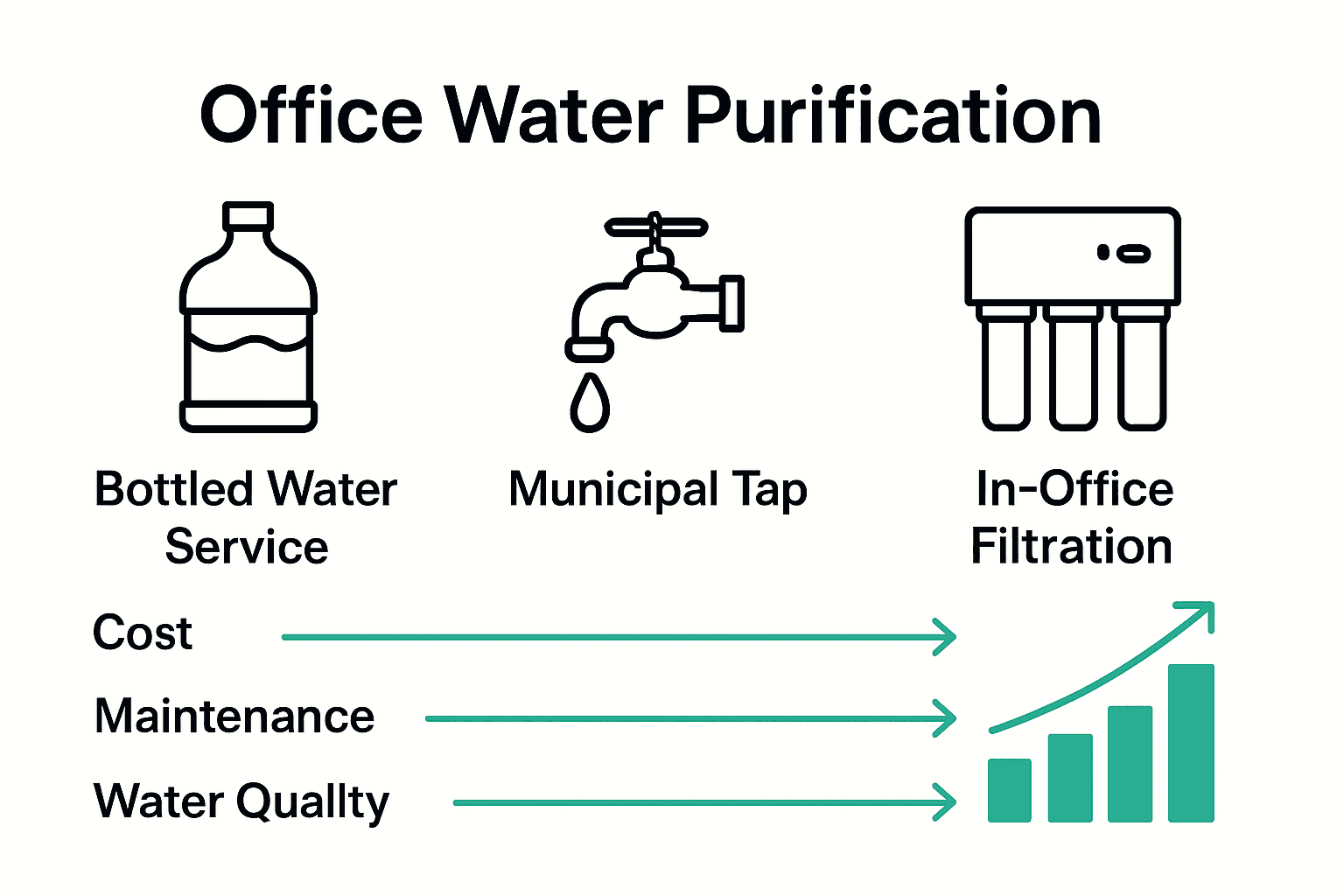
Compared to bottled water solutions, in-office purification systems offer significant long-term savings. A typical office might spend thousands annually on bottled water, whereas a high-quality water purification system can reduce these expenses by up to 70% while providing consistently clean, fresh water.
Complete Office Water Purification Guide for Healthier Spaces provides comprehensive insights into navigating the economic considerations of workplace water treatment. Smart organizations recognize that investing in water quality is not just an expense, but a strategic decision supporting employee health and organizational efficiency.
Elevate Your Office Hydration with Trusted Purified Water Solutions
The article highlights the challenge many offices face: providing truly purified water that supports health, productivity, and compliance. Employees deserve more than just filtered tap water. They need advanced purification technologies that remove contaminants while preserving beneficial minerals. This goal aligns directly with the latest in workplace hydration science and water safety standards.
At Coway Water Purifier, we understand these specific needs. Our wide range of water purification systems, from countertop designs to large-capacity models, employ cutting-edge filtration and UV sanitization to ensure every sip meets the highest quality. Learn about selecting the best solution for your office in our Uncategorized Archives – Coway Water Purifier which offers detailed insights rooted in health and safety research.
Looking to transform your workplace hydration immediately
Explore how enhancing water quality can boost employee wellness and productivity today. Visit Coway Water Purifier to shop our advanced water purifiers now and take the first step toward a healthier office environment.
Frequently Asked Questions
What is purified water and how is it made?
Purified water is water that has been mechanically filtered or processed to remove impurities. Common purification methods include distillation, reverse osmosis, carbon filtering, ultraviolet oxidation, and electrodeionization.
What are the benefits of using purified water in the office?
Using purified water in the office offers several health benefits, including improved hydration, enhanced cognitive performance, reduced sick days, and overall employee satisfaction, contributing to better workplace wellness.
How do I choose the right water purification system for my office?
To select the right water purification system, consider factors such as the purification methods available (like activated carbon filtration or reverse osmosis), the specific contaminants you wish to remove, and the overall water quality standards required for your workplace.
What are the compliance requirements for office water purification systems?
Compliance requirements for office water purification include regular testing for contaminants, maintaining filter systems, keeping documentation of water quality assessments, and ensuring all equipment meets national safety standards.
Recommended
- Complete Office Water Purification Guide for Healthier Spaces – Coway Water Purifier
- Complete Office Water Purifier Installation Guide – Coway Water Purifier
- Understanding the Benefits of Filtered Water for Offices – Coway Water Purifier
