
Uncategorized
What Is Post-Carbon Filtration for Home Water and Air
Jun
TL;DR:
- Post-carbon filtration is the final stage in water and air purification systems that removes residual odors, VOCs, and off-tastes using activated carbon. It improves taste, eliminates chemical odors, and protects against tank absorption, requiring replacement every 6 to 12 months for optimal performance. Both water and air filters rely on activated carbon’s adsorption properties, making regular maintenance essential for effective contaminant removal.
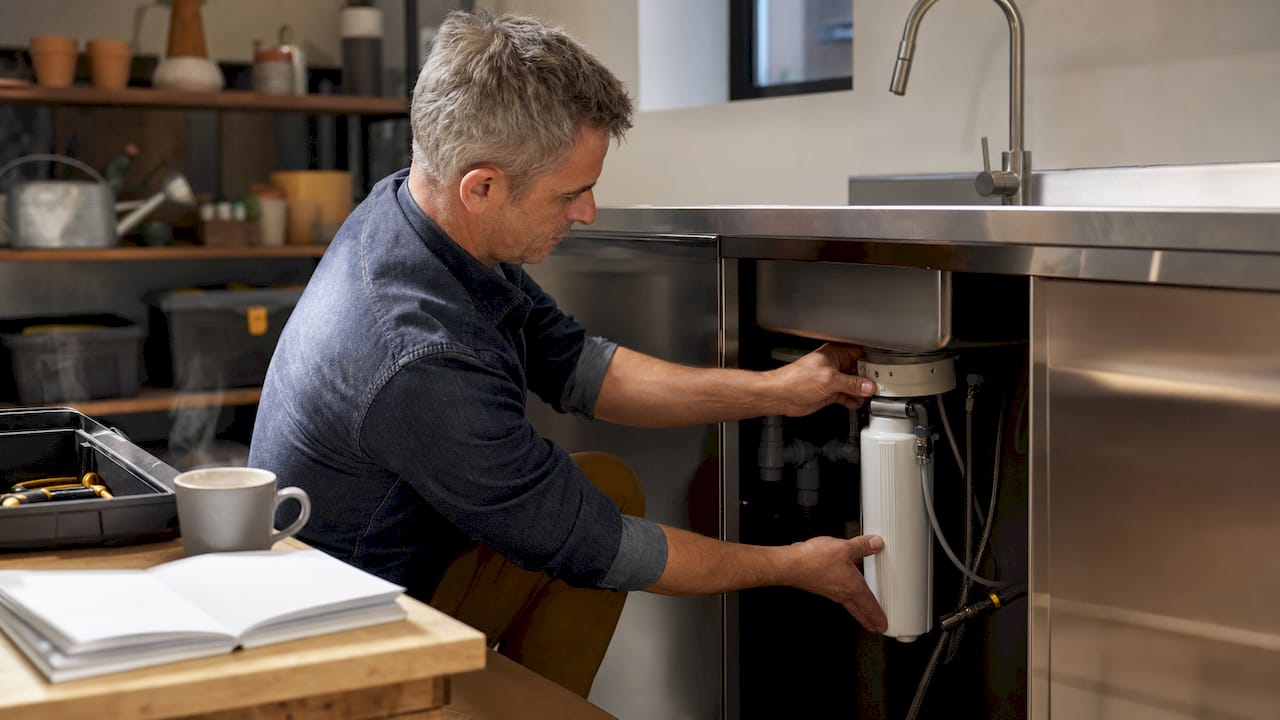
Post-carbon filtration is the process of using activated carbon as a final polishing stage to remove residual contaminants, odors, and off-tastes from water or air after primary purification. This stage sits between your storage tank and your tap in most multi-stage RO systems, targeting trace volatile organic compounds (VOCs), chlorine byproducts, and the “plastic” taste that can develop during storage. Without it, even technically clean water can taste flat, stale, or faintly chemical. For families investing in home purification, this final step is what separates water that tests pure from water that actually tastes pure.
What is post-carbon filtration and how does it work?
Post-carbon filtration is defined as a final-stage polishing component installed after primary purification, such as reverse osmosis, and before the tap. The industry term for this component is a “post-filter” or “post-carbon block filter,” and it appears in virtually every residential RO system sold today, including systems from Coway and DripLife.
The mechanism is adsorption, not filtration in the physical sense. Activated carbon, typically derived from coconut shells, carries millions of microscopic pores that trap dissolved gases, chlorine residuals, and organic molecules as water passes through. This is why activated carbon adsorption improves water flavor by removing flat or acidic tastes common in RO-treated water. The carbon does not filter particles by size. It chemically binds contaminants to its surface, pulling them out of solution.
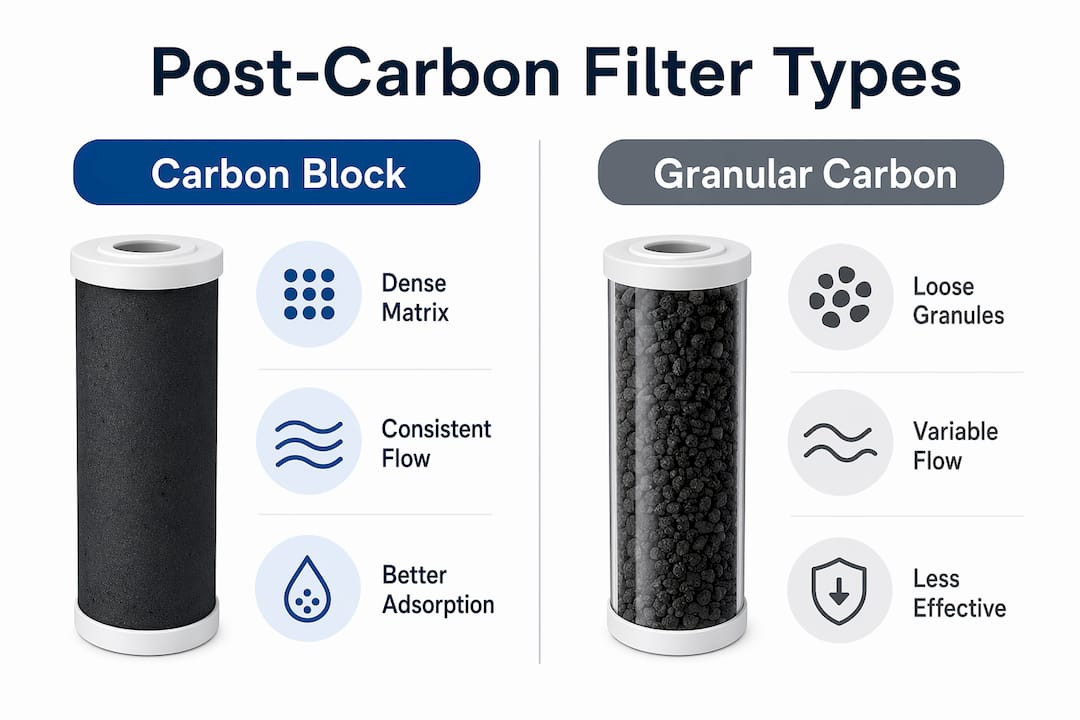
Two main formats exist for post-carbon filters:
- Carbon block filters: Water is forced through a dense, compressed matrix of carbon particles. This guarantees consistent contact time between water and carbon, preventing the “channeling” problem where water finds the path of least resistance and bypasses much of the media.
- Granular activated carbon (GAC) filters: Loose carbon granules sit in a housing. Water flows around them rather than through a solid matrix, which reduces contact time and allows channeling.
Carbon block filters outperform loose granular activated carbon by forcing water through a dense matrix, ensuring consistent contact time and preventing channeling. This results in a more reliable final taste polish without bitterness or acidity. For home use, carbon block is the format worth choosing.
One specific problem post-carbon filters solve is tank taste. Water stored in RO pressure tanks can absorb odors from the tank’s butyl rubber bladder or plastic housing. Post-carbon filters remove odors from water storage tanks caused by absorption from tank materials, eliminating “plastic” or rubbery tastes before the water reaches your glass. This is a problem most people attribute to their pipes or their water source, when the actual culprit is the storage stage.
Pro Tip: If your RO water tastes fine immediately after installation but develops an off-flavor within months, the post-carbon filter is the first thing to check. A saturated carbon block stops adsorbing and can actually release previously trapped compounds back into the water.
What are the benefits and maintenance of post-carbon filter systems?
The benefits of post-carbon filtration go beyond taste, though taste is the most immediate and noticeable improvement. Reverse osmosis membranes produce water that can taste flat or acidic due to mineral removal, and post-carbon polishing restores a crisp, refreshing finish. For families who switched to RO systems and found themselves still buying bottled water because the tap water tasted wrong, a functioning post-carbon stage fixes that problem directly.
The practical benefits include:
- Residual VOC removal: Primary filtration membranes target dissolved solids and microorganisms, but trace organic compounds can slip through or form during storage. Post-carbon adsorbs these before they reach the tap.
- Chlorine and chloramine reduction: Municipal water treatment uses chlorine as a disinfectant. Even after RO, trace chlorine can remain. Post-carbon removes it, eliminating the chemical aftertaste.
- Odor elimination: Sulfur compounds, organic decay byproducts, and tank-absorbed odors are all targets for activated carbon adsorption.
- Improved mouthfeel: Water that has passed through a fresh carbon block has a noticeably smoother texture compared to water that has only gone through an RO membrane.
Maintenance is where most households fall short. Post-carbon filters require replacement every 6 to 12 months to maintain efficacy, preventing accumulation of contaminants and secondary contamination. Replacement timing aligns with RO membrane maintenance and varies by usage volume and incoming water quality. A household drawing 3 gallons per day from a well with high organic content will exhaust a post-carbon filter faster than a city household drawing 1 gallon per day from treated municipal water.
The cost of neglect is real. A saturated carbon block no longer adsorbs contaminants. Worse, it can become a site for bacterial growth if left in place too long, turning a health-protective component into a contamination source. Replacing a post-carbon filter costs far less than addressing the health consequences of degraded water quality.
Pro Tip: Mark your filter replacement date on a piece of tape and stick it directly to the filter housing. Digital reminders get dismissed. A physical label on the unit itself is harder to ignore.
How does post-carbon filtration compare to other filtration methods?
Understanding where post-carbon fits in the filtration sequence clarifies why it cannot be replaced by any other single method. Sequential filtration systems using pre-carbon, RO membrane, and post-carbon provide comprehensive contaminant removal and taste improvement. Each stage targets a different category of problem.
The table below shows how the main filtration stages divide the work:
| Filtration stage | Primary target | What it misses |
|---|---|---|
| Pre-carbon filter | Chlorine, sediment, large organics | Dissolved solids, microorganisms |
| RO membrane | Dissolved solids, heavy metals, bacteria | Residual VOCs, odors, taste compounds |
| Post-carbon block | Residual VOCs, odors, tank taste, chlorine byproducts | Dissolved solids (already removed) |
| Ultrafiltration (UF) | Bacteria, viruses, suspended particles | Dissolved organics, taste compounds |
Pre-carbon filters protect the RO membrane from chlorine damage, which degrades the membrane’s polymer structure over time. You can read more about pre-filter roles and how they set up the rest of the system for success. Post-carbon filters serve the opposite end of the process: they clean up what the membrane left behind or what developed during storage.
Ultrafiltration (UF) is sometimes positioned as an alternative to RO for households that want to retain beneficial minerals. UF removes bacteria and viruses but does not remove dissolved organics or improve taste the way activated carbon does. A UF system without a post-carbon stage will still produce water with detectable odors and flat flavor. Pairing UF with post-carbon gives you microbial safety plus taste quality without stripping minerals.
The key distinction between pre-carbon and post-carbon is directionality. Pre-carbon protects equipment upstream. Post-carbon protects the consumer downstream. Both use activated carbon, but their positions in the system give them entirely different jobs. Treating them as interchangeable is a common mistake that leaves the final product unpolished.
For a broader view of how these technologies fit together, the home filtration technologies guide at Cowayswaterpurifier covers the full stack in practical terms.
How post-carbon filtration applies to air purification
Activated carbon filtration is widely used in air purification systems to remove odors, VOCs, and harmful gases, contributing to healthier indoor air quality. The same adsorption chemistry that removes tank taste from water removes formaldehyde, benzene, and cooking odors from indoor air. This is not a coincidence. The underlying mechanism is identical: carbon pores trap molecules on contact.

In air purifiers, the post-carbon stage typically follows a HEPA filter. HEPA captures particulates down to 0.3 microns, including dust, pollen, mold spores, and pet dander. But HEPA does nothing for gases or odors. The activated carbon layer handles those. Together, HEPA plus activated carbon covers both the particle and chemical dimensions of indoor air pollution.
The benefits for specific household situations include:
- Respiratory sensitivities: Individuals with asthma or chemical sensitivities experience measurable relief when VOC levels drop. Activated carbon air filtration reduces the chemical load in the breathing zone.
- New construction and renovation: Fresh paint, adhesives, and flooring materials off-gas VOCs for months. An activated carbon air purifier accelerates the clearance of these compounds.
- Cooking odors and smoke: Carbon adsorbs the organic compounds responsible for lingering food smells and tobacco smoke, which HEPA alone cannot address.
- Pet households: Ammonia from pet waste is a gas, not a particle. Activated carbon removes it where HEPA cannot.
The environmental sustainability angle is direct. Households with effective water and air purification systems buy less bottled water and use fewer chemical air fresheners. Both product categories generate significant plastic waste. A post-carbon water filter that makes tap water taste better than bottled water removes the incentive to buy plastic bottles entirely.
Key takeaways
Post-carbon filtration is the final, non-negotiable polishing stage that determines whether purified water and air actually deliver on their quality promise.
| Point | Details |
|---|---|
| Definition and position | Post-carbon filtration is the last stage in multi-stage systems, installed after RO or primary filtration and before the tap. |
| Carbon block over GAC | Carbon block filters prevent channeling and deliver consistent adsorption, making them the reliable choice for post-filter stages. |
| Maintenance schedule | Replace post-carbon filters every 6 to 12 months to prevent saturation, bacterial growth, and taste degradation. |
| Comparison with other stages | Pre-carbon protects equipment; RO removes dissolved solids; post-carbon removes residual VOCs, odors, and tank taste. |
| Air purification crossover | The same activated carbon adsorption technology removes VOCs, odors, and harmful gases from indoor air, not just water. |
Why the final stage is the one most people ignore
Most families spend hours researching RO membranes and sediment pre-filters, then treat the post-carbon block as an afterthought. I have seen this pattern repeatedly: households with technically excellent primary filtration producing water that tastes mediocre because the post-carbon stage is either undersized, the wrong type, or six months past its replacement date.
The misconception is that RO does the heavy lifting and the post-carbon filter is optional polish. That framing gets it backwards. The RO membrane produces chemically clean water. The post-carbon filter makes it water you actually want to drink. If your household is not drinking the filtered water because it tastes off, the filtration system has failed its primary purpose regardless of what the water test results show.
My practical advice: choose carbon block over granular activated carbon every time for post-filter applications. The density of the block format is not a marketing feature. It is the physical mechanism that makes the filter work reliably. And treat the replacement schedule as a hard deadline, not a suggestion. A neglected post-carbon filter is not neutral. It actively degrades the water quality it was installed to protect.
The same logic applies to air. If your air purifier has a HEPA filter but a spent carbon layer, you are removing particles but breathing VOCs and odors that the exhausted carbon can no longer capture. Both stages need to be current to deliver the protection you paid for.
— Soldierboy
Explore Coway’s water and air purification systems
Cowayswaterpurifier builds post-carbon filtration into every stage of its water purification lineup, from countertop units to under-sink systems. If you want to understand the full purification sequence your water goes through, the water purification process guide breaks down each stage with the specificity you need to make an informed decision.
For air quality, Coway’s activated carbon air purifiers address the VOC and odor dimension that HEPA-only systems miss. The 2026 air purifier selection guide walks you through choosing the right model for your home’s size and specific air quality concerns. Free delivery, installation, and maintenance support are included with Coway systems, so the post-carbon filter replacement schedule is one less thing you have to manage alone.
FAQ
What is post-carbon filtration in simple terms?
Post-carbon filtration is the final stage in a water or air purification system that uses activated carbon to remove residual odors, VOCs, and off-tastes after primary filtration. It is what makes purified water taste clean and refreshing rather than flat or chemical.
How often should I replace a post-carbon filter?
Post-carbon filters need replacement every 6 to 12 months, depending on water usage volume and incoming water quality. Skipping replacement allows the carbon to saturate and can introduce secondary contamination into your water.
Is post-carbon filtration effective without reverse osmosis?
Post-carbon filtration improves taste and removes VOCs and odors regardless of what precedes it, but it does not remove dissolved solids, heavy metals, or microorganisms. Pairing it with RO or ultrafiltration gives you both chemical purity and taste quality.
What is the difference between pre-carbon and post-carbon filters?
Pre-carbon filters protect the RO membrane by removing chlorine before water reaches it. Post-carbon filters polish the water after the membrane, removing residual odors and taste compounds that developed during storage. Both use activated carbon but serve opposite ends of the system.
Can post-carbon technology be used in air purifiers?
Activated carbon air filters use the same adsorption mechanism to remove VOCs, cooking odors, smoke, and harmful gases from indoor air. They are typically paired with HEPA filters, which handle particles, to cover both dimensions of indoor air quality.
Recommended
- The Role of Activated Carbon in Filtration at Home – Coway Water Purifier
- Advanced Filtration Technology: Cleaner Home Wellness – Coway Water Purifier
- What Is Energy Efficient Filtration? Cleaner Air and Water – Coway Water Purifier
- 7 Must-Have Filtration Technologies for Home Wellness – Coway Water Purifier
