
Uncategorized
7 Top Water Quality Tips Every Homeowner Should Know
Jan
Drinking water might look clear, but hidden contaminants can still put your family’s health at risk. Many water issues have no taste, smell, or visible signs, and you can’t rely on appearance alone to know if your tap is safe. Whether your water comes from a municipal supply or a private well, regular testing and smart choices are the keys to long-lasting safety.
This list will walk you through practical steps to protect your drinking water and understand what’s in it. You’ll discover ways to test for invisible threats, pick the best purification systems for your needs, and maintain top water quality in your home. Get ready for clear, actionable tips to make your water safer and your family healthier.
Table of Contents
- 1. Test Your Tap Water Regularly for Contaminants
- 2. Choose the Right Water Purification System
- 3. Maintain and Replace Filters on Schedule
- 4. Use UV Sanitization for Added Safety
- 5. Store Drinking Water in Safe, Clean Containers
- 6. Check Plumbing for Lead and Old Pipes
- 7. Stay Informed About Local Water Quality Reports
Quick Summary
| Takeaway | Explanation |
|---|---|
| 1. Regularly test your tap water. | Conducting regular tests identifies untraceable contaminants to protect your family’s health. Ensure testing is done at least annually. |
| 2. Choose the right purification system. | Select a water filtration system based on specific contaminants found in your water supply to ensure safety and effectiveness. |
| 3. Maintain and replace filters consistently. | Regular filter maintenance is crucial; neglecting this can lead to decreased effectiveness and increased health risks. Check replacement schedules closely. |
| 4. Use UV sanitization for safety. | Implement UV sanitization for effective microbial removal without chemicals, enhancing your water’s safety beyond traditional filtration methods. |
| 5. Stay informed about local water quality. | Regularly review local water quality reports to stay updated on potential contaminants and ensure informed decisions about your water treatment options. |
1. Test Your Tap Water Regularly for Contaminants
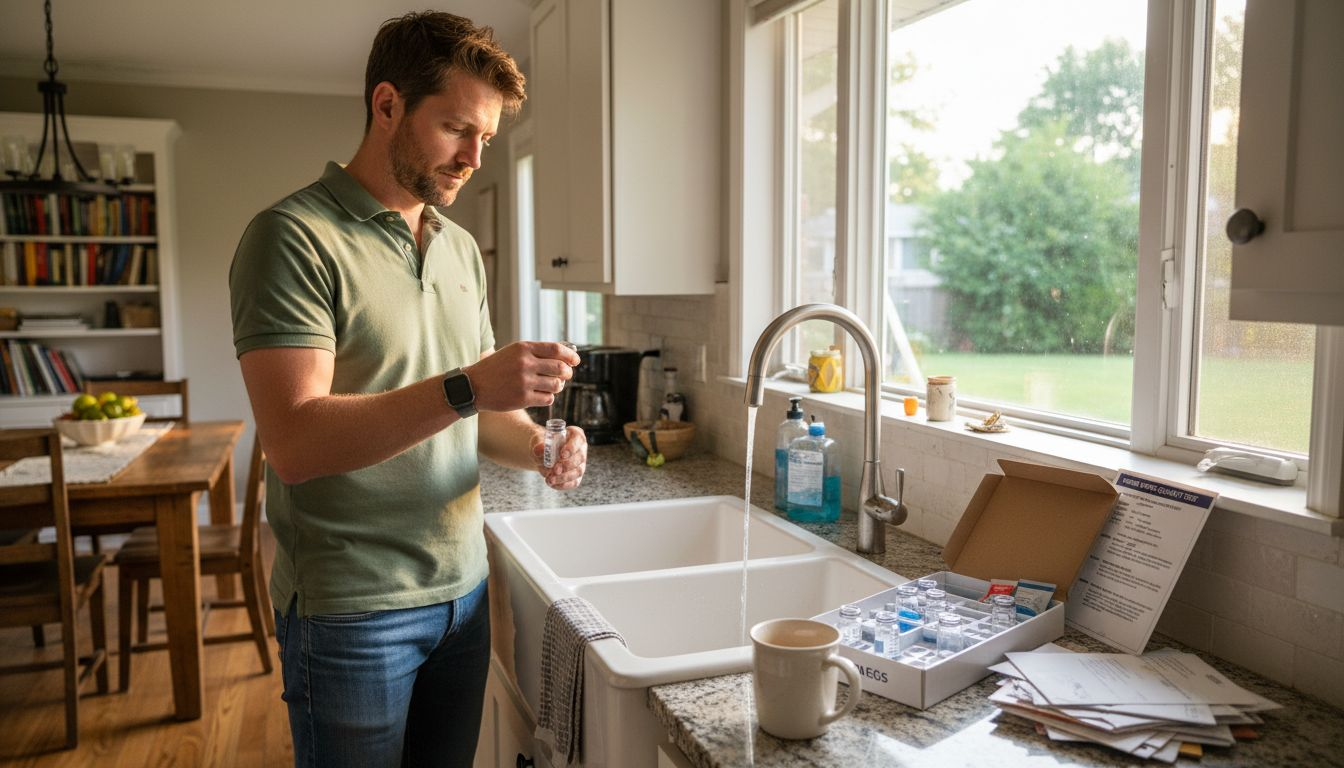
Understanding the quality of your home’s drinking water isn’t just a recommendation—it’s a critical step in protecting your family’s health. Water testing reveals hidden threats that can’t be detected by taste, smell, or appearance.
Most homeowners are unaware that water contaminants can lurk invisibly in their tap water. Testing drinking water for safety helps identify potential risks like heavy metals, microorganisms, and emerging pollutants such as PFAS.
Key reasons to test your tap water include:
- Identify potential health hazards
- Understand your water’s chemical composition
- Determine appropriate filtration needs
- Comply with health and safety standards
If you’re on a municipal water system, you’ll receive an annual Consumer Confidence Report (CCR) detailing water quality. However, these reports provide a broad overview and may not capture specific localized issues.
Your home’s water quality can change rapidly, making regular testing essential for ongoing health protection.
Private well owners face even greater testing responsibilities. The Environmental Protection Agency recommends annual comprehensive testing to check for total coliform bacteria, E. coli, pH levels, and total dissolved solids.
When selecting a water test, choose EPA-certified laboratories for the most reliable results. At-home testing kits can provide initial insights, but professional lab analysis offers the most comprehensive assessment.
Pro tip: Schedule professional water testing annually and after any significant changes in water source, local construction, or potential contamination events.
2. Choose the Right Water Purification System
Selecting the appropriate water purification system is more than a purchase—it’s an investment in your family’s health and wellbeing. The right filtration solution can transform potentially contaminated tap water into clean safe drinking water.
Water filtration technologies vary widely, with multiple purification methods available to address different contamination challenges. Understanding your specific water quality needs is the first critical step in choosing an effective system.
Key considerations when selecting a water purification system include:
- Types of contaminants present in your water
- Filtration technology effectiveness
- System capacity and flow rate
- Maintenance requirements
- Certification standards
Filtration Options:
- Pitcher filters (basic contaminant reduction)
- Faucet-mounted filters (convenient point-of-use)
- Countertop filtration systems
- Under-sink reverse osmosis systems
- Whole-house filtration units
Not all water filters are created equal. Certification matters more than marketing claims.
Certification from independent organizations like NSF International provides assurance that a filtration system actually performs as promised. These standards validate a product’s ability to reduce specific contaminants effectively.
Matching Filtration to Contamination means understanding your water’s unique chemical composition. Activated carbon filters excel at removing chlorine and improving taste, while reverse osmosis systems provide more comprehensive contaminant removal.
Pro tip: Obtain a professional water quality test before selecting your filtration system to ensure you choose a solution precisely matched to your home’s specific water chemistry.
3. Maintain and Replace Filters on Schedule
Maintaining your water filtration system is not just routine maintenance—it’s a critical step in protecting your family’s health. Neglecting filter replacements can transform your once-reliable water purification system into a potential health hazard.
Regular filter maintenance ensures that your filter replacement cycles remain effective in removing contaminants and providing clean water.
Key reasons to maintain and replace filters include:
- Prevent contaminant buildup
- Maintain optimal water flow rates
- Ensure maximum filtration efficiency
- Avoid potential health risks
- Extend the lifespan of your water treatment system
Filter Replacement Frequency:
- Refrigerator water filters: Typically every 6 months
- Pitcher filters: Every 2-3 months
- Under-sink filters: Annually
- Whole-house filtration systems: According to manufacturer guidelines
A forgotten filter is a forgotten risk to your family’s health.
Important Maintenance Considerations: NSF certified water treatment systems provide specific guidelines for filter replacement. These recommendations are based on comprehensive testing to ensure continuous water quality protection.
Failure to replace filters can lead to reduced filtration effectiveness and potential contaminant accumulation. Some filters may become breeding grounds for bacteria if not changed regularly.
Pro tip: Create a digital or physical calendar reminder for each filter’s replacement date to ensure you never miss a critical maintenance interval.
4. Use UV Sanitization for Added Safety
Ultraviolet water treatment represents a cutting-edge approach to ensuring drinking water safety without relying on harsh chemicals. This advanced sanitization method offers homeowners a powerful tool for eliminating microscopic threats lurking in their water supply.
UV sanitization technology provides comprehensive microbial protection by targeting the genetic material of harmful microorganisms.
Key benefits of UV water sanitization include:
- Eliminates viruses and bacteria
- Requires no chemical additives
- Works continuously without residual taste
- Environmentally friendly solution
- Highly effective against multiple pathogens
How UV Sanitization Works:
- UV-C light penetrates microorganism cell walls
- Disrupts DNA and RNA molecular structures
- Prevents microbes from reproducing
- Renders pathogens inactive
Ultraviolet light acts like a microscopic shield protecting your drinking water.
The specific wavelength around 254 nanometers is particularly effective at destroying microbiological contaminants. This targeted approach ensures that viruses bacteria and protozoa are neutralized without altering water’s fundamental chemical composition.
UV systems are especially valuable for homes with private water systems or those seeking an additional layer of protection beyond traditional filtration methods.
Pro tip: Schedule annual professional maintenance of your UV sanitization system to ensure optimal performance and consistent water safety.
5. Store Drinking Water in Safe, Clean Containers
The containers you choose for storing drinking water are more than simple vessels—they are your first line of defense against potential contamination. Proper water storage requires thoughtful selection and careful maintenance.
Safe drinking water methods begin with understanding which containers protect water quality effectively.
Critical considerations for water storage containers include:
- Use only food-grade materials
- Select containers with secure lids
- Avoid previously used chemical containers
- Choose durable materials
- Ensure easy cleaning and maintenance
Container Material Options:
- Glass containers (fragile but chemically inert)
- High-density polyethylene plastic bottles
- Stainless steel water carriers
- BPA-free plastic water jugs
Not all containers are created equal. Choose wisely to protect your water’s purity.
Municipal tap water can typically be stored directly. However water from wells or uncertain sources requires prior purification. Recommended storage practices involve keeping containers in cool dark locations away from direct sunlight and chemical exposure.
Regular maintenance is crucial. Water should be replaced every six months and containers thoroughly cleaned before refilling to prevent bacterial growth and maintain water quality.
Pro tip: Label your water storage containers with the fill date and set a recurring calendar reminder to rotate and refresh your water supply.
6. Check Plumbing for Lead and Old Pipes
The hidden dangers of lead in home plumbing can silently compromise your family’s health. Older homes built before 1986 are particularly vulnerable to lead contamination through aging pipes and plumbing fixtures.
Lead contamination risks in drinking water represent a serious health concern for homeowners.
Key risks of lead in plumbing include:
- Potential neurological damage
- Developmental issues in children
- Cognitive function impairment
- Long-term health complications
- Irreversible neurological impacts
Plumbing Inspection Checklist:
- Identify pipe materials and age
- Check for gray or dull metallic pipes
- Contact local water utility for records
- Test water for lead contamination
- Consider professional plumbing assessment
No level of lead exposure is considered safe for human consumption.
Warning Signs of Potential Lead Contamination:
- Pipes with a dull gray color
- Scratching reveals shiny silver metal
- Older homes built before 1986
- Water tastes metallic or unusual
The Environmental Protection Agency mandates the replacement of lead service lines by 2037. However homeowners should not wait and can take proactive steps to mitigate risks.
Pro tip: Purchase a certified lead testing kit from a reputable laboratory and schedule professional water analysis every two years, especially in homes built before 1990.
7. Stay Informed About Local Water Quality Reports
Knowledge is power when it comes to protecting your family’s drinking water. Understanding local water quality isn’t just about reading reports—it’s about proactively safeguarding your household’s health.
Water quality assessment tools provide critical insights into your local water ecosystem.
Benefits of staying informed include:
- Understanding potential contaminants
- Identifying local water treatment challenges
- Recognizing environmental impact zones
- Making educated water filtration decisions
- Tracking community water health trends
Report Research Strategies:
- Request annual Consumer Confidence Report
- Use EPA’s How’s My Waterway online tool
- Contact local water utility directly
- Review state environmental agency data
- Check municipal water quality websites
Your local water report is a roadmap to understanding what’s flowing from your tap.
The Environmental Protection Agency provides comprehensive resources for homeowners seeking detailed water quality information. Key report components typically include water source description, contaminant levels, potential health effects, and compliance with national drinking water standards.
Most municipal water systems publish annual reports detailing water testing results monitoring data and treatment processes. These documents offer transparency about the water infrastructure serving your community.
Pro tip: Schedule a quarterly review of your local water quality reports and set digital reminders to track any changes or emerging environmental concerns.
Below is a comprehensive table summarizing the main points, benefits, and strategies discussed throughout the article about ensuring quality and safe drinking water in homes.
| Topic | Key Details | Tips and Takeaways |
|---|---|---|
| Testing Tap Water | Regular testing for contaminants is essential to identify health risks and chemical properties. | Use EPA-certified labs for accurate results and test water after environmental or infrastructural changes. |
| Choosing Purification Systems | Select a system based on contaminants, capacity, and effectiveness. Certifications ensure reliability. | Conduct professional water testing before making a selection. |
| Filter Maintenance | Timely maintenance prevents contamination and ensures efficiency. | Set reminders for filter replacements specific to the system type. |
| UV Sanitization | UV treatment effectively neutralizes microorganisms without chemicals. | Include UV systems for added safety, especially with private water sources. |
| Proper Water Storage | Choose food-grade, durable, and cleanable containers. | Store water in cool, dark places and replace every six months. |
| Checking Plumbing | Inspect for old or leaded pipes associated with contamination risks. | Consider professional plumbing inspections for older homes. |
| Monitoring Local Water Quality | Local reports and EPA tools provide insights into water quality. | Review Consumer Confidence Reports and stay informed regularly. |
Protect Your Home’s Water Quality with Trusted Coway Solutions
Ensuring your family’s drinking water is clean and safe involves more than just testing and maintenance. The article highlights key challenges like selecting the right filtration system, ongoing filter replacement, and advanced UV sanitization as critical steps to safeguard your home. At Coway Water Purifier, we understand these concerns and offer scientifically backed water purifiers designed to tackle contaminants effectively while providing easy maintenance and reliable performance.
Explore our range of advanced water purification solutions including countertop units, under-sink systems, and models featuring UV sanitization by visiting our Uncategorized Archives – Coway Water Purifier. Take control of your water quality today and give your family the healthy hydration they deserve. Don’t wait for problems to arise. Visit https://cowayswaterpurifier.com now and choose the perfect water purifier tailored to your home’s unique needs.
Frequently Asked Questions
How often should I test my tap water for contaminants?
Testing your tap water for contaminants should be done at least annually. Schedule a professional water test to identify hidden risks and maintain your family’s health.
What should I look for when selecting a water purification system?
When choosing a water purification system, consider the types of contaminants present, filtration technology effectiveness, and your household’s specific needs. Obtain a water quality test to help you select a system perfectly matched to your water chemistry.
How can I ensure my water filters remain effective?
To ensure your water filters work properly, maintain and replace them on schedule according to manufacturer guidelines. Create a reminder for filter replacement dates to prevent health risks from neglected maintenance.
What are the benefits of using UV sanitization for water safety?
Using UV sanitization provides powerful protection against microorganisms without chemical additives. Consider installing a UV water purification system for an additional layer of safety, especially if you have concerns about the cleanliness of your water source.
How do I store drinking water safely in my home?
Store drinking water in food-grade containers with secure lids to prevent contamination. Refresh your stored water every six months to maintain quality and ensure cleanliness.
What signs indicate lead contamination in my plumbing?
Signs of potential lead contamination include dull gray pipes and unusual metallic tastes in your water. If you suspect lead, conduct a water test and consult a professional about replacing old pipes for your family’s safety.
Recommended
- 7 Key Water Purification Benefits for Homeowners – Coway Water Purifier
- 7 Essential Tips for Clean Drinking Water at Home – Coway Water Purifier
- 7 Types of Water Purifiers Every Homeowner Should Know – Coway Water Purifier
- 7 Essential Water Purification Facts 2025 for Healthy Homes – Coway Water Purifier
